Tiare
Gardenia taitensis. Family Rubiaceae. Shrub.
Also called Tahitian gardenia, Tiare flower.
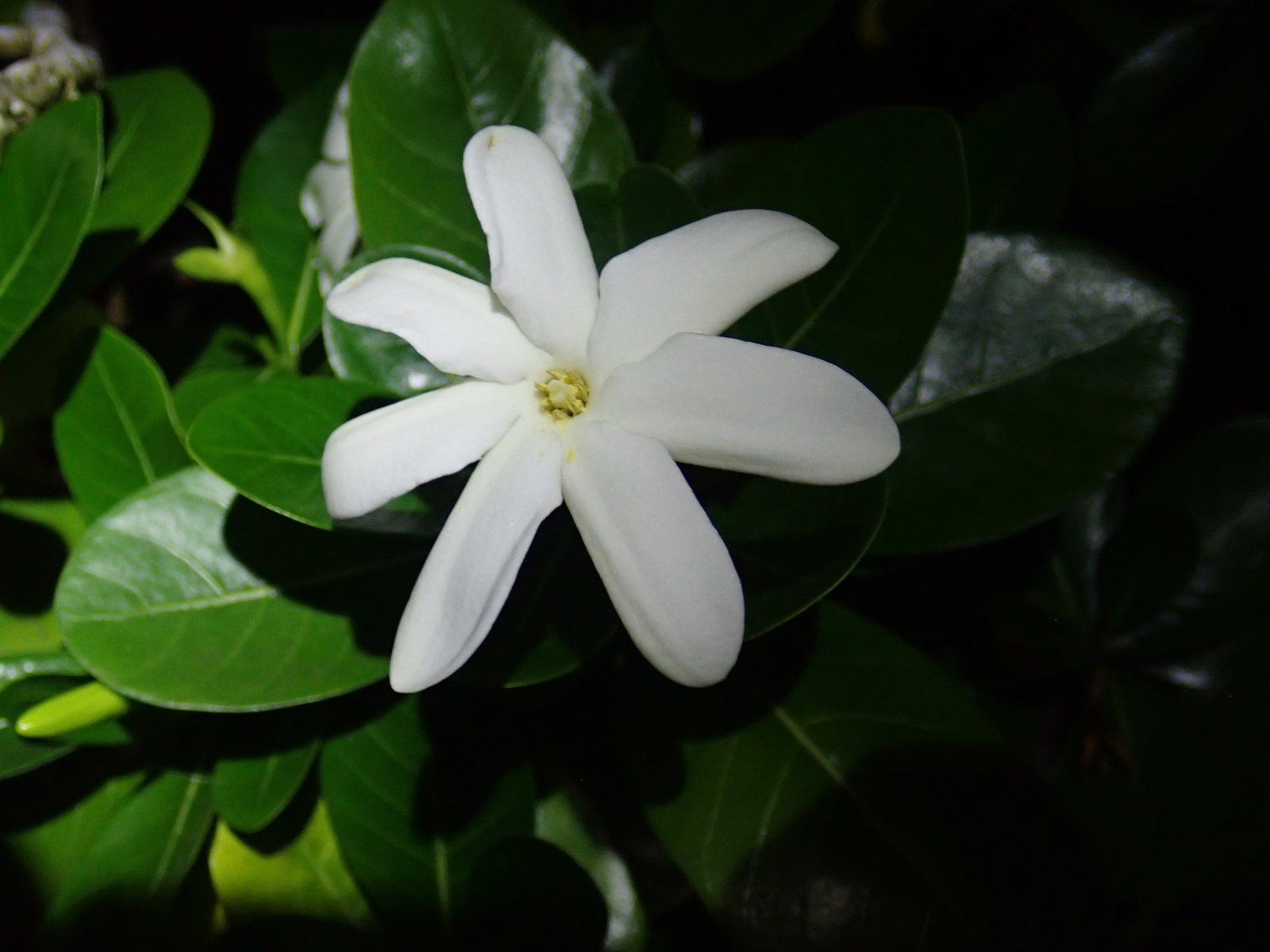
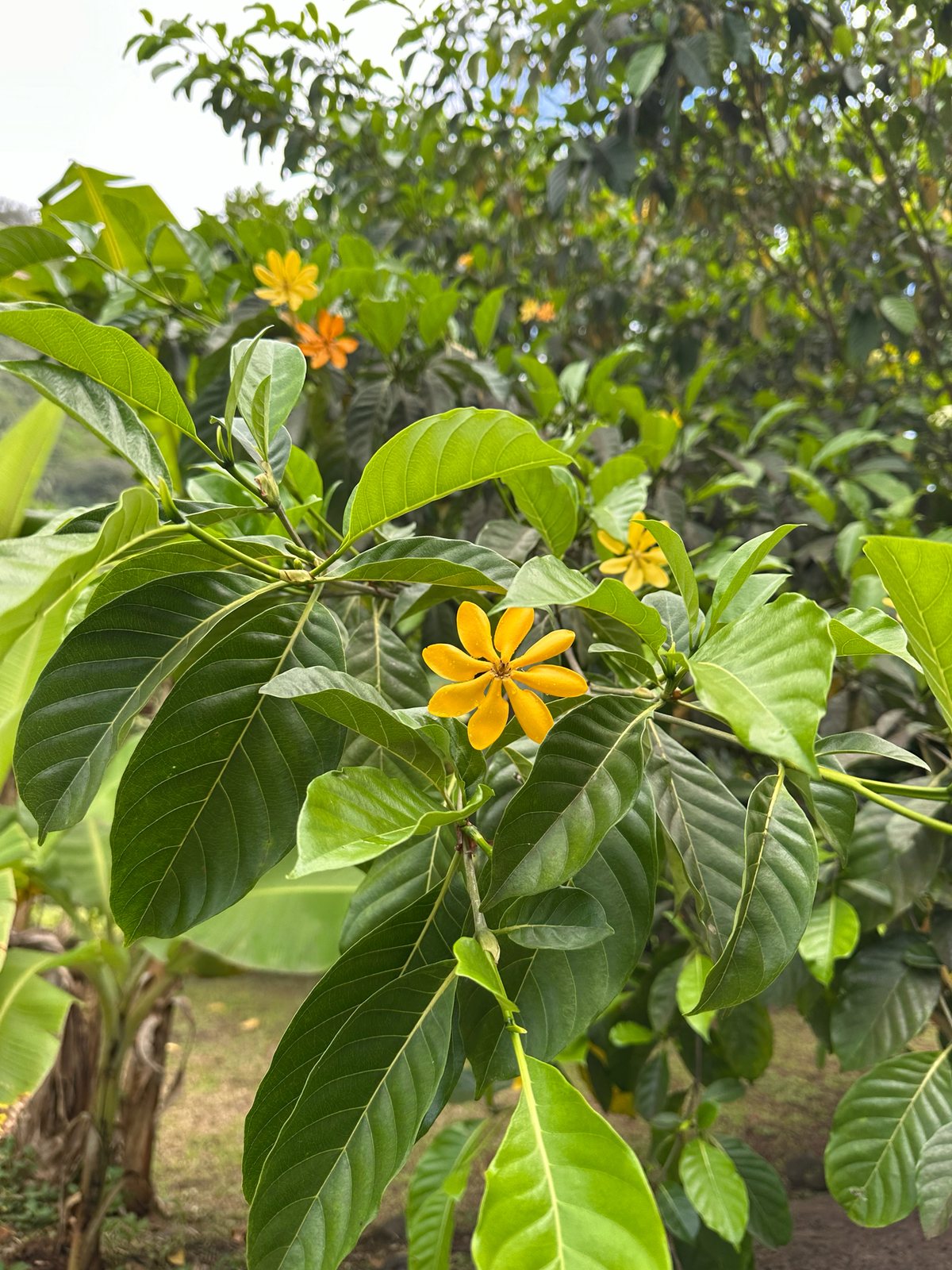
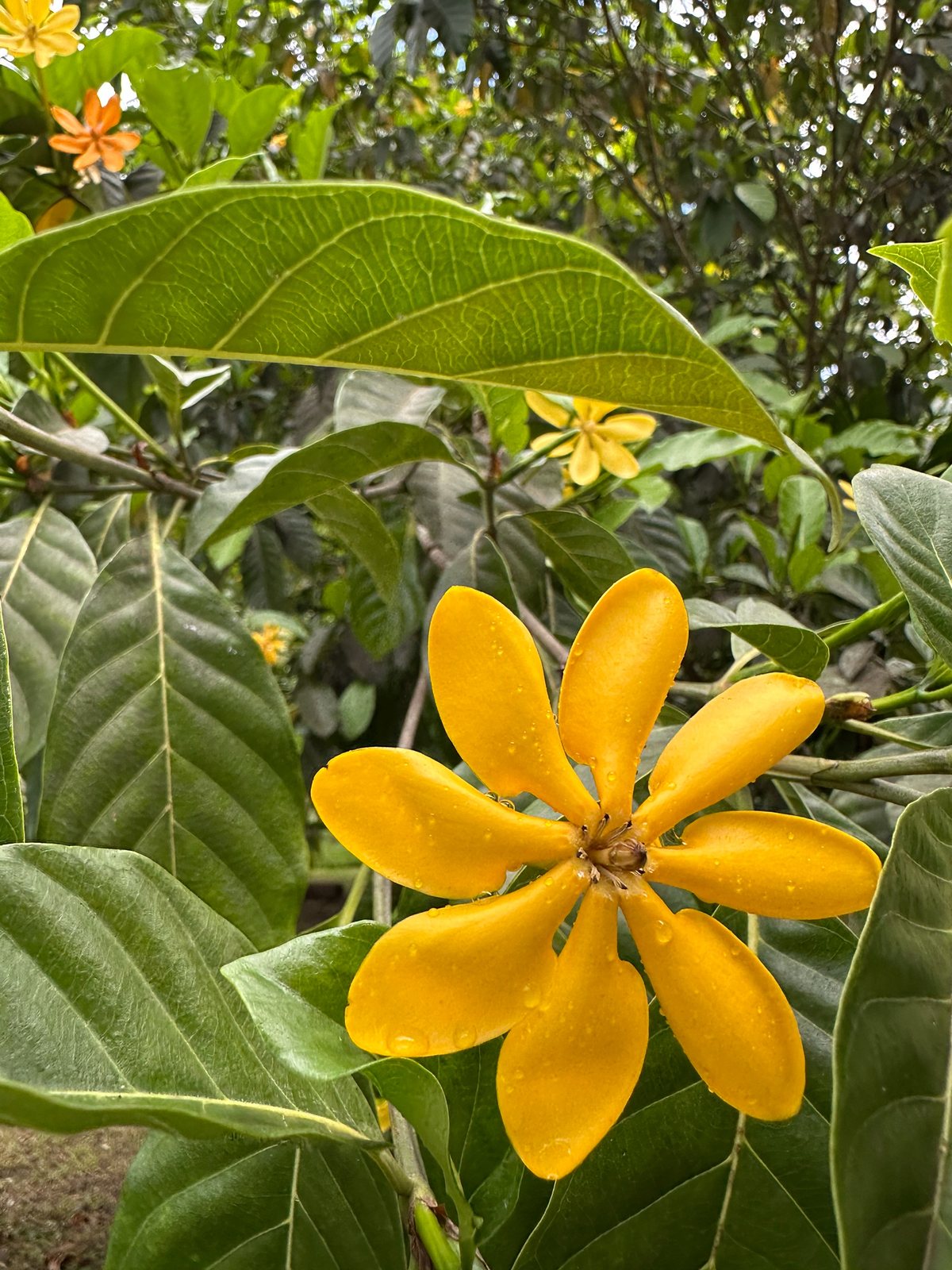
Tiare is a tropical evergreen shrub grown for its intensely fragrant, white, pinwheel-shaped flowers and glossy leaves. It makes a flowering hedge or specimen in frost-free gardens; elsewhere, grow it in a container that can spend winter in a warm, bright room or heated greenhouse.
At a glance
- Sun
- Full sun to partial shade; provide afternoon shade in very hot inland gardens and bright light indoors.
- Water
- Keep evenly moist during active growth, allowing the surface to dry slightly between waterings. Water less in winter, but do not let the root ball dry out completely.
- Soil
- Fertile, moisture-retentive but well-drained soil, preferably slightly acidic to neutral. Use a free-draining container mix rather than garden soil in pots.
- Height
- 4-10 ft (1.2-3 m)
- Spread
- 4-8 ft (1.2-2.4 m)
- Flowers
- Fragrant white flowers, mainly from late spring through autumn; flowering can continue intermittently throughout the year in tropical climates.
- Foliage
- Evergreen. Broad, glossy, leathery green leaves carried in opposite pairs or small whorls.
- Growth
- Moderate in warm conditions; slow in cool weather.
- Care needed
- Medium
The year at a glance
- Pollinators
- Heat tolerant
- Low allergen
- Fragrant
| J | F | M | A | M | J | J | A | S | O | N | D | |
|---|---|---|---|---|---|---|---|---|---|---|---|---|
| Flowers | ||||||||||||
| Plant |
Northern hemisphere months. In Australia, shift them by six.
- Difficulty
- Hard
- Toughness
- Needs looking after
Will it suit your garden?
Pick your zone, country, light and whether you have pets.
Full sun is 6 or more hours of direct sun a day, part shade 3 to 6 hours, shade under 3.
How it grows
Planting day
1.6 ft (0.5 m)
After 1 year
2.4 ft (0.75 m)
After 2 years
3 ft (0.99 m)
After 3 years
4 ft (1.2 m)
After 5 years
6 ft (1.7 m)
About 7 years to full size.
From a typical nursery size, at an average rate for this kind of plant. A rule of thumb, not a forecast.
Good to know
- Cats and dogs
- Mildly toxic: may upset a stomach
- Growth rate
- Slow
Care
Jobs through the year
- WaterApr–May, Sep–Oct, every 7 days
- Check moisture and water as surface soil starts drying; pots and young plants need more frequent checks.
- WaterJun–Aug, every 4 days
- Keep established roots evenly moist, not saturated; check container moisture daily in hot weather.
- WaterJan–Mar, Nov–Dec, every 10 days
- Check sheltered plants and water when surface mix dries slightly; never let the root ball dry out.
- FeedApr–Aug, every 30 days
- Feed lightly with gardenia fertilizer during active growth, following its label.
- MulchMay
- Apply organic mulch over roots without covering stem bases.
- PruneAug–Sep
- Lightly shorten long shoots after a main flowering flush; avoid repeated shearing.
- ProtectJan–May, Sep–Dec
- Use a movable pot; shelter warmly before nights drop below 10°C and return outside only when nights stay warmer.
- Water deeply when the soil surface begins to dry, and empty container saucers after watering.
- Feed lightly with a gardenia or flowering-shrub fertiliser during spring and summer, following the label rate.
- Spread organic mulch over the root zone, keeping it clear of the stems.
- Move containers under warm, bright cover before nights regularly fall below 50°F (10°C); protect from all frost.
- Keep indoor plants away from heating vents and provide good airflow without cold draughts.
Pruning. Lightly shorten long shoots after a main flush of flowers to maintain a rounded shape. Remove dead or damaged branches as needed, and avoid repeated shearing, which removes developing flower buds.
Through the year
- Spring
- Check roots and repot container plants if crowded; begin light feeding as new growth starts.
- Late spring
- Move overwintered plants outdoors once nights remain above 50°F (10°C), introducing stronger sunlight gradually.
- Summer
- Check soil moisture frequently, especially in containers, and inspect leaf undersides for pests.
- Late summer
- Lightly prune after a flowering flush and take semi-ripe cuttings.
- Autumn
- Bring containers under warm cover before cold nights arrive and stop routine feeding as growth slows.
- Winter
- Provide the brightest available sheltered position and reduce watering without letting roots become completely dry.
In the garden
- Plant beside a terrace or entrance where the flower scent can be enjoyed at close range.
- Use as an informal evergreen hedge in frost-free gardens.
- Grow in a large container as a seasonal focal point on a sunny patio.
- Combine with palms and broad-leaved tropical plants for contrasting leaf shapes.
- Include in a white-flowered courtyard or evening garden, where the blooms stand out against dark foliage.
Garden styles it suits: Tropical, Modern tropical, Luxury resort, Sensory garden, White garden and Hawaiian.
Plant it with: Hibiscus, Ixora, Cordyline, Dwarf mondo grass, Bromeliads and Areca palm.
Wildlife: The flowers can attract nectar-feeding insects, including moths, where suitable pollinators occur. Its wildlife value varies with location, and it is not a substitute for locally native planting.
Problems to watch for
- Yellow leaves with green veins: check drainage and soil pH before feeding; use chelated iron if iron deficiency is confirmed.
- Scale insects or mealybugs: inspect stems and leaf undersides, remove small infestations by hand, and use a labelled horticultural oil or insecticidal soap if needed.
- Spider mites indoors: look for fine webbing and stippled leaves; rinse foliage thoroughly and treat persistent infestations with insecticidal soap.
- Bud drop or root rot: avoid abrupt changes in temperature and moisture, keep roots out of standing water, and protect plants from cold.
Safety
Species-specific toxicity information is limited. Other gardenias are toxic to cats, dogs and horses, usually causing mild digestive upset after ingestion; keep tiare leaves, flowers and any fruit out of their reach. Human poisoning risk is not well established, so do not assume ornamental plant parts are edible.
Easily confused with
Cape jasmine (Gardenia jasminoides)
Usually has smaller leaves and flowers with broader, overlapping petals; many garden forms have double flowers rather than tiare's open, pinwheel-shaped blooms.
Crape jasmine (Tabernaemontana divaricata)
Its flowers usually have five distinctly twisted lobes and occur in clusters; damaged stems release milky sap.
Frangipani (Plumeria rubra)
Has thick, succulent branches and much larger leaves crowded near branch tips; flowers have five broad, waxy petals, often with yellow centres.
The name
Gardenia honours the physician and botanist Alexander Garden, taitensis refers to Tahiti, and tiare is the Tahitian word for flower.
Propagation. Take semi-ripe stem cuttings in summer and root them in a clean, free-draining medium with warmth and high humidity. Seed is less commonly available and produces variable plants.
Checked against open data
- Accepted botanical name
- Gardenia taitensis
- In the US and Canada
- Introduced in Hawaii.
- Native range
- Fiji, Niue, Samoa, Tonga, Vanuatu and Wallis-Futuna Is..
Sources: GBIF (CC BY 4.0), USDA PLANTS and Trefle (CC BY 4.0). The care and design notes are LandscapeGPT's own.
See it in your own yard.
Upload a photo of your yard and see it redesigned with plants that suit your climate, each checked against your zone.