Trailing indigo bush
Dalea greggii. Family Fabaceae. Groundcover.
Also called Trailing dalea, Gregg's dalea.
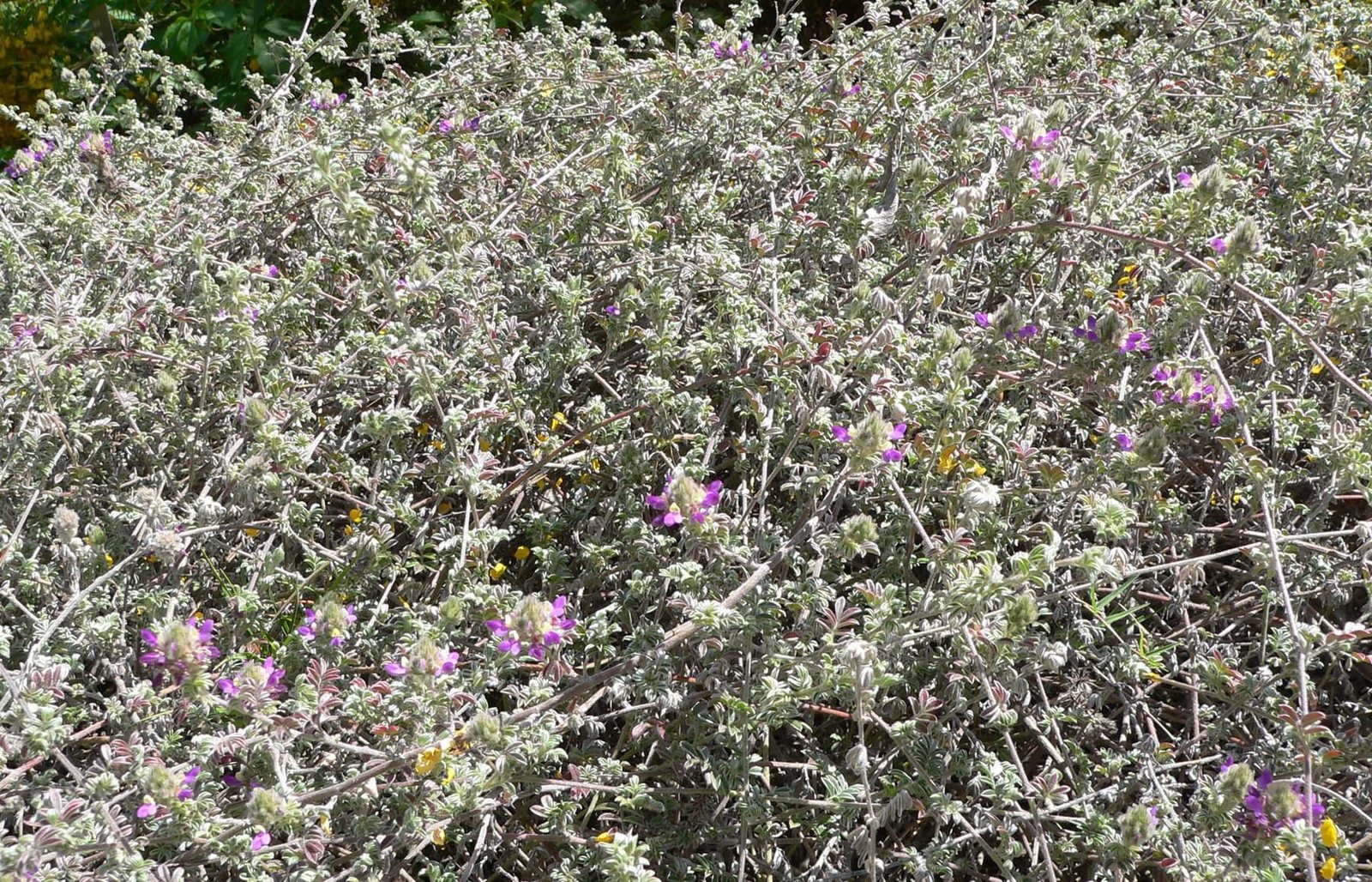
Trailing indigo bush is a low, spreading, woody groundcover native to southwestern Texas and Mexico. Gardeners grow it for its silvery foliage, small purple flowers and ability to cover hot, dry ground with little irrigation once established. It performs best in warm, dry climates; cold winters can damage its foliage and stems.
At a glance
- Sun
- Full sun; tolerates light shade but grows less densely and flowers less.
- Water
- Low once established; water deeply but infrequently, allowing the soil to dry between waterings.
- Soil
- Well-drained sandy, gravelly or rocky soil, including alkaline soil; avoid persistently wet soil and heavy, poorly drained clay.
- Height
- 1-2 ft (0.3-0.6 m)
- Spread
- 4-6 ft (1.2-1.8 m), sometimes wider where stems root
- Flowers
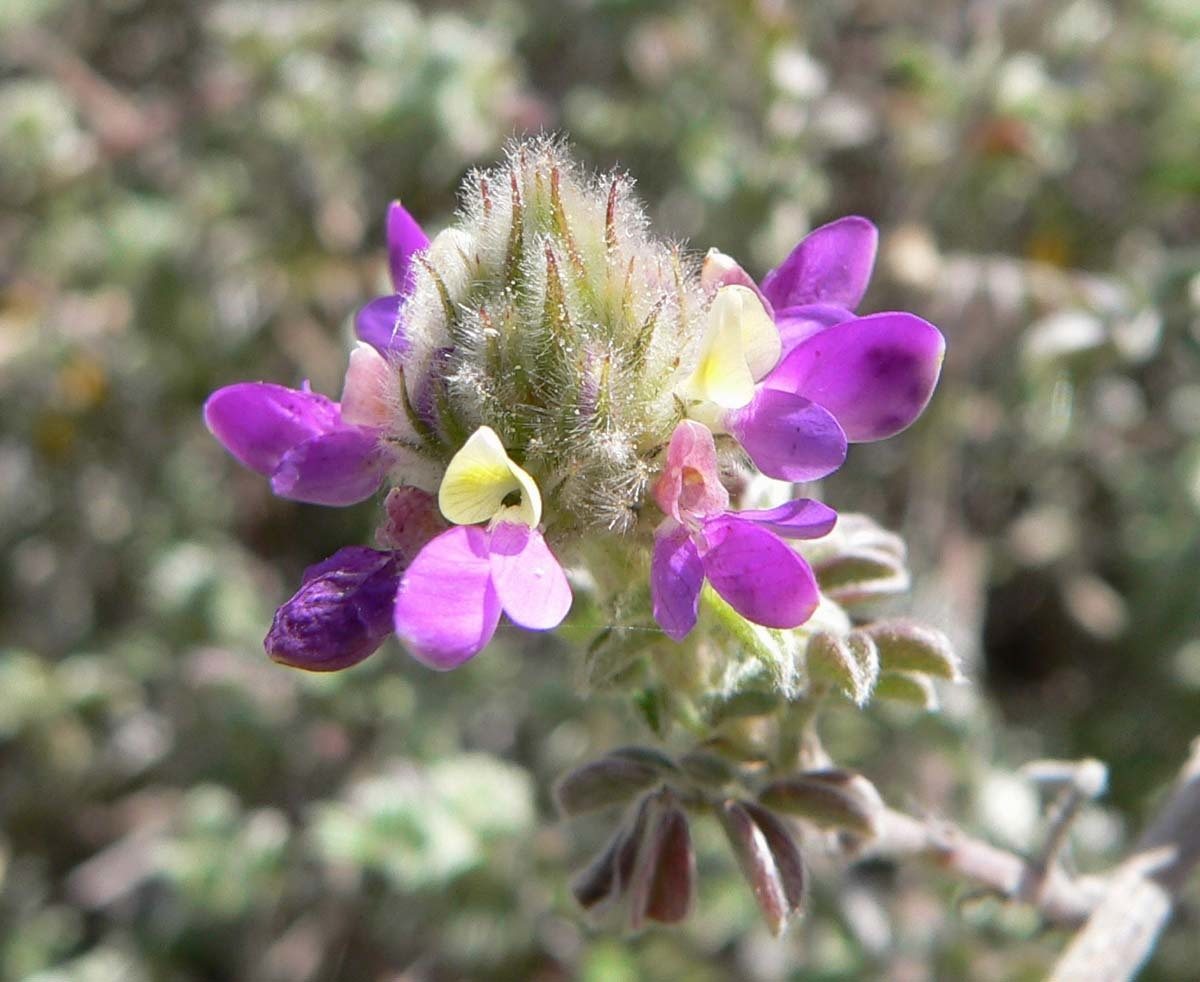
- Small lavender-purple flower clusters, mainly in spring with intermittent flowering through summer and autumn in warm climates.
- Foliage
- Fine-textured, silvery grey-green compound leaves on long, trailing stems; evergreen in mild climates but may lose foliage in cold weather.
- Growth
- Moderate to fast in warm weather
- Care needed
- Low
The year at a glance
- Pollinators
- Drought tolerant
- Heat tolerant
- Low allergen
| J | F | M | A | M | J | J | A | S | O | N | D | |
|---|---|---|---|---|---|---|---|---|---|---|---|---|
| Flowers | ||||||||||||
| Plant |
Northern hemisphere months. In Australia, shift them by six.
- Difficulty
- Moderate
- Toughness
- Fairly tough
Will it suit your garden?
Pick your zone, country, light and whether you have pets.
Full sun is 6 or more hours of direct sun a day, part shade 3 to 6 hours, shade under 3.
How it grows
Planting day
0.4 ft (0.11 m)
After 1 year
0.9 ft (0.28 m)
After 2 years
1.5 ft (0.45 m)
full size
About 2 years to full size.
From a typical nursery size, at an average rate for this kind of plant. A rule of thumb, not a forecast.
Good to know
- Cats and dogs
- Safe
- Native to
- the US
- In the garden
- Spreads vigorously: plan to contain it.
- Growth rate
- Fast
Care
Jobs through the year
- WaterApr–May, Sep–Oct, every 28 days
- Water established ground plants only during prolonged dry spells; young plants need more frequent watering.
- WaterJun–Aug, every 21 days
- Deep-water established ground plants only in prolonged drought, allowing soil to dry afterward.
- PruneApr–May
- After hard frosts, remove dead stems and lightly shorten sprawling shoots.
- PruneJun–Aug
- Trim only stems encroaching on paths; avoid repeated heavy cutting.
- MulchMay
- Apply a light gravel mulch without covering the crown.
- ProtectJan–Apr, Oct–Dec
- Not reliably hardy in zones 6–7; overwinter a container-grown plant in bright, frost-free shelter.
- Water regularly through the first growing season, letting the surface soil dry between waterings.
- Once established, irrigate only during prolonged dry spells or when growth shows drought stress.
- Plant on a raised mound if drainage is slow; do not place it where winter water collects.
- Use gravel mulch and keep it away from the crown.
- Avoid routine fertilizing, especially high-nitrogen feeds.
- Allow room for spreading stems and keep it out of regularly irrigated lawn edges.
Pruning. In spring, after the risk of hard frost has passed, remove dead or frost-damaged stems back to healthy growth. Shorten straggling shoots lightly to encourage a denser mat and keep paths clear.
Through the year
- Spring
- Check for winter damage and prune back to living growth once hard frosts have passed.
- Spring
- Plant in full sun after the soil warms, choosing a freely draining site.
- Early summer
- Check new plants regularly and water deeply when the root zone begins to dry.
- Summer
- Trim stems that encroach on paths; give established plants occasional deep watering during prolonged drought.
- Autumn
- Reduce irrigation as temperatures fall and remove debris that traps moisture around the crown.
- Winter
- Keep the soil on the dry side and leave frost-damaged growth in place until spring.
In the garden
- Mass on sunny, well-drained banks to create a low silver-green carpet.
- Let stems trail over low retaining walls or the edges of raised beds.
- Use beneath widely spaced yuccas and agaves to soften their upright shapes.
- Plant beside gravel paths with desert marigolds and autumn sage for contrasting foliage and flower colour.
Garden styles it suits: Desert / xeriscape, Southwestern, Desert modern, Dry gravel garden, Pollinator garden and Low-maintenance.
Plant it with: Red yucca, Autumn sage, Desert marigold, Blackfoot daisy, Parry's agave and Damianita.
Wildlife: Flowers attract bees and other small pollinating insects. It is often lightly browsed by deer, but resistance varies with local conditions and food availability.
Problems to watch for
- Root or crown rot in wet soil: improve drainage, reduce watering and replace badly rotted plants.
- Frost-damaged foliage and stems: choose a sheltered, sunny position and prune dead growth after the last hard frost.
- Thin, open growth in shade: move to a sunnier position and lightly shorten sprawling shoots.
- Sparse or woody patches in older mats: lightly prune healthy growth and replace declining sections with rooted cuttings or layers.
Safety
Not known to be toxic to people, cats, dogs or horses, but species-specific safety information is limited. No particular toxic part is established; it is not an edible plant, so discourage pets and children from eating it.
Easily confused with
Black dalea (Dalea frutescens)
Black dalea forms an upright, rounded shrub with greener foliage and its strongest purple flower display in late summer and autumn; trailing indigo bush forms a low, spreading mat with distinctly silvery foliage.
The name
Dalea honours the English botanist Samuel Dale, while greggii honours the plant collector Josiah Gregg.
Propagation. Take softwood or semi-ripe cuttings during warm weather, or detach stems that have rooted where they touch the soil. Seed can also be used; hard-coated seed usually benefits from careful scarification before sowing.
Checked against open data
- Accepted botanical name
- Dalea greggii
- In the US and Canada
- Native in the lower 48 states.
- Native range
- Mexico Central, Mexico Gulf, Mexico Northeast, Mexico Northwest, Mexico Southwest, New Mexico and Texas.
Sources: GBIF (CC BY 4.0), USDA PLANTS and Trefle (CC BY 4.0). The care and design notes are LandscapeGPT's own.
See it in your own yard.
Upload a photo of your yard and see it redesigned with plants that suit your climate, each checked against your zone.