Urn plant
Aechmea fasciata. Family Bromeliaceae. Perennial.
Also called Silver vase plant, Silver vase bromeliad.
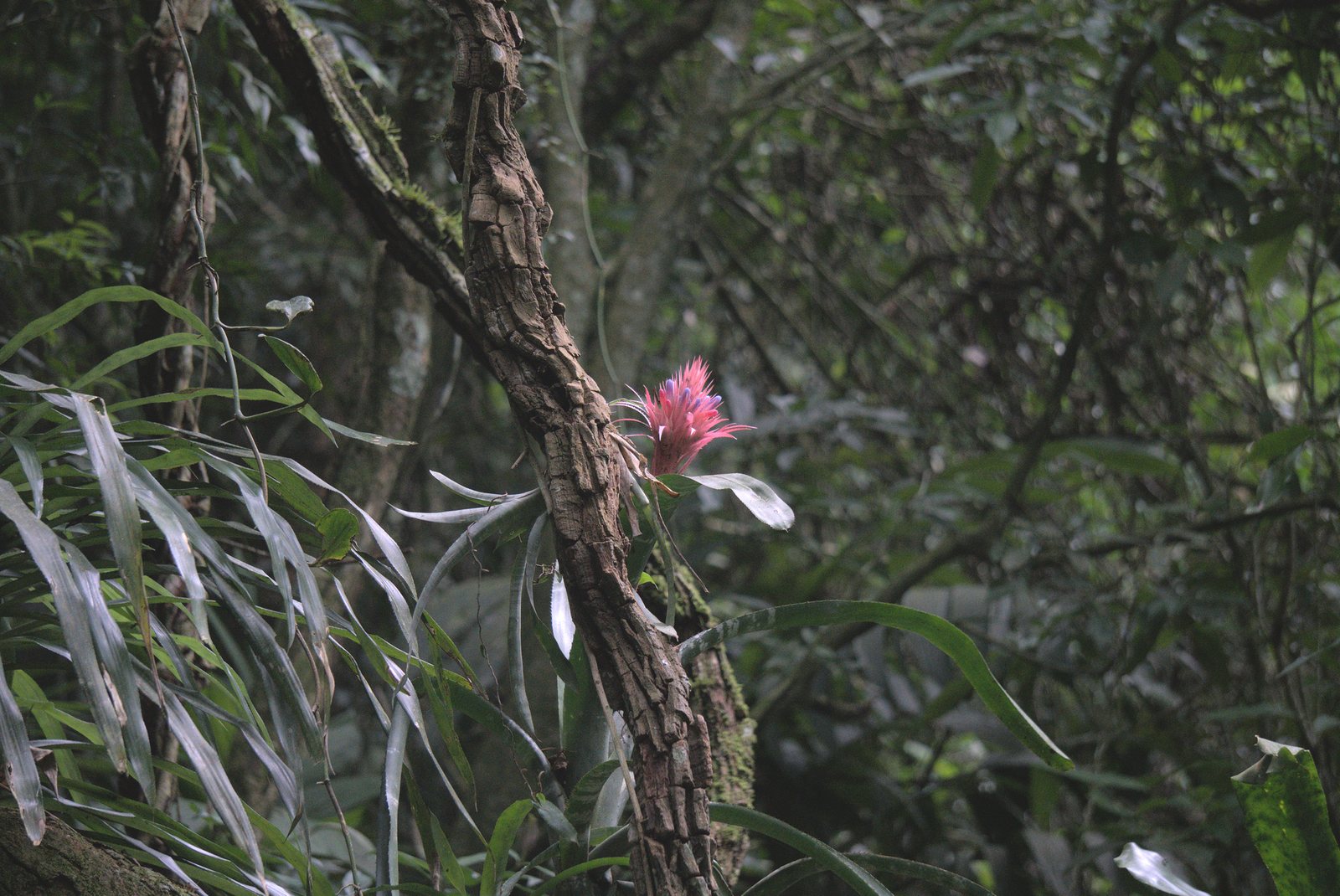
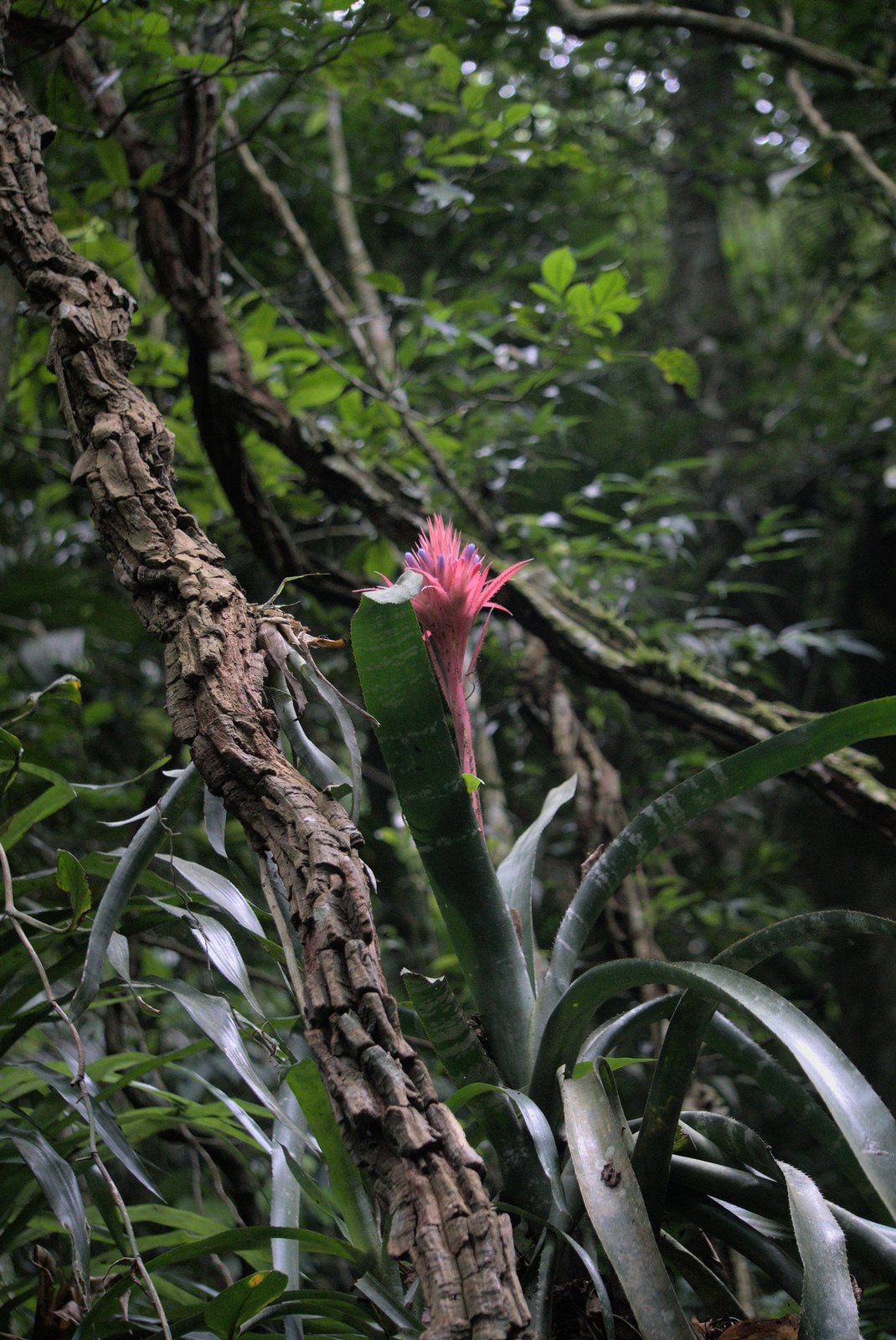
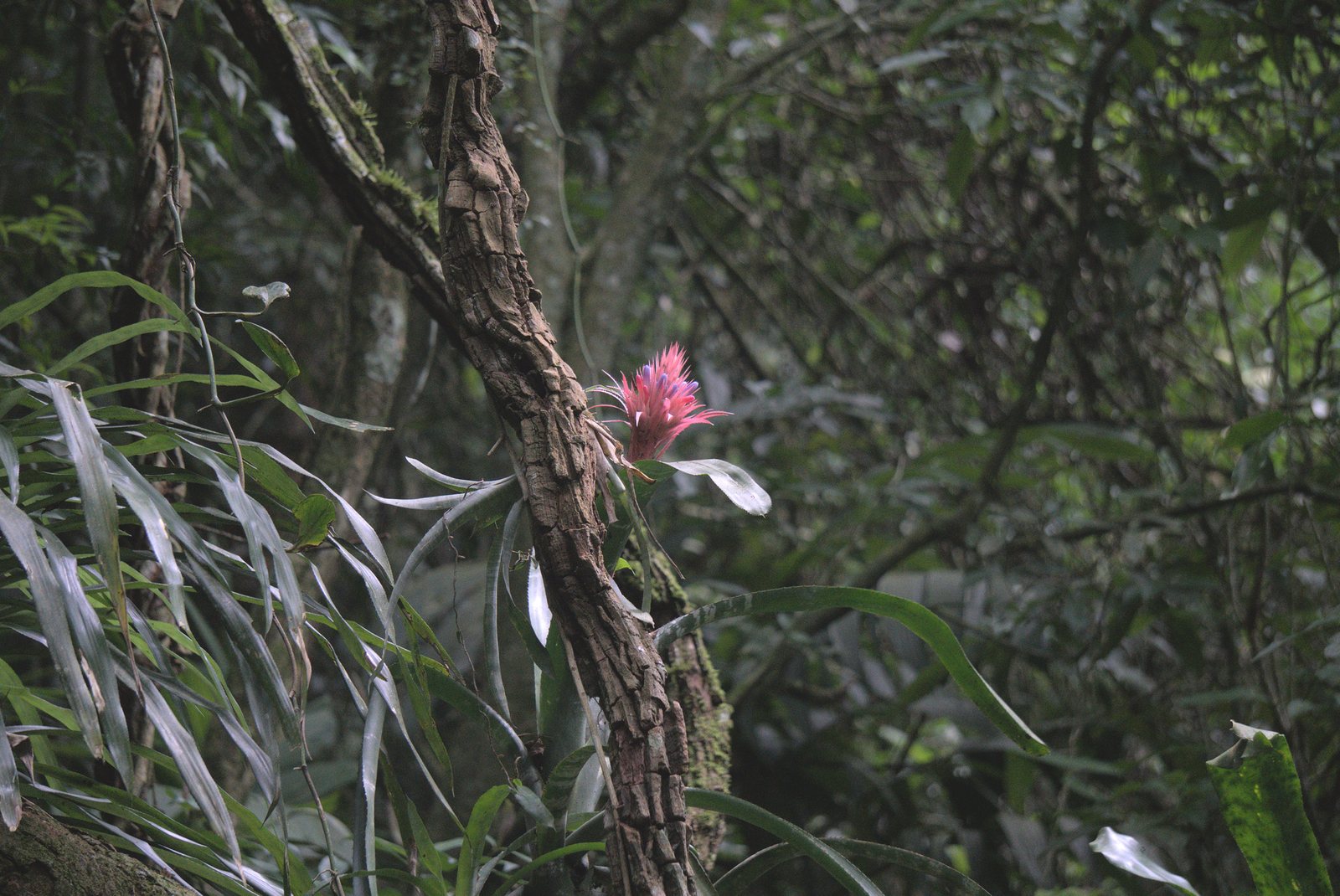
Urn plant is an evergreen bromeliad from Brazil, grown for its silver-banded leaves and long-lasting pink flower bracts. It makes a useful houseplant or shaded patio specimen, but needs frost-free warmth outdoors year-round. Each rosette flowers once, then slowly dies while producing replacement offsets.
At a glance
- Sun
- Bright indirect light indoors; filtered light or partial shade outdoors. Avoid strong afternoon sun, which can scorch the leaves.
- Water
- Water the potting mix when its surface has dried, then let it drain completely. Keep some clean water in the central leaf cup during warm growing conditions, refreshing it regularly; use rainwater where tap water is hard.
- Soil
- A loose, airy bromeliad mix, or orchid bark blended with peat-free potting mix and perlite. Good drainage matters more than rich soil.
- Height
- 1-3 ft (0.3-0.9 m), including the flower head
- Spread
- 1-2 ft (0.3-0.6 m) per rosette; offset clumps eventually grow wider
- Flowers
- Usually summer in natural conditions, though indoor plants may flower at other times. Small blue-purple flowers emerge among pink bracts; the bracts can remain attractive for several months.
- Foliage
- Evergreen. Broad, arching, grey-green strap-shaped leaves with silvery crossbands, arranged in a water-holding rosette. Leaf margins usually have small sharp spines.
- Growth
- Slow to moderate; offsets usually take several years to reach flowering size.
- Care needed
- Low
The year at a glance
- Low allergen
| J | F | M | A | M | J | J | A | S | O | N | D | |
|---|---|---|---|---|---|---|---|---|---|---|---|---|
| Flowers | ||||||||||||
| Plant |
Northern hemisphere months. In Australia, shift them by six.
- Difficulty
- Easy
- Toughness
- Fairly tough
Will it suit your garden?
Pick your zone, country, light and whether you have pets.
Full sun is 6 or more hours of direct sun a day, part shade 3 to 6 hours, shade under 3.
How it grows
Planting day
1 ft (0.3 m)
After 1 year
1.2 ft (0.38 m)
After 2 years
1.5 ft (0.45 m)
After 3 years
1.7 ft (0.53 m)
After 5 years
2 ft (0.6 m)
full size
About 4 years to full size.
From a typical nursery size, at an average rate for this kind of plant. A rule of thumb, not a forecast.
Good to know
- Cats and dogs
- Safe
- Growth rate
- Slow
Care
Jobs through the year
- WaterApr–May, Sep–Oct, every 10 days
- Check container mix and water only after its surface dries; drain thoroughly.
- WaterJun–Aug, every 7 days
- Flush and refill the leaf cup with clean water; water potting mix only if its surface is dry.
- WaterJan–Mar, Nov–Dec, every 14 days
- Check sheltered pots and water mix sparingly; avoid cold stagnant water in the leaf cup.
- FeedApr–Aug, every 30 days
- Apply balanced liquid fertilizer to the mix at one-quarter strength.
- DivideApr–May
- Optionally detach offsets once at least one-third the mother rosette's size, preferably with roots.
- PruneSep–Nov
- Cut the flower stalk at its base once bracts brown; retain the mother rosette while offsets develop.
- ProtectJan–May, Sep–Dec
- Grow in a container locally; keep indoors above 10°C and move outside only when nights stay warm.
- ProtectJun–Aug
- Acclimatise outdoor pots to filtered shade and protect from strong afternoon sun.
- Use a pot with drainage holes and keep the base of the rosette above the potting mix.
- Flush and refill the central cup weekly in warm conditions to remove stale water and debris.
- Let the potting mix partly dry between waterings; never leave the pot standing in a saucer of water.
- Feed monthly in spring and summer with a balanced liquid fertiliser at one-quarter strength, applied to the potting mix.
- Keep above 10°C (50°F) where possible, and reduce watering in cool, low-light conditions.
Pruning. Cut the flower stalk close to its base once the bracts turn brown, using clean secateurs. Remove dead outer leaves as they loosen, but leave a declining mother rosette attached while it supports developing offsets.
Through the year
- Spring
- Check drainage and repot only if the container is crowded or the mix has broken down.
- Spring
- Begin light monthly feeding as growth resumes; separate sufficiently large offsets if wanted.
- Early summer
- Move indoor plants outside only when nights remain above 10°C (50°F), introducing them gradually to a sheltered, shaded position.
- Summer
- Refresh the leaf cup weekly and check outdoor plants for mosquito larvae and scale insects.
- Autumn
- Bring container plants indoors before nights become cold; stop routine feeding as growth slows.
- Winter
- Provide bright indirect light, water the mix sparingly and avoid leaving cold, stagnant water in the leaf cup.
In the garden
- Use a single plant in a simple container to show the symmetrical rosette and silver leaf markings.
- Group beneath palms or other high-canopy plants in frost-free gardens for contrasting leaf shapes.
- Place in a shaded courtyard alongside ferns and cast-iron plants for layered evergreen foliage.
- Use as a seasonal patio accent in colder climates, moving it indoors for winter.
Garden styles it suits: Modern tropical, Architectural minimal, Modern courtyard, Tropical, Small-space and Brazilian tropical modernism.
Plant it with: Cast-iron plant, Bird's nest fern, Parlour palm, Moth orchid and Chinese evergreen.
Wildlife: The water-filled rosette can shelter small invertebrates and, in tropical settings, small frogs. Its value to local wildlife is limited in most temperate gardens, and outdoor cups can harbour mosquito larvae.
Problems to watch for
- Root or crown rot: usually follows waterlogged mix, buried leaf bases or cold, wet conditions. Improve drainage, reduce watering and remove badly rotted tissue; save healthy offsets if the mother plant is lost.
- Mealybugs and scale insects: inspect leaf bases and undersides regularly. Wipe off small infestations and use an insecticidal soap labelled for indoor ornamentals if needed, testing a small area first.
- Brown, bleached patches: strong direct sun can scorch leaves. Move to filtered light; damaged patches will not recover.
- Mosquito larvae in outdoor leaf cups: flush the cup thoroughly every week rather than allowing water to stagnate.
Safety
Not known to be toxic to cats, dogs, horses or people. The leaf-edge spines can scratch skin or mouths, and chewing plant material may cause mild stomach upset.
Easily confused with
Amazonian zebra plant (Aechmea chantinii)
Usually has stronger, more sharply defined pale bands on darker leaves and a branched flower head with orange-red bracts, rather than the compact pink head of urn plant.
Queen's tears (Billbergia nutans)
Has narrower leaves in slender, clustered rosettes and loose, nodding flower sprays rather than a broad urn-shaped rosette with a dense upright flower head.
The name
Aechmea comes from a Greek word for a spear point, referring to pointed flower structures, while fasciata means banded and describes the leaf markings; urn plant refers to the water-holding rosette.
Propagation. Separate basal offsets in spring or early summer when they are about one-third to one-half the size of the mother rosette, preferably with roots of their own. Cut cleanly at the attachment point and pot into an airy mix, keeping the young plants warm and out of direct sun.
Checked against open data
- Accepted botanical name
- Aechmea fasciata
- In the US and Canada
- Introduced in Puerto Rico.
- Native range
- Brazil Southeast.
Sources: GBIF (CC BY 4.0), USDA PLANTS and Trefle (CC BY 4.0). The care and design notes are LandscapeGPT's own.
See it in your own yard.
Upload a photo of your yard and see it redesigned with plants that suit your climate, each checked against your zone.