Viper's bugloss
Echium vulgare. Family Boraginaceae. Perennial.
Also called Blueweed, Blue devil.
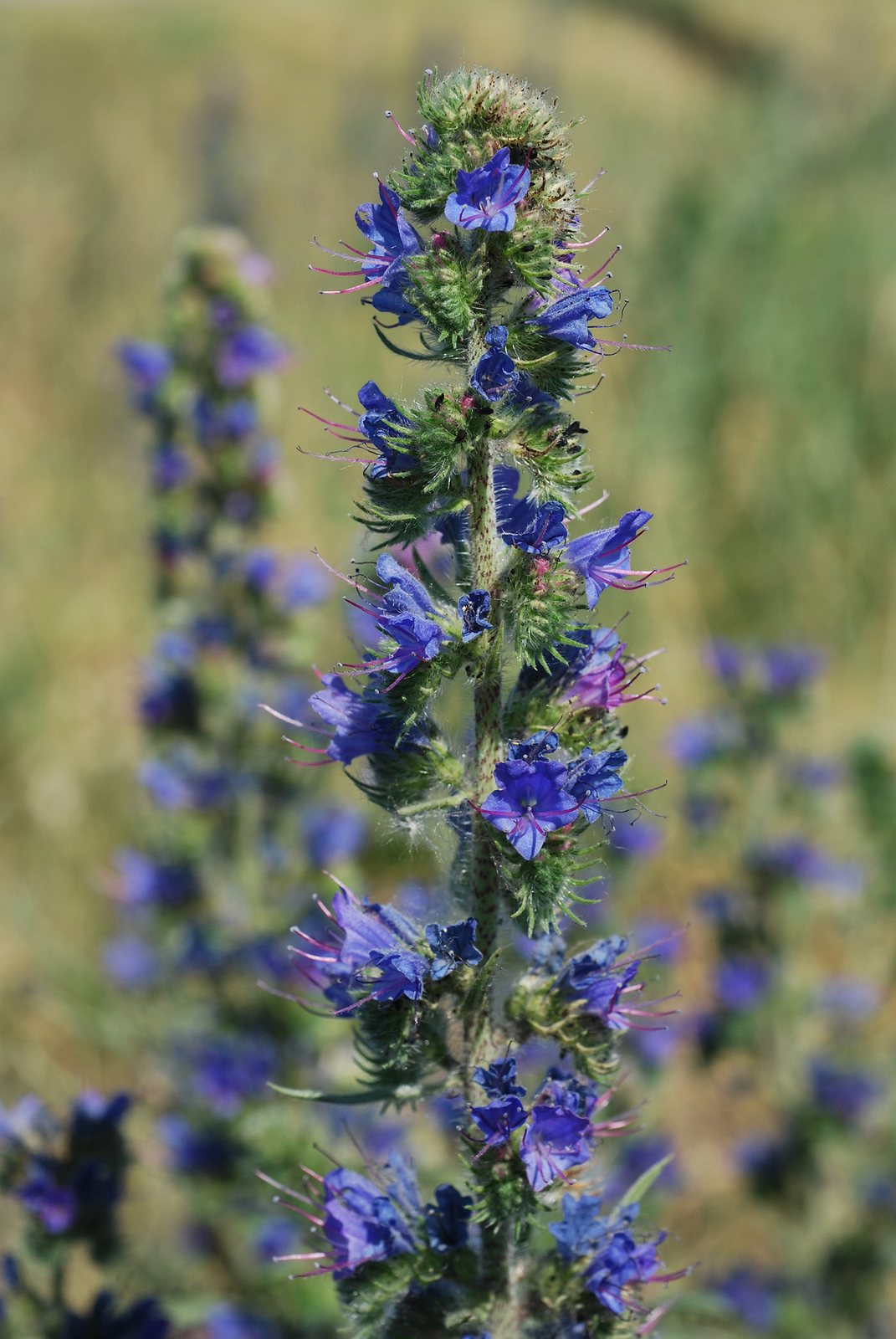
Viper's bugloss is usually a biennial, occasionally a short-lived perennial, forming a leafy rosette before producing upright spikes of blue flowers. Gardeners grow it for its long flowering season and abundant bee forage in sunny, dry ground, but it seeds freely and is unsuitable where it is an invasive weed.
At a glance
- Sun
- Full sun.
- Water
- Low once established; water young plants during prolonged dry weather and avoid persistently wet soil.
- Soil
- Well-drained, preferably sandy, gravelly or chalky soil. Tolerates poor fertility; avoid heavy, waterlogged ground.
- Height
- 1-3 ft (0.3-0.9 m)
- Spread
- 1-2 ft (0.3-0.6 m)
- Flowers
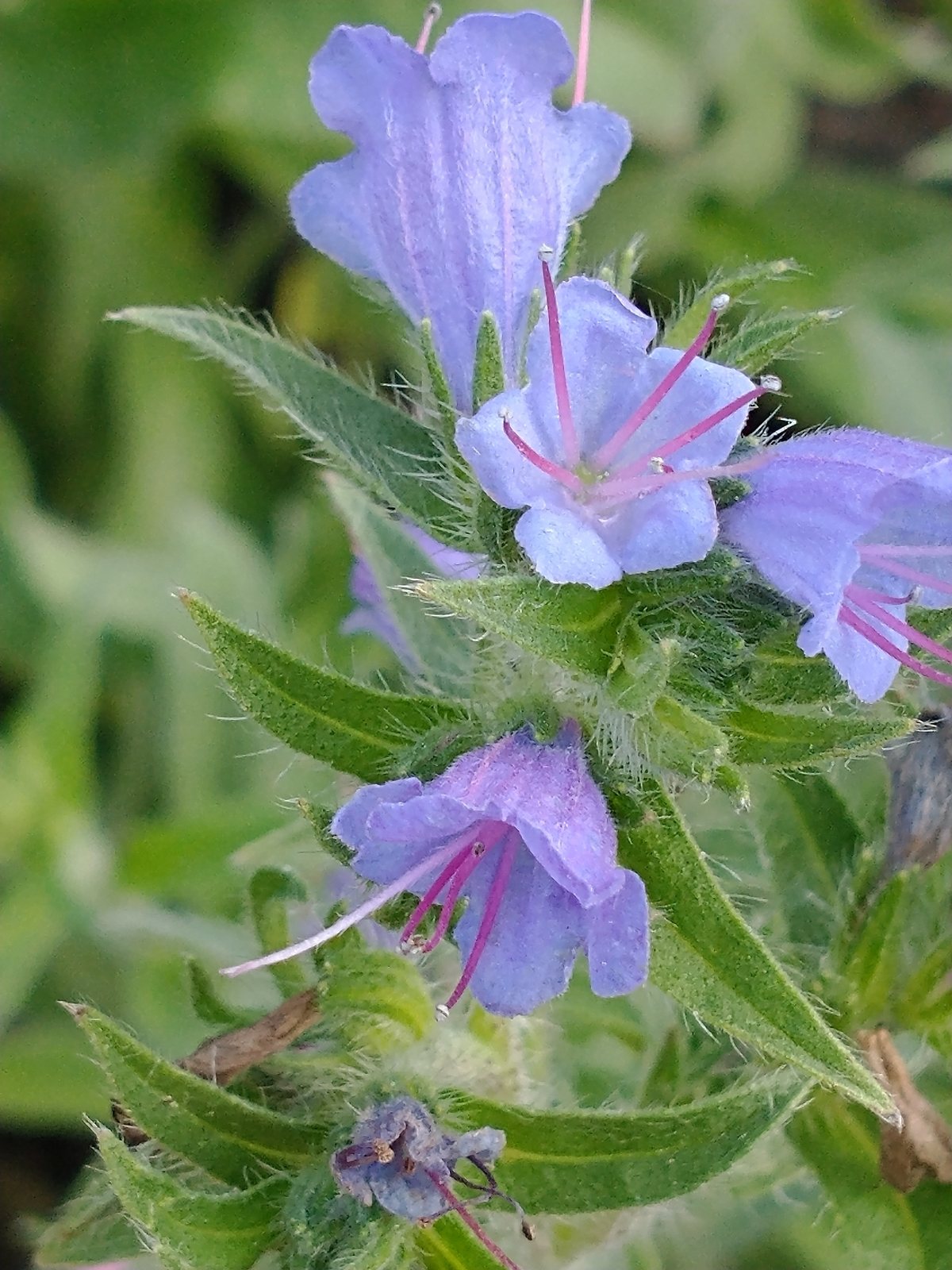
- Late spring through summer, sometimes into early autumn; pink buds open to vivid blue flowers with protruding reddish stamens.
- Foliage
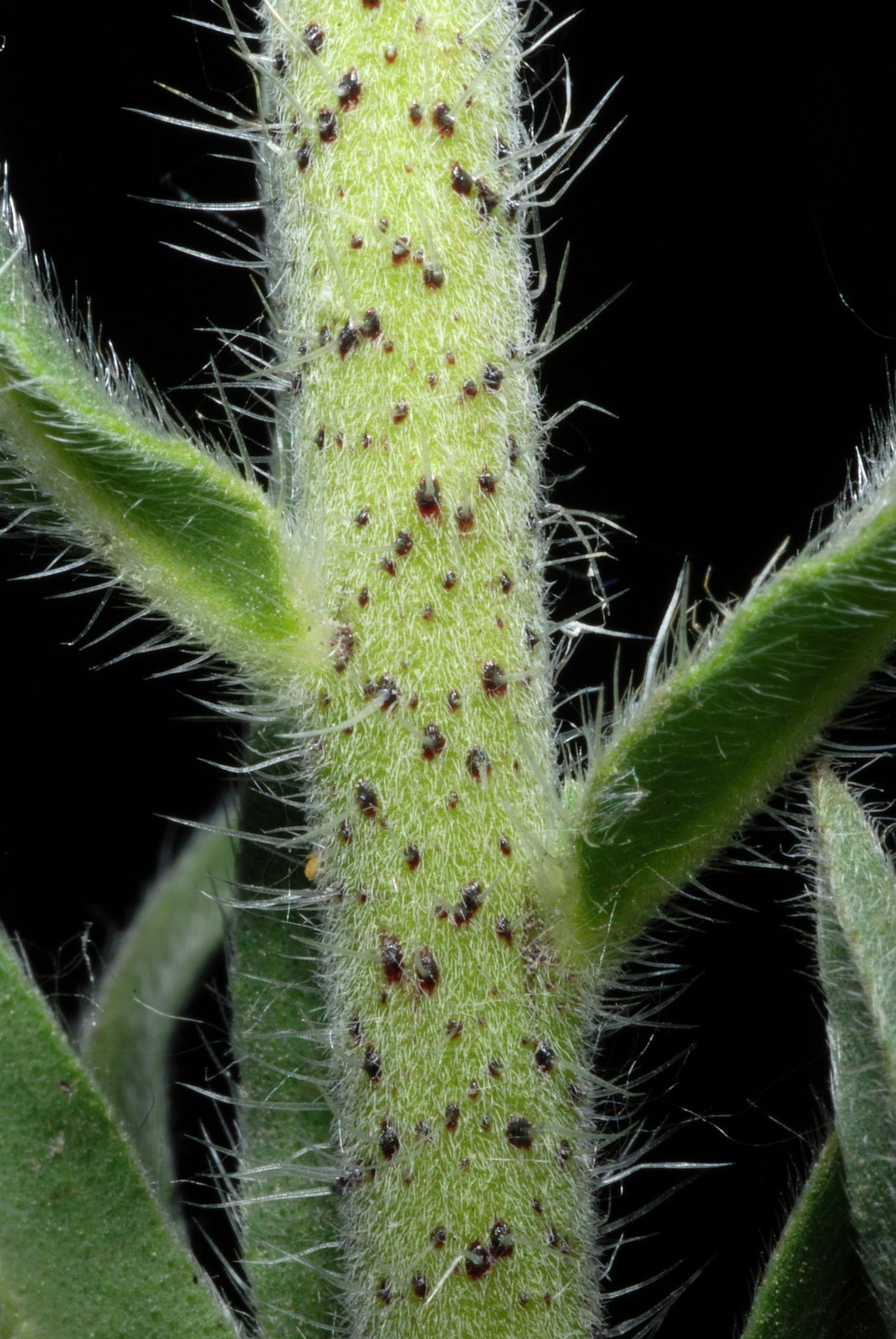
- Narrow, rough, bristly green leaves form a basal rosette, with smaller leaves along the flowering stems. Rosettes may remain green through mild winters.
- Growth
- Fast once established; usually flowers in its second year.
- Care needed
- Low
The year at a glance
- Pollinators
- Deer resistant
- Drought tolerant
- Cold hardy
- Low allergen
| J | F | M | A | M | J | J | A | S | O | N | D | |
|---|---|---|---|---|---|---|---|---|---|---|---|---|
| Flowers | ||||||||||||
| Plant |
Northern hemisphere months. In Australia, shift them by six.
- Difficulty
- Easy
- Toughness
- Very tough
Will it suit your garden?
Pick your zone, country, light and whether you have pets.
Full sun is 6 or more hours of direct sun a day, part shade 3 to 6 hours, shade under 3.
How it grows
Planting day
1 ft (0.3 m)
After 1 year
1.5 ft (0.45 m)
After 2 years
2 ft (0.6 m)
full size
About 2 years to full size.
From a typical nursery size, at an average rate for this kind of plant. A rule of thumb, not a forecast.
Good to know
- Cats and dogs
- Toxic
- Native to
- the UK
- Invasive in
- the US, Canada and Australia
- In the garden
- Spreads vigorously: plan to contain it.
- Growth rate
- Fast
Care
Jobs through the year
- WaterApr–May, Sep, every 21 days
- Water established plants only during extended drought; keep seedlings watered until rooted.
- WaterJun–Aug, every 14 days
- During extended drought only, soak established plants and let soil dry between waterings.
- DeadheadJun–Sep, every 7 days
- Cut fading spikes before seed ripens to control spread; wear gloves and long sleeves.
- PruneSep–Oct
- Remove finished dead plants and unwanted rosettes; wear gloves against the bristly foliage.
- ProtectJan–Feb, Oct–Dec
- Keep overwintering rosette crowns clear of wet leaves and moisture-holding mulch.
- Water seedlings until rooted, then water only during extended drought.
- Do not routinely feed; rich soil encourages soft growth and flopping.
- Keep the crown free of damp organic mulch; use a light gravel mulch if needed.
- Support unusually tall stems in exposed gardens before they lean.
- Wear gloves and long sleeves when handling the bristly leaves and stems.
Pruning. Cut fading flower spikes before seeds ripen if you do not want seedlings. Remove dead stems after flowering, or leave a few to seed only where the plant is appropriate and its spread can be controlled.
Through the year
- Early spring
- Remove unwanted overwintered rosettes while their taproots are still manageable.
- Spring
- Sow seed directly into open, well-drained soil where the plants are to flower.
- Late spring
- Thin crowded seedlings to about 1-1.5 ft (0.3-0.45 m) apart.
- Summer
- Water new plants in prolonged drought and support leaning flower spikes if necessary.
- Late summer
- Remove fading spikes before seed develops to limit spread.
- Autumn
- Clear dead plants and check that surviving rosettes are not buried under wet leaves.
In the garden
- Use as a temporary vertical accent among low plants in a sunny gravel garden.
- Combine with yarrow and oxeye daisies for a loose, meadow-like planting where its spread is acceptable.
- Plant with ornamental grasses to contrast blue flower spikes with fine foliage.
- Include in a sunny pollinator border away from paths, play areas and grazing animals.
Garden styles it suits: Cottage garden, Wildflower, Wildlife garden, Pollinator garden, Dry gravel garden and Desert / xeriscape.
Plant it with: Yarrow, Oxeye daisy, Field scabious, Catmint, Lavender and Sheep's fescue.
Wildlife: Nectar-rich flowers attract many bees, including bumblebees, as well as other pollinating insects. Its wildlife value does not outweigh the need to control it where it threatens pasture or native vegetation.
Problems to watch for
- Excessive self-seeding: remove flower spikes before seed ripens and pull young rosettes promptly.
- Crown or root rot in wet soil: improve drainage or move future plantings to a raised, gravelly site.
- Flopping stems in rich soil or shade: provide full sun, stop feeding and stake if necessary.
- Powdery mildew: thin crowded plants for airflow and avoid drought stress in young plants.
Safety
All parts contain pyrrolizidine alkaloids and should not be eaten by people, cats, dogs or horses. Repeated ingestion can cause serious, potentially fatal liver damage; horses and other grazing livestock are particularly at risk, including from contaminated hay. The stiff hairs can also irritate skin.
Where it spreads. An introduced pasture and environmental weed in parts of North America, especially the western United States and southern Canada; it is listed as noxious in several western jurisdictions. It is also a serious introduced weed in southeastern Australia, including parts of New South Wales, Victoria and Tasmania. Native in the United Kingdom.
Easily confused with
Paterson's curse (Echium plantagineum)
Usually has broader, softer basal leaves and larger, more purple flowers with only two stamens clearly protruding; viper's bugloss has narrow, harshly bristly leaves and four prominently protruding stamens.
Common bugloss (Anchusa officinalis)
Its blue-purple flowers have a conspicuous pale, scaly eye and stamens hidden inside the flower, unlike the projecting stamens of viper's bugloss.
Pride of Madeira (Echium candicans)
A much larger, woody evergreen shrub with dense, cone-shaped flower heads and grey-green foliage, rather than a mostly biennial plant arising from a basal rosette.
The name
Echium comes from the Greek echis, meaning viper, reflecting an old association with snakes and snakebite remedies, while vulgare means common.
Propagation. Propagate by seed sown directly in spring or early autumn into well-drained soil, covering lightly. Autumn sowing is best where seedlings can establish before severe cold. Plants develop a taproot and resent being moved; division is not suitable.
Checked against open data
- Accepted botanical name
- Echium vulgare
- In the US and Canada
- Introduced in Alaska, the lower 48 states and St. Pierre and Miquelon.
- Native range
- Albania, Altay, Austria, Baltic States, Belarus, Belgium, Bulgaria, Central European Rus, Corse, Cyprus, Czechoslovakia and Denmark.
- Measured
- Soil pH 6.5 to 7. Average height 21 cm.
Sources: GBIF (CC BY 4.0), USDA PLANTS and Trefle (CC BY 4.0). The care and design notes are LandscapeGPT's own.
See it in your own yard.
Upload a photo of your yard and see it redesigned with plants that suit your climate, each checked against your zone.