Waratah
Telopea speciosissima. Family Proteaceae. Shrub.
Also called New South Wales waratah.
An evergreen shrub from eastern Australia, waratah produces large crimson flowerheads framed by showy red bracts. Gardeners grow it as a spring focal point and for cut flowers, but it needs acidic, freely draining soil, cool roots and protection from severe frost.
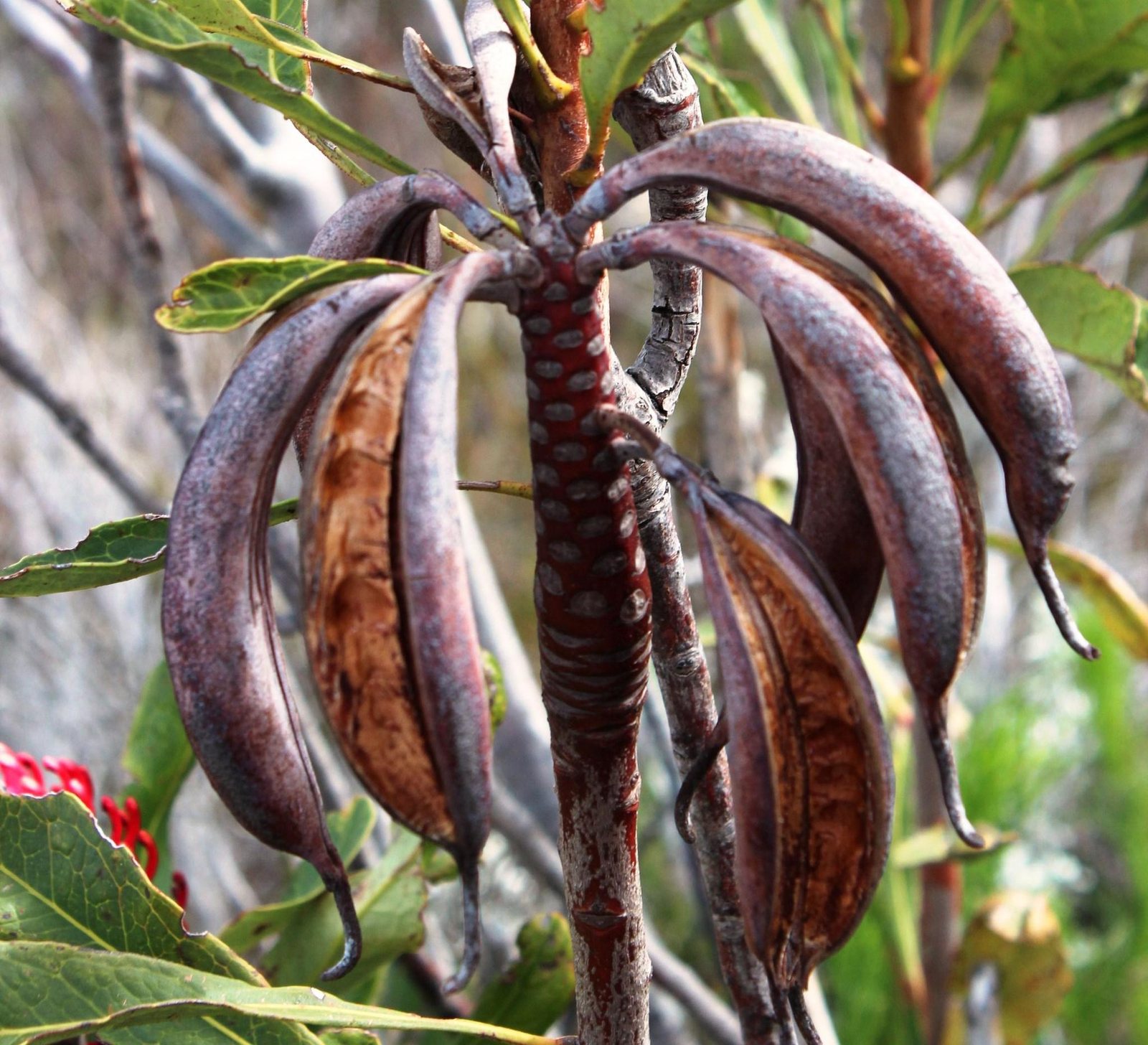
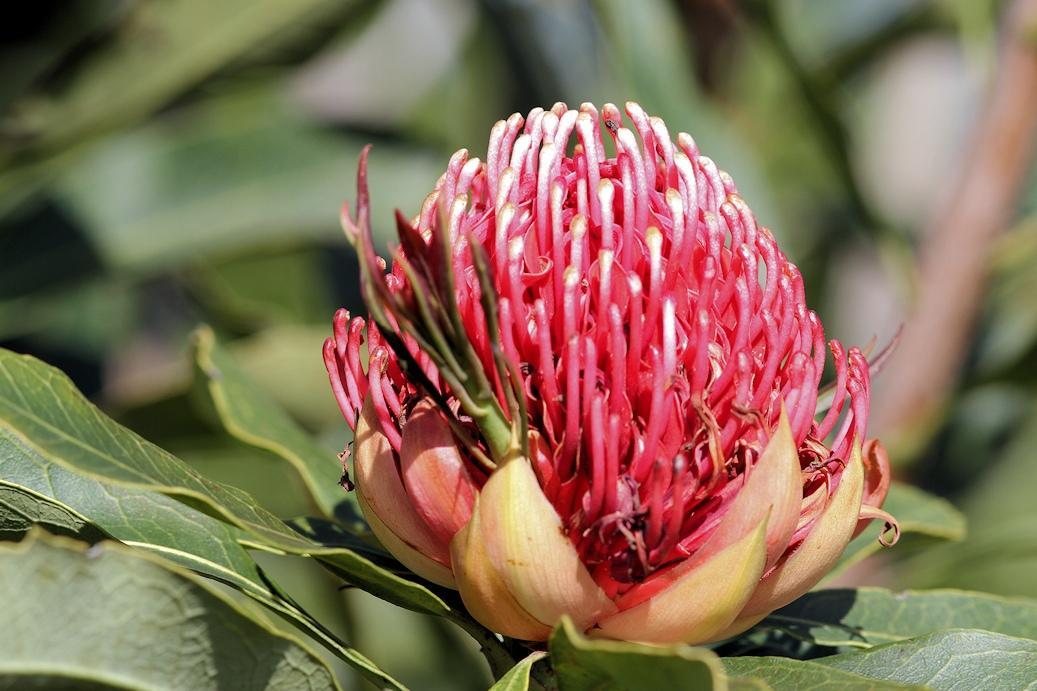
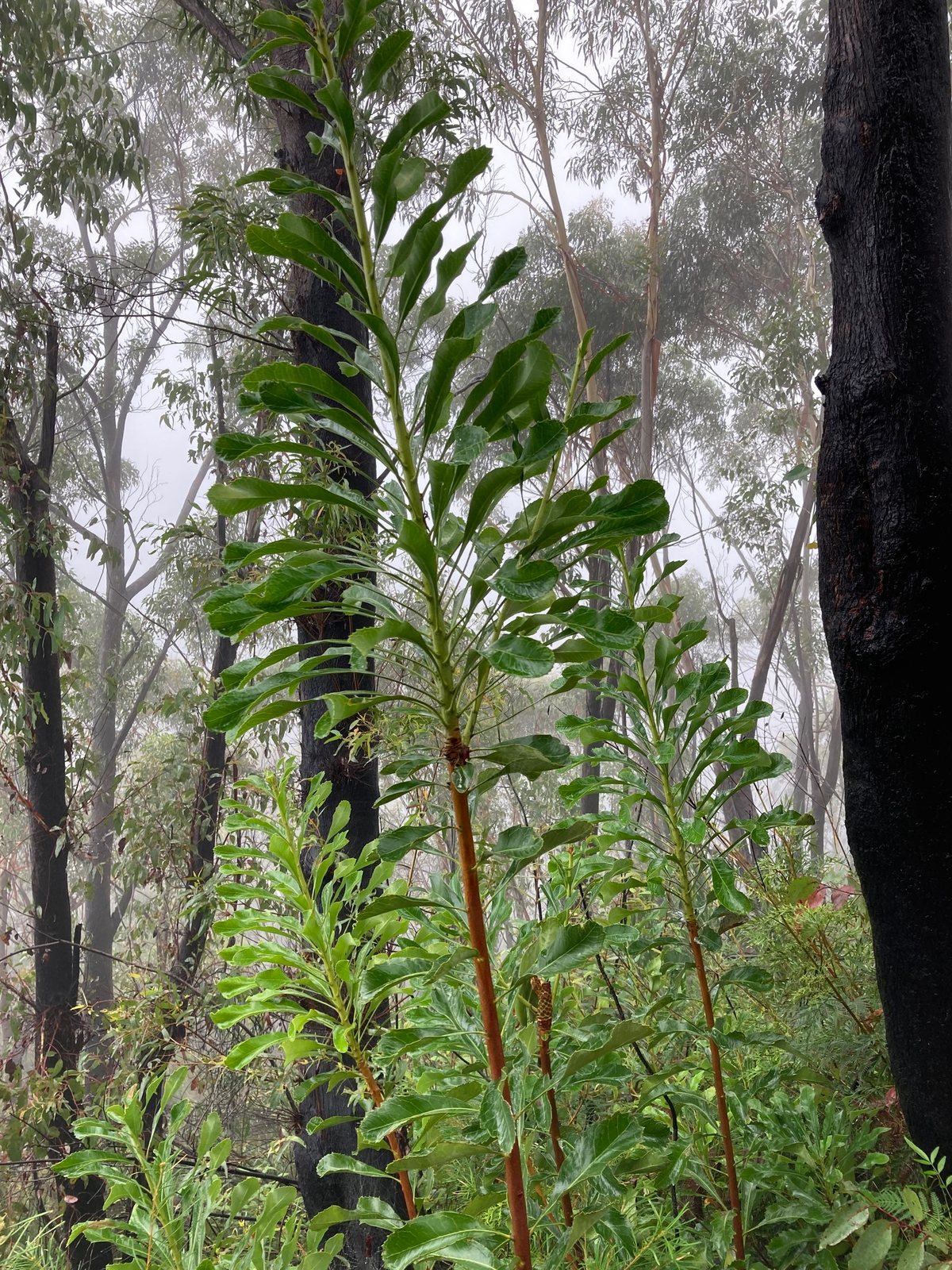
At a glance
- Sun
- Full sun to partial shade; give afternoon shade in hot inland gardens and shelter from drying winds.
- Water
- Keep the root zone evenly moist but never waterlogged, especially during establishment and flower-bud development. Water established plants deeply during dry spells.
- Soil
- Acidic, well-drained soil with low phosphorus levels. Avoid lime, heavy wet clay and sites where water collects; use a raised bed or large container if drainage is poor.
- Height
- 6-12 ft (1.8-3.6 m)
- Spread
- 4-8 ft (1.2-2.4 m)
- Flowers
- Spring: September-November in Australia, generally April-June in the Northern Hemisphere. Dense crimson flowerheads surrounded by red bracts; white and pink forms also exist.
- Foliage
- Evergreen. Leathery, dark green, oblong leaves with coarsely toothed margins.
- Growth
- Moderate once established; often slow initially.
- Care needed
- High
The year at a glance
- Pollinators
- Heat tolerant
- Wildlife
- Low allergen
| J | F | M | A | M | J | J | A | S | O | N | D | |
|---|---|---|---|---|---|---|---|---|---|---|---|---|
| Flowers | ||||||||||||
| Plant |
Northern hemisphere months. In Australia, shift them by six.
- Difficulty
- Hard
- Toughness
- Needs looking after
Will it suit your garden?
Pick your zone, country, light and whether you have pets.
Full sun is 6 or more hours of direct sun a day, part shade 3 to 6 hours, shade under 3.
How it grows
Planting day
1.6 ft (0.5 m)
After 1 year
2.8 ft (0.84 m)
After 2 years
4 ft (1.2 m)
After 3 years
5 ft (1.5 m)
After 5 years
7 ft (2.2 m)
About 7 years to full size.
From a typical nursery size, at an average rate for this kind of plant. A rule of thumb, not a forecast.
Good to know
- Cats and dogs
- Safe
- Native to
- Australia
- Growth rate
- Slow
Care
Jobs through the year
- WaterApr–May, Sep–Oct, every 7 days
- Check established ground plants and water if drying; young plants and pots need more frequent checks.
- WaterJun–Aug, every 7 days
- Water deeply when needed to maintain even moisture without waterlogging.
- FeedApr
- Apply a small dose of low-phosphorus Australian native-plant feed.
- MulchApr–May
- Refresh coarse organic mulch without disturbing shallow roots or covering the stem base.
- PruneJun
- Immediately after flowering, shorten flowered stems by one-third to one-half, retaining leaves.
- ProtectJan–Apr, Oct–Dec
- Not hardy in zones 6–7; overwinter in a bright, frost-free container position and keep slightly moist.
- Water deeply during dry weather; do not let newly planted shrubs dry out.
- Apply a modest amount of low-phosphorus fertiliser labelled for Australian native plants in spring.
- Mulch with coarse organic material to keep roots cool, leaving the stem base clear.
- Avoid digging around the shallow roots or planting competitive groundcovers against the base.
- Protect young plants from frost; in colder climates, grow in a container and overwinter in a bright, frost-free place.
Pruning. Prune immediately after flowering, shortening spent flowering stems by about one-third to one-half while retaining healthy leafy growth. Avoid routine late-summer or autumn pruning, which removes developing flower buds.
Through the year
- Spring
- Plant after damaging frosts have passed, keeping the root ball intact and checking that water drains freely.
- Spring
- Apply low-phosphorus native-plant fertiliser sparingly and refresh mulch.
- Late spring
- Prune promptly after flowering to encourage branching without sacrificing next year's buds.
- Summer
- Water deeply during dry spells and protect the root zone from overheating.
- Autumn
- Check drainage before wet weather and avoid pruning stems carrying developing buds.
- Winter
- Protect young plants from frost and move container plants under bright, frost-free cover where winters are cold.
In the garden
- Use as a spring focal shrub in an Australian native planting with banksias and native fuchsias.
- Plant against a plain wall or evergreen backdrop so the crimson flowerheads stand out.
- Grow in a large, well-drained container in a sheltered courtyard where unsuitable soil or winter cold prevents permanent planting.
- Combine with lomandra and other fine-textured foliage for contrast with its broad leaves and bold flowers.
Garden styles it suits: Australian native, Architectural minimal, Woodland, Wildlife garden, Modern courtyard and Sensory garden.
Plant it with: Heath banksia, Native fuchsia, Lomandra, Flannel flower and Crowea.
Wildlife: Nectar-rich flowers attract honeyeaters in Australia and may be visited by other nectar-feeding birds and insects where grown.
Problems to watch for
- Phytophthora root rot: wilting or dieback can develop in wet soil. Improve drainage before planting, avoid overwatering and remove badly affected plants.
- Phosphorus injury: excess phosphorus can cause leaf damage and decline. Avoid general-purpose feeds, manure-rich amendments and fertilisers not suitable for phosphorus-sensitive natives.
- Bud or flower failure: drought, deep shade or pruning after buds form can reduce flowering. Maintain steady moisture, provide brighter light and prune only just after flowering.
- Scale insects: inspect stems and leaf undersides; remove small infestations by hand or use a horticultural oil labelled for the pest, avoiding hot weather.
Safety
Not known to be toxic to people, cats, dogs or horses, but reliable species-specific ingestion data are limited. No particular part is established as poisonous; it is not an edible plant, so discourage chewing or eating it.
Easily confused with
Gippsland waratah (Telopea oreades)
Usually grows into a larger shrub or small tree, with mostly smooth-edged leaves and less prominent bracts around the red flowerheads.
Tasmanian waratah (Telopea truncata)
Has smaller flowerheads and mostly smooth-edged leaves with pale, often hairy undersides, rather than the conspicuously toothed leaves of New South Wales waratah.
King protea (Protea cynaroides)
Has much broader, rounded leaves and a large bowl-shaped flowerhead enclosed by broad, pointed bracts.
The name
Waratah comes from a Dharug Aboriginal name, while Telopea means 'seen from afar' in Greek and speciosissima means 'most showy' in Latin.
Propagation. Sow fresh seed in a freely draining, low-phosphorus seed mix; seedlings vary and may take several years to flower. Named selections are propagated from semi-ripe cuttings, which can be slow and difficult to root.
Checked against open data
- Accepted botanical name
- Telopea speciosissima
- Native range
- New South Wales.
- Measured
- Average height 350 cm.
Sources: GBIF (CC BY 4.0) and Trefle (CC BY 4.0). The care and design notes are LandscapeGPT's own.
See it in your own yard.
Upload a photo of your yard and see it redesigned with plants that suit your climate, each checked against your zone.