Watermelon
Citrullus lanatus. Family Cucurbitaceae. Annual.
Watermelon is a tender, trailing vine grown as an annual for its large, sweet, juicy fruits. It needs a long, warm growing season; early varieties offer the best chance outdoors in cooler areas, while much of the UK benefits from greenhouse or polytunnel growing.
At a glance
- Sun
- Full sun, with at least 8 hours of direct light daily and shelter from cold winds.
- Water
- Water deeply and regularly during flowering and fruit development, keeping the soil moist but not waterlogged. Avoid repeated drying out followed by heavy watering.
- Soil
- Fertile, well-drained sandy loam enriched with compost; ideally pH 6.0-7.0. Cold, wet clay delays growth and encourages root problems.
- Height
- 1-2 ft (0.3-0.6 m) without support
- Spread
- 6-15 ft (1.8-4.6 m), depending on variety
- Flowers
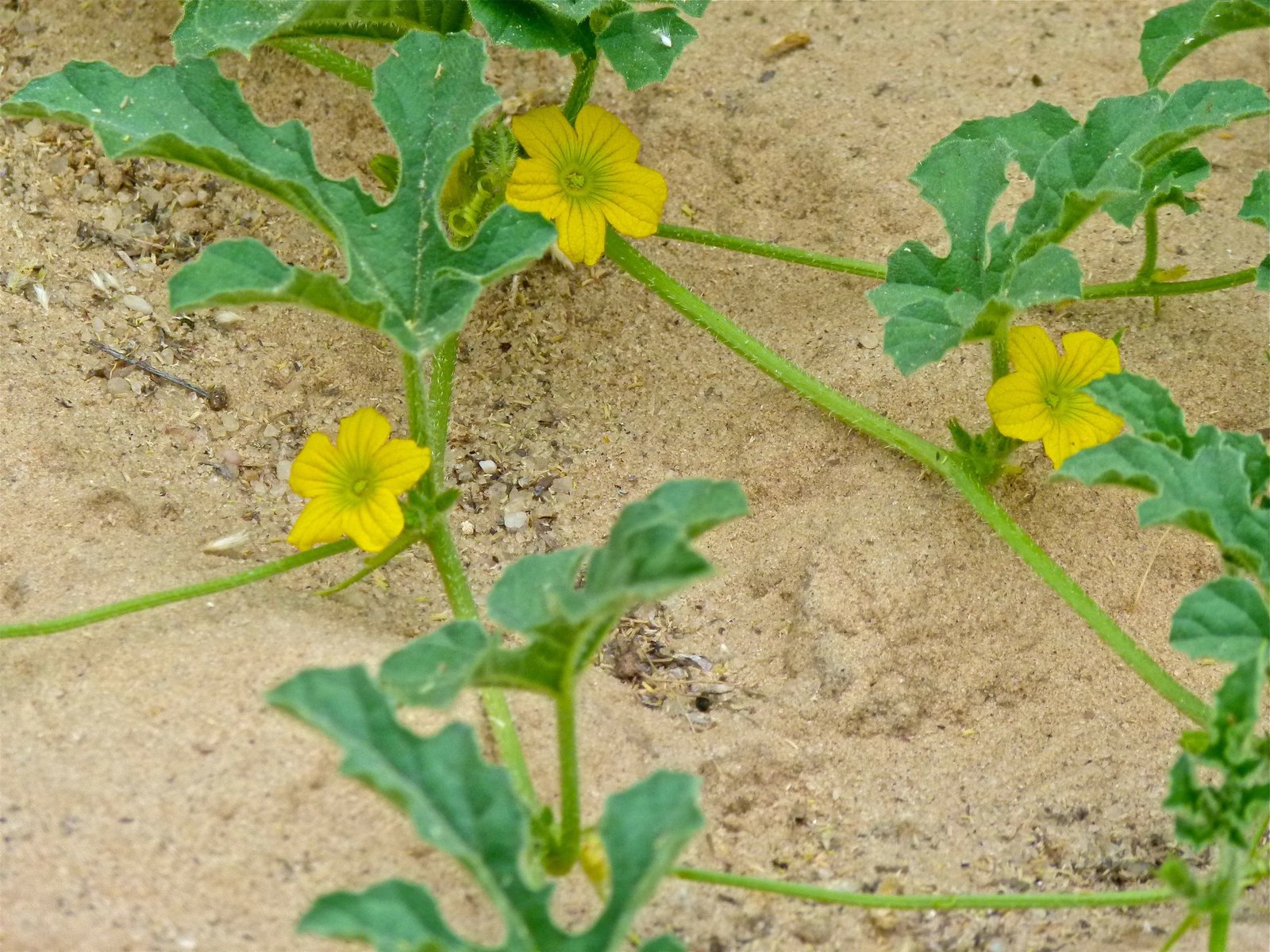
- Small yellow flowers from early summer onward; separate male and female flowers grow on the same plant.
- Foliage
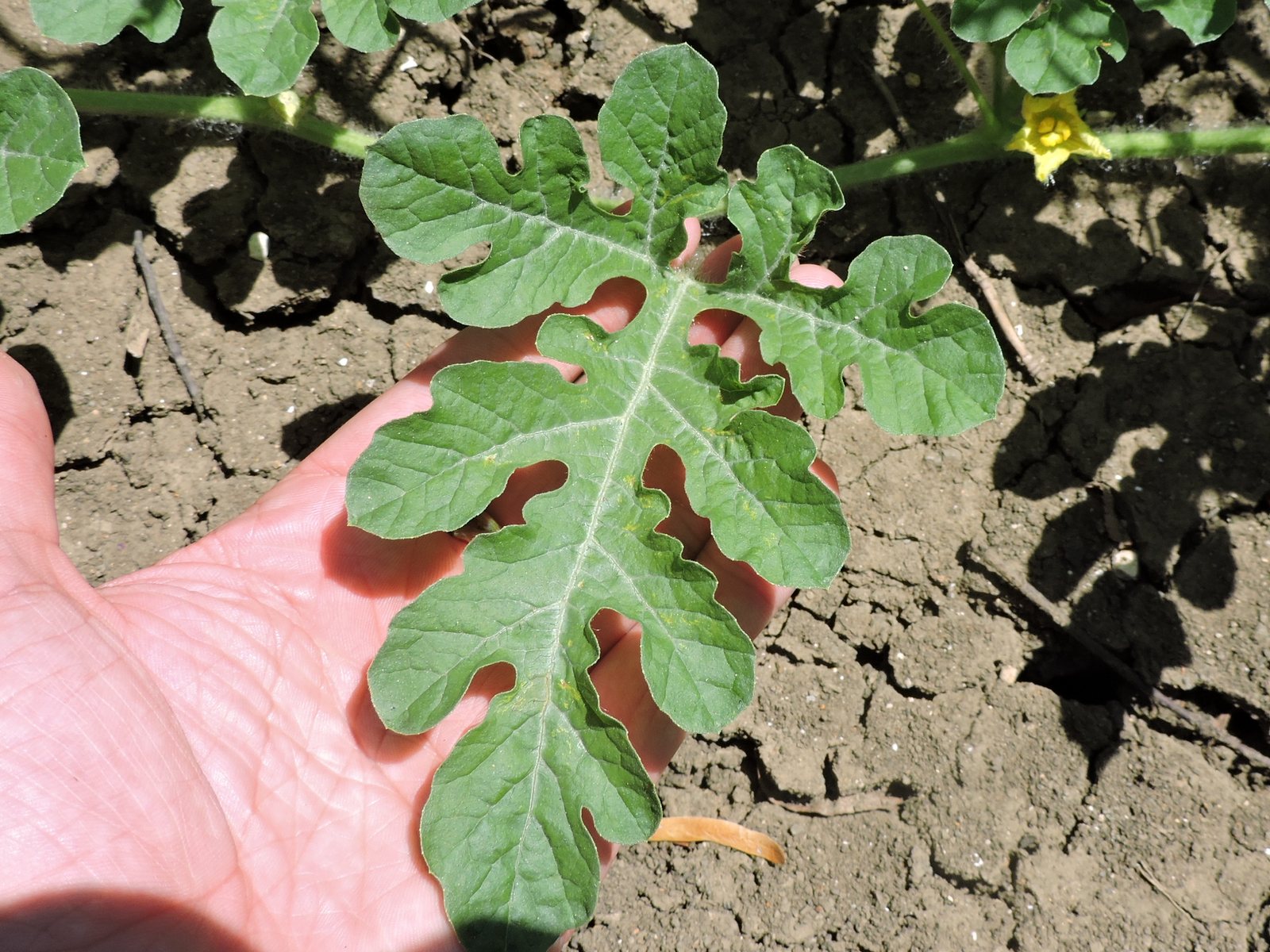
- Rough, hairy, deeply lobed green leaves on trailing stems with curling tendrils.
- Growth
- Fast in warm weather
- Care needed
- Medium
The year at a glance
- Pollinators
- Heat tolerant
- Low allergen
- Edible
| J | F | M | A | M | J | J | A | S | O | N | D | |
|---|---|---|---|---|---|---|---|---|---|---|---|---|
| Flowers | ||||||||||||
| Fruit | ||||||||||||
| Plant |
Northern hemisphere months. In Australia, shift them by six.
- Difficulty
- Moderate
- Toughness
- Needs looking after
Will it suit your garden?
Pick your zone, country, light and whether you have pets.
Full sun is 6 or more hours of direct sun a day, part shade 3 to 6 hours, shade under 3.
How it grows
Planting day
0.5 ft (0.15 m)
After 1 year
1.5 ft (0.45 m)
full size
Full size in one season.
From a typical nursery size, at an average rate for this kind of plant. A rule of thumb, not a forecast.
Good to know
- Cats and dogs
- Safe
- Growth rate
- Fast
Care
Jobs through the year
- WaterMay–Jun, every 7 days
- Soak in-ground plants when rain is insufficient; check newly planted seedlings more often.
- WaterJul–Sep, every 3 days
- Maintain even root-zone moisture during fruit growth; skip if soil remains moist.
- FeedMay–Jun
- Incorporate compost and apply balanced vegetable fertilizer at planting as directed.
- FeedJul
- Feed at fruit set if needed, following the label; avoid excessive nitrogen.
- MulchJun
- Mulch after soil warms, keeping mulch away from the stem.
- ProtectMay–Jun
- Use fleece during cold spells; uncover flowers so bees can reach them.
- ProtectJul–Aug
- Rest developing fruits on straw or boards to keep them off wet soil.
- HarvestAug–Sep
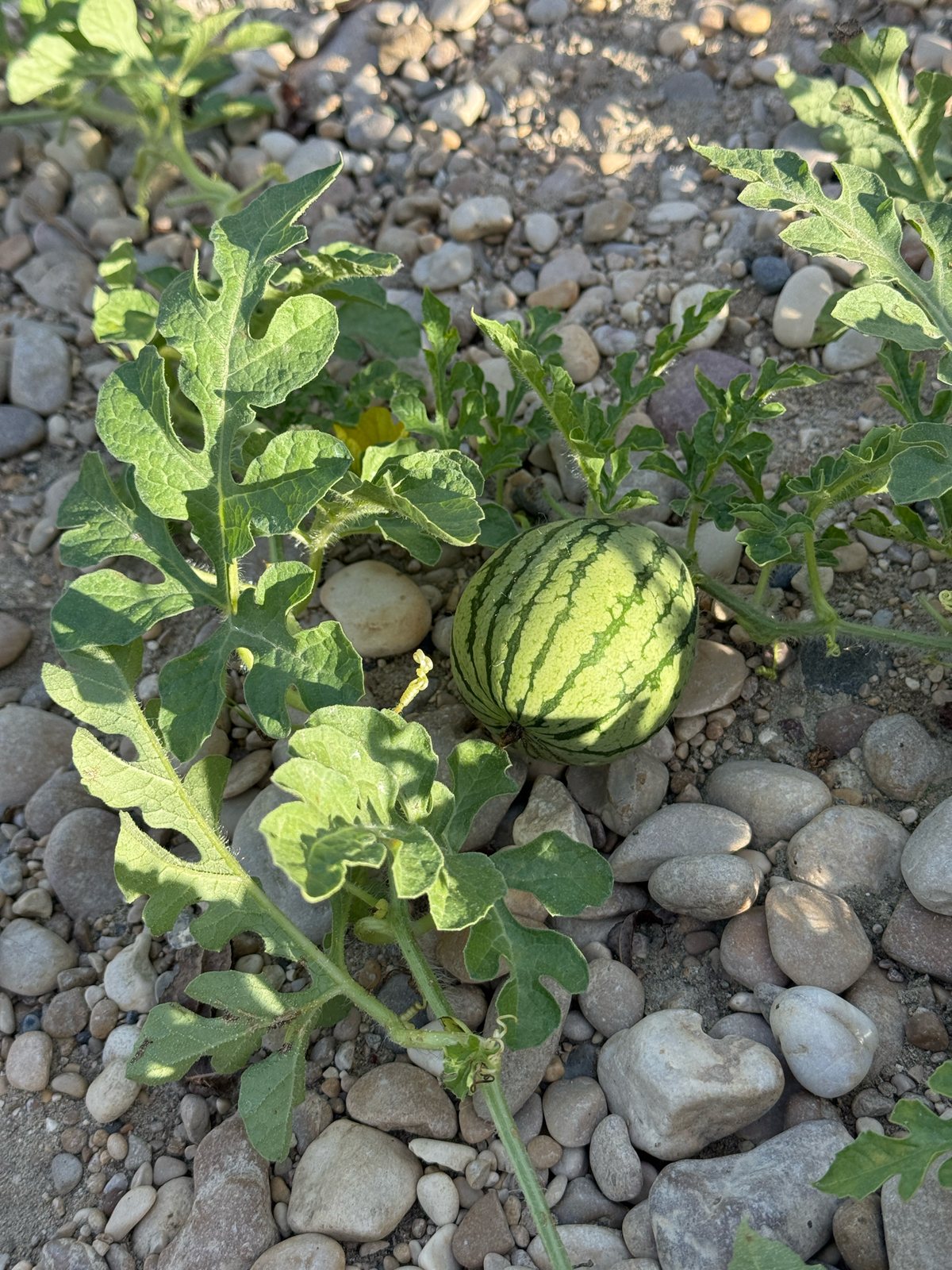
- Check for a creamy ground spot, dull rind and brown nearest tendril; cut ripe fruit before frost.
- Plant out only after frost danger has passed and the soil has warmed to at least 65°F (18°C); allow roughly 3-5 ft (0.9-1.5 m) between plants, following the variety's spacing advice.
- Water at soil level, soaking the root zone rather than wetting the foliage.
- Mix compost into the bed before planting; use a balanced vegetable fertilizer as directed and avoid excessive nitrogen.
- Mulch once the soil is warm to conserve moisture and suppress weeds; keep mulch away from the stem base.
- Leave flowers accessible to bees. For seedless varieties, grow the recommended seeded pollinizer nearby.
- Keep developing fruits off wet soil with straw or a board; if training small-fruited varieties up a sturdy trellis, support each fruit in a sling.
Pruning. Routine pruning is unnecessary. During summer, redirect wandering vines rather than cutting them back, and remove diseased leaves with clean tools without stripping the foliage that shades the fruit.
Harvest
Harvest fully grown watermelons in summer to early autumn, usually about 35–50 days after fruit set, depending on variety and warmth. Look for a dry, brown tendril nearest the fruit, a dull rind and a creamy-yellow patch where the melon rests on the ground. Cut the stem with secateurs, leaving a short stalk attached; watermelons do not become sweeter after picking.
Through the year
- Early spring
- Choose an early-maturing variety if your summers are short, and prepare a sunny bed with compost.
- Mid spring
- Sow indoors in individual pots about 3-4 weeks before your expected planting-out date; keep the compost warm for germination.
- Late spring
- Harden off young plants and plant after the last frost once the soil is warm, or direct-sow where the warm season is long enough.
- Early summer
- Mulch warm soil, establish deep watering, and remove insect covers when flowering begins so bees can reach the flowers.
- Mid summer
- Check fruit set and leaf health. In a greenhouse, hand-pollinate female flowers if insects are scarce.
- Late summer to early autumn
- Harvest when several maturity signs agree: the ground spot turns creamy yellow, the rind loses its bright sheen, and the nearest tendril browns. Cut the stem rather than pulling the fruit.
- Autumn
- Harvest before frost and remove spent vines; do not compost diseased material unless your system reliably reaches pathogen-killing temperatures.
In the garden
- Let vines run across a dedicated sunny kitchen-garden bed, where their large leaves provide seasonal ground cover.
- Train a small-fruited variety over a strong trellis at the edge of a potager, using slings to display and support the fruit.
- Grow compact varieties in large containers on a warm patio, with room for trailing stems and reliable watering.
- Edge the growing area with low flowering plants such as sweet alyssum to provide forage for beneficial insects without shading the crop.
Garden styles it suits: Potager (kitchen garden), Edible landscape, Homestead, Farmhouse, Family-friendly and Cottage garden.
Plant it with: Sweet alyssum, Calendula, Borage, French marigold and Nasturtium.
Wildlife: Flowers provide pollen and nectar for bees, which are important for fruit set. Ripe or damaged fruit may attract rodents, birds and other wildlife.
Problems to watch for
- Poor fruit set: cold weather, extreme heat or inadequate pollination can prevent fruit development. Keep flowers accessible to bees, hand-pollinate under cover, and avoid spraying insecticides on open flowers.
- Powdery mildew: white patches develop on leaves, especially later in the season. Choose resistant varieties, provide generous spacing and remove badly affected foliage.
- Aphids: colonies distort young growth and may spread viruses. Check shoot tips, wash off small colonies with water and encourage natural predators; remove plants with severe virus symptoms.
- Fusarium wilt: vines wilt and may die despite moist soil. Remove affected plants, choose resistant varieties and rotate away from watermelon for several years; rotation reduces but does not eliminate the risk.
Safety
Watermelon is not known to be toxic to people, cats, dogs or horses. Flesh is edible, but tough rind and large quantities of seeds can cause digestive upset or present choking or blockage risks for pets. Do not eat unusually bitter fruit: bitterness can indicate cucurbitacins, which can cause serious gastrointestinal poisoning.
Easily confused with
Muskmelon (Cucumis melo)
Leaves are generally rounded or shallowly lobed rather than deeply cut. Fruits vary widely but often have netted or ribbed skins and a distinct melon fragrance when ripe.
Colocynth (Citrullus colocynthis)
A close relative with similar lobed leaves but usually small, round fruits that turn yellow and contain intensely bitter, poisonous pulp. Do not identify an unknown fruit by tasting it.
The name
Watermelon refers to the fruit's high water content, while the Latin species name lanatus means woolly, referring to the plant's hairs.
Propagation. Grow from seed, either sown directly into warm soil or started indoors in individual pots to minimize root disturbance. Seedless varieties require warmer germination conditions and a compatible seeded pollinizer. Saved seed from hybrids or cross-pollinated plants may not produce fruit like the parent.
Checked against open data
- Accepted botanical name
- Citrullus lanatus
- In the US and Canada
- Introduced in the lower 48 states, Navassa Island, Pacific Basin, Puerto Rico and US Virgin Islands.
- Native range
- Egypt, Ethiopia, Libya and Sudan.
- Measured
- Average height 150 cm.
Sources: GBIF (CC BY 4.0), USDA PLANTS and Trefle (CC BY 4.0). The care and design notes are LandscapeGPT's own.
See it in your own yard.
Upload a photo of your yard and see it redesigned with plants that suit your climate, each checked against your zone.