Wavy hair grass
Avenella flexuosa. Family Poaceae. Ornamental grass.
Also called Wavy hairgrass, Crinkled hair grass, Deschampsia flexuosa.
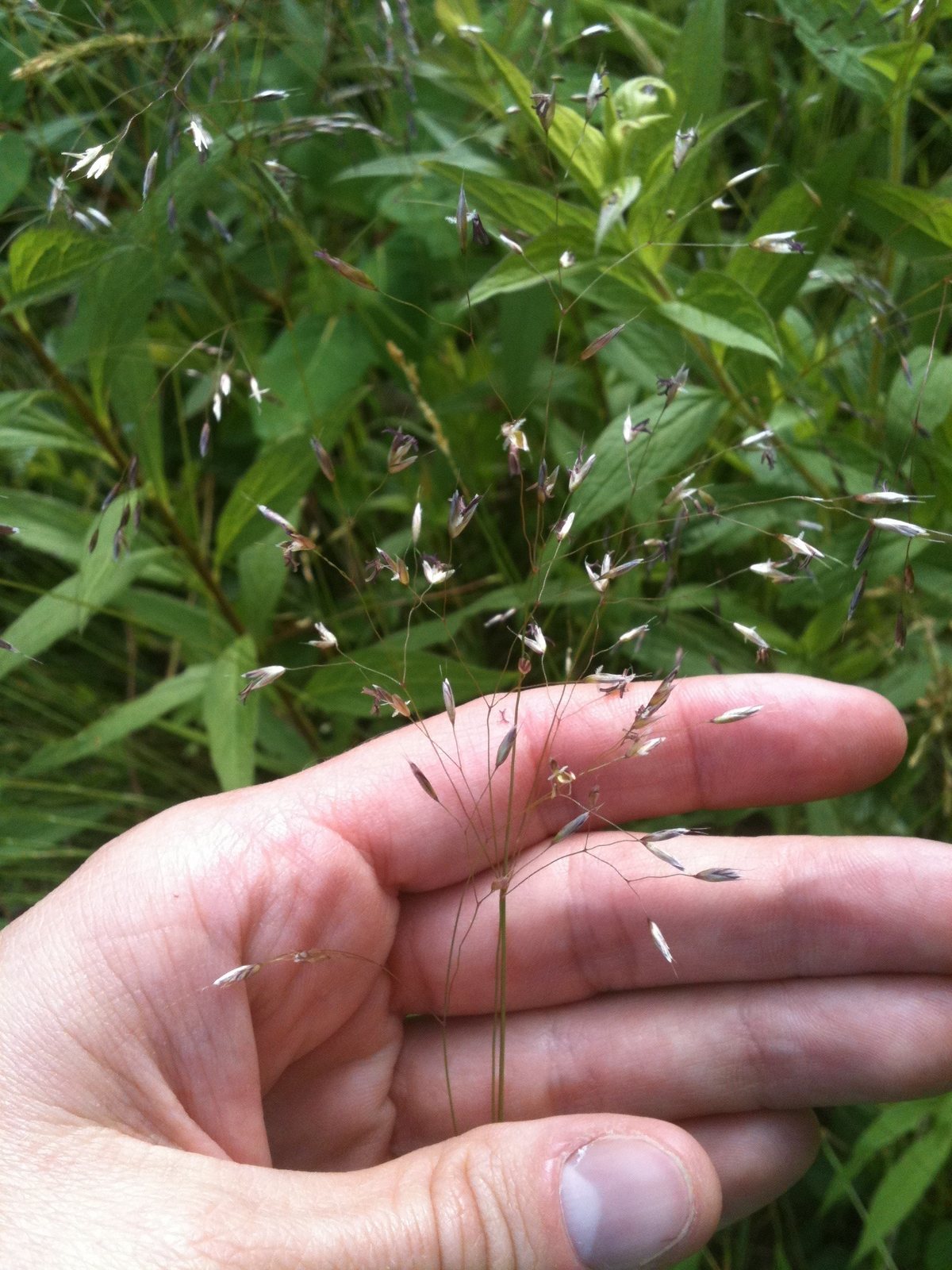
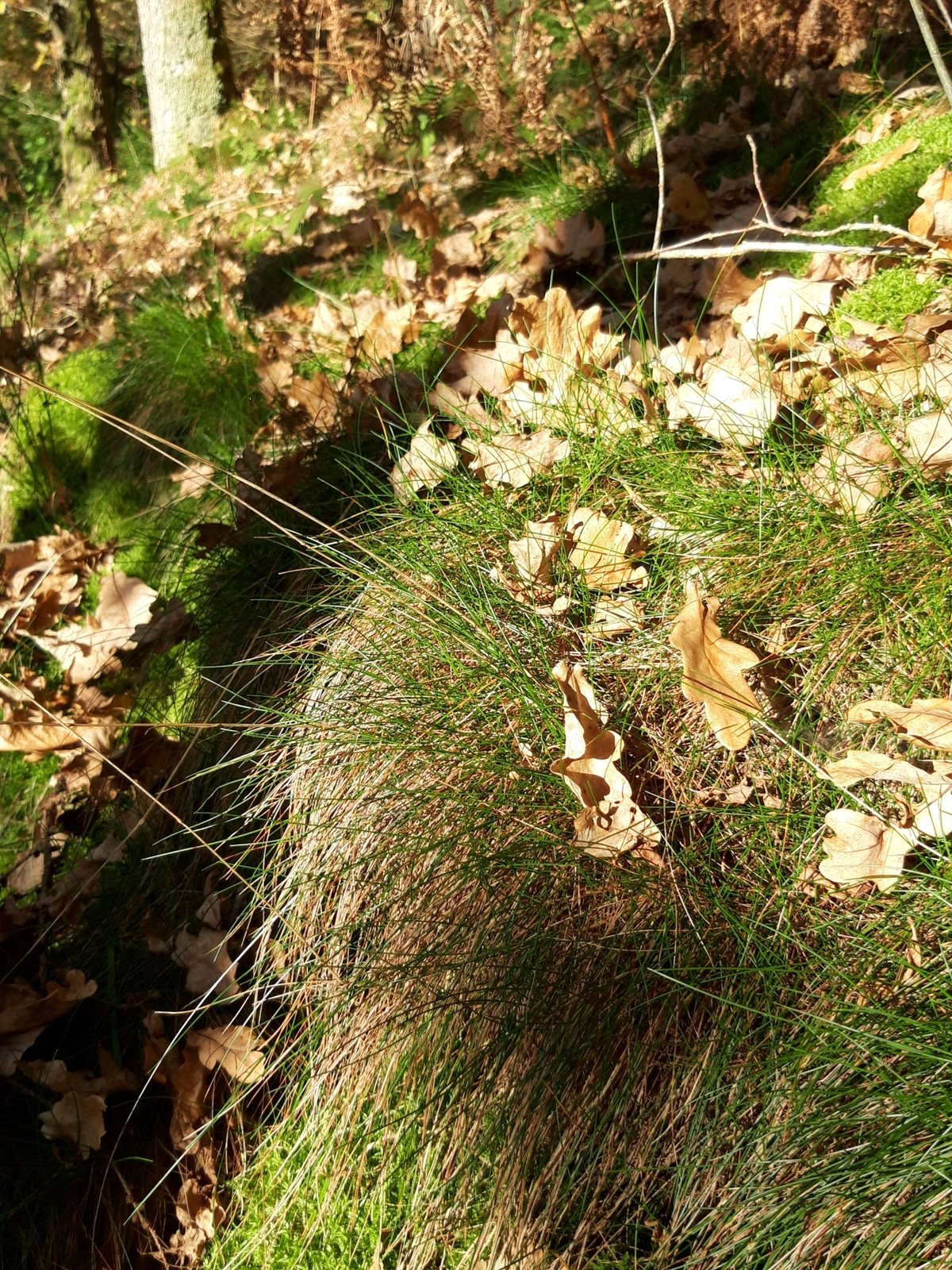
Wavy hair grass is a fine-leaved, clump-forming perennial grass grown for its airy clouds of flowers above low green tufts. It suits acidic woodland edges and naturalistic planting, especially where the soil is lean and well drained.
At a glance
- Sun
- Full sun to partial shade; light shade is helpful in warmer climates.
- Water
- Water regularly while establishing; established plants tolerate moderately dry soil but not prolonged drought in hot weather.
- Soil
- Well-drained, acidic to neutral soil of low to moderate fertility; particularly suited to sandy, gravelly or peaty ground. Avoid waterlogged soil and strongly alkaline conditions.
- Height
- 1-3 ft (0.3-0.9 m), including flower stems
- Spread
- 1-2 ft (0.3-0.6 m)
- Flowers
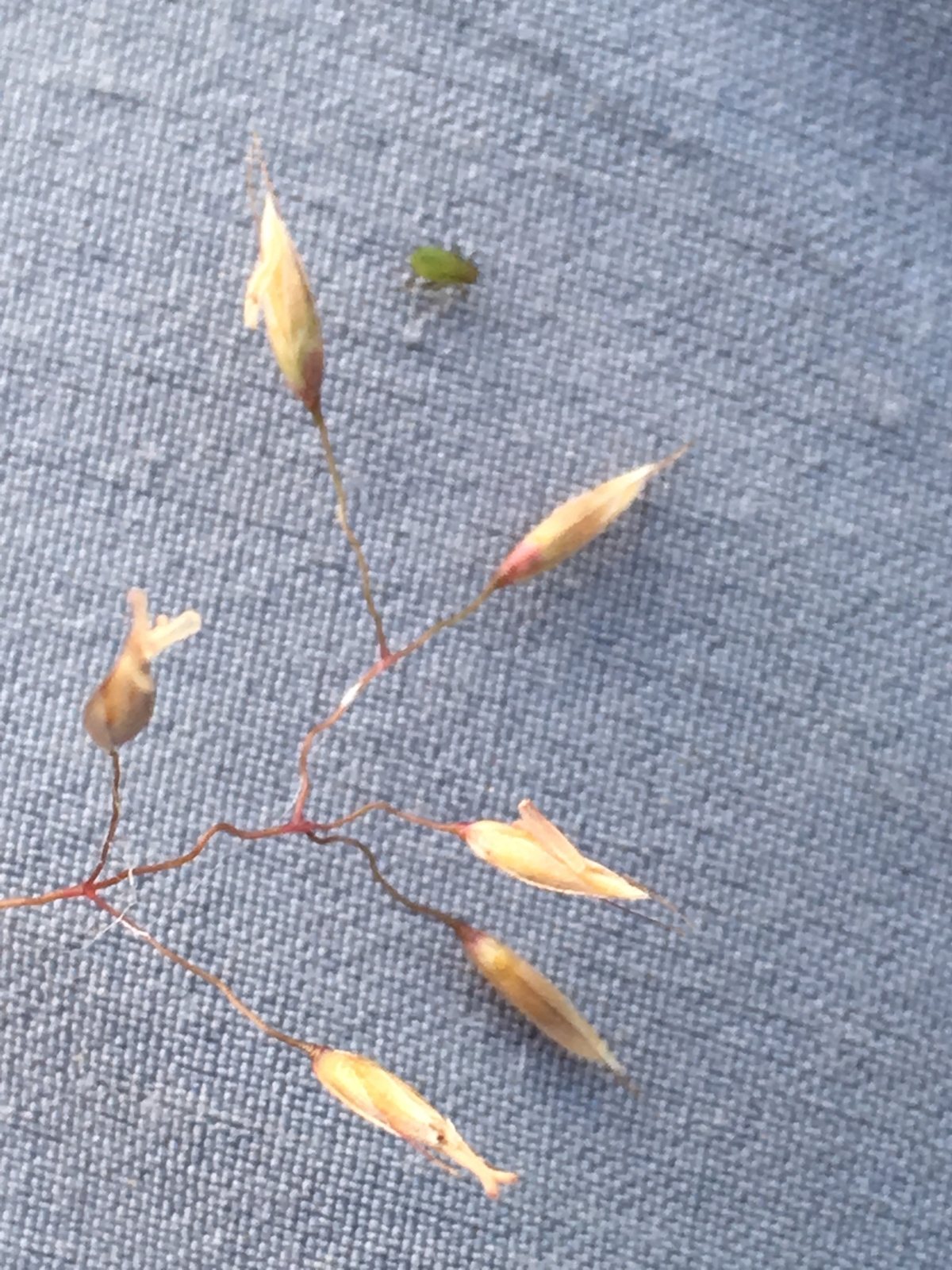
- Late spring to summer; tiny purplish-green flowers in open, shimmering panicles, fading to pale straw.
- Foliage
- Very fine, dark green, rolled leaves form soft, arching tufts; usually evergreen, but foliage can brown in severe cold or drought.
- Growth
- Moderate
- Care needed
- Low
The year at a glance
- Deer resistant
- Cold hardy
- Wildlife
| J | F | M | A | M | J | J | A | S | O | N | D | |
|---|---|---|---|---|---|---|---|---|---|---|---|---|
| Flowers | ||||||||||||
| Fruit | ||||||||||||
| Plant |
Northern hemisphere months. In Australia, shift them by six.
- Difficulty
- Easy
- Toughness
- Fairly tough
Will it suit your garden?
Pick your zone, country, light and whether you have pets.
Full sun is 6 or more hours of direct sun a day, part shade 3 to 6 hours, shade under 3.
How it grows
Planting day
1.1 ft (0.35 m)
After 1 year
1.5 ft (0.45 m)
After 2 years
1.8 ft (0.55 m)
After 3 years
2 ft (0.6 m)
full size
About 3 years to full size.
From a typical nursery size, at an average rate for this kind of plant. A rule of thumb, not a forecast.
Good to know
- Cats and dogs
- Safe
- Native to
- the US, Canada and the UK
- Invasive in
- Australia
- In the garden
- Spreads vigorously: plan to contain it.
- Growth rate
- Moderate
Care
Jobs through the year
- WaterApr–May, Sep–Oct, every 14 days
- Water established clumps if the root zone is dry; water new plants more frequently.
- WaterJun–Aug, every 7 days
- Water deeply during extended dry spells, allowing the surface to dry between waterings.
- PruneFeb–Mar
- Comb out dead leaves and cut old stems at the base; retain healthy evergreen foliage.
- DivideMar–Apr
- Divide thinning or congested clumps and replant vigorous outer sections.
- DeadheadJul–Aug
- Remove heads before seed falls if seedlings are unwanted; otherwise retain for texture.
- ProtectJan–Feb, Nov–Dec
- Keep crowns clear of wet leaves and thick mulch.
- Water during the first growing season whenever the root zone dries out.
- Avoid routine feeding; rich soil encourages loose growth and leaning flower stems.
- Keep the crown clear of thick mulch and standing water.
- Divide congested or thinning clumps in spring and replant the vigorous outer sections.
- Remove flower stems before seed falls if unwanted seedlings appear.
Pruning. In late winter or early spring, comb out dead leaves and cut old flower stems near the base. Trim badly browned foliage lightly rather than routinely cutting the whole evergreen tuft to the ground.
Through the year
- Early spring
- Remove dead foliage and old stems before fresh growth develops.
- Spring
- Plant or divide clumps, then water thoroughly.
- Late spring
- Check new plants for dry soil as flower stems begin to rise.
- Summer
- Water during extended dry spells and remove seed heads if seedlings are unwanted.
- Autumn
- Leave sound seed heads for texture, or remove them where self-seeding is a concern.
- Winter
- Check that fallen leaves and wet mulch are not smothering the crowns.
In the garden
- Plant in loose groups along lightly shaded woodland edges for a fine-textured foreground.
- Thread through naturalistic perennial planting to create a transparent layer of flowers.
- Combine with heathers and other acid-soil plants on well-drained ground.
- Use beside paths where low foliage stays unobtrusive and flower stems catch the light.
Garden styles it suits: Woodland, New perennial (prairie), Wildlife garden, Low-maintenance, Modern rustic and Sensory garden.
Plant it with: Heather, Bilberry, Foxglove, Hard fern, Rowan and Silver birch.
Wildlife: Provides shelter for small invertebrates, and its seeds may be eaten by birds. Flowers are wind-pollinated rather than a significant nectar source.
Problems to watch for
- Crown rot in wet ground: improve drainage or move the plant, keeping the crown at soil level.
- Loose, flopping growth in rich soil or deep shade: stop feeding and move to a brighter, leaner site.
- Brown foliage during hot droughts: water deeply during prolonged dry weather and provide light afternoon shade in hot regions.
- Unwanted seedlings: remove flower heads before seed ripens and pull young seedlings promptly.
Safety
Not known to be toxic to people, cats, dogs or horses. No part is generally recognised as poisonous, but this ornamental grass should not be treated as food or as a substitute for suitable horse pasture.
Where it spreads. Can self-seed freely on open, acidic ground. It is introduced and naturalised in south-eastern Australia, including Victoria and Tasmania, where it can spread into native vegetation; check local environmental weed advice before planting.
Easily confused with
Tufted hair grass (Deschampsia cespitosa)
Usually forms a larger, coarser tussock with broader, flat, rough leaves; wavy hair grass has very fine, rolled leaves and more noticeably winding flower branches.
Purple moor grass (Molinia caerulea)
Has broader, flat leaves and flowers later, usually from midsummer into autumn; its foliage turns golden and dies back rather than remaining green through winter.
Sheep's fescue (Festuca ovina)
Also has fine, rolled leaves, but its flower heads are narrower and more compact, without the broad, airy panicles and winding branches.
The name
The species name flexuosa means winding or bent, referring to the sinuous flower branches that also give rise to the common name.
Propagation. Divide established clumps in spring, or sow seed in autumn or spring. Seed-grown plants vary, so divide named selections to preserve their characteristics.
Checked against open data
- Accepted botanical name
- Avenella flexuosa
- In the US and Canada
- Native in Canada, Greenland, the lower 48 states and St. Pierre and Miquelon. Introduced in Alaska.
- Native range
- Alabama, Albania, Algeria, Argentina Northeast, Argentina Northwest, Argentina South, Arkansas, Austria, Baltic States, Belarus, Belgium and Borneo.
- Measured
- Soil pH 4.8 to 6.8. Average height 13 cm.
Sources: GBIF (CC BY 4.0), USDA PLANTS and Trefle (CC BY 4.0). The care and design notes are LandscapeGPT's own.
See it in your own yard.
Upload a photo of your yard and see it redesigned with plants that suit your climate, each checked against your zone.