Wax currant
Ribes cereum. Family Grossulariaceae. Shrub.
Also called Squaw currant.
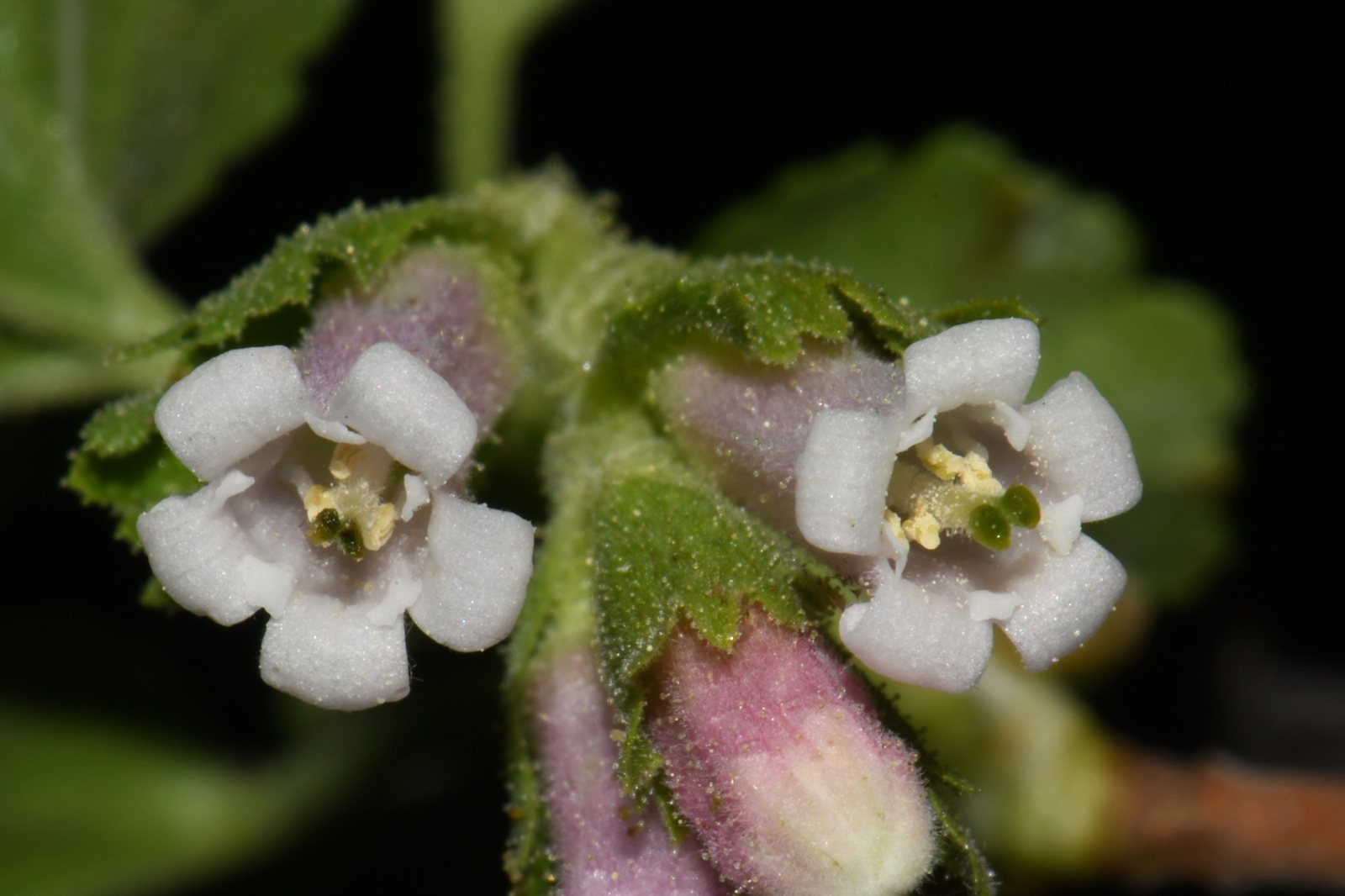
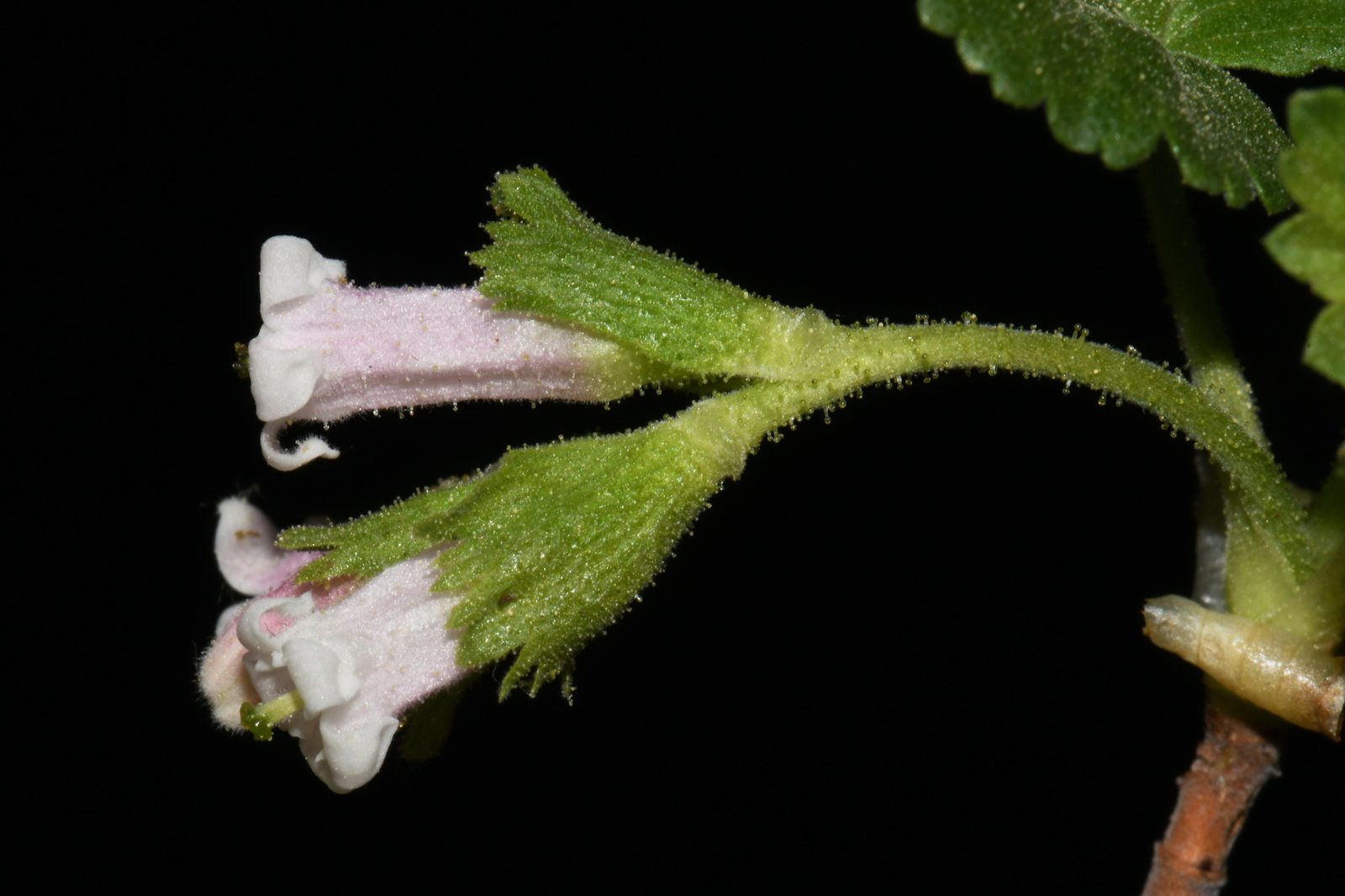
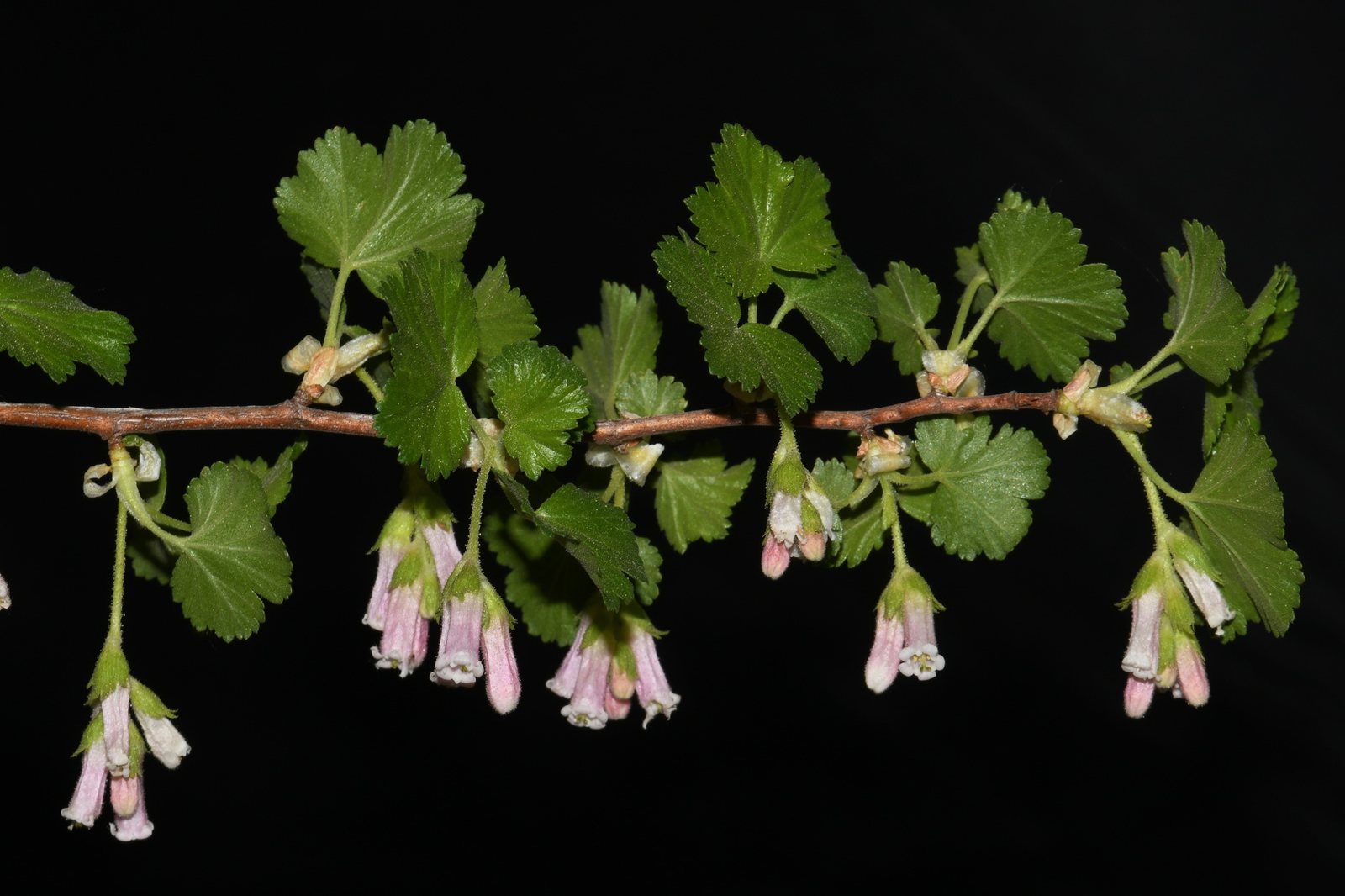
Wax currant is a thornless, deciduous shrub native to western North America, with small lobed leaves, pale spring flowers and orange-red to red berries. Gardeners grow it for wildlife, informal screening and dry native plantings; its edible berries are usually bland rather than dessert-quality.
At a glance
- Sun
- Full sun to partial shade; light afternoon shade helps in hot, dry gardens.
- Water
- Water regularly while establishing; established plants tolerate dry spells and usually need only occasional deep watering.
- Soil
- Well-drained sandy, gravelly or loamy soil; tolerates lean and rocky ground but dislikes persistent waterlogging.
- Height
- 3-6 ft (0.9-1.8 m)
- Spread
- 3-6 ft (0.9-1.8 m)
- Flowers
- Spring to early summer; small, tubular white to pale pink flowers in short clusters.
- Foliage
- Small, rounded, shallowly lobed green leaves, often sticky or resinous and aromatic when rubbed; autumn colour is usually yellow.
- Growth
- Slow to moderate
- Care needed
- Low
The year at a glance
- Pollinators
- Drought tolerant
- Cold hardy
- Wildlife
- Low allergen
| J | F | M | A | M | J | J | A | S | O | N | D | |
|---|---|---|---|---|---|---|---|---|---|---|---|---|
| Flowers | ||||||||||||
| Fruit | ||||||||||||
| Plant |
Northern hemisphere months. In Australia, shift them by six.
- Difficulty
- Easy
- Toughness
- Very tough
Will it suit your garden?
Pick your zone, country, light and whether you have pets.
Full sun is 6 or more hours of direct sun a day, part shade 3 to 6 hours, shade under 3.
How it grows
Planting day
1.6 ft (0.5 m)
After 1 year
2.1 ft (0.63 m)
After 2 years
2.5 ft (0.76 m)
After 3 years
2.9 ft (0.89 m)
After 5 years
4 ft (1.2 m)
About 7 years to full size.
From a typical nursery size, at an average rate for this kind of plant. A rule of thumb, not a forecast.
Good to know
- Cats and dogs
- Safe
- Native to
- the US and Canada
- Growth rate
- Slow
Care
Jobs through the year
- WaterApr–May, Sep–Oct, every 21 days
- Water established shrubs only if the root zone is dry during prolonged drought; young plants need more frequent watering.
- WaterJun–Aug, every 14 days
- Give established shrubs a deep soak during extended dry spells, not while soil remains moist.
- PruneFeb–Mar
- Remove dead and crossing branches; thin a few old stems at ground level if crowded.
- MulchMar–Apr
- Renew a thin mulch over the roots, keeping it away from stems.
- ProtectMar–Apr, Oct–Nov
- Before planting, check local Ribes restrictions related to white pine blister rust.
- Water deeply during the first growing season, allowing the soil surface to dry between waterings.
- Once established, water during prolonged drought rather than keeping the soil constantly moist.
- Apply a thin mulch over the root area, keeping it clear of the stems.
- Avoid routine feeding; add a little compost in spring only if growth is weak on very poor soil.
- Check local rules before planting: some US jurisdictions restrict Ribes because of white pine blister rust.
Pruning. In late winter, remove dead, damaged and crossing branches at their origin. Thin a few of the oldest stems at ground level when needed, rather than shearing the whole shrub.
Harvest
Pick berries in summer when they are fully orange-red to red, slightly soft and detach easily; flavour varies and is often bland. An established nursery plant may give a modest crop about 2-3 years after planting, but timing and yield vary with plant age, climate and pollination.
Through the year
- Autumn
- Plant in well-drained ground while the soil is workable; use spring planting in very cold regions.
- Late winter
- Remove dead wood and thin crowded old stems.
- Spring
- Renew mulch and check new shoots for aphids.
- Late spring
- Let flowering finish without clipping; flowers provide food for pollinators.
- Summer
- Pick fully ripe berries or leave them for birds; water young plants during dry weather.
- Early summer
- Take softwood cuttings from healthy, non-flowering shoots if you want more plants.
In the garden
- Use in an informal native hedge with serviceberry and other locally suitable shrubs.
- Plant on a sunny, well-drained bank to give low shrub cover without frequent irrigation.
- Combine with bunchgrasses and penstemons in a dry woodland edge or open native planting.
- Place near a wildlife garden boundary, where birds can feed and shelter without formal pruning.
Garden styles it suits: Wildlife garden, Pollinator garden, Desert / xeriscape, Mountain lodge, Native hedgerow and Low-maintenance.
Plant it with: Saskatoon serviceberry, Antelope bitterbrush, Bluebunch wheatgrass, Prairie junegrass, Sulphur buckwheat and Rocky Mountain penstemon.
Wildlife: Flowers feed bees and other pollinators; birds and small mammals eat the berries. The branching shrub provides shelter, and deer may browse the shoots.
Problems to watch for
- Root decline in wet soil: improve drainage or move the plant to higher ground; reduce watering.
- Aphids on young shoots: wash off small colonies with water and encourage predatory insects.
- Powdery mildew: provide good air circulation, avoid crowding and remove badly affected shoots.
- White pine blister rust: Ribes can act as alternate hosts; follow local planting restrictions and seek local advice if suspicious leaf spotting or orange spores appear.
Safety
Not known to be toxic to people, cats, dogs or horses. The ripe berries are edible; species-specific safety information for pets and horses is limited, so do not encourage them to eat large quantities of leaves, stems or fruit.
Easily confused with
Golden currant (Ribes aureum)
Has conspicuous yellow, often clove-scented flowers rather than the small white to pale pink flowers of wax currant.
Red-flowering currant (Ribes sanguineum)
Usually has larger leaves, longer hanging clusters of pink or red flowers and dark blue-black berries.
Sticky currant (Ribes viscosissimum)
Usually has larger, more deeply lobed, conspicuously hairy leaves and dark berries rather than orange-red to red fruit.
The name
The epithet cereum means waxy, referring to the waxy appearance of the berries.
Propagation. Grow from cleaned seed given a cold, moist stratification period; germination can be slow and irregular. Softwood cuttings taken in early summer are another option.
Checked against open data
- Accepted botanical name
- Ribes cereum
- In the US and Canada
- Native in Canada and the lower 48 states.
- Native range
- Alberta, Arizona, British Columbia, California, Colorado, Idaho, Montana, Nebraska, Nevada, New Mexico, North Dakota and Oklahoma.
- Measured
- Soil pH 6.5 to 7.5. Average height 91 cm.
Sources: GBIF (CC BY 4.0), USDA PLANTS and Trefle (CC BY 4.0). The care and design notes are LandscapeGPT's own.
See it in your own yard.
Upload a photo of your yard and see it redesigned with plants that suit your climate, each checked against your zone.