White willow
Salix alba. Family Salicaceae. Tree.
Also called European white willow.
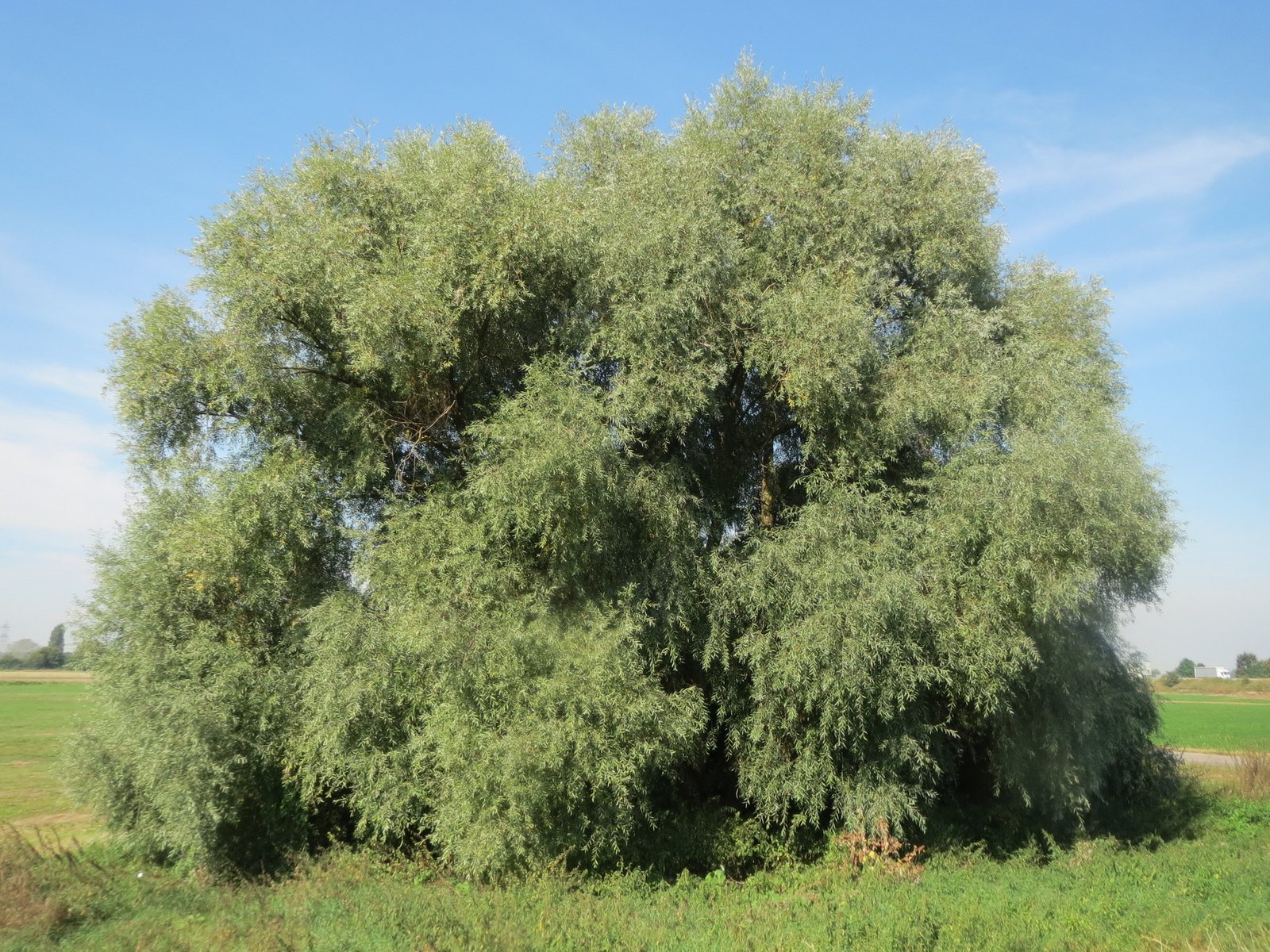
White willow is a large, fast-growing deciduous tree grown for its spreading crown and narrow leaves with silvery undersides. It suits spacious, damp landscapes rather than small gardens: its extensive roots, brittle branches and heavy leaf litter require careful siting.
At a glance
- Sun
- Full sun; tolerates light partial shade.
- Water
- High; prefers consistently moist or wet ground and tolerates seasonal flooding. Water young trees deeply during dry spells.
- Soil
- Moisture-retentive loam, clay or alluvial soil; tolerates poor drainage and a broad range of soil pH.
- Height
- 50-80 ft (15-24 m)
- Spread
- 40-60 ft (12-18 m)
- Flowers
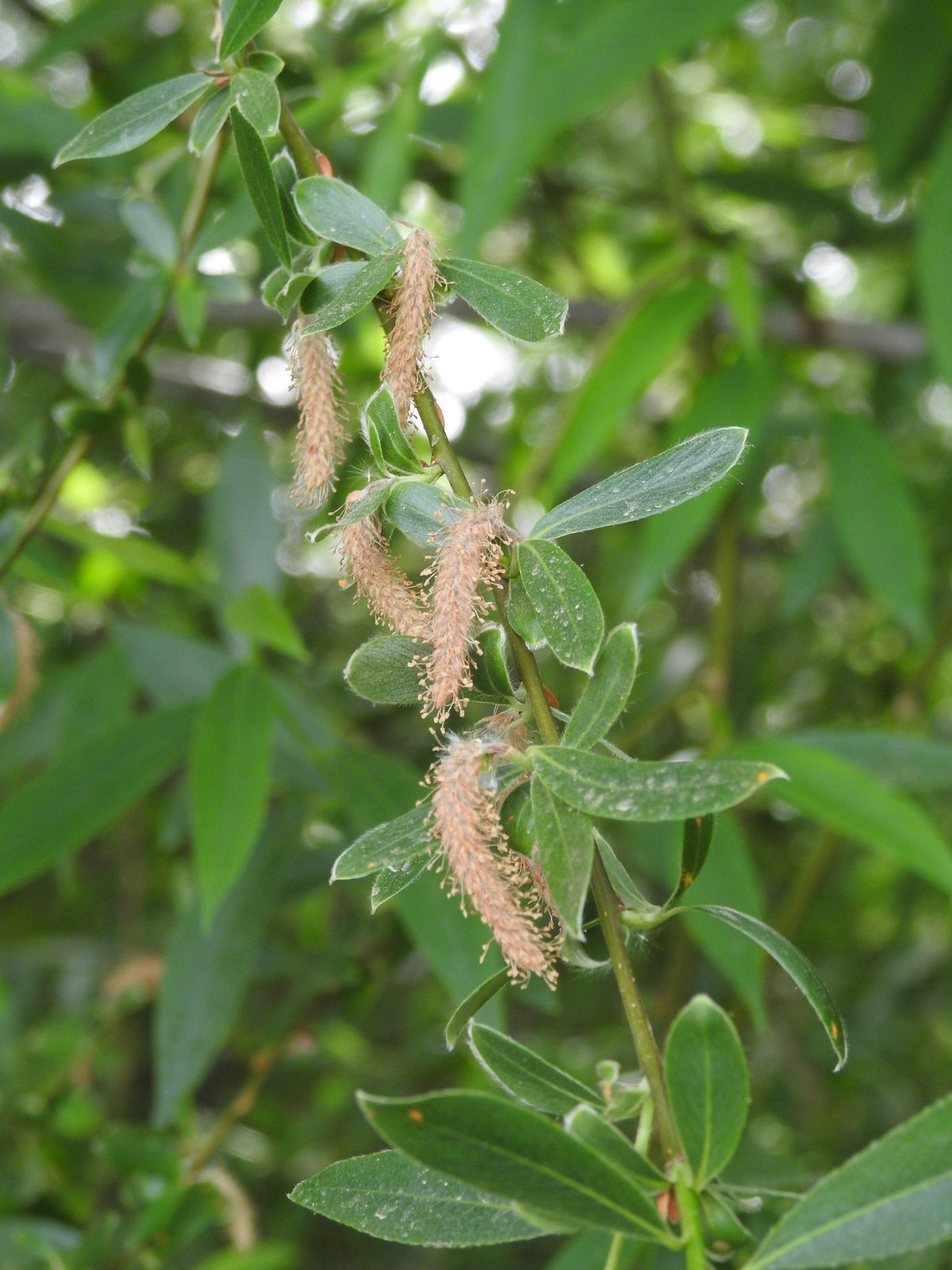
- Spring, with the emerging leaves; yellow male catkins or greenish female catkins on separate trees.
- Foliage
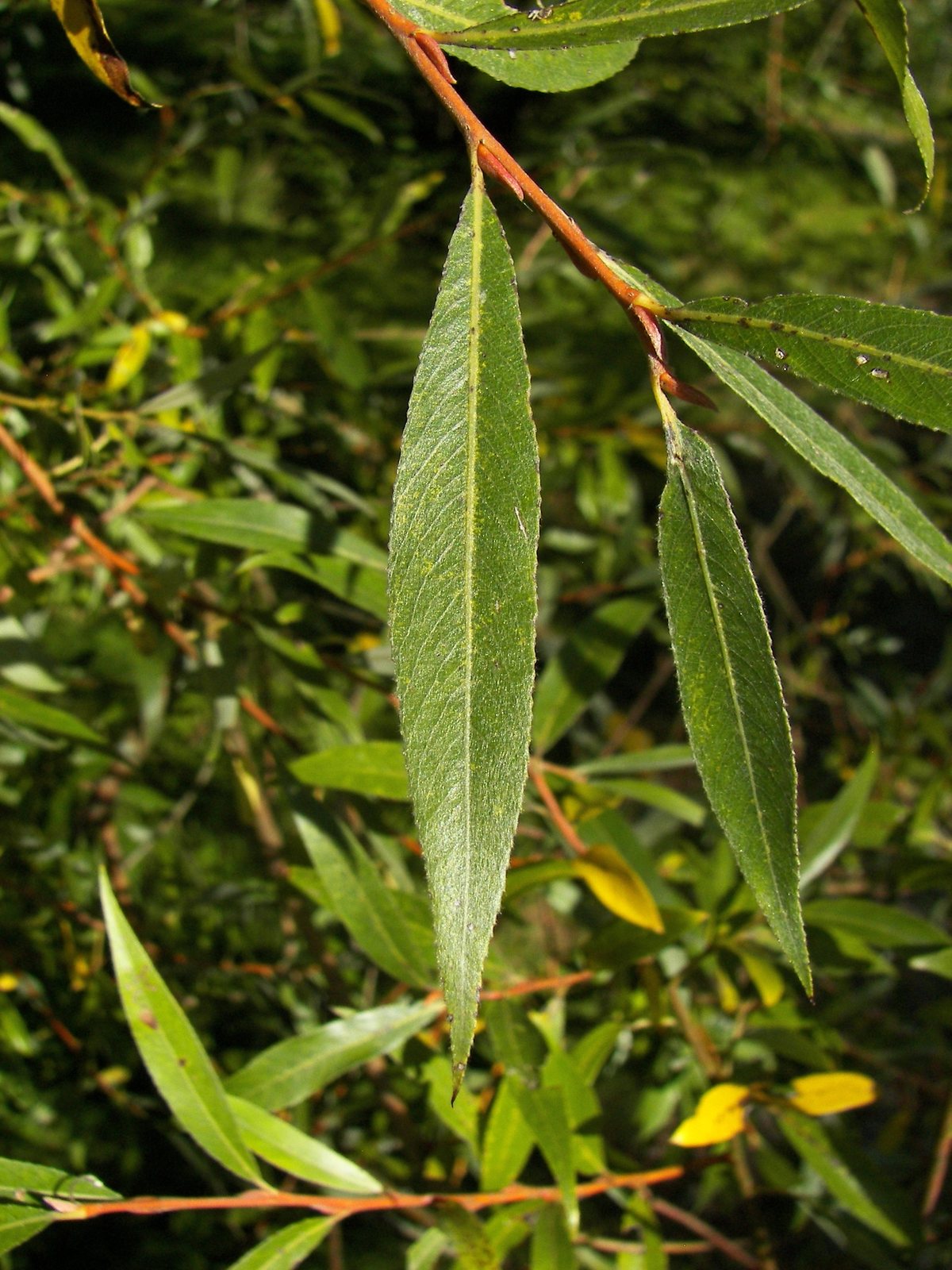
- Narrow, finely toothed green leaves with silky white hairs, especially underneath; usually turns yellow before falling.
- Growth
- Fast, often 3-6 ft (0.9-1.8 m) a year when young on moist ground.
- Care needed
- High
The year at a glance
- Pollinators
- Cold hardy
- Wildlife
| J | F | M | A | M | J | J | A | S | O | N | D | |
|---|---|---|---|---|---|---|---|---|---|---|---|---|
| Flowers | ||||||||||||
| Fruit | ||||||||||||
| Plant |
Northern hemisphere months. In Australia, shift them by six.
- Difficulty
- Moderate
- Toughness
- Fairly tough
Will it suit your garden?
Pick your zone, country, light and whether you have pets.
Full sun is 6 or more hours of direct sun a day, part shade 3 to 6 hours, shade under 3.
How it grows
Planting day
8 ft (2.3 m)
After 1 year
12 ft (3.7 m)
After 2 years
16 ft (5 m)
After 3 years
21 ft (6.3 m)
After 5 years
29 ft (8.9 m)
About 13 years to full size.
From a typical nursery size, at an average rate for this kind of plant. A rule of thumb, not a forecast.
Good to know
- Cats and dogs
- Mildly toxic: may upset a stomach
- Invasive in
- the US, Canada and Australia
- In the garden
- Spreads vigorously: plan to contain it.
- Growth rate
- Fast
Care
Jobs through the year
- WaterApr–May, Sep–Oct, every 7 days
- Water established trees if soil is drying; omit on naturally wet ground and water young trees more often.
- WaterJun–Aug, every 7 days
- Water deeply during dry weather to maintain moist soil; young rootballs may need more frequent soaking.
- MulchMar–Apr
- Apply 5–8 cm of organic mulch over the root area, keeping the trunk clear.
- PruneFeb–Mar
- Train young trees before growth starts; use an arborist for large limbs or established pollards.
- ProtectOct–Nov
- Inspect for storm damage and weak forks; have hazardous mature branches assessed professionally.
- Plant only where the mature crown and extensive roots have ample room, well away from buildings, drains, septic systems and paving.
- Water deeply through dry weather during the first two growing seasons; do not let the root ball dry out.
- Apply a 2-3 in (5-8 cm) layer of organic mulch over the root area, keeping it clear of the trunk.
- Do not routinely feed established trees; excessive nitrogen encourages weak, rapid growth.
- Stake only if the root ball moves in wind, and remove supports once the tree is firmly rooted.
- Have a qualified arborist inspect large trees for weak forks, decay and storm damage.
Pruning. Prune young trees in late winter to develop a sound framework, removing damaged branches and poorly attached competing stems. Pollarding must begin while the tree is young and continue on a regular cycle; do not top a mature, previously unpollarded tree.
Through the year
- Autumn
- Plant container-grown trees while the soil is moist, allowing ample space for mature roots and branches.
- Winter
- Plant bare-root trees while dormant, provided the ground is neither frozen nor waterlogged.
- Late winter
- Carry out formative pruning or scheduled pollard work before growth resumes.
- Spring
- Refresh mulch and check leaves and young shoots for aphids, rust or dieback.
- Summer
- Water young trees deeply during dry spells and check that ties are not cutting into the bark.
- Autumn
- Clear fallen leaves from paths, drains and small ponds; inspect the crown after strong winds.
In the garden
- A shade tree in a large, damp lawn, positioned away from buildings and frequently used seating areas.
- A waterside specimen on a large property where it is locally appropriate and cannot spread into sensitive waterways.
- A traditionally managed pollard for repeated winter structure in an estate or rural landscape.
- A silvery foliage backdrop to moisture-loving grasses and perennials at the sunny edge of its canopy.
Garden styles it suits: Grand estate, English country, Modern rustic, Wildlife garden, Bog garden and Winter interest.
Plant it with: Tufted hair grass, Purple moor grass, Meadowsweet, Marsh marigold, Siberian iris and Royal fern.
Wildlife: Spring catkins provide pollen or nectar for insects, and the foliage feeds numerous moth and butterfly larvae. Older trees can develop cavities used by birds and bats; these benefits do not outweigh invasive impacts where the tree is non-native and spreading.
Problems to watch for
- Brittle limbs and weak forks can break in wind: train young trees carefully and have hazardous mature branches assessed by an arborist.
- Roots can exploit leaking drains and lift nearby paving: choose a generous planting site and repair leaking pipes rather than repeatedly cutting major roots.
- Willow anthracnose and shoot blight can blacken leaves and kill young shoots: collect fallen debris and prune affected small branches in dry weather.
- Aphids and willow leaf beetles can damage foliage: tolerate light infestations, encourage predators and use a strong water spray on reachable aphid colonies.
Safety
Not generally regarded as a poisonous garden tree for people, cats, dogs or horses. Bark and leaves contain salicylates, so substantial ingestion or homemade medicinal preparations can cause adverse effects, particularly in cats; discourage chewing and seek veterinary advice after significant ingestion.
Where it spreads. Spreads along waterways by seed and rooting broken branches. White willow is invasive in parts of southeastern Australia, including New South Wales, Victoria and Tasmania, and is covered by Australian willow-control programs and regional restrictions. It is also introduced and locally invasive in parts of the northeastern and midwestern United States and southern Canada, including Ontario;
Easily confused with
Crack willow (Salix fragilis)
Typically has broader, less silky leaves with greener undersides and twigs that snap readily at their bases. Hybrids with white willow are common and can be difficult to identify.
Weeping willow (Salix babylonica)
Has strongly drooping branchlets and leaves that are usually less silvery underneath; many cultivated weeping willows are hybrids rather than this species.
Common osier (Salix viminalis)
Usually forms a large shrub or small tree with long, upright rods and much narrower leaves whose margins often roll under.
The name
The species name alba means white, referring to the pale, silky leaf undersides that also give white willow its common name.
Propagation. Root hardwood cuttings taken during dormancy in moist soil, using healthy young shoots. Cuttings root readily; do not propagate or distribute it where local restrictions apply.
Checked against open data
- Accepted botanical name
- Salix alba
- In the US and Canada
- Introduced in Canada and the lower 48 states.
- Native range
- Afghanistan, Albania, Algeria, Altay, Austria, Baltic States, Belarus, Belgium, Bulgaria, Central European Rus, China North-Central and Corse.
- Measured
- Average height 1750 cm.
Sources: GBIF (CC BY 4.0), USDA PLANTS and Trefle (CC BY 4.0). The care and design notes are LandscapeGPT's own.
See it in your own yard.
Upload a photo of your yard and see it redesigned with plants that suit your climate, each checked against your zone.