Woolly sunflower
Eriophyllum lanatum. Family Asteraceae. Perennial.
Also called Oregon sunshine, Common woolly sunflower.
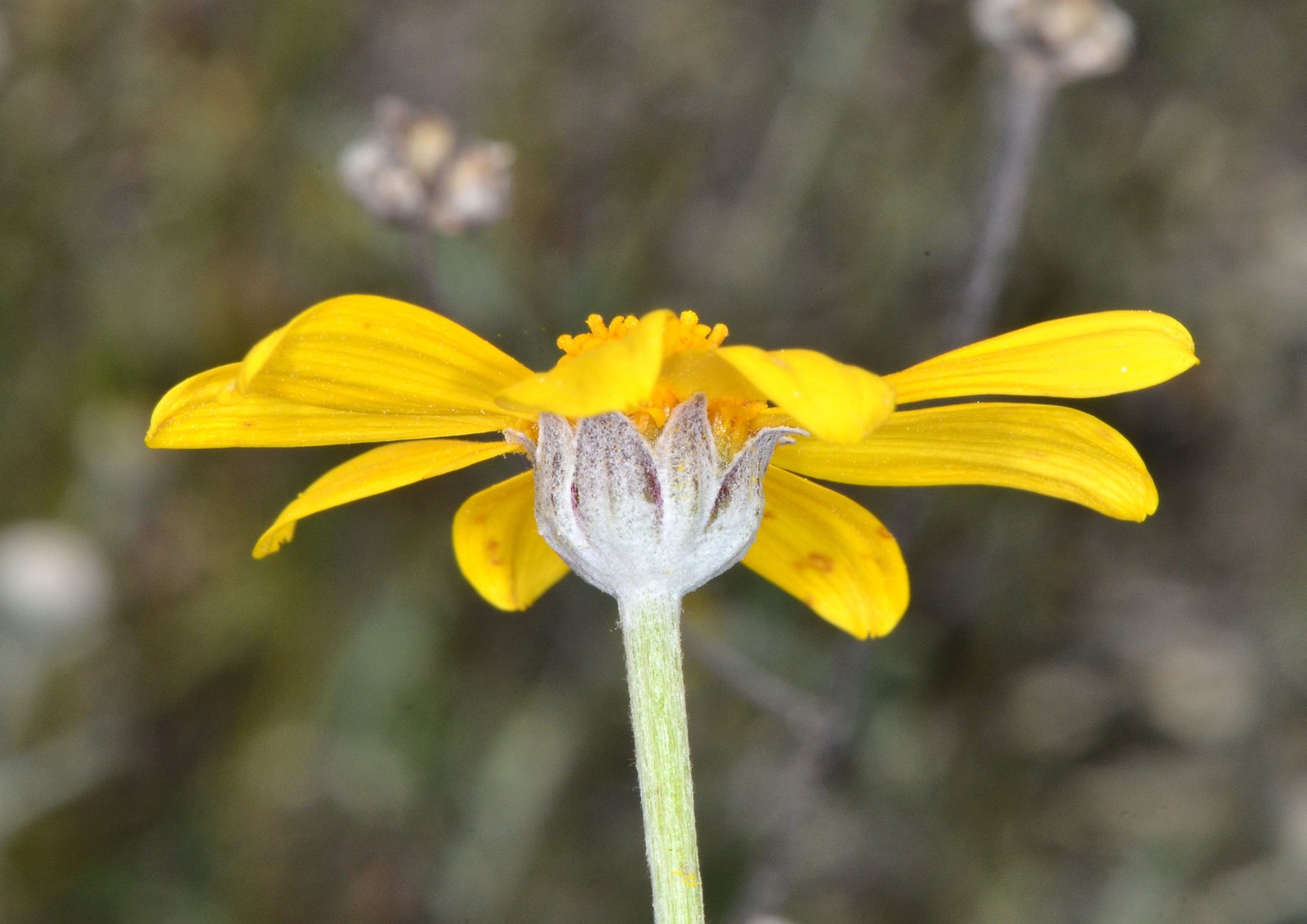
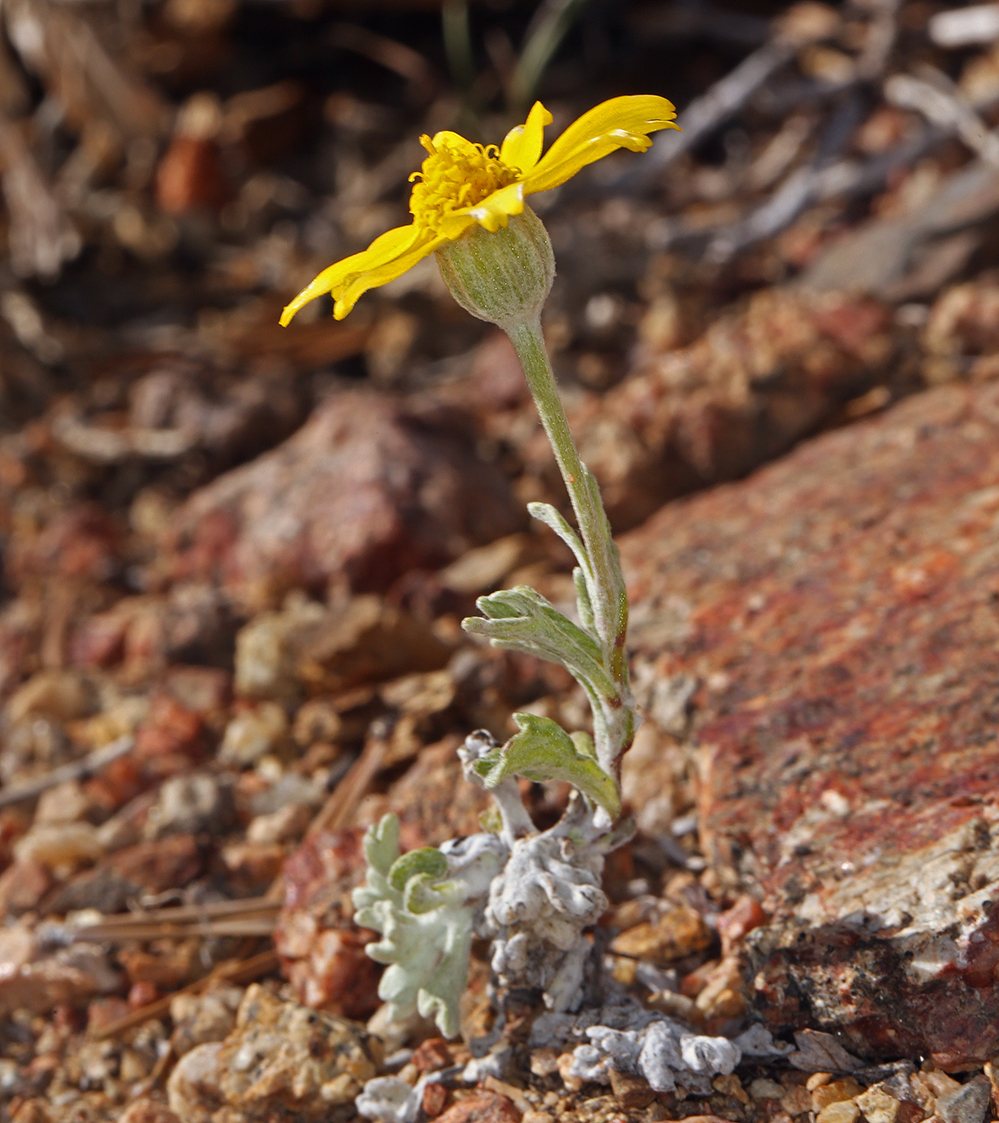
Woolly sunflower is a low, sometimes woody-based perennial native to western North America, grown for its yellow daisy flowers and woolly grey-green leaves. It suits sunny gravel gardens, rock gardens and dry borders, where sharp drainage matters more than rich soil. Its size and winter persistence vary considerably with its geographic form and growing conditions.
At a glance
- Sun
- Full sun; tolerates light shade but flowers less freely.
- Water
- Low once established. Water during establishment, then give occasional deep watering during prolonged drought; avoid persistently damp soil.
- Soil
- Lean, well-drained sandy, gravelly or rocky soil. Avoid heavy, wet soil, especially in winter.
- Height
- 0.5-2 ft (0.15-0.6 m), occasionally taller depending on the form
- Spread
- 1-2 ft (0.3-0.6 m)
- Flowers
- Golden-yellow daisy flowers from late spring through summer; timing and duration vary with climate and moisture.
- Foliage
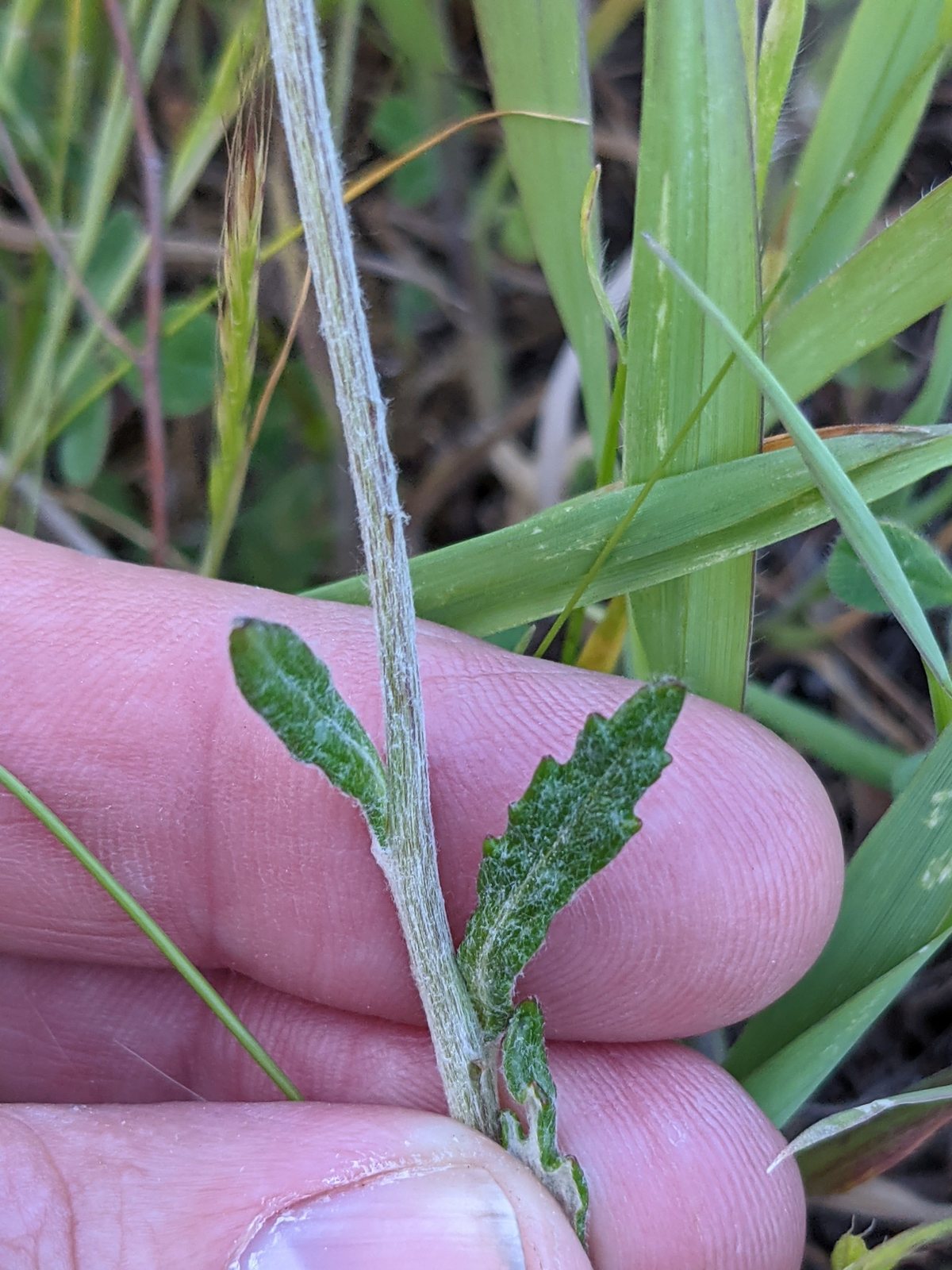
- Small, woolly grey-green leaves, often lobed, on low branching stems. Leaves may persist in mild winters but die back in colder areas.
- Growth
- Moderate
- Care needed
- Low
The year at a glance
- Pollinators
- Drought tolerant
- Heat tolerant
- Wildlife
- Low allergen
| J | F | M | A | M | J | J | A | S | O | N | D | |
|---|---|---|---|---|---|---|---|---|---|---|---|---|
| Flowers | ||||||||||||
| Fruit | ||||||||||||
| Plant |
Northern hemisphere months. In Australia, shift them by six.
- Difficulty
- Easy
- Toughness
- Very tough
Will it suit your garden?
Pick your zone, country, light and whether you have pets.
Full sun is 6 or more hours of direct sun a day, part shade 3 to 6 hours, shade under 3.
How it grows
Planting day
1 ft (0.3 m)
After 1 year
1.1 ft (0.32 m)
After 2 years
1.1 ft (0.35 m)
After 3 years
1.2 ft (0.38 m)
full size
About 3 years to full size.
From a typical nursery size, at an average rate for this kind of plant. A rule of thumb, not a forecast.
Good to know
- Cats and dogs
- Safe
- Native to
- the US and Canada
- Growth rate
- Moderate
Care
Jobs through the year
- WaterApr–May, Sep, every 28 days
- Water established plants only during extended drought; new plants need more frequent watering through their first season.
- WaterJun–Aug, every 21 days
- Water established plants deeply only during prolonged dry spells, allowing soil to dry between soakings.
- PruneMar
- Remove dead stems and lightly tidy growth without cutting hard into old, leafless wood.
- DeadheadJun–Aug, every 14 days
- Remove faded flower stems to prolong bloom, leaving some heads for birds and seed.
- MulchApr
- Apply a thin gravel mulch, keeping the crown clear.
- ProtectJan–Feb, Oct–Dec
- Clear fallen leaves from the crown and prevent winter waterlogging.
- Water regularly through the first growing season, allowing the surface soil to dry between waterings.
- Once established, water deeply but infrequently during extended dry spells.
- Do not routinely fertilize; rich feeding encourages loose growth.
- Use a thin gravel mulch rather than moisture-retentive organic mulch around the crown.
- In wet climates, plant on a slope, raised bed or gravel mound to keep the roots drained.
Pruning. Remove faded flower stems to encourage further bloom, or leave some seed heads for wildlife and self-seeding. In early spring, trim out dead stems and lightly shorten untidy growth without cutting hard into old, leafless wood.
Through the year
- Early spring
- Remove winter-killed stems and lightly tidy established plants as new growth appears.
- Spring
- Plant into freely draining soil and water thoroughly; avoid burying the crown.
- Late spring
- Check young plants during dry weather and water when the root zone begins to dry.
- Summer
- Remove spent flowers for a tidier display, leaving some heads if you want seed.
- Late summer
- Collect dry seed heads before the seeds disperse.
- Autumn
- Sow seed outdoors and clear fallen leaves away from the crown to reduce winter damp.
In the garden
- Plant along the front of sunny dry borders, where the silver-grey foliage contrasts with darker leaves.
- Use in gravel gardens and rock gardens with low penstemons and stonecrops.
- Group with drought-tolerant western North American natives for a naturalistic pollinator planting.
- Place on sunny banks or beside paving where drainage is good and the yellow flowers can spill toward the edge.
Garden styles it suits: Dry gravel garden, Desert / xeriscape, Pollinator garden, California native, Pacific Northwest woodland and Wildflower.
Plant it with: California poppy, Blue flax, Sulphur buckwheat, Prairie junegrass, Broadleaf stonecrop and Penstemon.
Wildlife: Flowers provide pollen and nectar for native bees and other visiting insects. Retained seed heads can provide food for small seed-eating birds.
Problems to watch for
- Root or crown rot in wet soil: improve drainage or move the plant to a raised, gravelly position; avoid winter irrigation.
- Floppy growth and fewer flowers in shade or rich soil: provide full sun and stop feeding.
- Aphids on tender shoots: rinse them off with water and allow predators to control small colonies.
- Poor establishment during hot, dry weather: plant in spring or early autumn and water the developing root system rather than relying on its eventual drought tolerance.
Safety
Not known to be toxic to people, cats, dogs or horses, but species-specific safety information is limited. No plant part is established as a serious poisoning hazard; it is not a food plant and should not be deliberately eaten.
Easily confused with
Golden yarrow (Eriophyllum confertiflorum)
Usually has more finely divided leaves and dense clusters of much smaller yellow flower heads, rather than the larger, more distinct daisies of woolly sunflower.
Arrowleaf balsamroot (Balsamorhiza sagittata)
Has much larger, arrow-shaped leaves arising mainly from the base and larger yellow flower heads on long stalks.
The name
Eriophyllum means woolly-leaved in Greek, and lanatum means woolly in Latin, both referring to the plant's hairy foliage.
Propagation. Grow from seed sown outdoors in autumn; some seed sources germinate better after a period of cold, moist conditions. Take non-flowering softwood cuttings in late spring or early summer to preserve a particular plant's form.
Checked against open data
- Accepted botanical name
- Eriophyllum lanatum
- In the US and Canada
- Native in Canada and the lower 48 states.
- Native range
- British Columbia, California, Idaho, Mexico Northwest, Montana, Nevada, Oregon, Utah, Washington and Wyoming.
Sources: GBIF (CC BY 4.0), USDA PLANTS and Trefle (CC BY 4.0). The care and design notes are LandscapeGPT's own.
See it in your own yard.
Upload a photo of your yard and see it redesigned with plants that suit your climate, each checked against your zone.