Blue flax
Linum lewisii. Family Linaceae. Perennial.
Also called Lewis flax, Lewis's flax, Prairie flax.
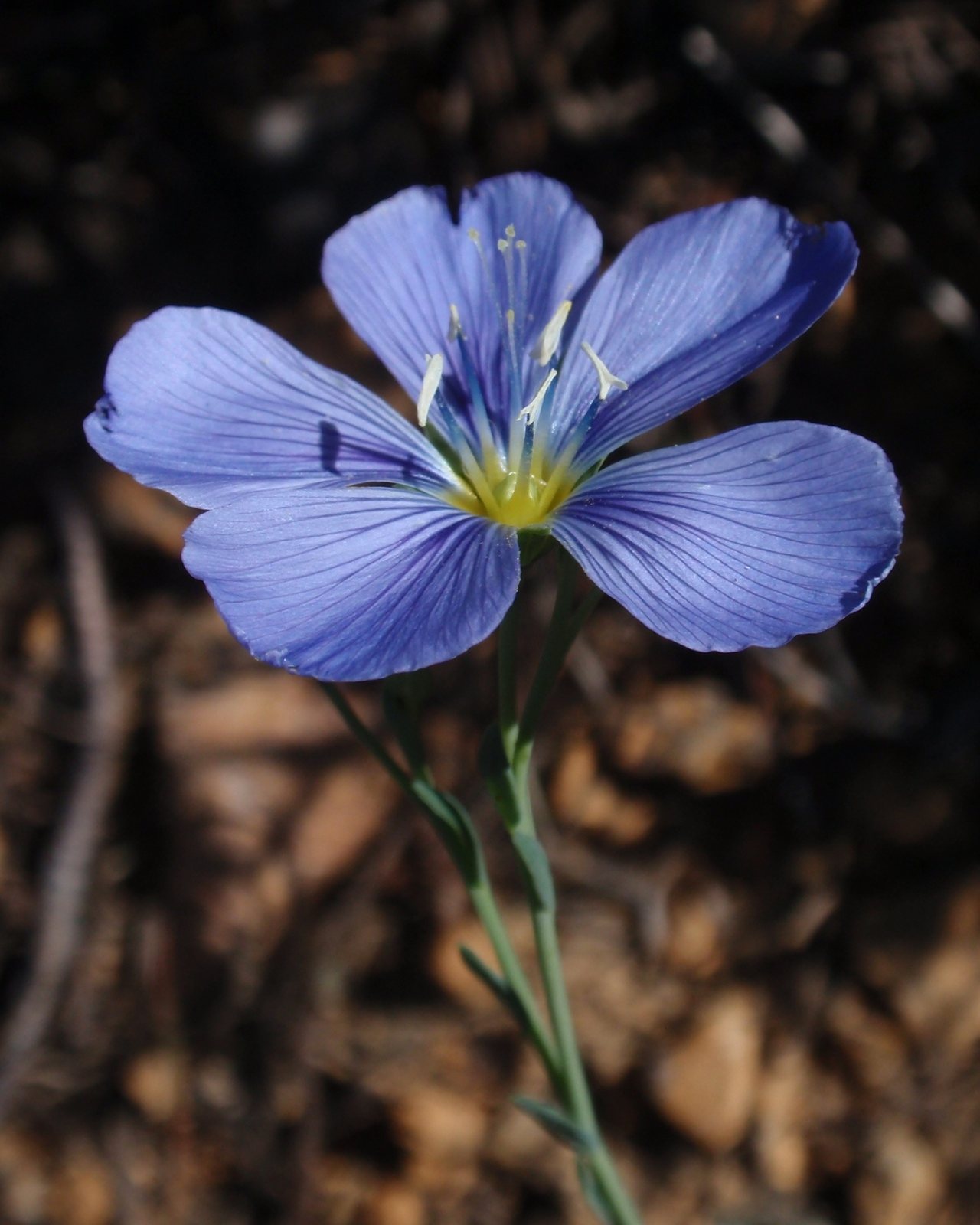
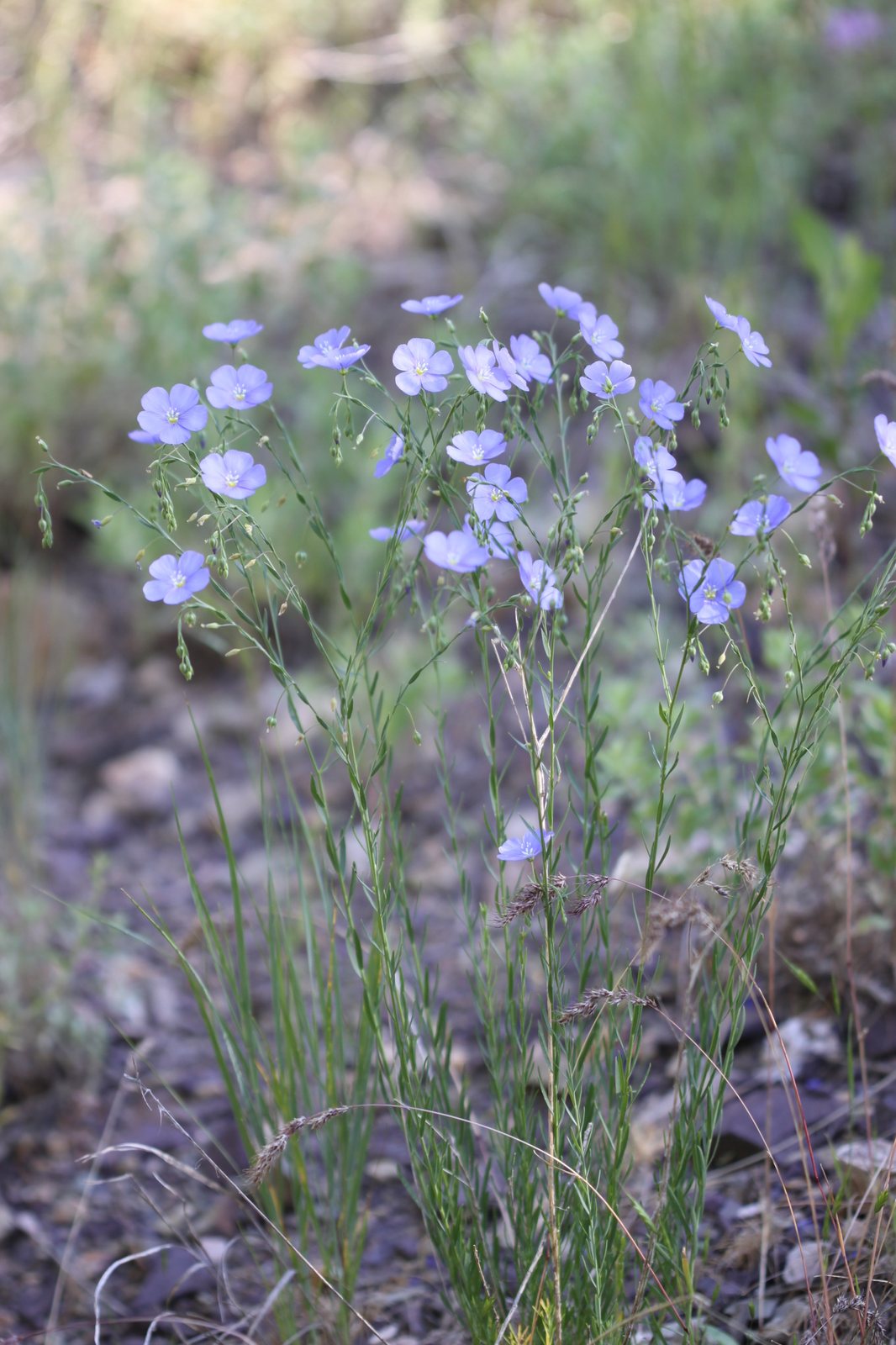
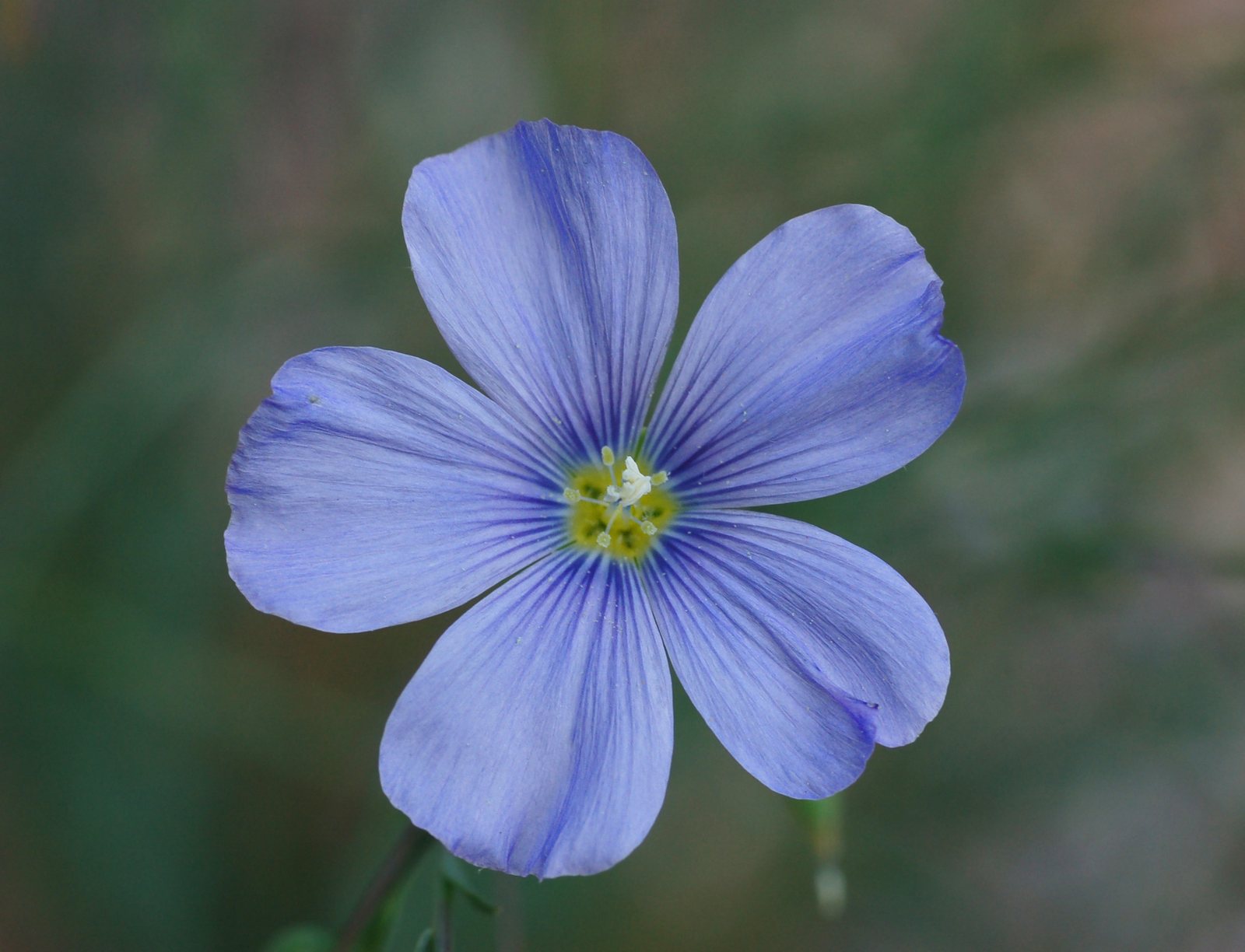
Blue flax is a short-lived perennial native to western and central North America, grown for its slender stems and clear blue flowers. Each flower lasts about a day, but new ones open over several weeks, especially in sunny gardens with freely draining soil.
At a glance
- Sun
- Full sun; flowering is reduced and stems may lean in shade.
- Water
- Low once established. Water young plants during dry spells; established plants tolerate drought but may stop flowering during prolonged heat and dryness.
- Soil
- Well-drained sandy, gravelly or loamy soil, including lean and moderately alkaline soils. Avoid waterlogged ground and heavily enriched beds.
- Height
- 1-3 ft (0.3-0.9 m)
- Spread
- 1-1.5 ft (0.3-0.45 m)
- Flowers
- Late spring through summer; five-petalled pale to sky-blue flowers, often opening in the morning and dropping their petals later that day.
- Foliage
- Fine, narrow, blue-green to grey-green leaves spaced along slender, branching stems. Usually dies back in cold winters; some basal growth may persist in mild climates.
- Growth
- Moderate to fast; plants raised from seed may flower in their first year.
- Care needed
- Low
The year at a glance
- Pollinators
- Drought tolerant
- Cold hardy
- Low allergen
| J | F | M | A | M | J | J | A | S | O | N | D | |
|---|---|---|---|---|---|---|---|---|---|---|---|---|
| Flowers | ||||||||||||
| Fruit | ||||||||||||
| Plant |
Northern hemisphere months. In Australia, shift them by six.
- Difficulty
- Easy
- Toughness
- Fairly tough
Will it suit your garden?
Pick your zone, country, light and whether you have pets.
Full sun is 6 or more hours of direct sun a day, part shade 3 to 6 hours, shade under 3.
How it grows
Planting day
1 ft (0.3 m)
After 1 year
1.4 ft (0.42 m)
After 2 years
1.8 ft (0.55 m)
After 3 years
2 ft (0.6 m)
full size
About 2 years to full size.
From a typical nursery size, at an average rate for this kind of plant. A rule of thumb, not a forecast.
Good to know
- Cats and dogs
- Toxic
- Native to
- the US and Canada
- Growth rate
- Fast
Care
Jobs through the year
- WaterApr–May, Sep, every 21 days
- Check established plants and water if soil is very dry; water seedlings and new plants more often.
- WaterJun–Aug, every 14 days
- Water established plants deeply during prolonged dry spells, letting soil dry between waterings.
- PruneFeb–Mar
- Remove dead stems before new growth, preserving healthy basal foliage.
- PruneJul–Aug
- Lightly shear after the main flowering flush; leave a few stems for replacement seedlings.
- MulchApr
- Use a light gravel mulch if needed; keep the crown free of thick organic mulch.
- ProtectOct–Nov
- Keep crowns clear of wet debris and ensure winter water drains away.
- Water after planting and during dry spells in the first growing season, letting the soil dry between waterings.
- Avoid routine feeding; rich soil encourages soft, floppy growth.
- Keep the crown free of thick organic mulch; use a light gravel mulch where drainage is good.
- Leave a few seed capsules to ripen if you want replacement plants, and remove unwanted seedlings while small.
- Grow in an open, sunny position rather than staking plants that have become weak in shade.
Pruning. After the main flowering flush, lightly shear spent flowering stems to tidy the plant and encourage possible repeat bloom. If you want seedlings, leave some stems until the capsules ripen, then cut dead growth back in late winter or early spring.
Through the year
- Late winter
- Cut away dead stems before new growth develops, leaving any healthy basal foliage.
- Spring
- Direct-sow seed in a prepared, well-drained bed, or plant young plants without disturbing their roots.
- Late spring
- Thin crowded seedlings and water new plants during dry spells.
- Summer
- Lightly shear faded flowering stems, keeping a few uncut if you want seed.
- Early autumn
- Collect dry, brown seed capsules before they split, or let seed fall naturally.
- Autumn
- Direct-sow fresh seed and check that winter rain can drain away from the crowns.
In the garden
- Scatter through a sunny meadow planting with fine-textured grasses for a light blue seasonal haze.
- Plant in loose groups in gravel gardens, where the fine foliage softens stones and paths.
- Combine with yellow-flowered perennials for a clear blue-and-yellow contrast.
- Use near the front or middle of an informal border, allowing neighbouring plants to fill gaps as individual plants age.
Garden styles it suits: Wildflower, Native meadow, Dry gravel garden, Desert / xeriscape, Pollinator garden and Cottage garden.
Plant it with: Prairie dropseed, Blue grama, Yarrow, Lanceleaf coreopsis, Blanket flower and Purple prairie clover.
Wildlife: Flowers provide pollen and nectar for bees and other flower-visiting insects. It is especially useful in open, sunny plantings within its native North American range.
Problems to watch for
- Crown or root rot in wet soil: improve drainage or move plants to a raised, gravelly bed; avoid frequent watering.
- Floppy stems and poor flowering: provide full sun and stop high-nitrogen feeding.
- Aphids on soft shoots: dislodge small colonies with water and leave predators such as ladybirds undisturbed.
- Plants disappearing after a few years: this is naturally short-lived; allow some self-seeding or sow replacement plants.
Safety
Treat the seeds and foliage as potentially toxic if eaten: blue flax contains cyanogenic compounds that can release cyanide. Substantial ingestion may cause serious poisoning in people or animals, including horses; species-specific poisoning information for cats and dogs is limited. Do not use it as food or livestock forage, and seek medical or veterinary advice after significant ingestion.
Easily confused with
Perennial flax (Linum perenne)
This Eurasian species is extremely similar and is often confused with blue flax in cultivation. Flower colour and general habit are not reliable distinctions; confirmed seed provenance or a botanical key may be needed.
Common flax (Linum usitatissimum)
The flax grown for linseed and fibre is an annual, often with a more upright habit. It completes its life cycle after setting seed rather than regrowing from a perennial crown.
Scarlet flax (Linum grandiflorum)
Usually has larger, red flowers, though other flower colours exist, and grows as an annual rather than a perennial.
The name
Linum is the Latin name for flax, and lewisii honours Meriwether Lewis of the Lewis and Clark expedition.
Propagation. Usually grown from seed. Direct-sow in autumn or early spring, covering lightly; winter chilling can improve germination. Transplant seedlings while small because established plants resent root disturbance, and division is generally less successful than sowing.
Checked against open data
- Accepted botanical name
- Linum lewisii
- In the US and Canada
- Native in Alaska, Canada and the lower 48 states.
- Native range
- Alaska, Alberta, Arizona, Arkansas, British Columbia, California, Colorado, Idaho, Kansas, Manitoba, Mexico Northeast and Mexico Northwest.
- Measured
- Soil pH 5.6 to 8.4. Average height 16 cm.
Sources: GBIF (CC BY 4.0), USDA PLANTS and Trefle (CC BY 4.0). The care and design notes are LandscapeGPT's own.
See it in your own yard.
Upload a photo of your yard and see it redesigned with plants that suit your climate, each checked against your zone.