Wunu
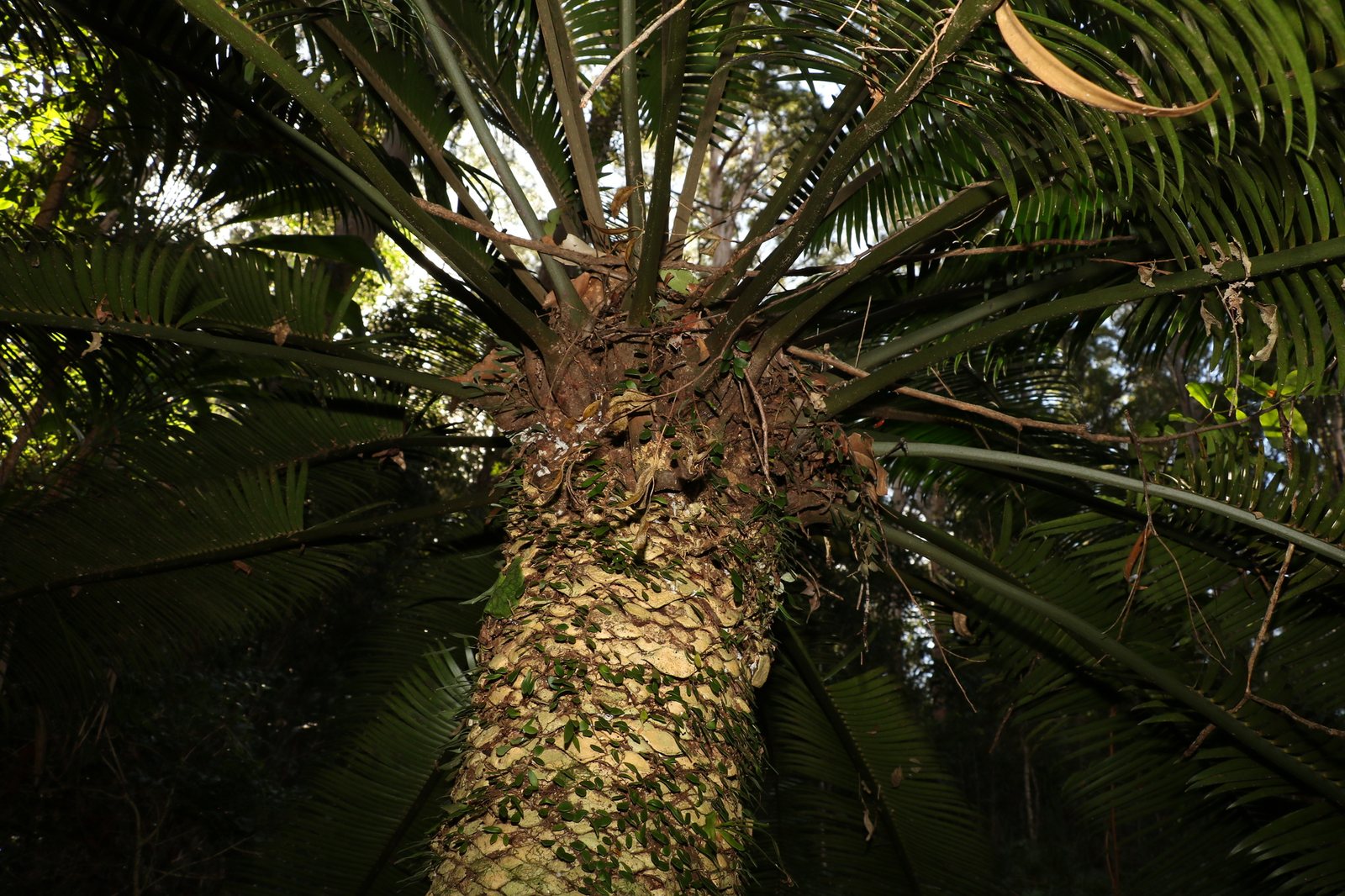
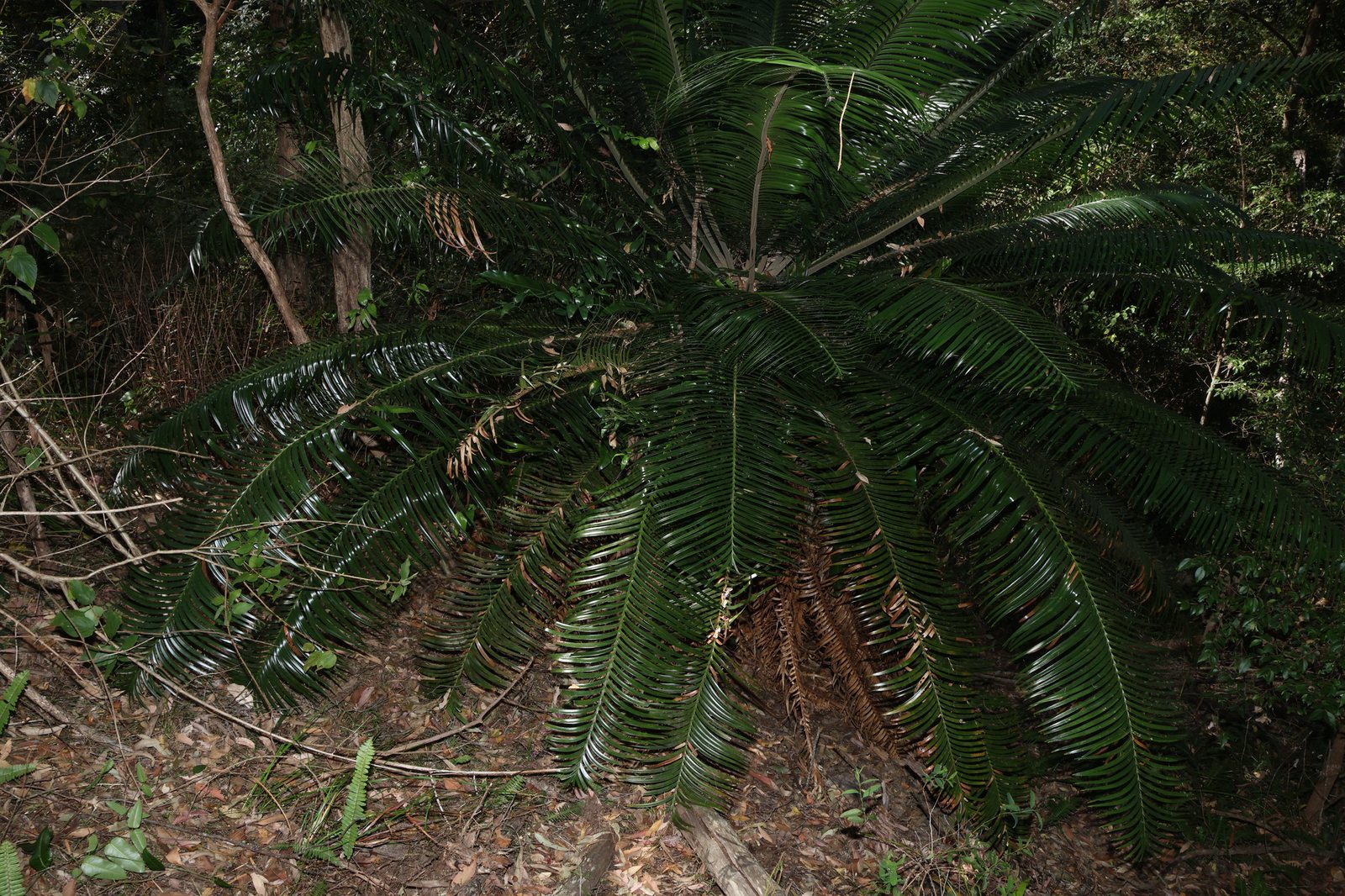
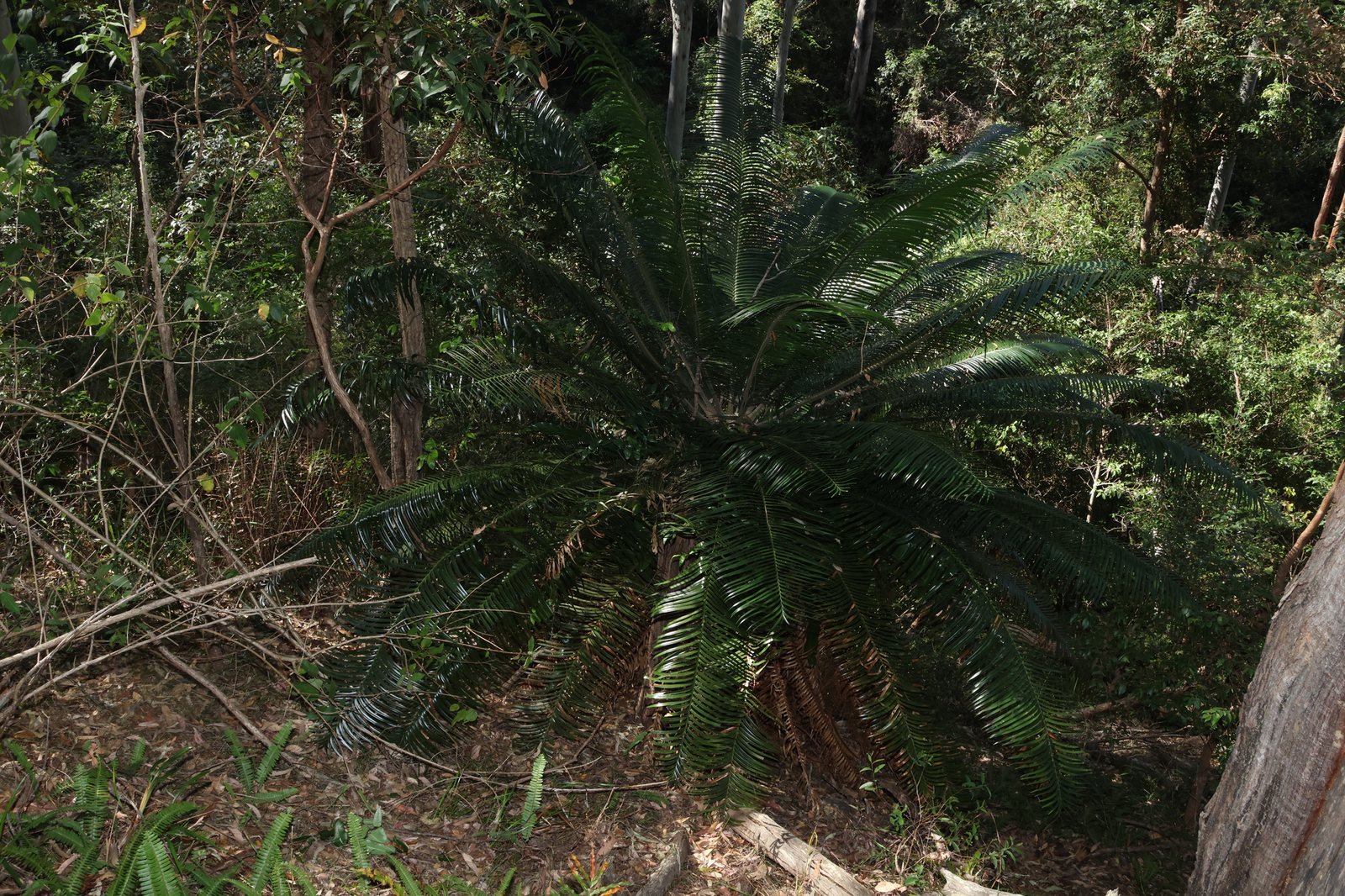
Lepidozamia peroffskyana. Family Zamiaceae. Tree.
Also called Scaly zamia, Pineapple zamia, Burrawang.
Wunu is a slow-growing, evergreen cycad from eastern Australia, with a stout trunk and a crown of long, arching leaves. Gardeners grow it for its bold foliage and palm-like shape, especially in sheltered subtropical gardens. It needs generous space, good drainage and protection from prolonged freezing.
At a glance
- Sun
- Partial shade to full sun; shelter from harsh afternoon sun in hot, dry climates, especially while young.
- Water
- Water deeply during dry spells, then let the surface soil begin to dry; avoid permanently wet roots.
- Soil
- Well-drained soil enriched with organic matter, preferably slightly acidic to neutral; avoid waterlogged clay.
- Height
- 10-20 ft (3-6 m), occasionally taller in very old specimens
- Spread
- 10-16 ft (3-5 m)
- Foliage
- Evergreen. Long, glossy, dark green, feather-like leaves with numerous narrow leaflets; mature leaves can reach 6-10 ft (1.8-3 m) long.
- Growth
- Slow; trunk development takes many years.
- Care needed
- Low
The year at a glance
- Heat tolerant
| J | F | M | A | M | J | J | A | S | O | N | D | |
|---|---|---|---|---|---|---|---|---|---|---|---|---|
| Plant |
Northern hemisphere months. In Australia, shift them by six.
- Difficulty
- Moderate
- Toughness
- Fairly tough
Will it suit your garden?
Pick your zone, country, light and whether you have pets.
Full sun is 6 or more hours of direct sun a day, part shade 3 to 6 hours, shade under 3.
How it grows
Planting day
7 ft (2 m)
After 1 year
7 ft (2.1 m)
After 2 years
7 ft (2.2 m)
After 3 years
7 ft (2.2 m)
After 5 years
8 ft (2.4 m)
About 32 years to full size.
From a typical nursery size, at an average rate for this kind of plant. A rule of thumb, not a forecast.
Good to know
- Cats and dogs
- Toxic
- Native to
- Australia
- Growth rate
- Slow
Care
Jobs through the year
- WaterApr–May, Sep–Oct, every 14 days
- For established ground plants, water deeply if dry; young plants and pots need more frequent checks.
- WaterJun–Aug, every 7 days
- Water established ground plants during dry spells, letting the surface dry slightly between soakings.
- WaterJan–Mar, Nov–Dec, every 21 days
- Check sheltered pots and water lightly only when the surface dries; avoid soggy compost.
- FeedApr–May
- Apply a light slow-release feed with trace elements at the label rate.
- MulchMay
- Refresh mulch over the roots without covering the trunk or growing crown.
- PruneMar–Apr
- Remove fully brown leaves at their bases with gloves; never cut healthy leaves or the central crown.
- ProtectJan–May, Sep–Dec
- In zones 6–7 or the UK, use a movable container and overwinter in bright, frost-free shelter.
- Water regularly through the first few growing seasons, keeping the root zone moist but not saturated.
- Apply a light dressing of slow-release fertiliser with trace elements in spring, following the label rate.
- Mulch over the root zone, leaving the trunk and crown clear.
- Allow enough room for the full leaf spread rather than cutting leaves back to fit.
- Protect young plants from frost; in cold regions, use a container that can be moved into a bright, frost-free space.
- Keep the top of the trunk and growing crown above soil and mulch level.
Pruning. Remove fully brown or damaged leaves at their bases in late winter or spring, using clean tools and gloves. Do not shorten healthy leaves or cut into the central growing point.
Through the year
- Spring
- Plant once frost risk has passed and the soil is warming; water thoroughly after planting.
- Spring
- Apply a modest slow-release feed and refresh mulch without covering the trunk.
- Summer
- Water deeply during dry weather and check tender new leaves for pests.
- Autumn
- Reduce watering as growth slows, especially for container plants.
- Winter
- Protect young plants from frost and keep container compost from becoming persistently wet.
- Late winter
- Remove dead leaves and check that fallen debris is not collecting around the crown.
In the garden
- Use as a single architectural specimen in a sheltered lawn or broad planting bed.
- Combine with palms, tree ferns and shade-tolerant groundcovers for a layered subtropical planting.
- Place beneath a high, open tree canopy where its glossy foliage catches filtered light.
- Grow a young specimen in a large, well-drained courtyard container, allowing room for arching leaves.
Garden styles it suits: Architectural minimal, Modern tropical, Tropical, Australian native, Woodland and Green on green.
Plant it with: Bird's nest fern, Soft tree fern, Clivia, Cast iron plant and Lomandra.
Wildlife: In its native range, specialised beetles pollinate the cones. It is not a nectar plant, and its poisonous seeds should not be treated as wildlife food.
Problems to watch for
- Root or crown rot in wet ground: improve drainage, keep soil away from the crown and avoid frequent shallow watering.
- Scale insects and mealybugs: inspect leaflet undersides, remove small infestations by hand and use a labelled horticultural oil if needed, avoiding hot weather.
- Frost-damaged foliage: shelter young plants and cover before cold nights; wait until frost risk has passed before removing damaged leaves.
- Scorched new leaves: provide afternoon shade in hot, dry sites and maintain even moisture while a new flush expands.
Safety
Treat all parts as highly poisonous to people, cats, dogs and horses, especially the seeds. Ingestion can cause severe gastrointestinal illness, liver damage and death; seek urgent medical or veterinary advice after suspected ingestion. Keep plants and fallen seeds away from children and grazing or chewing animals.
Easily confused with
Sago palm (Cycas revoluta)
Sago palm has much narrower, stiff leaflets with strongly rolled-under edges; wunu has broader, flatter leaflets and longer, more arching leaves.
MacDonnell Ranges cycad (Macrozamia macdonnellii)
MacDonnell Ranges cycad has conspicuously blue-grey foliage and narrower leaflets; wunu is normally glossy dark green with broader leaflets.
Propagation
Propagation. Usually grown from fresh seed. Male and female cones occur on separate plants, and pollination is needed to produce viable seed; germination and subsequent growth are slow. Wear gloves when handling seeds and keep them away from children and animals.
Checked against open data
- Accepted botanical name
- Lepidozamia peroffskyana
- Native range
- New South Wales and Queensland.
Sources: GBIF (CC BY 4.0) and Trefle (CC BY 4.0). The care and design notes are LandscapeGPT's own.
See it in your own yard.
Upload a photo of your yard and see it redesigned with plants that suit your climate, each checked against your zone.