Yardlong bean
Vigna unguiculata subsp. sesquipedalis. Family Fabaceae. Annual.
Also called Asparagus bean, Chinese long bean, Long-podded cowpea, Snake bean.
Yardlong bean is a heat-loving climbing vegetable grown as an annual for its long, slender edible pods. It crops well in long, warm summers; in much of the United Kingdom and cooler parts of Canada, it is more dependable in a greenhouse or polytunnel.
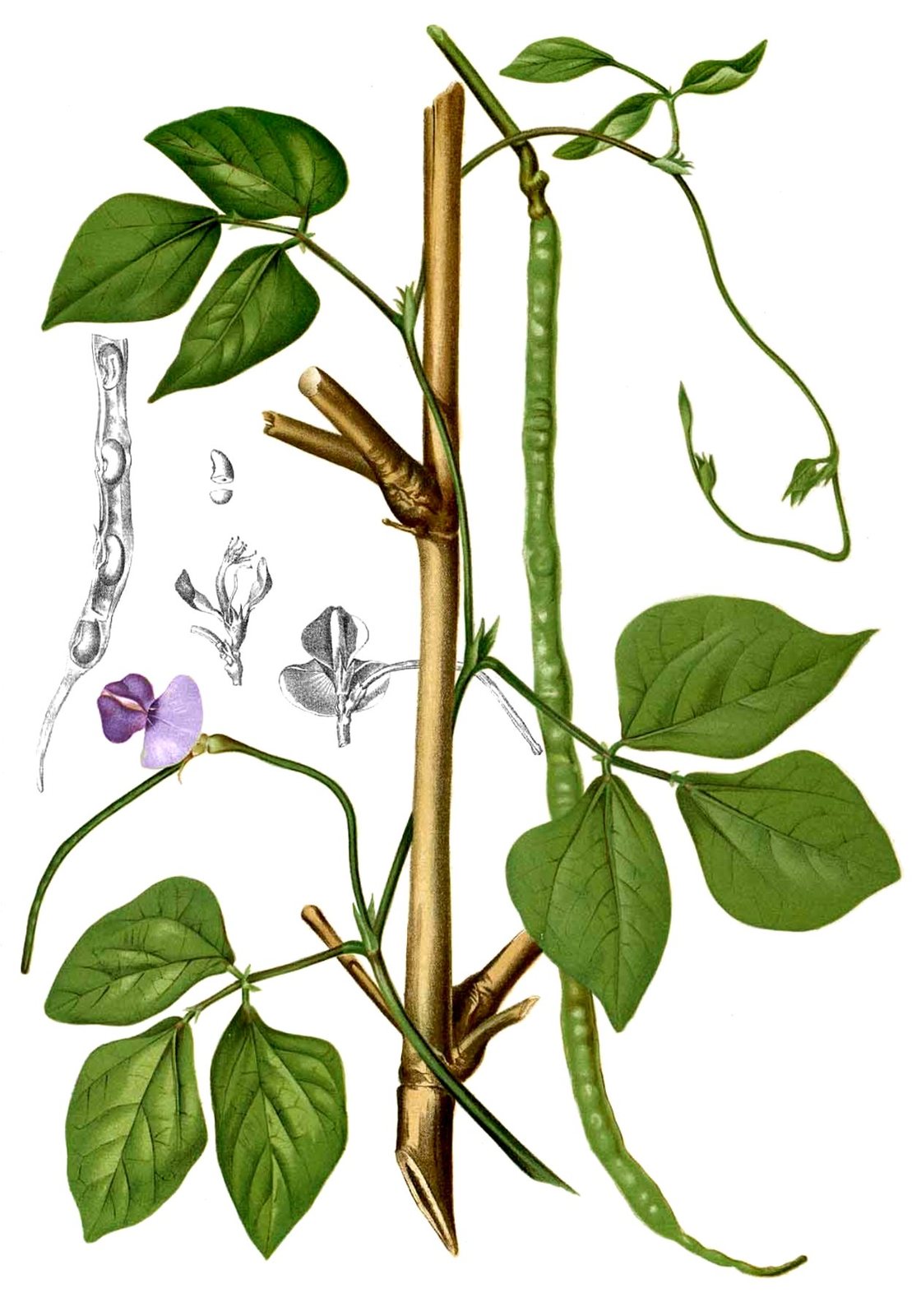
At a glance
- Sun
- Full sun, with at least 6-8 hours of direct light and shelter from cold winds.
- Water
- Water deeply when the soil surface starts to dry, keeping moisture steady during flowering and pod development. Avoid waterlogged soil.
- Soil
- Well-drained, moderately fertile soil, ideally pH 6.0-7.0.
- Height
- 6-12 ft (1.8-3.7 m), depending on variety and growing conditions
- Spread
- 2-3 ft (0.6-0.9 m) per plant when supported
- Flowers
- Summer into early autumn; pale lilac, purple or whitish pea-shaped flowers.
- Foliage
- Green leaves divided into three broad, pointed leaflets on twining stems.
- Growth
- Fast in hot weather; slow in cool conditions.
- Care needed
- Medium
The year at a glance
- Pollinators
- Heat tolerant
- Low allergen
- Edible
| J | F | M | A | M | J | J | A | S | O | N | D | |
|---|---|---|---|---|---|---|---|---|---|---|---|---|
| Flowers | ||||||||||||
| Fruit | ||||||||||||
| Plant |
Northern hemisphere months. In Australia, shift them by six.
- Difficulty
- Moderate
- Toughness
- Fairly tough
Will it suit your garden?
Pick your zone, country, light and whether you have pets.
Full sun is 6 or more hours of direct sun a day, part shade 3 to 6 hours, shade under 3.
How it grows
Planting day
1.1 ft (0.33 m)
After 1 year
9 ft (2.8 m)
full size
Full size in one season.
From a typical nursery size, at an average rate for this kind of plant. A rule of thumb, not a forecast.
Good to know
- Cats and dogs
- Safe
- Growth rate
- Moderate
Care
Jobs through the year
- WaterMay–Jun, every 7 days
- Water established plants when the surface dries; seedlings need more frequent checks.
- WaterJul–Aug, every 3 days
- Water deeply at soil level if drying, keeping moisture steady during flowering and pod growth.
- WaterSep–Oct, every 7 days
- Water if soil is drying while plants remain actively cropping; reduce in cool weather.
- ProtectMay–Jun
- Plant only after frost in soil above 18°C; provide tall supports and use greenhouse shelter in cool sites.
- MulchJun
- Mulch after the soil warms, keeping material clear of stems.
- PruneJul–Sep
- Pinch tips only if vines outgrow their support; remove damaged or diseased growth.
- HarvestJul–Oct
- Snip slender, tender pods before seeds bulge; stop when frost ends cropping.
- Sow after frost once soil is consistently at least 65°F (18°C), preferably warmer.
- Install a sturdy trellis or poles 6-8 ft (1.8-2.4 m) tall before the vines begin climbing.
- Water at soil level during dry spells, especially while pods are forming.
- Mulch once the ground has warmed to conserve moisture and suppress weeds.
- Avoid heavy nitrogen feeding, which encourages leafy growth at the expense of pods.
Pruning. Routine pruning is unnecessary. Pinch out the growing tips when vines exceed their support, and remove damaged or diseased growth as it appears.
Harvest
Pick pods while slender, flexible and tender, before the seeds make obvious bulges; many varieties are best at 12-18 in (30-45 cm), rather than their maximum length. Harvest every day or two once cropping begins, usually about 60-90 days after sowing in warm conditions, and snip pods without damaging the flower stalks.
Through the year
- Early spring
- Choose a sunny, sheltered position and prepare a strong climbing support; use greenhouse space in cool climates.
- Mid spring
- For an early start, sow individual seeds in pots indoors 2-4 weeks before the expected planting date.
- Late spring
- Harden off indoor-grown plants and plant out, or direct-sow, only after frost and once the soil is warm.
- Early summer
- Guide young vines onto their supports and mulch the warmed soil.
- Summer
- Water consistently and pick tender pods frequently to keep plants cropping.
- Early autumn
- Leave a few healthy pods to dry fully if saving seed; continue picking the remaining tender pods.
- Late autumn
- Remove frost-killed vines and clean supports; discard diseased material.
In the garden
- Train over a tall trellis at the back of a vegetable bed to add height without shading shorter crops.
- Grow on an arch in a kitchen garden, with the hanging pods easy to see and pick.
- Use a large container with a sturdy climbing frame on a warm, sunny patio.
- Combine with basil and marigolds in a sunny edible border, keeping the vines on their own support.
Garden styles it suits: Potager (kitchen garden), Edible landscape, Homestead, Cottage garden, Tropical and Small-space.
Plant it with: Basil, French marigold, Sweet pepper, Aubergine and Swiss chard.
Wildlife: Flowers can attract bees, although the crop is largely self-pollinating. Aphids may attract ladybirds, lacewings and other predators.
Problems to watch for
- Poor germination or stalled growth in cold soil: delay sowing until the ground is warm, or grow under cover.
- Aphids on young shoots: wash off small colonies with water; use insecticidal soap labelled for edible crops if necessary.
- Spider mites in hot, dry conditions, especially under cover: inspect leaf undersides, prevent drought stress and use suitable biological controls in greenhouses.
- Powdery mildew: provide good airflow, avoid overcrowding and remove badly affected leaves.
Safety
Not known to be toxic to cats, dogs or horses. Pods and seeds are food for people, but cook them before eating; raw or undercooked mature seeds can cause digestive upset.
Easily confused with
Climbing French bean (Phaseolus vulgaris)
Also has twining stems and three-part leaves, but its pods are usually much shorter and often broader than yardlong bean pods.
Cowpea (Vigna unguiculata subsp. unguiculata)
A close relative with similar leaves and flowers, usually grown for its seeds; its pods are generally much shorter, and many varieties have a bushier habit.
Runner bean (Phaseolus coccineus)
Usually has larger flowers, often scarlet, and broad, flat pods rather than very long, pencil-thin pods.
The name
The common name refers to the exceptional length of the pods, while sesquipedalis means 'a foot and a half long' in Latin.
Propagation. Grow from seed, preferably direct-sown into warm soil. For transplants, sow in individual pots and plant out while young to minimise root disturbance. Save seed from fully mature, dry pods on healthy, open-pollinated plants.
Checked against open data
- Accepted botanical name
- Vigna unguiculata sesquipedalis
Sources: GBIF (CC BY 4.0). The care and design notes are LandscapeGPT's own.
See it in your own yard.
Upload a photo of your yard and see it redesigned with plants that suit your climate, each checked against your zone.