Alder buckthorn
Frangula alnus. Family Rhamnaceae. Shrub.
Also called Glossy buckthorn, Breaking buckthorn, Rhamnus frangula.
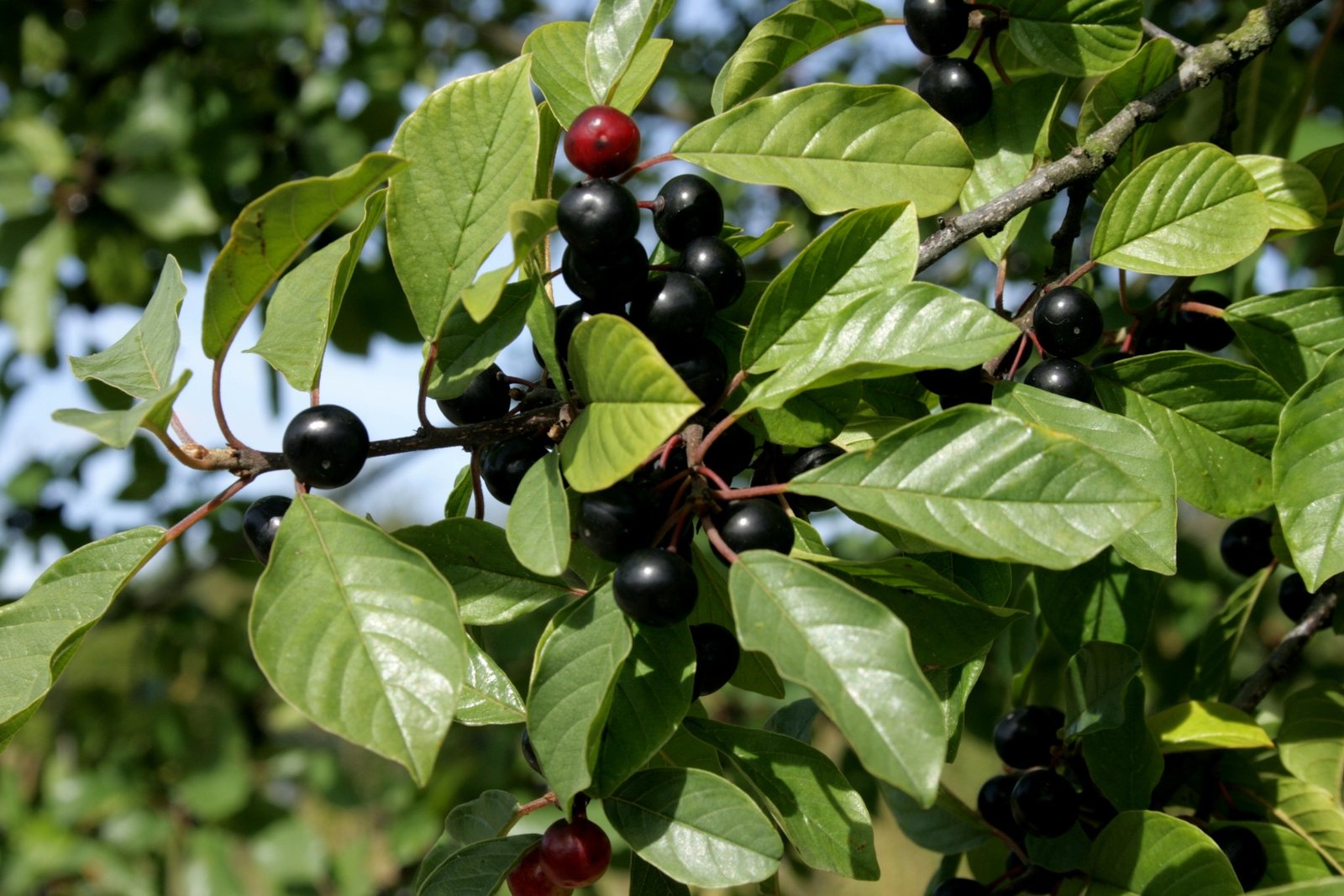
Alder buckthorn is a deciduous shrub or small tree with glossy leaves, small flowers and fruits that turn from red to black. In its native range, gardeners grow it for informal hedges, damp woodland edges and wildlife, especially brimstone butterflies in Britain. It is invasive in parts of North America, where it should not be planted.
At a glance
- Sun
- Full sun to partial shade; tolerates deeper shade but becomes more open.
- Water
- Prefers consistently moist ground; tolerates wet soils and brief flooding once established.
- Soil
- Humus-rich, acidic to neutral soil is best. Tolerates clay and poorly drained ground, but struggles in very dry or strongly alkaline soil.
- Height
- 12-20 ft (3.7-6 m)
- Spread
- 8-15 ft (2.4-4.6 m)
- Flowers
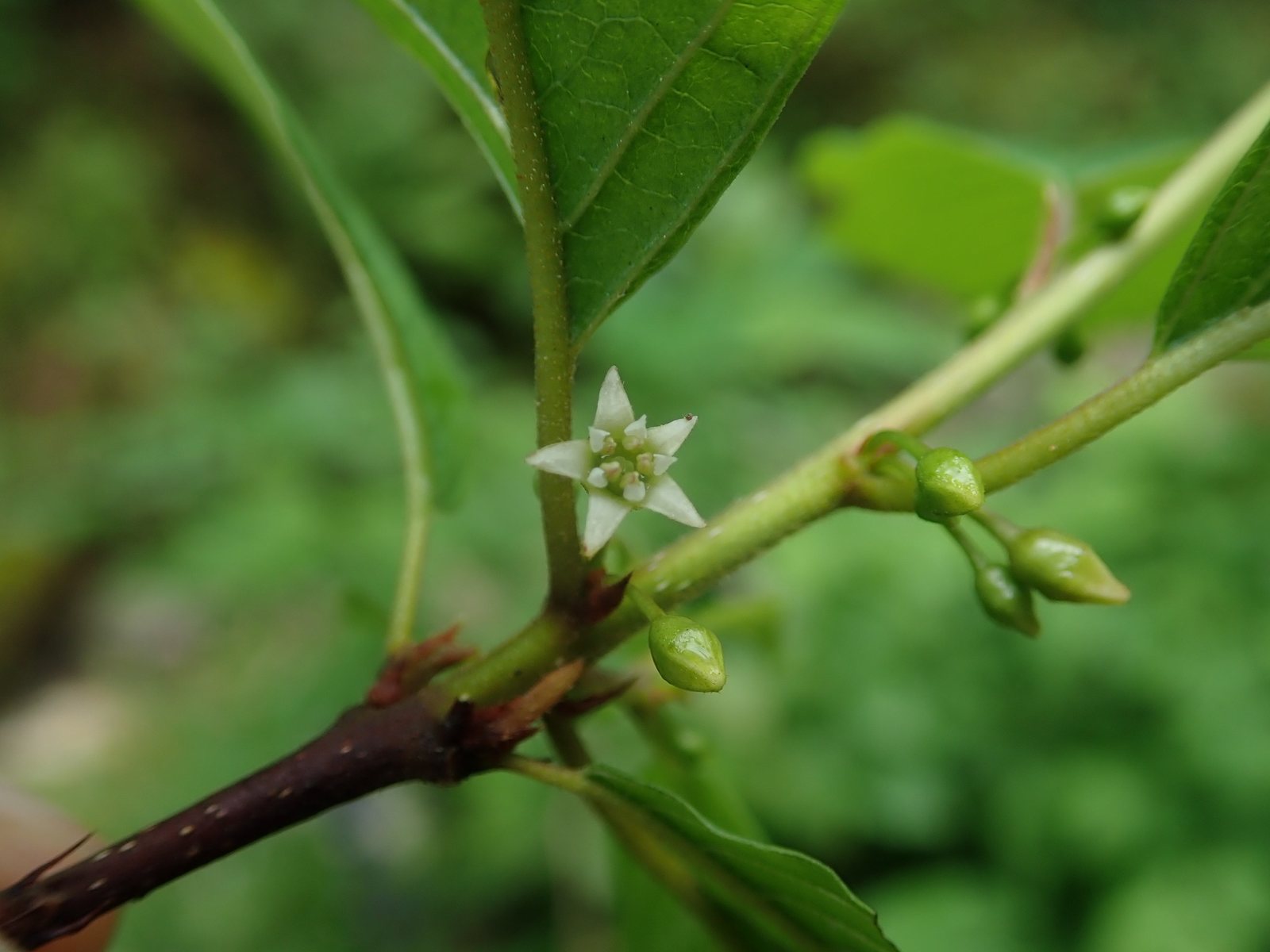
- Late spring through summer; tiny greenish-white flowers in leaf axils.
- Foliage
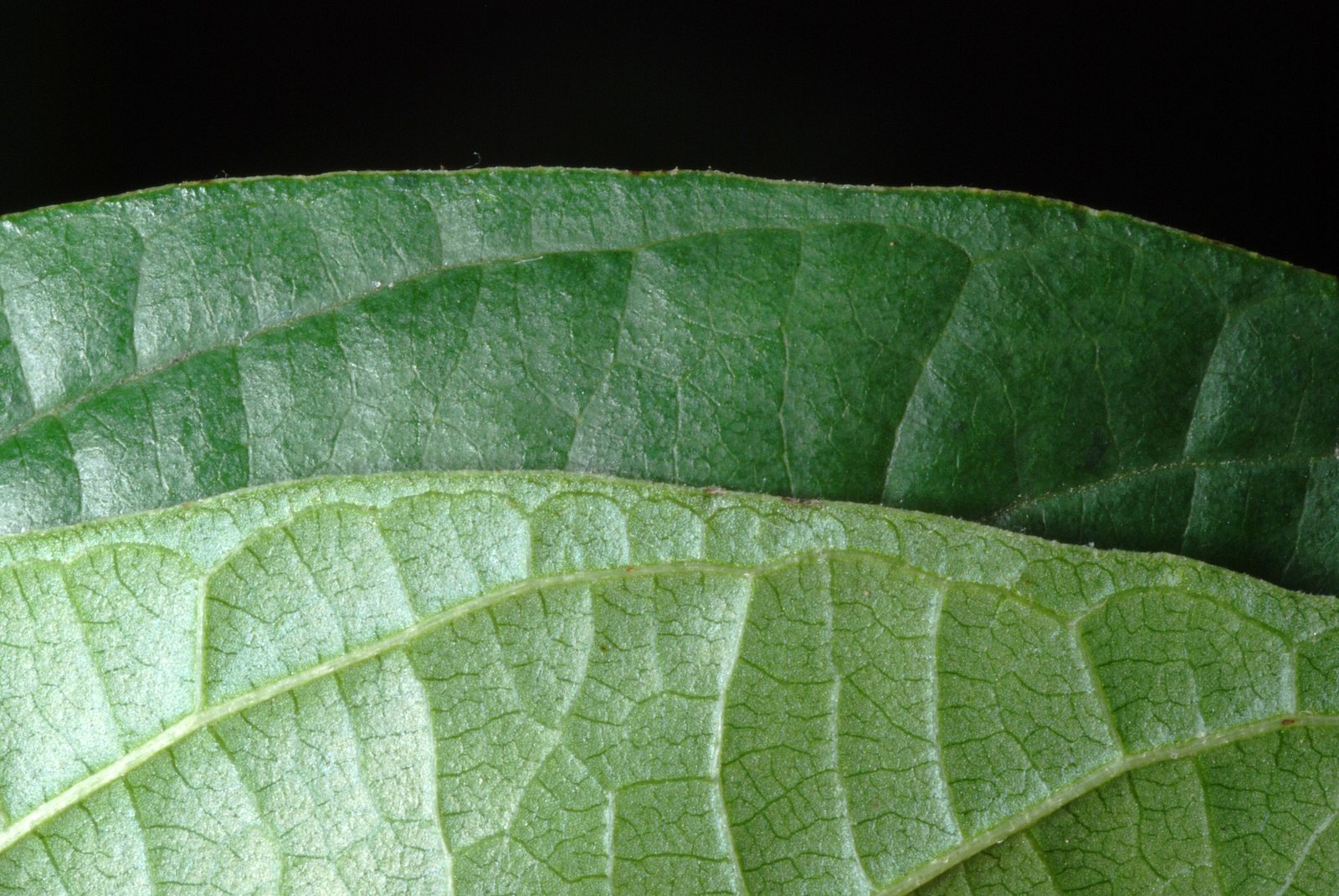
- Alternate, oval, glossy green leaves with smooth edges and prominent curved veins; usually yellow in autumn.
- Growth
- Moderate
- Care needed
- Low
The year at a glance
- Pollinators
- Cold hardy
- Wildlife
- Low allergen
| J | F | M | A | M | J | J | A | S | O | N | D | |
|---|---|---|---|---|---|---|---|---|---|---|---|---|
| Flowers | ||||||||||||
| Fruit | ||||||||||||
| Plant |
Northern hemisphere months. In Australia, shift them by six.
- Difficulty
- Easy
- Toughness
- Very tough
Will it suit your garden?
Pick your zone, country, light and whether you have pets.
Full sun is 6 or more hours of direct sun a day, part shade 3 to 6 hours, shade under 3.
How it grows
Planting day
1.9 ft (0.58 m)
After 1 year
5 ft (1.4 m)
After 2 years
8 ft (2.3 m)
After 3 years
10 ft (3.1 m)
After 5 years
16 ft (4.9 m)
full size
About 5 years to full size.
From a typical nursery size, at an average rate for this kind of plant. A rule of thumb, not a forecast.
Good to know
- Cats and dogs
- Toxic
- Native to
- the UK
- Invasive in
- the US and Canada
- In the garden
- Spreads vigorously: plan to contain it.
- Growth rate
- Moderate
Care
Jobs through the year
- WaterApr–May, Sep–Oct, every 14 days
- Water established shrubs if soil starts drying; young plants and sandy sites need closer checks.
- WaterJun–Aug, every 7 days
- Water established shrubs during dry weather to keep the root zone moist.
- MulchMar–Apr
- Apply 5–8 cm of leaf mould or composted bark, keeping stems clear.
- PruneFeb–Mar
- Remove damaged or crossing branches; thin a few old stems if needed and check for nests.
- ProtectMar–Apr, Oct–Nov
- Check local invasive-plant rules before planting; use a native alternative where invasive.
- ProtectJun–Oct, every 30 days
- Remove unwanted seedlings; in invaded regions, replace the parent shrub with a suitable native.
- Check local invasive-plant rules before buying; choose a locally native alternative where it is invasive.
- Water deeply during dry spells for the first two growing seasons.
- Keep the root zone moist, especially on sandy soil.
- Apply 2-3 in (5-8 cm) of leaf mould or composted bark, keeping it clear of the stems.
- Do not routinely fertilise; use a light compost dressing if growth is weak on poor soil.
Pruning. Prune in late winter while dormant, removing dead, damaged or crossing branches. To renew an established shrub, remove a few of the oldest stems at ground level rather than shearing the whole plant.
Through the year
- Late winter
- Remove damaged branches and thin congested growth; check for nesting wildlife before cutting.
- Spring
- Plant where locally appropriate, water thoroughly and mulch the root zone.
- Late spring
- Check new growth for aphids; leave small colonies for predators or wash off heavy infestations.
- Summer
- Water young plants during dry weather and check nearby ground for unwanted seedlings.
- Autumn
- Plant in mild climates while soil remains workable; remove seedlings beyond the intended planting area.
In the garden
- Use in a mixed native hedge in Britain and other parts of its native range, allowing room for its loose branching.
- Plant along damp woodland edges with ferns and moisture-loving perennials for a layered, informal boundary.
- Use beside a wildlife pond, above the permanently submerged margin, to connect water planting with taller shrubs.
- Grow as a multi-stemmed background shrub where its yellow autumn leaves can contrast with dark evergreens.
Garden styles it suits: Woodland, Wildlife garden, Native hedgerow, Rewilded, Bog garden and English country.
Plant it with: Guelder rose, Common dogwood, Purple moor grass, Tufted hair grass, Lady fern and Meadowsweet.
Wildlife: In Britain, the leaves feed brimstone butterfly caterpillars. Small flowers provide nectar and pollen, and birds eat the fruits and disperse the seeds. Wildlife use does not offset its damaging spread in invaded North American habitats.
Problems to watch for
- Unwanted seedlings: birds spread the seeds widely; remove seedlings promptly. In invaded regions, replace the parent shrub with a suitable native plant.
- Drought stress: wilting and early leaf drop can follow prolonged dryness; water deeply and maintain an organic mulch.
- Aphids: inspect soft shoots and wash off heavy colonies with water; avoid broad-spectrum insecticides.
- Leaf spots: usually minor; clear badly affected fallen leaves and thin congested growth to improve airflow.
Safety
The fruits and bark are toxic to people, cats, dogs and horses if eaten; other parts should also be kept out of reach. They contain strong laxative compounds that can cause abdominal pain, vomiting and diarrhoea, with potentially serious dehydration after substantial ingestion. Do not eat the berries or use the bark as a home remedy.
Where it spreads. Invasive in the northeastern and upper midwestern United States, including New England and the Great Lakes region, and in eastern Canada, including Ontario, Quebec and parts of the Maritime provinces. It forms dense thickets in wetlands, woodland and other habitats, displacing native plants. Sale and planting are restricted in several jurisdictions; check state, provincial and local rules.
Easily confused with
Common buckthorn (Rhamnus cathartica)
Usually has opposite or nearly opposite leaves with finely toothed edges, and often a sharp spine at the twig tip. Alder buckthorn has alternate, smooth-edged leaves and no terminal spine.
Common alder (Alnus glutinosa)
Has toothed leaves, often with a notched tip, plus catkins and persistent woody cone-like structures rather than fleshy fruits.
Bird cherry (Prunus padus)
Has finely toothed leaves and conspicuous hanging clusters of white flowers. Alder buckthorn has smooth leaf edges and tiny flowers tucked into the leaf axils.
The name
Frangula comes from the Latin for breaking, referring to its brittle wood, while alnus means alder and refers to its alder-like foliage.
Propagation. Where planting is appropriate and permitted, propagate from fresh seed with a period of winter cold, or take semi-ripe cuttings in summer. Seed germination can be slow and uneven. Do not propagate or distribute it in invaded regions.
Checked against open data
- Accepted botanical name
- Frangula alnus
- In the US and Canada
- Introduced in Canada and the lower 48 states.
- Native range
- Albania, Algeria, Altay, Austria, Baltic States, Belarus, Belgium, Bulgaria, Central European Rus, Corse, Czechoslovakia and Denmark.
- Measured
- Soil pH 5 to 6.5. Average height 230 cm.
Sources: GBIF (CC BY 4.0), USDA PLANTS and Trefle (CC BY 4.0). The care and design notes are LandscapeGPT's own.
See it in your own yard.
Upload a photo of your yard and see it redesigned with plants that suit your climate, each checked against your zone.