Alkali sacaton
Sporobolus airoides. Family Poaceae. Ornamental grass.
Also called Alkali dropseed.
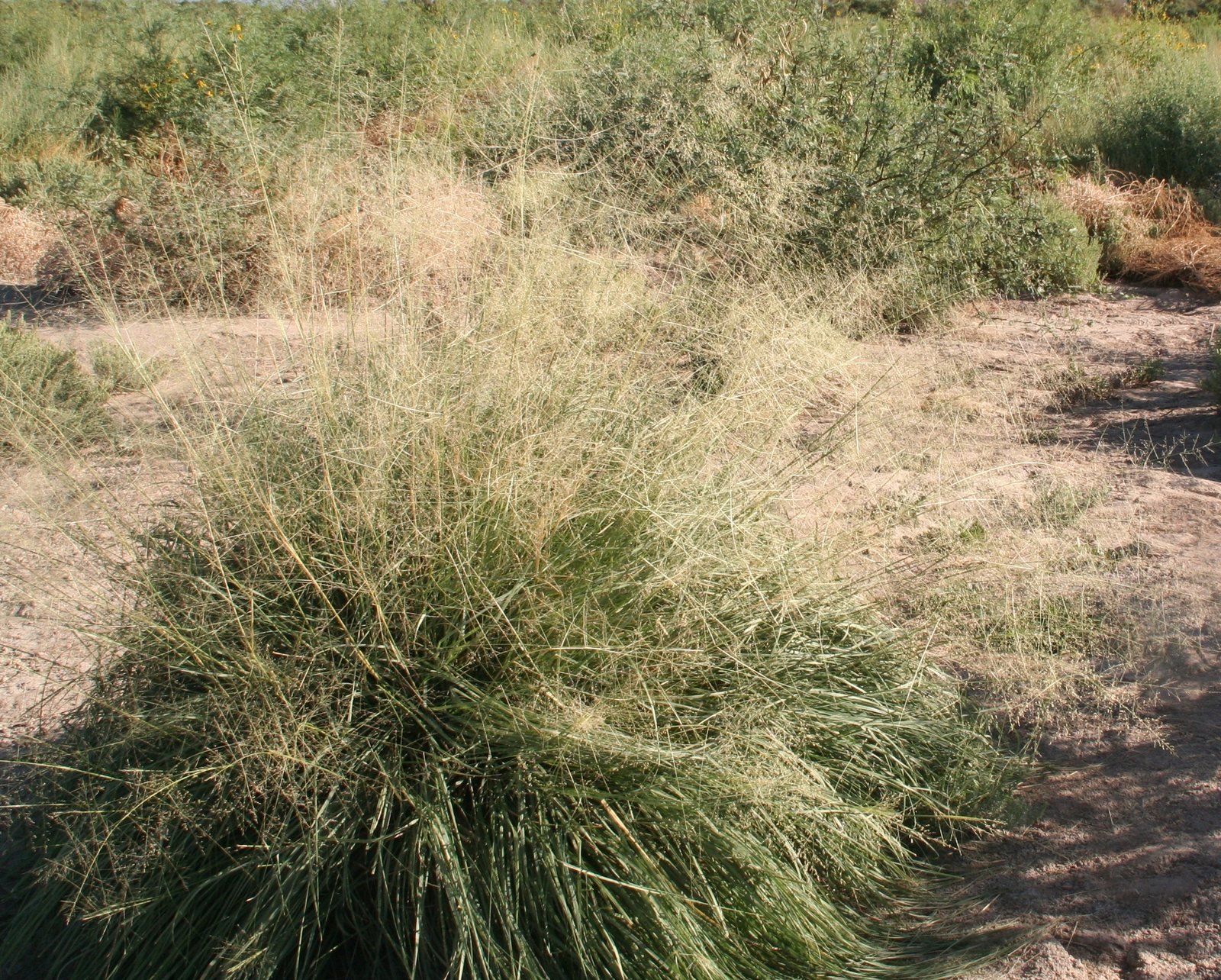
Alkali sacaton is a warm-season, clump-forming perennial grass native to western and central North America. Gardeners grow it for its fine blue-green foliage, airy flower clouds and tolerance of drought, salty soils and alkaline ground. It performs best with summer heat and may flower less freely in cool maritime gardens.
At a glance
- Sun
- Full sun.
- Water
- Water regularly while establishing; once rooted, water deeply during prolonged drought. Established plants tolerate dry ground and occasional brief flooding.
- Soil
- Tolerates sandy, loamy and clay soils, including saline and alkaline ground. Avoid sites that remain waterlogged through winter.
- Height
- 3-5 ft (0.9-1.5 m), including flower stems
- Spread
- 2-3 ft (0.6-0.9 m)
- Flowers
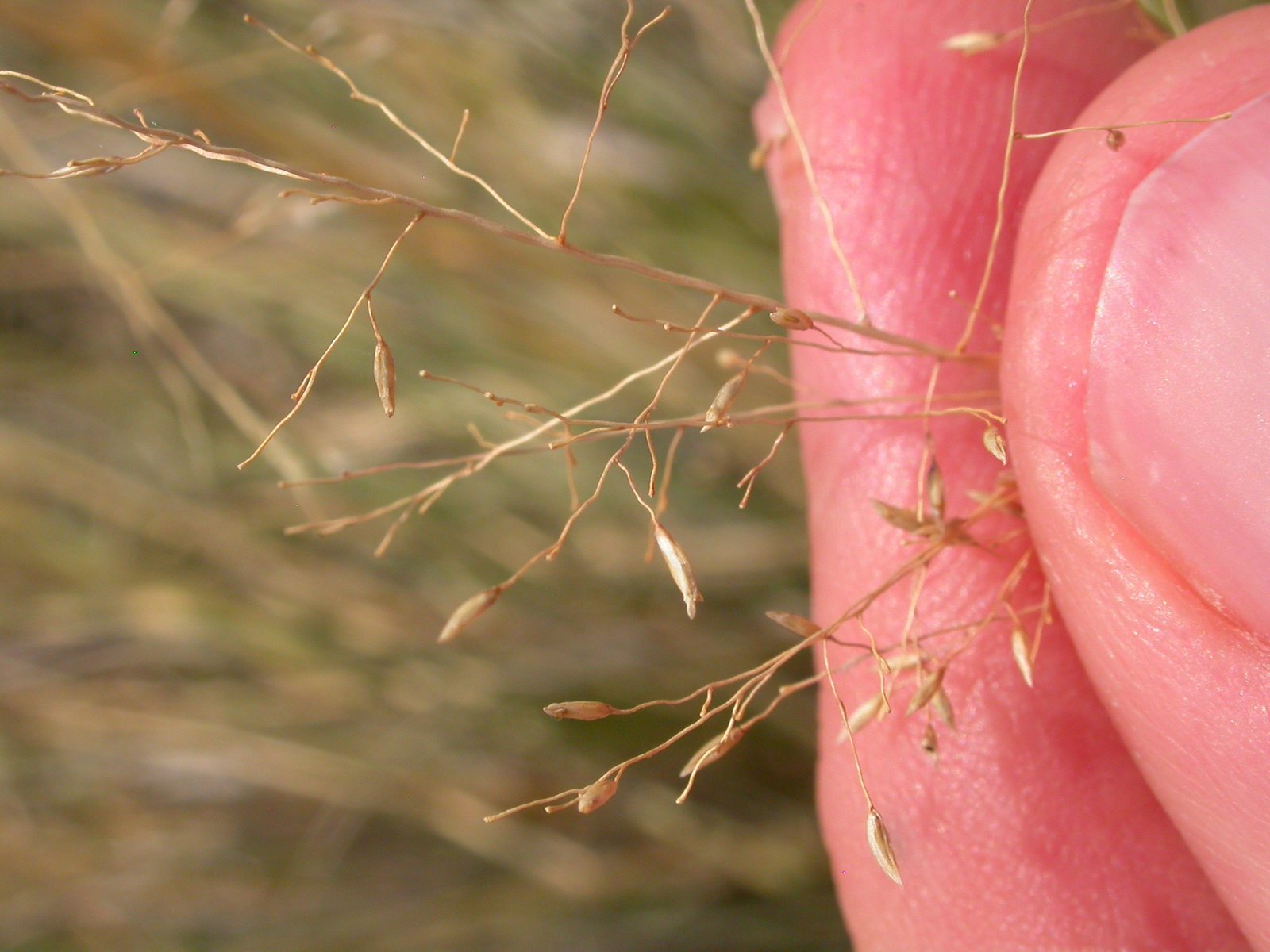
- Summer into early autumn; fine pinkish to purplish flowers form broad, airy panicles that fade to tan.
- Foliage
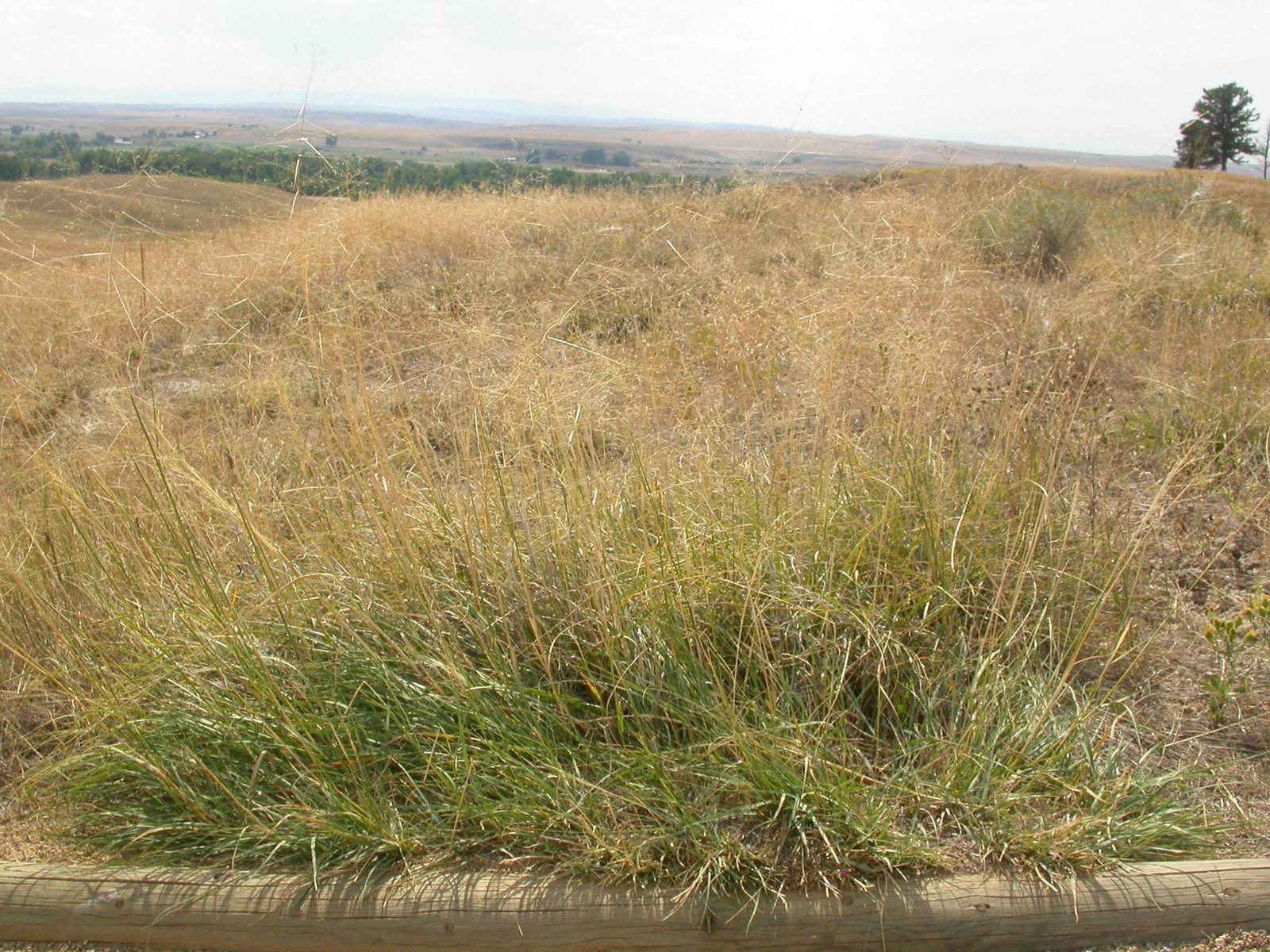
- Narrow, arching, blue-green to grey-green blades form a dense basal clump and turn straw-coloured in autumn.
- Growth
- Moderate; growth starts late in spring as the soil warms.
- Care needed
- Low
The year at a glance
- Deer resistant
- Drought tolerant
- Cold hardy
- Heat tolerant
- Wildlife
| J | F | M | A | M | J | J | A | S | O | N | D | |
|---|---|---|---|---|---|---|---|---|---|---|---|---|
| Flowers | ||||||||||||
| Fruit | ||||||||||||
| Plant |
Northern hemisphere months. In Australia, shift them by six.
- Difficulty
- Easy
- Toughness
- Very tough
Will it suit your garden?
Pick your zone, country, light and whether you have pets.
Full sun is 6 or more hours of direct sun a day, part shade 3 to 6 hours, shade under 3.
How it grows
Planting day
1.1 ft (0.35 m)
After 1 year
2.3 ft (0.69 m)
After 2 years
3 ft (1 m)
After 3 years
4 ft (1.2 m)
full size
About 3 years to full size.
From a typical nursery size, at an average rate for this kind of plant. A rule of thumb, not a forecast.
Good to know
- Cats and dogs
- Safe
- Native to
- the US and Canada
- Growth rate
- Moderate
Care
Jobs through the year
- WaterMay–Jun, Sep, every 21 days
- Water established clumps only during extended drought; water new plants more frequently.
- WaterJul–Aug, every 14 days
- Check established clumps and water deeply only during prolonged drought or persistent stress.
- PruneFeb–Mar
- Cut old stems to 10–15 cm before new growth; leave seed heads standing until then.
- DivideMay–Jun
- Divide crowded clumps only when fresh growth begins and the soil has warmed.
- DeadheadAug–Sep
- Remove seed heads before seed falls only where self-seeding is unwanted.
- Plant in full sun after the soil has warmed, allowing room for the mature clump.
- Water deeply during the first growing season, letting the surface soil dry between waterings.
- Once established, water only during extended dry spells unless the plant shows persistent drought stress.
- Avoid routine feeding; rich soil and excess nitrogen can produce floppy growth.
- Keep mulch clear of the crown and divide crowded clumps in spring when fresh growth begins.
Pruning. Leave dry foliage and seed heads standing through winter. In late winter or early spring, before new shoots extend, cut the old growth to 4-6 in (10-15 cm) above the ground.
Through the year
- Late winter
- Cut back standing stems before fresh growth begins.
- Spring
- Check crowns for winter damage; do not assume plants are dead before warm-season growth starts.
- Late spring
- Plant or divide once the soil is warm, and water new plants thoroughly.
- Summer
- Water establishing plants deeply; check mature clumps only during prolonged drought.
- Early autumn
- Collect ripe seed if wanted, or remove flower heads before seed falls where seedlings would be unwelcome.
- Late autumn
- Leave the tawny foliage standing for winter structure and wildlife cover.
In the garden
- Plant in broad drifts in dry meadow schemes, where the fine flower heads soften stronger plant shapes.
- Combine with yuccas and other bold-leaved plants in gravel gardens for contrasting textures.
- Use in sunny saline or alkaline beds where less tolerant ornamentals struggle.
- Place beside paths or terraces where low sunlight can illuminate the airy seed heads.
Garden styles it suits: Native meadow, New perennial (prairie), Desert / xeriscape, Dry gravel garden, Southwestern and Winter interest.
Plant it with: Blue grama, Little bluestem, Purple prairie clover, Prairie coneflower, Butterfly weed and Banana yucca.
Wildlife: Seeds provide food for seed-eating birds, while dense clumps offer shelter for insects and other small animals. Like other grasses, it is wind-pollinated rather than a nectar source for bees.
Problems to watch for
- Crown rot in persistently wet soil: improve drainage or move the plant to a raised, better-drained position.
- Flopping in shade or over-rich soil: provide full sun and stop nitrogen feeding.
- Weak flowering in cool summers: choose the warmest sunny site available; reliable flowering may not be possible in cool maritime conditions.
- Unwanted seedlings on open ground: remove seed heads before they shed and pull seedlings while small.
Safety
Not known to be toxic to people, cats, dogs or horses; no part is generally regarded as poisonous. It is also used as a forage grass, although garden plants should not be assumed safe to eat if treated with chemicals.
Easily confused with
Giant sacaton (Sporobolus wrightii)
Usually forms a much taller, coarser clump, often reaching 6-8 ft (1.8-2.4 m) in flower, with larger leaves and more imposing flower stems.
Prairie dropseed (Sporobolus heterolepis)
Makes a lower, rounded mound of much finer, hairlike green leaves; its flowers often have a distinctive coriander-like scent.
The name
The common name refers to its tolerance of alkaline soils, while sacaton comes from the Spanish zacatón, meaning a large or coarse grass.
Propagation. Sow seed shallowly in spring once conditions are warm, keeping the seedbed moist until seedlings establish. Divide established clumps in spring as active growth begins; large crowns can be tough to split.
Checked against open data
- Accepted botanical name
- Sporobolus airoides
- In the US and Canada
- Native in Canada and the lower 48 states.
- Native range
- Arizona, Arkansas, British Columbia, California, Colorado, Idaho, Kansas, Mexico Northeast, Mexico Southwest, Missouri, Montana and Nebraska.
- Measured
- Soil pH 6.6 to 9.
Sources: GBIF (CC BY 4.0), USDA PLANTS and Trefle (CC BY 4.0). The care and design notes are LandscapeGPT's own.
See it in your own yard.
Upload a photo of your yard and see it redesigned with plants that suit your climate, each checked against your zone.