Apache plume
Fallugia paradoxa. Family Rosaceae. Shrub.
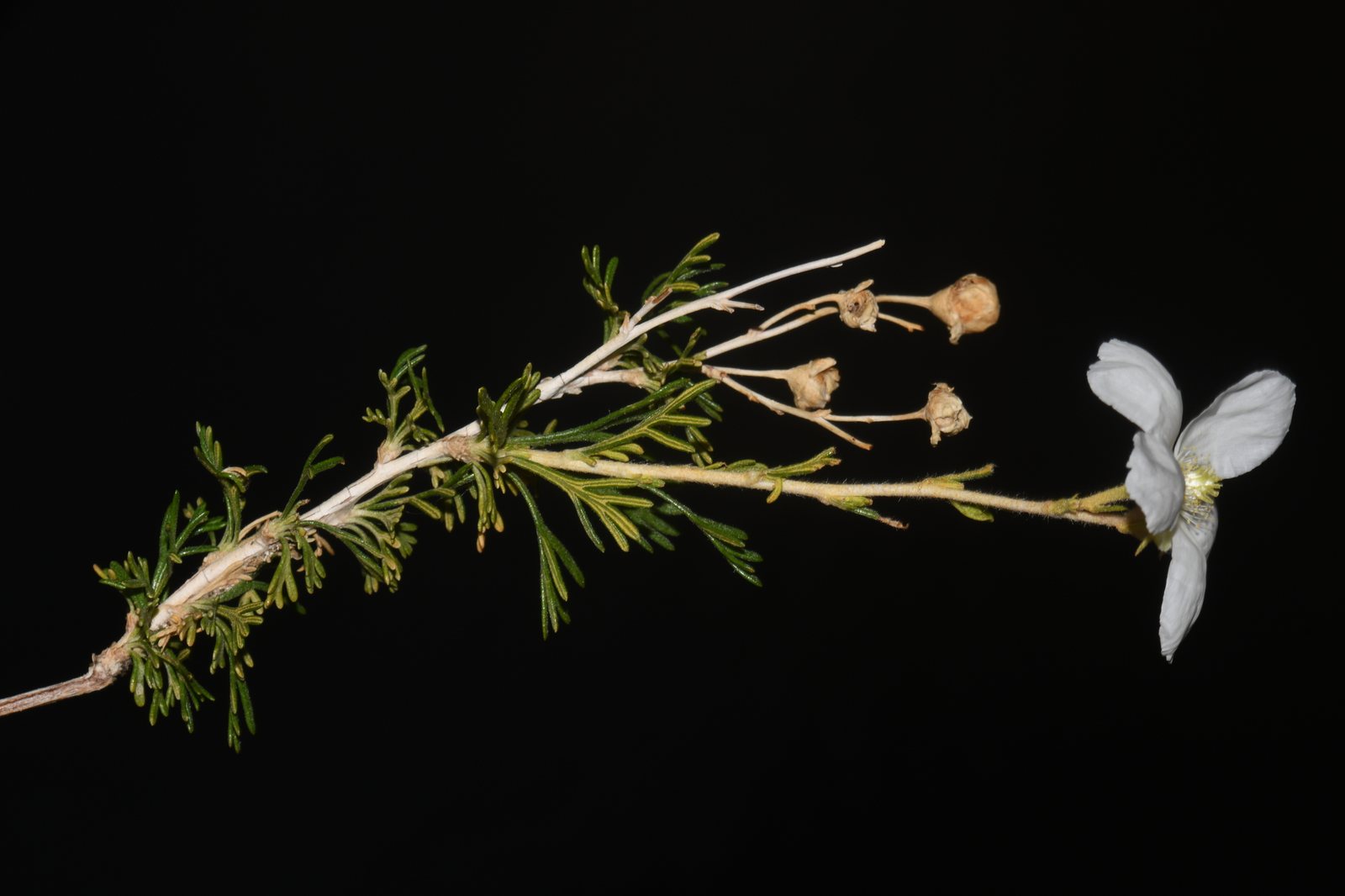
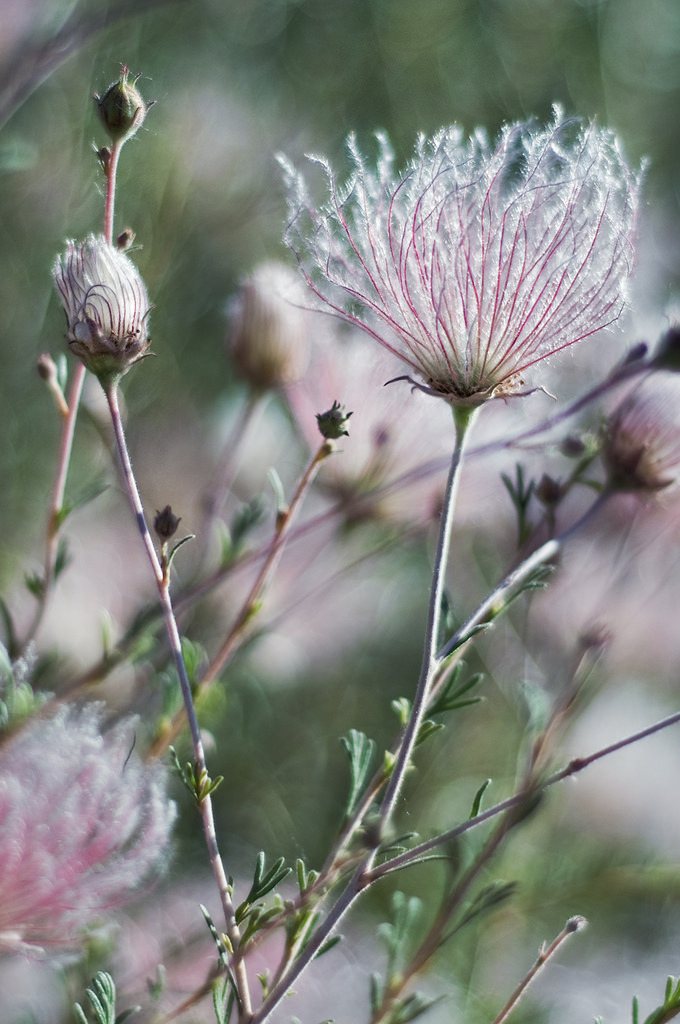
Apache plume is an open, twiggy shrub native to the southwestern United States and northern Mexico. Gardeners grow it for its white flowers and long-lasting, pinkish, feathery seed heads, which can appear together on the plant. It suits sunny, dry gardens but performs poorly in persistently wet soil.
At a glance
- Sun
- Full sun; tolerates light shade but flowers less freely.
- Water
- Low once established. Water deeply during establishment, then mainly during prolonged drought.
- Soil
- Well-drained sandy, gravelly or rocky soil; tolerates alkaline soil and low fertility. Avoid waterlogged ground and heavy, poorly drained clay.
- Height
- 3-6 ft (0.9-1.8 m)
- Spread
- 3-6 ft (0.9-1.8 m)
- Flowers
- White, five-petalled flowers from late spring into summer, sometimes repeating after rain; pink to silvery, feathery seed heads follow.
- Foliage
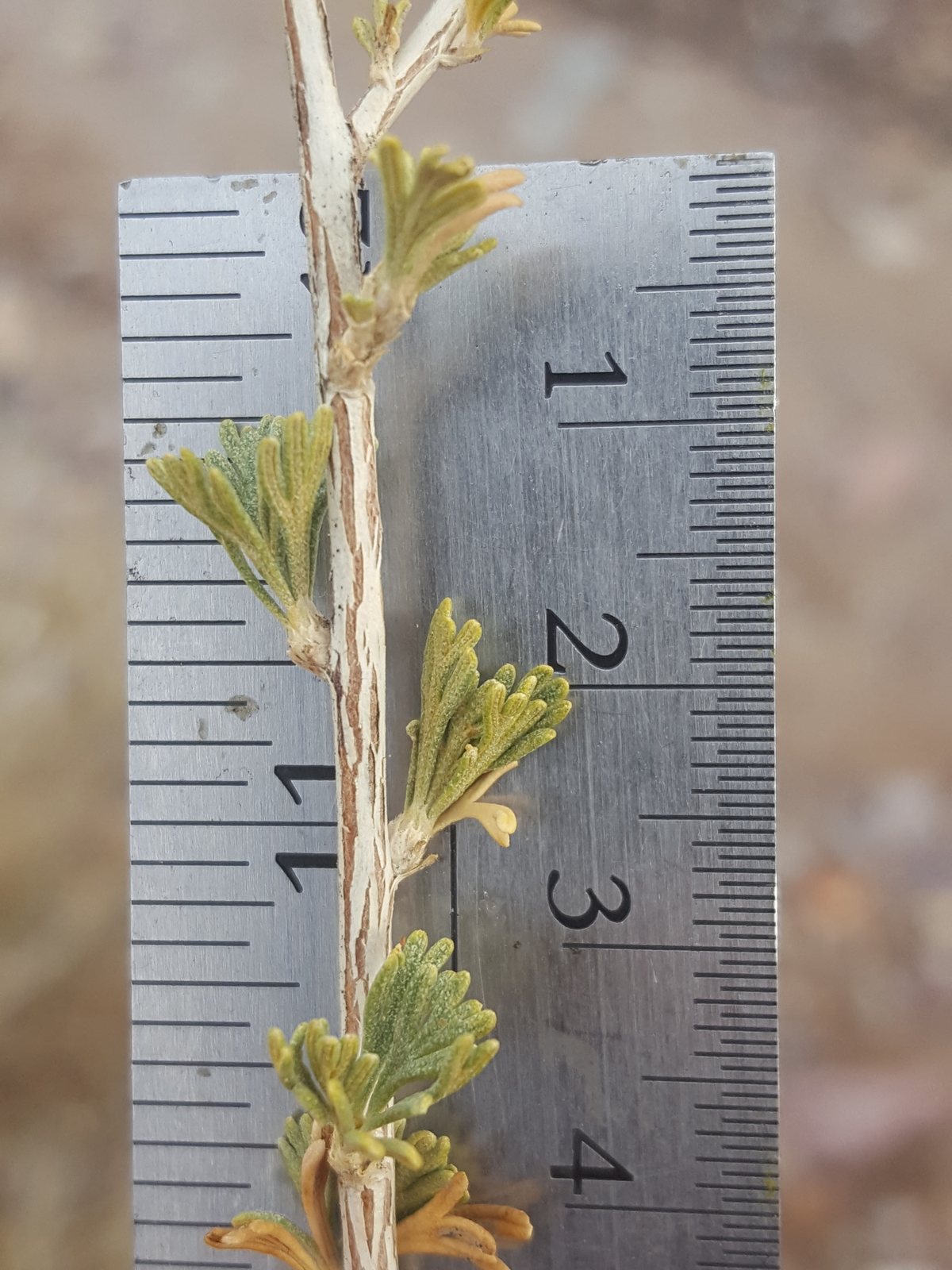
- Small, deeply lobed, dark green leaves with paler, hairy undersides. Deciduous in cold climates; may retain some leaves in mild winters.
- Growth
- Moderate
- Care needed
- Low
The year at a glance
- Pollinators
- Drought tolerant
- Heat tolerant
- Wildlife
- Low allergen
| J | F | M | A | M | J | J | A | S | O | N | D | |
|---|---|---|---|---|---|---|---|---|---|---|---|---|
| Flowers | ||||||||||||
| Fruit | ||||||||||||
| Plant |
Northern hemisphere months. In Australia, shift them by six.
- Difficulty
- Easy
- Toughness
- Very tough
Will it suit your garden?
Pick your zone, country, light and whether you have pets.
Full sun is 6 or more hours of direct sun a day, part shade 3 to 6 hours, shade under 3.
How it grows
Planting day
1.6 ft (0.5 m)
After 1 year
2.2 ft (0.67 m)
After 2 years
2.8 ft (0.84 m)
After 3 years
3 ft (1 m)
After 5 years
4 ft (1.4 m)
full size
About 5 years to full size.
From a typical nursery size, at an average rate for this kind of plant. A rule of thumb, not a forecast.
Good to know
- Cats and dogs
- Safe
- Growth rate
- Moderate
Care
Jobs through the year
- WaterApr–May, Sep, every 30 days
- Established shrubs need water only in prolonged drought; water new shrubs more often as soil dries.
- WaterJun–Aug, every 21 days
- During prolonged drought only, soak established roots deeply and let soil dry between waterings.
- PruneFeb–Mar
- Remove dead or crossing branches and thin older stems only if crowded; avoid shearing.
- MulchApr
- Use a thin gravel mulch if needed, keeping stem bases clear.
- ProtectOct–Nov
- Clear blocked drainage before winter rain; roots must not remain waterlogged.
- Water deeply during the first growing season, allowing the soil to dry between waterings.
- Once established, give occasional deep watering during extended drought rather than frequent light watering.
- Avoid routine feeding; rich soil and excess fertiliser encourage loose growth.
- Use a thin gravel mulch if needed, keeping it clear of the stem bases.
- Remove unwanted seedlings or suckers while small if you need to contain its spread.
Pruning. In late winter or early spring, remove dead, damaged or crossing branches and thin a few older stems at ground level if needed. Avoid regular shearing and leave the decorative seed heads through autumn and winter.
Through the year
- Late winter
- Remove dead wood and lightly thin crowded stems before new growth begins.
- Spring
- Plant in a sunny, freely draining position and water thoroughly.
- Late spring
- Check soil moisture around newly planted shrubs; water deeply when the root zone begins to dry.
- Summer
- Water established shrubs only during prolonged drought; leave fading flowers to develop plumes.
- Autumn
- Remove unwanted seedlings and retain seed heads for seasonal interest.
- Winter
- Check that water drains away from the roots, especially in cool, rainy climates.
In the garden
- Plant among gravel and boulders, where its loose outline softens hard surfaces.
- Combine with blue grama, penstemons and yuccas in a dry, southwestern-style border.
- Backlight with low afternoon sun to highlight the feathery seed heads.
- Use in an informal dry-land screen or on a sunny, well-drained slope, allowing room for its natural spread.
Garden styles it suits: Desert / xeriscape, Southwestern, Desert modern, Dry gravel garden, Wildlife garden and Low-maintenance.
Plant it with: Blue grama, Little bluestem, Palmer's penstemon, Banana yucca, Desert marigold and Sulphur buckwheat.
Wildlife: Flowers provide pollen and nectar for bees and other insects. The branching shrub offers shelter for small birds.
Problems to watch for
- Root rot or winter decline in wet soil: improve drainage or move the shrub to a raised, freely draining position.
- Sparse flowers and stretched growth in shade: provide a position with full sun.
- Loose, overly lush growth from excess water or fertiliser: stop feeding and reduce irrigation once established.
- Unwanted seedlings or suckers: pull seedlings and cut or dig out unwanted shoots while small.
Safety
Not known to be toxic to people, cats, dogs or horses, but species-specific safety information is limited. It is not a food plant; discourage pets and children from eating it.
Easily confused with
Prairie smoke (Geum triflorum)
Also produces pink, feathery seed heads, but is a low herbaceous perennial with basal, fern-like leaves and nodding pink flowers, not a woody shrub with open white flowers.
Cliffrose (Purshia stansburiana)
Another southwestern shrub with plumed seeds, but its flowers are usually cream to pale yellow and strongly fragrant, and older plants develop conspicuously shredding bark.
The name
The common name refers to the plant's southwestern range and its plume-like, feathery seed heads.
Propagation. Grow from ripe seed or take semi-ripe cuttings in summer. Seed germination can be variable; a period of cold, moist stratification may help. Rooted suckers can sometimes be separated during dormancy.
Checked against open data
- Accepted botanical name
- Fallugia paradoxa
- Native range
- Arizona, California, Colorado, Mexico Northeast, Mexico Northwest, Nevada, New Mexico, Oklahoma, Texas and Utah.
- Measured
- Soil pH 7 to 8. Average height 183 cm.
Sources: GBIF (CC BY 4.0) and Trefle (CC BY 4.0). The care and design notes are LandscapeGPT's own.
See it in your own yard.
Upload a photo of your yard and see it redesigned with plants that suit your climate, each checked against your zone.