Arugula
Eruca vesicaria. Family Brassicaceae. Annual.
Also called Rocket, Salad rocket, Garden rocket, Roquette.
Arugula is a fast-growing leafy vegetable grown as an annual for its peppery leaves and edible flowers. It crops best in cool weather, making it useful for spring and autumn salads; heat and dry soil quickly send it into flower.
At a glance
- Sun
- Full sun in cool weather; light afternoon shade helps in warmer conditions.
- Water
- Keep the root zone evenly moist, watering when the soil surface starts to dry. Avoid waterlogged soil.
- Soil
- Fertile, well-drained soil that holds moisture, ideally around pH 6.0-7.0.
- Height
- 0.5-1 ft (0.15-0.3 m) when harvested for leaves; 1-3 ft (0.3-0.9 m) in flower.
- Spread
- 0.5-1 ft (0.15-0.3 m)
- Flowers
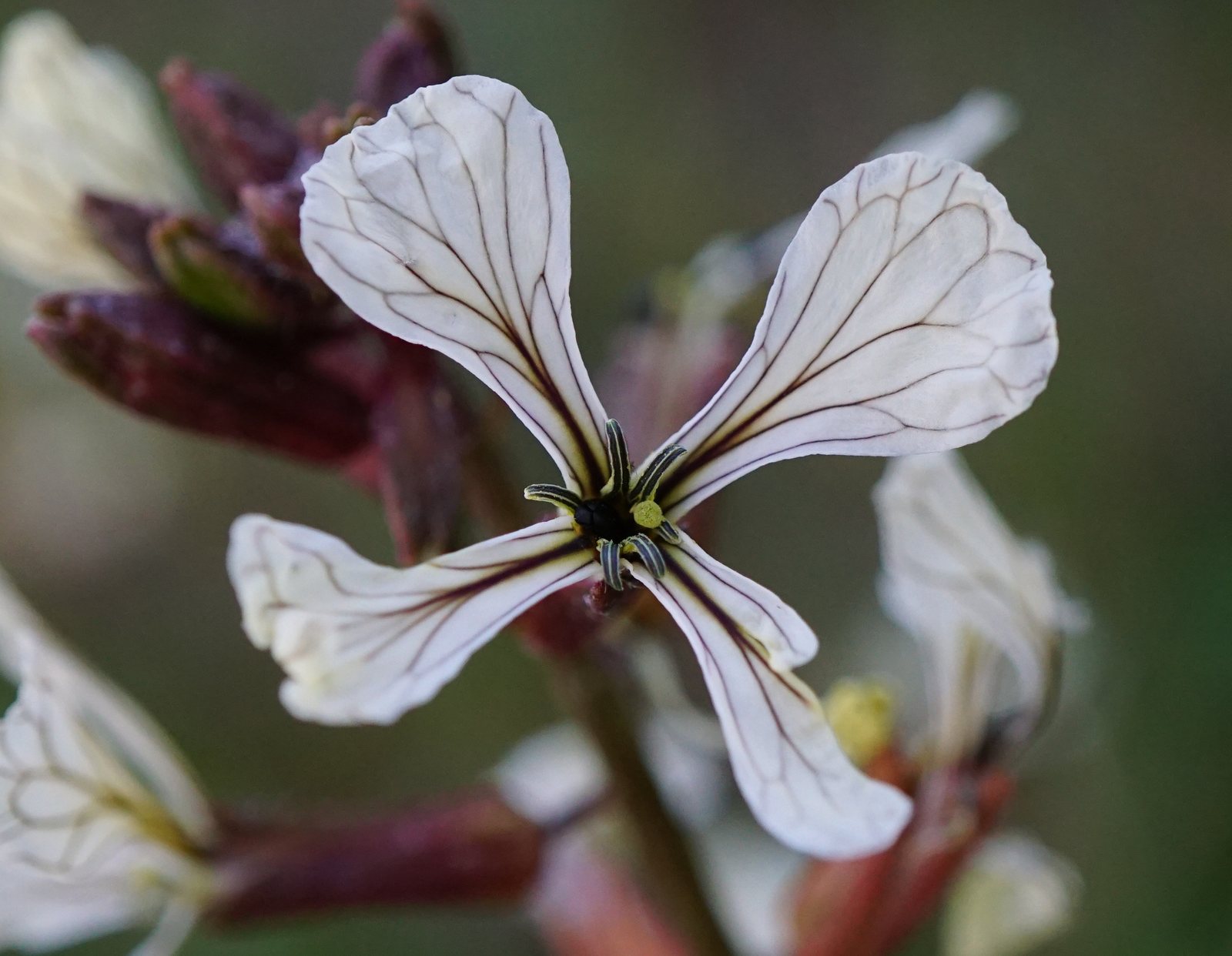
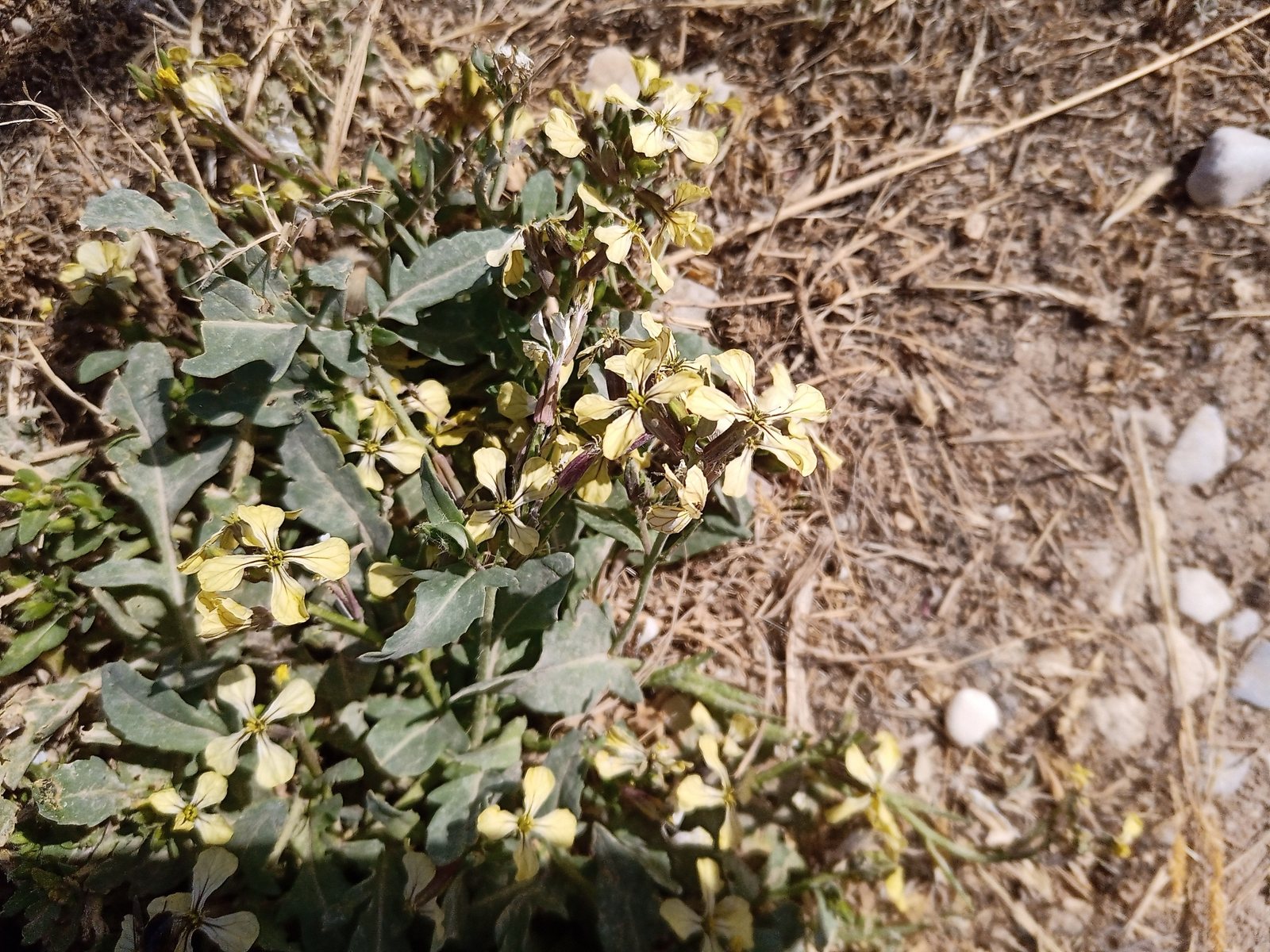
- Usually late spring to summer, or whenever plants bolt; cream to pale yellow flowers with dark purple veins.
- Foliage
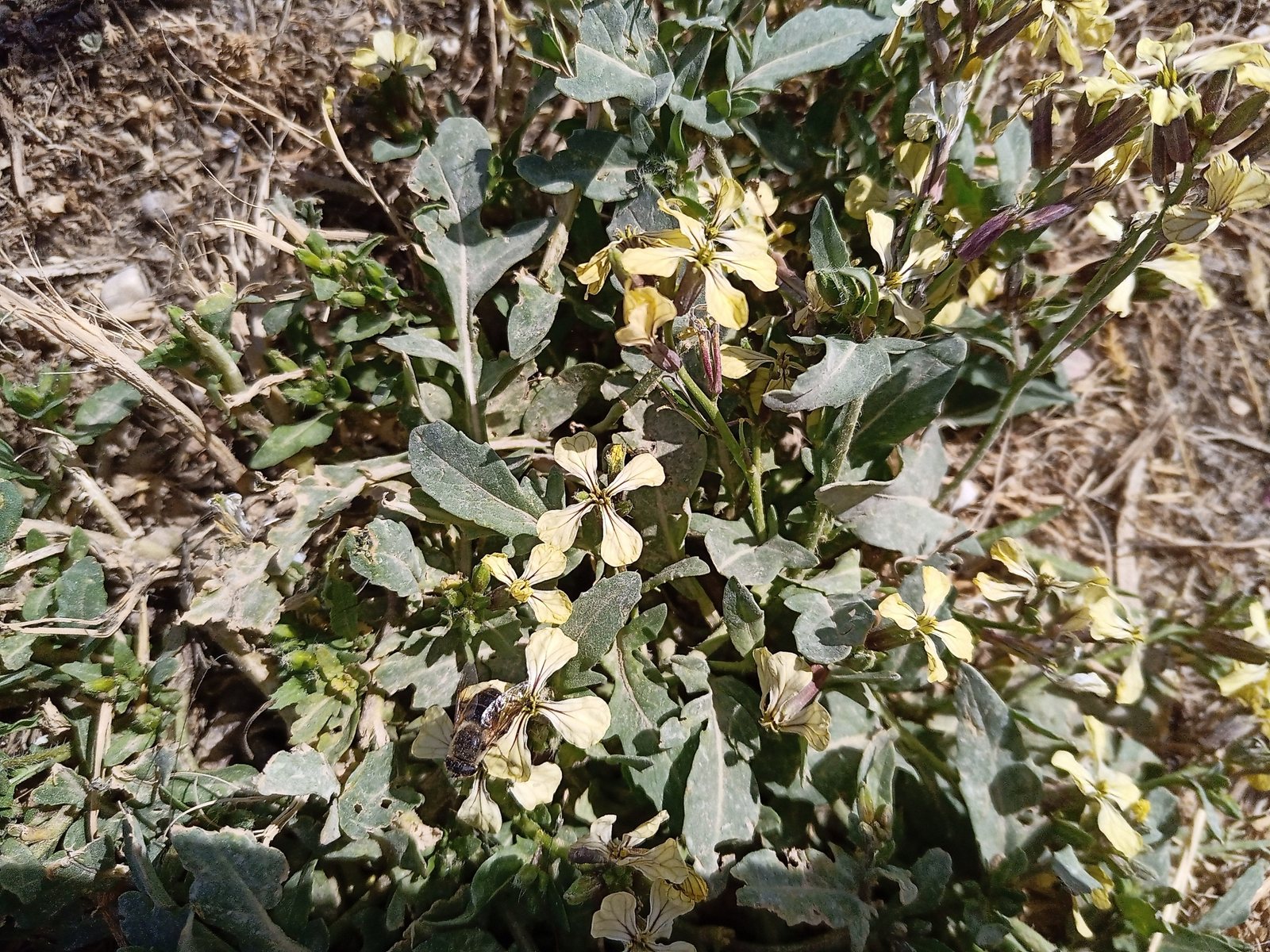
- Soft green leaves with irregular lobes and a peppery, sometimes mustard-like flavour; older leaves become stronger and tougher.
- Growth
- Fast; baby leaves are often ready about 3-4 weeks after sowing.
- Care needed
- Low
The year at a glance
- Pollinators
- Low allergen
- Edible
| J | F | M | A | M | J | J | A | S | O | N | D | |
|---|---|---|---|---|---|---|---|---|---|---|---|---|
| Flowers | ||||||||||||
| Fruit | ||||||||||||
| Plant |
Northern hemisphere months. In Australia, shift them by six.
- Difficulty
- Easy
- Toughness
- Fairly tough
Will it suit your garden?
Pick your zone, country, light and whether you have pets.
Full sun is 6 or more hours of direct sun a day, part shade 3 to 6 hours, shade under 3.
How it grows
Planting day
0.5 ft (0.15 m)
After 1 year
0.7 ft (0.22 m)
full size
Full size in one season.
From a typical nursery size, at an average rate for this kind of plant. A rule of thumb, not a forecast.
Good to know
- Cats and dogs
- Safe
- Growth rate
- Fast
Care
Jobs through the year
- WaterMar–May, Sep–Nov, every 3 days
- Water in-ground crops when the surface dries; seedlings need more frequent checks.
- WaterJun–Aug, every 2 days
- Keep roots evenly moist during warm dry weather; skip watering if soil is already moist.
- FeedMar, Aug
- Work compost into the bed before sowing; extra feed is rarely needed.
- MulchMay, Aug
- Apply a thin fine mulch around established plants, keeping crowns clear.
- ProtectMar–May, Aug–Sep
- Cover new sowings immediately with fine insect mesh to exclude flea beetles.
- ProtectOct–Nov
- Use fleece or a cloche to extend harvesting through light frosts.
- HarvestApr–Nov
- Pick young outer leaves, leaving the centre intact; replace bitter, bolting plants.
- Sow directly about 0.25 in (0.6 cm) deep; thin to 4-6 in (10-15 cm) apart for larger leaves.
- Water regularly during dry spells to maintain steady growth and reduce premature bolting.
- Work compost into the bed before sowing; feed lightly only if growth is pale or weak.
- Apply a thin layer of fine mulch around established plants to conserve moisture, keeping it clear of their crowns.
- Sow small batches every 2-3 weeks during cool growing weather rather than one large crop.
Pruning. Pick outer leaves while leaving the central growing point intact, or cut young plants about 1 in (2.5 cm) above the soil for another harvest. Remove flower stalks if you want a little more leaf growth, but replace bolting plants once leaves become too strong.
Harvest
Pick young leaves 5–10 cm (2–4 in) long, usually 3–4 weeks after sowing; full-sized leaves take about 4–6 weeks. Snip outer leaves individually, leaving the centre growing, or cut the whole patch about 3 cm (1 in) above the soil for regrowth. Harvest regularly before flower stalks develop, as older leaves and hot-weather growth become tougher and more bitter.
Through the year
- Early spring
- Sow outdoors as soon as the soil is workable; protect young seedlings with fleece or insect mesh.
- Mid-spring
- Thin seedlings, begin harvesting young leaves and sow another small batch.
- Late spring
- Check for flea beetles and keep plants evenly watered as temperatures rise.
- Summer
- Pause sowing during sustained heat, or use a lightly shaded site; leave a few flowering plants for insects if wanted.
- Late summer
- Restart sowing as temperatures begin to fall for an autumn crop.
- Autumn
- Harvest regularly and use a cloche or fleece against light frost; in mild-winter climates, continue small sowings.
In the garden
- Edge vegetable beds with short rows that can be harvested and replaced throughout the cool season.
- Combine with loose-leaf lettuce and radishes in a potager for contrasting leaf shapes and quick crops.
- Grow in containers near the kitchen, with drainage holes and enough soil to resist drying out.
- Fill temporary gaps between slower-growing vegetables before their foliage closes over.
- Allow a few plants to flower at the edge of an edible garden for delicate cream blooms and visiting insects.
Garden styles it suits: Potager (kitchen garden), Edible landscape, Herb parterre, Cottage garden, Small-space and Homestead.
Plant it with: Lettuce, Radish, Spring onion, Carrot, Coriander and Calendula.
Wildlife: Flowers provide nectar and pollen for bees, hoverflies and other insects. Leaves may feed caterpillars of cabbage-family butterflies and moths.
Problems to watch for
- Flea beetles make small shot holes in leaves: cover seedlings immediately after sowing with fine insect mesh, securing the edges.
- Slugs and snails eat seedlings and young leaves: remove hiding places, inspect after dark and use locally approved iron phosphate bait if needed.
- Downy mildew causes yellow patches and greyish growth beneath leaves: improve spacing, water the soil rather than foliage and remove badly affected plants.
- Premature bolting produces tough, strongly flavoured leaves: sow in cooler weather, keep soil moist and replace plants with fresh sowings.
Safety
Not known to be toxic to people, cats, dogs or horses. Leaves, flowers and seeds are edible; large amounts may cause digestive upset, and it should not be used as a major livestock feed.
Easily confused with
Wild rocket (Diplotaxis tenuifolia)
Usually a short-lived perennial with narrower, more deeply cut leaves and yellow flowers; arugula is annual and has cream flowers marked with dark veins.
White mustard (Sinapis alba)
Has yellow flowers and generally coarser, hairier leaves and stems; arugula has cream flowers with conspicuous dark veins.
The name
Arugula comes through southern Italian names for rocket, while the Latin species name vesicaria refers to a bladder-like or inflated structure.
Propagation. Grow from seed sown directly where it will crop. For seed saving, let some pods dry on the plant, then collect them before they split; self-sown seedlings may appear if pods are left in place.
Checked against open data
- Accepted botanical name
- Eruca vesicaria
- In the US and Canada
- Introduced in Canada and the lower 48 states.
- Native range
- Afghanistan, Algeria, Baleares, China North-Central, China South-Central, China Southeast, Corse, Cyprus, East Aegean Is., Egypt, Greece and Gulf States.
- Measured
- Soil pH 7 to 7.5. Average height 14 cm.
Sources: GBIF (CC BY 4.0), USDA PLANTS and Trefle (CC BY 4.0). The care and design notes are LandscapeGPT's own.
See it in your own yard.
Upload a photo of your yard and see it redesigned with plants that suit your climate, each checked against your zone.