Carrot
Daucus carota. Family Apiaceae. Annual.
Also called Garden carrot, Cultivated carrot.
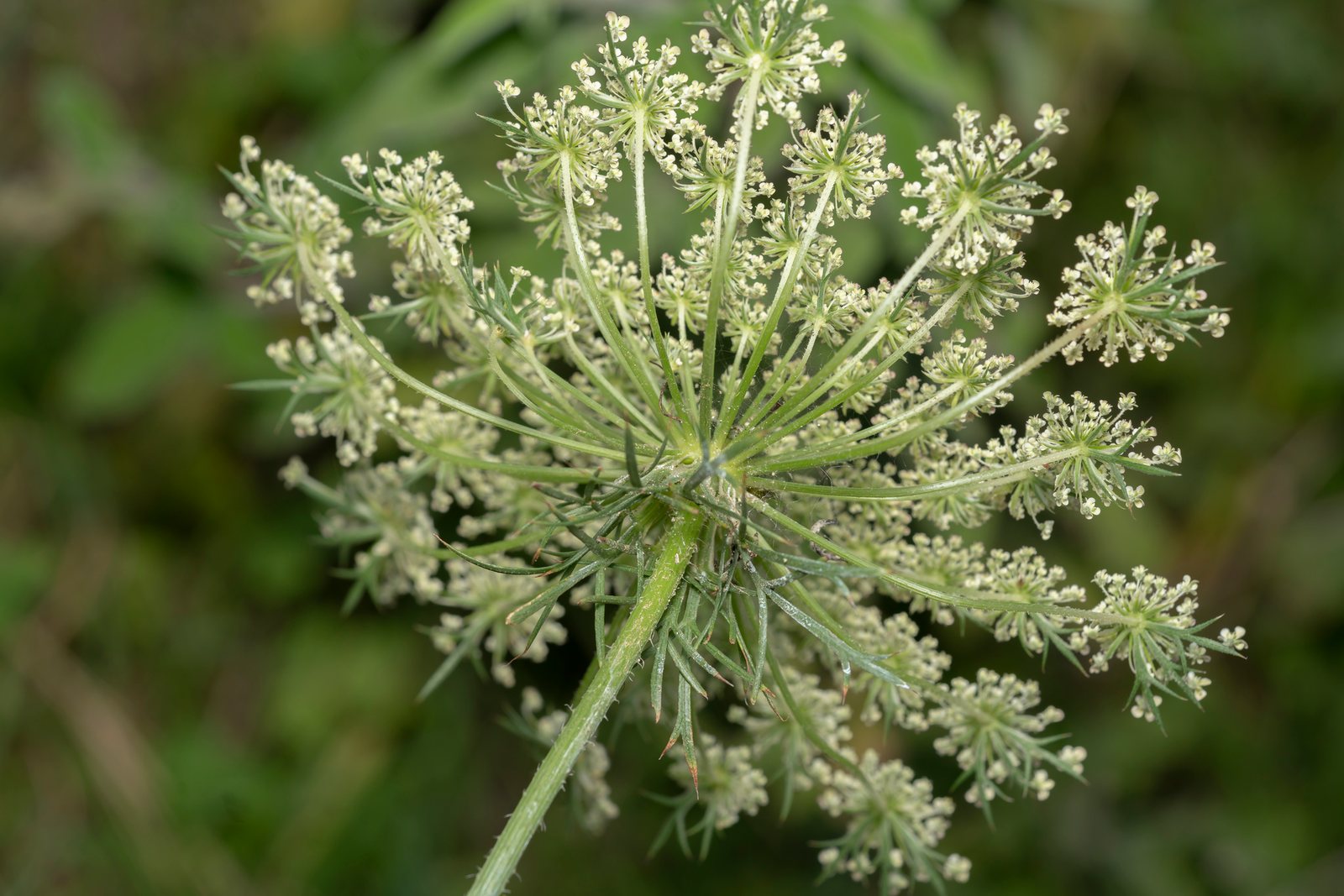
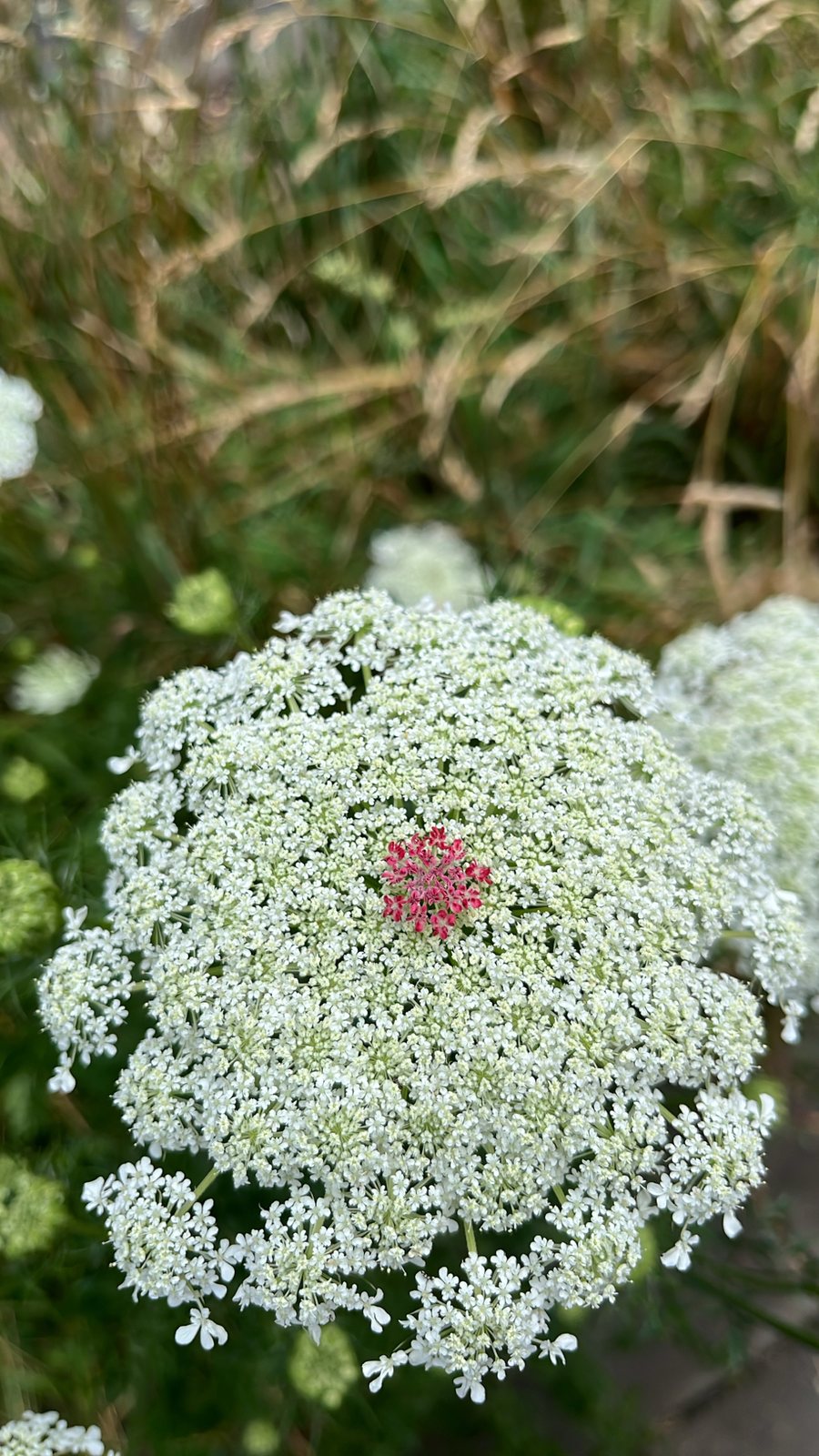
Carrot is a biennial root vegetable grown as an annual for its crisp, sweet storage root, which may be orange, purple, red, yellow or white. Its finely divided leaves suit vegetable beds and mixed edible plantings; plants left for a second year produce white flower heads and seed.
At a glance
- Sun
- Full sun; tolerates light shade, but roots develop more slowly.
- Water
- Keep the seedbed consistently moist until seedlings emerge, then water deeply when the surface soil begins to dry. Avoid alternating drought and heavy watering, which can split roots.
- Soil
- Deep, loose, well-drained sandy loam, ideally pH 6.0-7.0. Remove stones and avoid compacted soil or fresh manure, which encourage forked roots.
- Height
- 1-1.5 ft (0.3-0.45 m) in the harvest year; flowering stems can reach 3-4 ft (0.9-1.2 m).
- Spread
- 0.25-0.5 ft (0.08-0.15 m)
- Flowers
- Flat-topped clusters of small white flowers in summer of the second year; normally harvested before flowering.
- Foliage
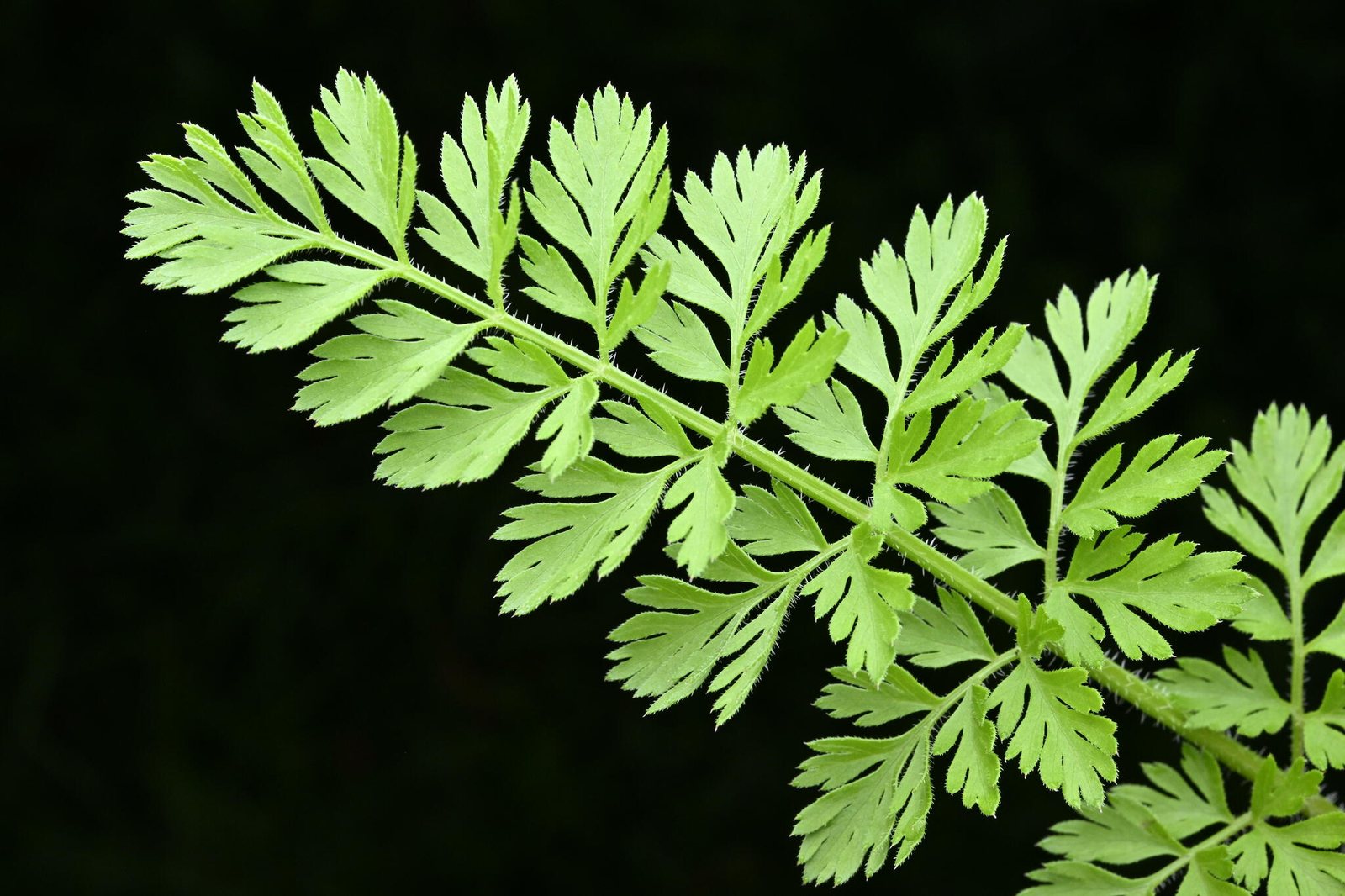
- Soft, finely divided green leaves held in an upright rosette.
- Growth
- Moderate; many cultivars reach harvest size about 70-100 days after sowing, depending on temperature and growing condit…
- Care needed
- Medium
The year at a glance
- Low allergen
- Edible
| J | F | M | A | M | J | J | A | S | O | N | D | |
|---|---|---|---|---|---|---|---|---|---|---|---|---|
| Fruit | ||||||||||||
| Plant |
Northern hemisphere months. In Australia, shift them by six.
- Difficulty
- Moderate
- Toughness
- Fairly tough
Will it suit your garden?
Pick your zone, country, light and whether you have pets.
Full sun is 6 or more hours of direct sun a day, part shade 3 to 6 hours, shade under 3.
How it grows
Planting day
0.5 ft (0.15 m)
After 1 year
1.2 ft (0.38 m)
full size
Full size in one season.
From a typical nursery size, at an average rate for this kind of plant. A rule of thumb, not a forecast.
Good to know
- Cats and dogs
- Safe
- Native to
- the UK
- Invasive in
- the US and Canada
- In the garden
- Spreads vigorously: plan to contain it.
- Growth rate
- Moderate
Care
Jobs through the year
- WaterMar–May, every 7 days
- Water established rows if dry; check seedbeds daily and keep the surface moist until emergence.
- WaterJun–Aug, every 5 days
- Water established roots deeply if rainfall is insufficient; avoid alternating drought and soaking.
- WaterSep–Oct, every 10 days
- Water established roots only when soil is drying, allowing for rainfall.
- FeedMar–Apr
- On poor soil only, apply a modest balanced fertilizer before sowing; avoid fresh manure and excess nitrogen.
- ProtectMar–Oct
- Keep fine insect mesh sealed over rows from sowing where carrot fly occurs.
- HarvestJun–Nov, every 7 days
- Lift roots as they reach the desired size; harvest storage crops before the ground freezes hard.
- Sow directly into the growing bed; transplanting often distorts the taproot.
- Keep shallowly sown seed moist; germination can take two to three weeks in cool soil.
- Thin seedlings to 2-3 in (5-8 cm) apart, or follow the cultivar's spacing instructions.
- Use modest amounts of balanced fertiliser only where needed; excess nitrogen encourages leaves rather than roots.
- Weed carefully while plants are small, and cover exposed root shoulders with soil to prevent greening.
- Use fine insect mesh from sowing where carrot fly is troublesome, sealing the edges.
Pruning. No pruning is needed during growth. After harvest, cut the leaves off just above the root before storage.
Harvest
Harvest carrot roots about 60–90 days after sowing, or earlier for baby carrots, when the shoulders reach the variety’s expected width, often 2–3 cm (¾–1¼ in). Brush away a little soil to check their size, then loosen the ground with a garden fork and lift gently rather than pulling hard on the leaves.
Through the year
- Late winter
- Prepare beds when the soil is workable, removing stones and breaking up compaction without adding fresh manure.
- Spring
- Direct-sow shallow rows once soil is workable and warming; keep the surface moist until emergence.
- Late spring
- Thin crowded seedlings and remove weeds before they compete with the crop.
- Summer
- Water evenly and make further sowings where the season allows; in hot climates, favour cooler-season planting.
- Autumn
- Harvest as roots reach the size you want. Lift storage crops before the soil freezes hard.
- Winter
- In mild climates, harvest roots left in well-drained ground; elsewhere, check stored roots and discard any that soften or rot.
In the garden
- Plant in orderly rows within a potager, using the fine foliage to contrast with broad-leaved lettuces.
- Use short-rooted cultivars in deep containers on sunny patios where garden soil is stony or compacted.
- Grow in raised vegetable beds for accessible harvesting and easier control of soil texture.
- Leave a few plants to flower in an edible or pollinator border, removing seed heads before unwanted self-sowing.
Garden styles it suits: Potager (kitchen garden), Edible landscape, Homestead, Cottage garden, Family-friendly and Small-space.
Plant it with: Lettuce, Radish, Onion, Leek, Chives and Calendula.
Wildlife: Second-year flowers provide nectar and pollen for hoverflies, small bees and other insects. Leaves can feed swallowtail caterpillars in regions where suitable species occur.
Problems to watch for
- Carrot fly: larvae tunnel through roots. Cover crops with fine insect mesh from sowing and rotate the growing site.
- Forked or misshapen roots: remove stones, loosen compacted soil and avoid fresh manure; choose short-rooted cultivars for shallow beds.
- Poor germination: prevent the seedbed from drying or crusting, use fresh seed and avoid sowing into very hot soil.
- Leaf blights: remove affected debris, rotate crops and water at soil level to reduce prolonged leaf wetness.
Safety
Cultivated carrot roots and leaves are not known to be toxic to people, cats, dogs or horses in normal food amounts. Contact with foliage can occasionally irritate skin, and some people have carrot allergies. Large, hard pieces can be a choking hazard for pets. Do not eat wild carrot-like plants: poisonous relatives can be fatal.
Where it spreads. The cultivated crop is not usually invasive, but the wild form of Daucus carota can spread aggressively in disturbed grassland and roadsides in the United States and southern Canada. Wild carrot is listed as a Class C noxious weed in Washington State. Prevent seed set where unwanted spread is a concern.
Easily confused with
Poison hemlock (Conium maculatum)
Typically has smooth, hairless stems with purple blotches, unlike the usually hairy flowering stems of carrot. It is highly poisonous; these features alone are not a safe basis for identifying a wild plant for eating.
Fool's parsley (Aethusa cynapium)
Has hairless foliage and conspicuous narrow bracts hanging down beneath individual flower clusters. It is poisonous; do not harvest carrot-like plants unless their identity is certain.
Parsnip (Pastinaca sativa)
Has broad, toothed leaflets rather than carrot's finely divided foliage, and yellow rather than white flowers. Its sap can cause severe skin burns after sunlight exposure.
The name
The common name carrot and the botanical name Daucus carota derive through Latin from ancient Greek names for carrot-like plants.
Propagation. Grow from seed sown directly where plants will mature. For seed saving, retain healthy roots through winter and allow them to flower the following year; cultivated carrots can cross with nearby wild carrots.
Checked against open data
- Accepted botanical name
- Daucus carota
- In the US and Canada
- Introduced in Canada, the lower 48 states, Pacific Basin, Puerto Rico and St. Pierre and Miquelon.
- Native range
- Afghanistan, Albania, Algeria, Austria, Azores, Baleares, Baltic States, Belarus, Belgium, Bulgaria, Canary Is. and Cape Verde.
- Measured
- Soil pH 6.5 to 7. Average height 45 cm.
Sources: GBIF (CC BY 4.0), USDA PLANTS and Trefle (CC BY 4.0). The care and design notes are LandscapeGPT's own.
See it in your own yard.
Upload a photo of your yard and see it redesigned with plants that suit your climate, each checked against your zone.