Beavertail cactus
Opuntia basilaris. Family Cactaceae. Succulent.
Also called Beavertail prickly pear.
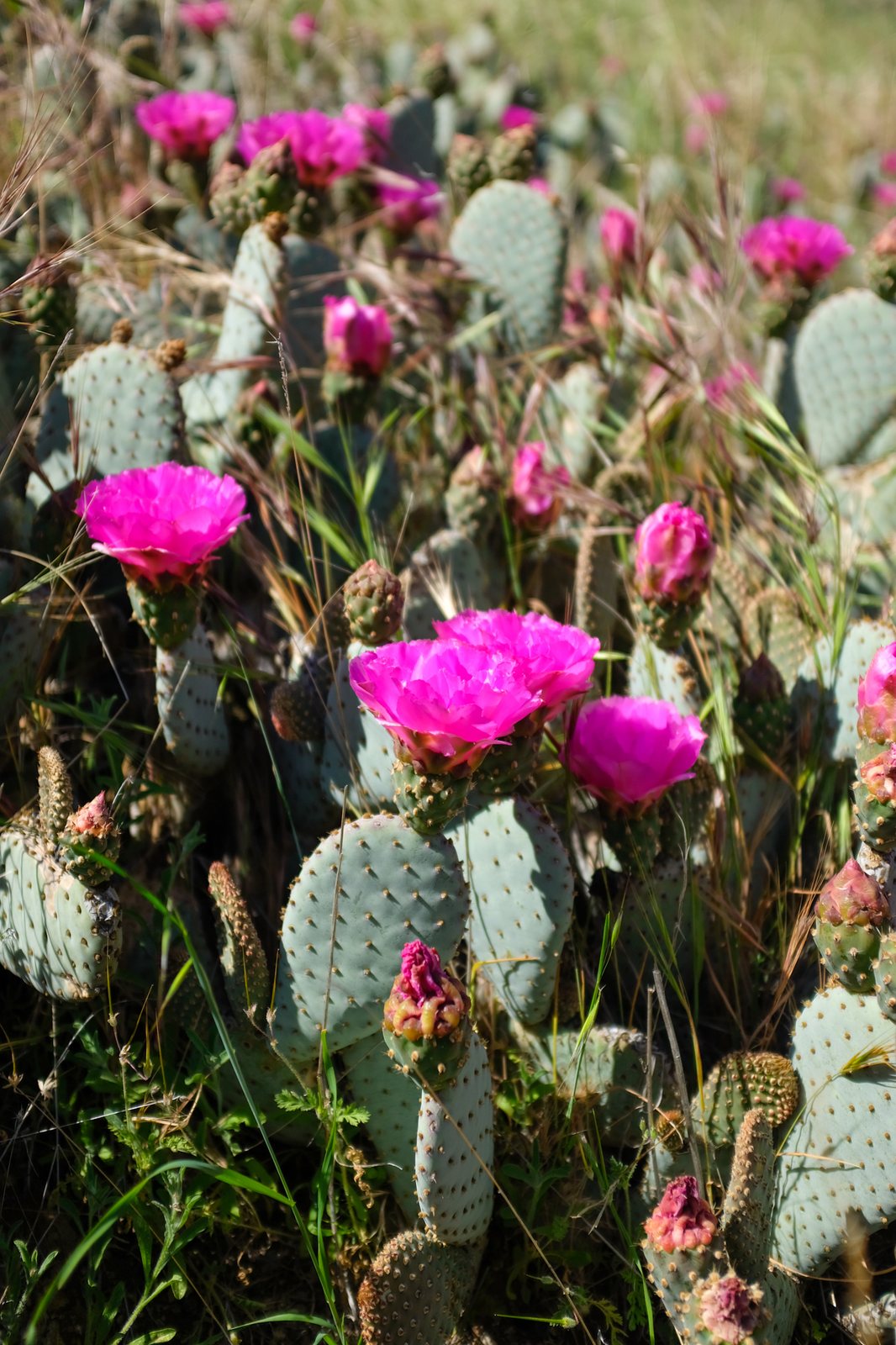
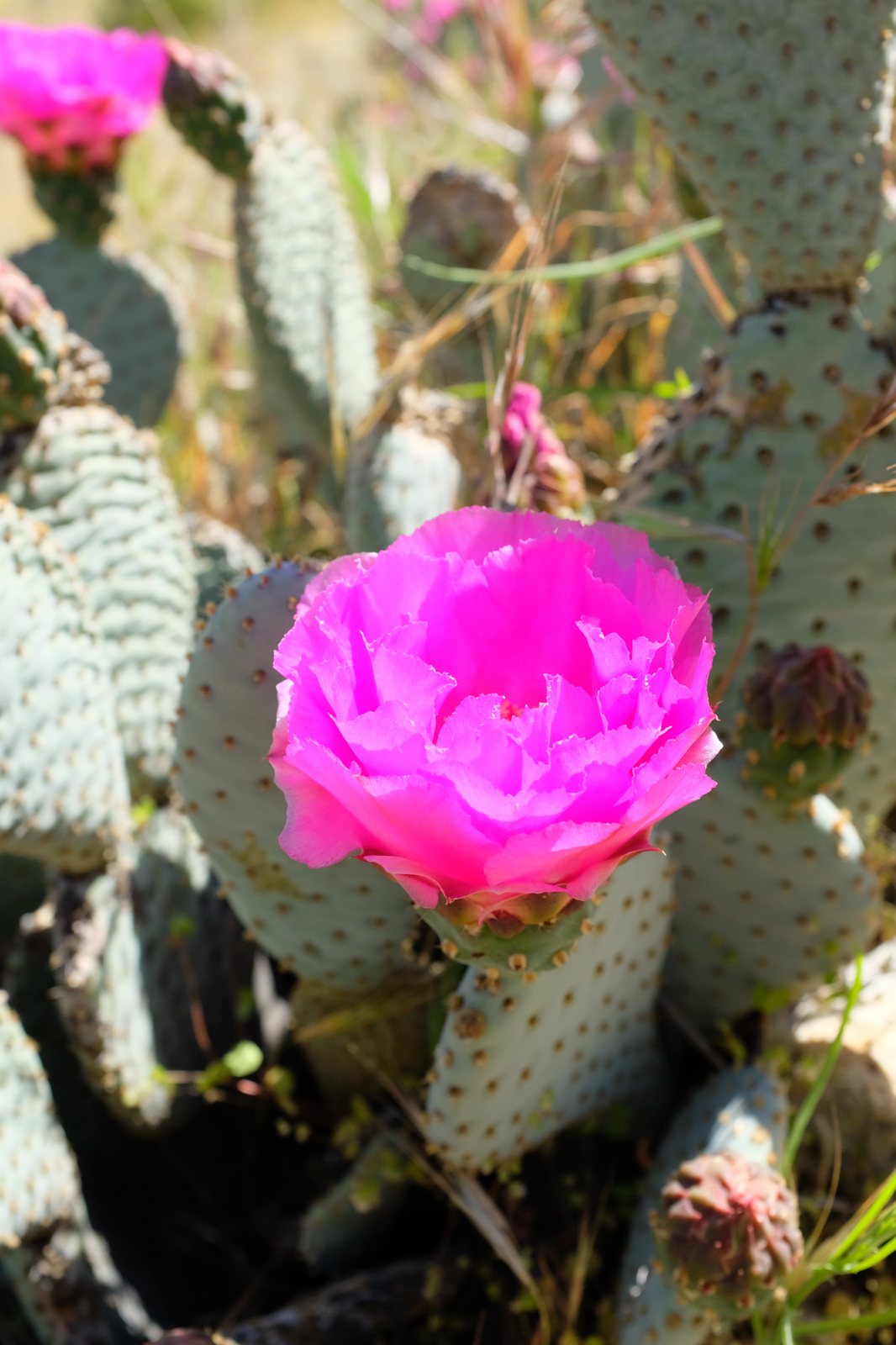
Beavertail cactus is a low, clumping cactus native to the southwestern United States and northwestern Mexico, grown for its blue-grey pads and vivid pink flowers. It suits sunny, dry gardens, but needs protection from persistent winter wet and should be kept away from paths because its tiny bristles penetrate skin.
At a glance
- Sun
- Full sun; flowering is best with at least 6 hours of direct sunlight.
- Water
- Very low once established. Let the soil dry completely between waterings; keep almost dry in winter.
- Soil
- Sharply drained sandy or gravelly soil. In containers, use a gritty cactus mix and a pot with unobstructed drainage holes.
- Height
- 0.5-1.5 ft (0.15-0.45 m)
- Spread
- 2-4 ft (0.6-1.2 m)
- Flowers
- Spring to early summer; bright rose-pink to magenta flowers, each opening briefly.
- Foliage
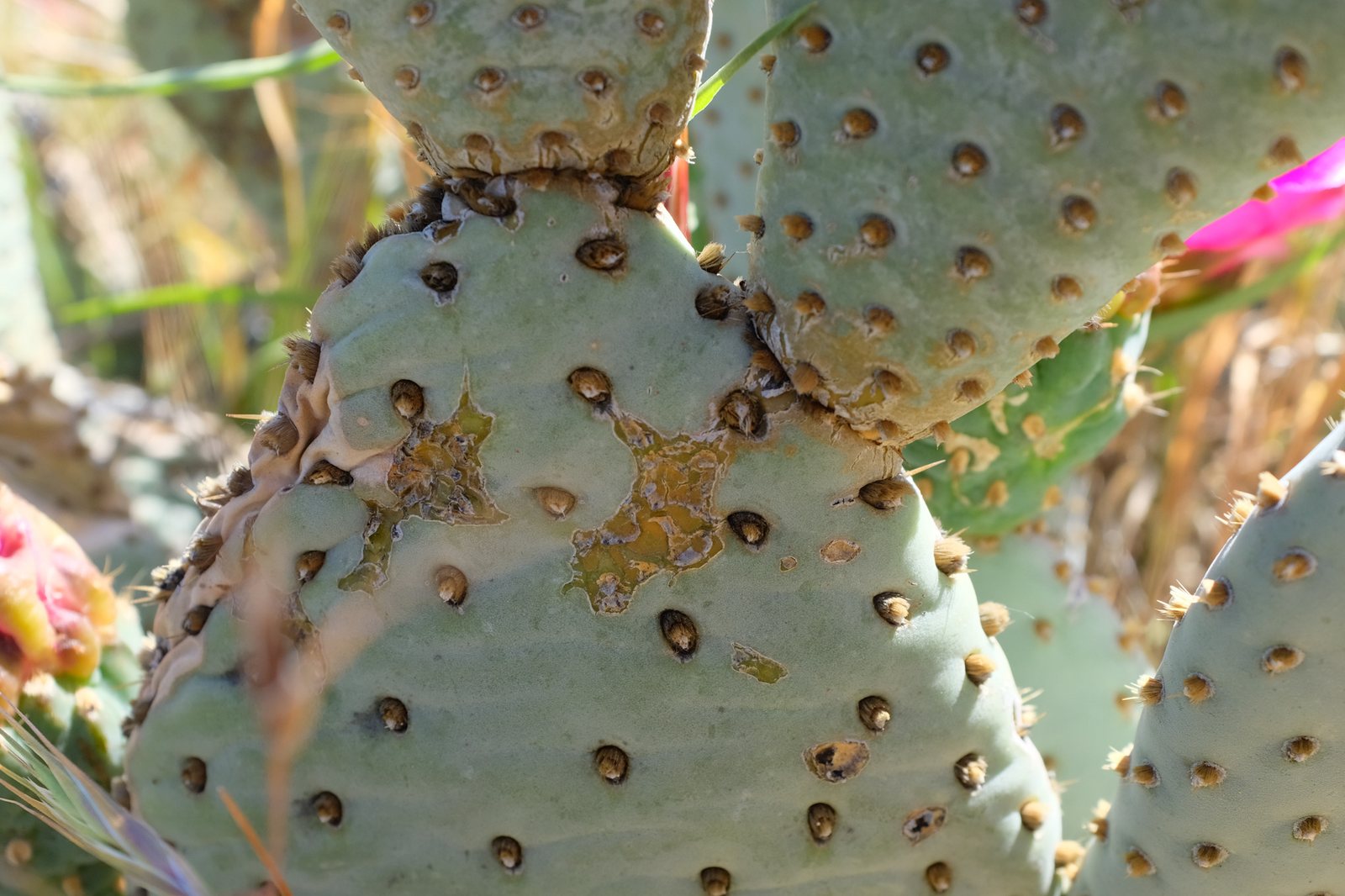
- Evergreen. Flattened, oval, blue-grey to grey-green stem pads, sometimes flushed purple in cold or drought. Usually without long spines, but densely dotted with clusters of tiny, barbed bristles called glochids.
- Growth
- Slow to moderate
- Care needed
- Low
The year at a glance
- Pollinators
- Deer resistant
- Drought tolerant
- Heat tolerant
- Wildlife
- Low allergen
| J | F | M | A | M | J | J | A | S | O | N | D | |
|---|---|---|---|---|---|---|---|---|---|---|---|---|
| Flowers | ||||||||||||
| Fruit | ||||||||||||
| Plant |
Northern hemisphere months. In Australia, shift them by six.
- Difficulty
- Moderate
- Toughness
- Fairly tough
Will it suit your garden?
Pick your zone, country, light and whether you have pets.
Full sun is 6 or more hours of direct sun a day, part shade 3 to 6 hours, shade under 3.
How it grows
Planting day
0.8 ft (0.25 m)
After 1 year
0.8 ft (0.26 m)
After 2 years
0.9 ft (0.26 m)
After 3 years
0.9 ft (0.27 m)
After 5 years
0.9 ft (0.28 m)
About 8 years to full size.
From a typical nursery size, at an average rate for this kind of plant. A rule of thumb, not a forecast.
Good to know
- Cats and dogs
- Safe
- Native to
- the US
- Invasive in
- Australia
- Growth rate
- Slow
Care
Jobs through the year
- WaterMay, Sep, every 30 days
- For established ground plants, water only in warm drought when soil is completely dry.
- WaterJun–Aug, every 21 days
- Water only if completely dry; young plants and pots need closer moisture checks.
- MulchMay
- Apply a thin gravel layer, leaving pad bases clear; avoid organic mulch.
- PruneMay–Jun
- If needed, remove damaged pads at joints in dry weather using tongs.
- ProtectJan–Apr, Oct–Dec
- In zone 6–7, overwinter in a bright, dry, frost-protected container location; keep almost dry.
- ProtectMay
- After frost risk passes, acclimatize sheltered plants gradually to outdoor sun.
- Plant on a raised mound or slope where water drains away quickly.
- Water newly planted specimens sparingly during warm weather, allowing the soil to dry completely between soakings.
- Use gravel around the base rather than moisture-holding organic mulch.
- Feed container plants lightly with cactus fertilizer once in spring; established plants in the ground usually need none.
- In wet or cold climates, grow in a movable container and overwinter somewhere bright, dry and frost-protected.
- Handle with tongs and folded newspaper; ordinary gardening gloves may not stop the tiny bristles.
Pruning. In late spring or early summer, remove damaged pads or reduce spread by cutting cleanly at a pad joint. Work in dry weather and keep fresh cuts dry while they heal.
Through the year
- Early spring
- Inspect for soft, discoloured pads and check that drainage holes and gravel around the base are clear.
- Spring
- Plant or repot as active growth begins; gradually acclimatize overwintered plants to full outdoor sun.
- Late spring
- Remove damaged pads and take pad cuttings during dry weather.
- Summer
- Check container moisture, watering thoroughly only after the mix has dried completely.
- Autumn
- Reduce watering and move containers under cover before persistent rain or temperatures below their tolerance.
- Winter
- Keep sheltered plants bright and nearly dry; avoid feeding.
In the garden
- Plant in a raised gravel bed with boulders to show off its low, sculptural pads.
- Group with small agaves and drought-tolerant perennials for contrasting shapes and spring colour.
- Use in a broad, shallow container with excellent drainage on a sunny terrace, away from seating and foot traffic.
- Place in a southwestern native planting where its flowers provide a strong seasonal accent.
Garden styles it suits: Desert modern, Desert / xeriscape, Dry gravel garden, Southwestern, California native and Architectural minimal.
Plant it with: Red yucca, Parry's agave, Blackfoot daisy, Desert marigold, Indian ricegrass and Brittlebush.
Wildlife: Flowers attract native bees, including cactus-specialist bees within its native range. Desert animals may eat pads or fruit; keep domestic animals away because of the barbed bristles.
Problems to watch for
- Root or pad rot in wet soil: improve drainage, stop watering and remove affected tissue; salvage healthy pads if the base is rotten.
- Cochineal scale, seen as white cottony patches: isolate container plants and remove small infestations with a firm water jet during warm, drying weather.
- Mealybugs on pads or roots: isolate affected pots, remove visible insects and repot in clean mix if roots are infested.
- Sun scorch after moving outdoors: introduce plants to direct sun gradually over one to two weeks; damaged patches will not turn green again.
Safety
Not known to be chemically toxic to people, cats, dogs or horses. However, the tiny barbed bristles on pads, flowers and fruit can cause painful skin irritation and serious injury to eyes or the mouth if touched or eaten.
Where it spreads. In Australia, this species falls within the regulated opuntioid cactus group, which is designated a Weed of National Significance. Sale, movement and cultivation restrictions vary by state or territory; check local rules before obtaining or propagating it.
Easily confused with
Bunny ears cactus (Opuntia microdasys)
Usually has greener pads with conspicuous, regularly spaced yellow or white bristle tufts and yellow flowers, rather than blue-grey pads and pink flowers.
Santa Rita prickly pear (Opuntia santa-rita)
Usually grows taller, has rounder pads that often turn strongly purple, and bears yellow flowers; some pads carry long spines.
Engelmann's prickly pear (Opuntia engelmannii)
Forms a much larger shrub with larger pads, usually prominent long spines, and yellow to orange flowers.
The name
The common name refers to the broad, flattened pads resembling a beaver's tail, while basilaris means basal, referring to its growth from near the base.
Propagation. Detach a healthy mature pad at its joint in late spring or summer. Let the cut dry and callus in an airy, shaded place for about one to two weeks, then set the base shallowly into dry, gritty mix; water sparingly as roots develop. Seed is slower and may germinate irregularly.
Checked against open data
- Accepted botanical name
- Opuntia basilaris
- In the US and Canada
- Native in the lower 48 states.
- Native range
- Arizona, California, Mexico Northwest, Nevada and Utah.
Sources: GBIF (CC BY 4.0), USDA PLANTS and Trefle (CC BY 4.0). The care and design notes are LandscapeGPT's own.
See it in your own yard.
Upload a photo of your yard and see it redesigned with plants that suit your climate, each checked against your zone.