Bismarck palm
Bismarckia nobilis. Family Arecaceae. Tree.
Also called Silver Bismarck palm.
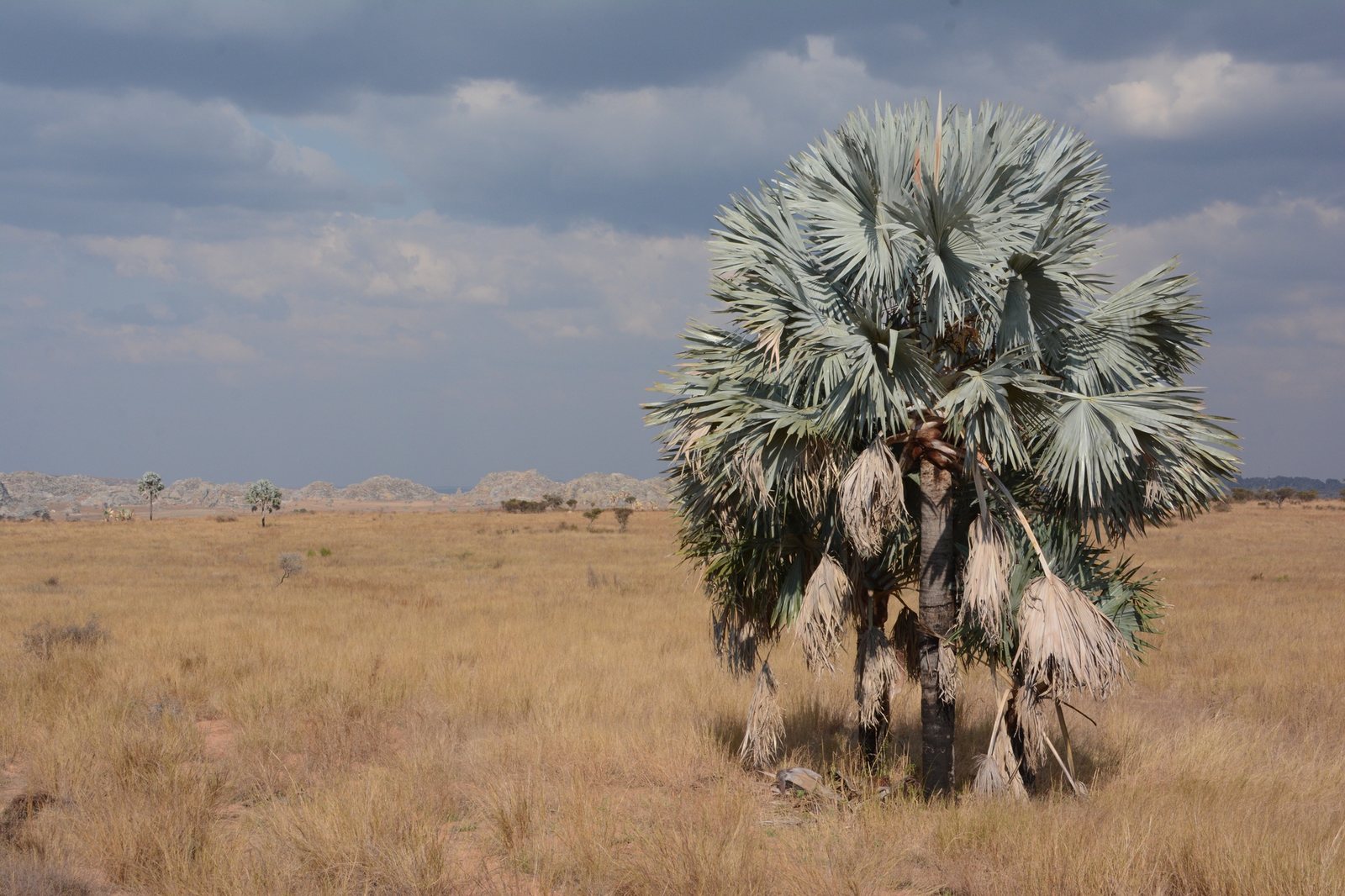
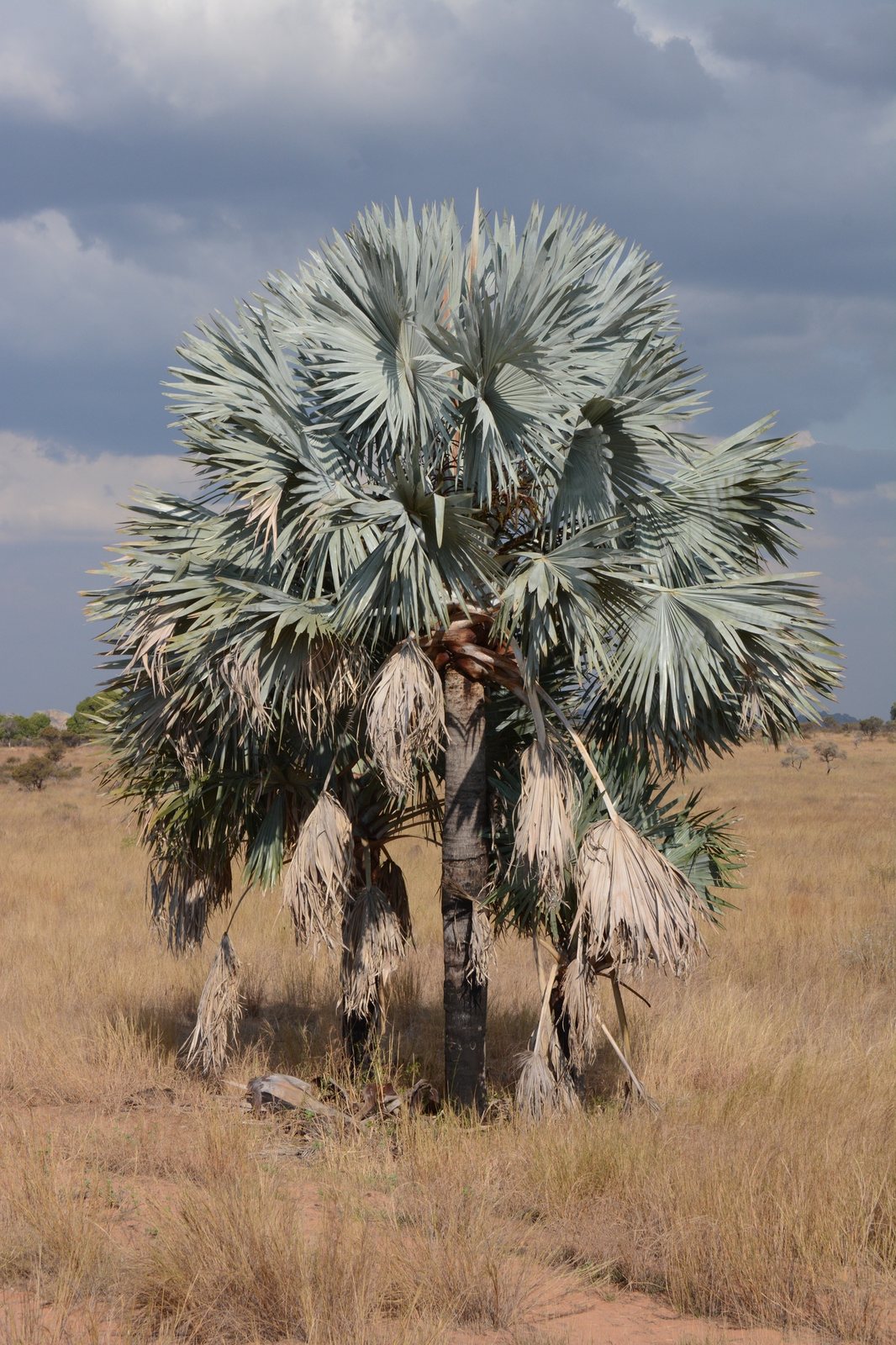
A large, solitary-trunked palm from Madagascar, grown for its enormous, usually silver-blue fan leaves and bold, rounded crown. It needs a spacious garden in a frost-free or nearly frost-free climate; in the UK and most of Canada, it is practical only as a young container plant with heated winter shelter.
At a glance
- Sun
- Full sun; tolerates light shade but develops its best colour and shape in strong light.
- Water
- Water regularly while establishing, allowing the surface soil to dry between soakings. Established palms tolerate drought, but grow better with occasional deep watering during prolonged dry weather.
- Soil
- Well-drained sandy, loamy or gravelly soil; tolerates a range of soil pH but not persistent waterlogging.
- Height
- 40-60 ft (12-18 m)
- Spread
- 15-25 ft (4.5-7.6 m)
- Flowers
- Small cream flowers on branching stalks among the leaves, usually in spring or summer in warm climates; male and female flowers grow on separate palms.
- Foliage
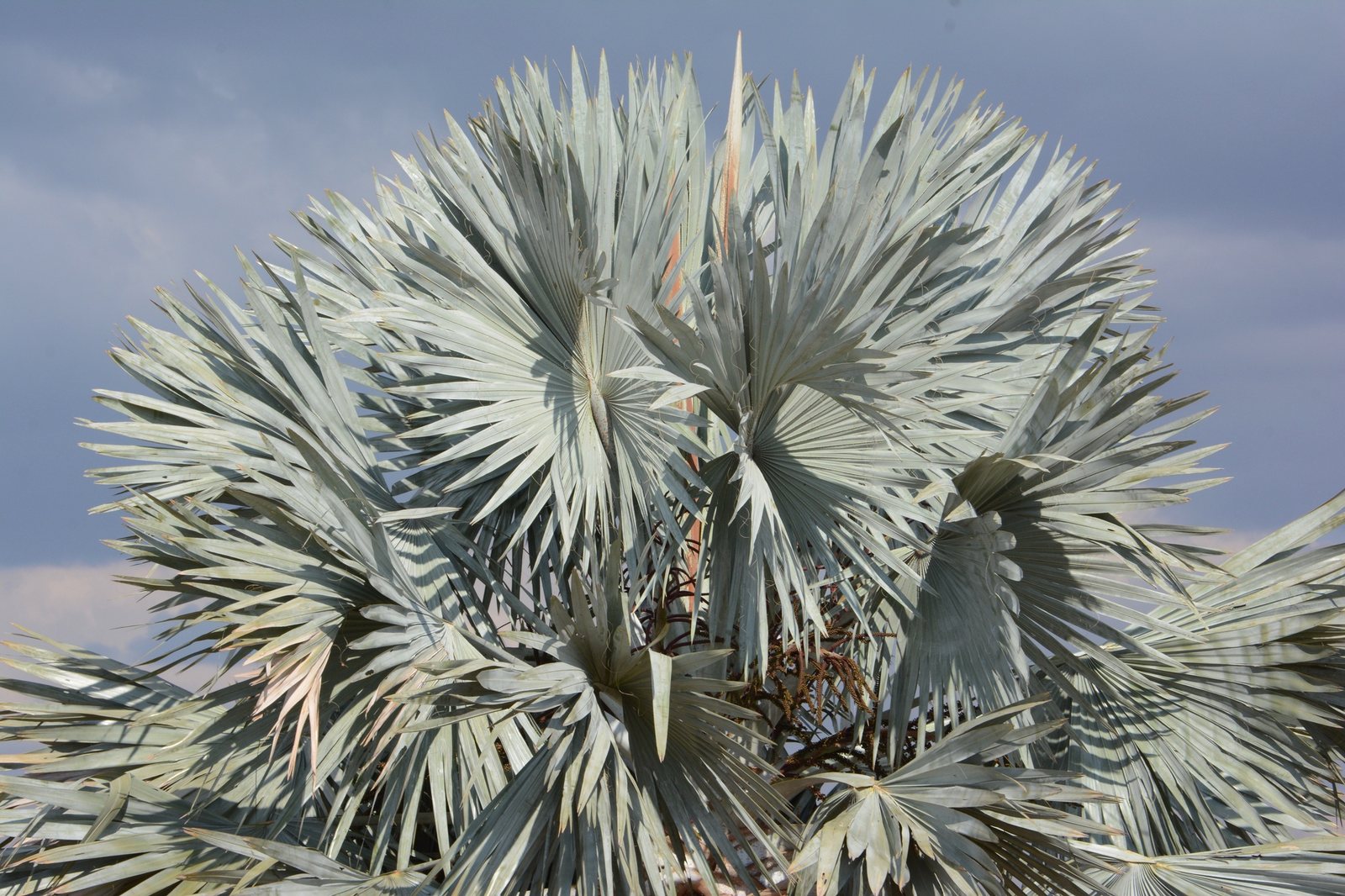
- Evergreen. Huge, stiff, rounded fan leaves, often 6 ft (1.8 m) across, divided into pointed segments. Most garden plants are silver-blue, although green-leaved forms also occur.
- Growth
- Slow initially, becoming moderate in sustained warmth with adequate water.
- Care needed
- Low
The year at a glance
- Pollinators
- Drought tolerant
- Heat tolerant
- Wildlife
| J | F | M | A | M | J | J | A | S | O | N | D | |
|---|---|---|---|---|---|---|---|---|---|---|---|---|
| Flowers | ||||||||||||
| Fruit | ||||||||||||
| Plant |
Northern hemisphere months. In Australia, shift them by six.
- Difficulty
- Hard
- Toughness
- Needs looking after
Will it suit your garden?
Pick your zone, country, light and whether you have pets.
Full sun is 6 or more hours of direct sun a day, part shade 3 to 6 hours, shade under 3.
How it grows
Planting day
7 ft (2 m)
After 1 year
8 ft (2.5 m)
After 2 years
10 ft (3 m)
After 3 years
11 ft (3.5 m)
After 5 years
15 ft (4.5 m)
About 26 years to full size.
From a typical nursery size, at an average rate for this kind of plant. A rule of thumb, not a forecast.
Good to know
- Cats and dogs
- Safe
- Growth rate
- Slow
Care
Jobs through the year
- WaterApr–May, Sep–Oct, every 14 days
- Check before soaking; let the surface dry and water young or container plants more often.
- WaterJun–Aug, every 14 days
- Deep-water established roots during dry weather; check young and container plants more frequently.
- WaterJan–Mar, Nov–Dec, every 21 days
- Check sheltered containers and water only enough to prevent complete root-ball drying.
- FeedMay–Jul
- Apply slow-release palm feed with potassium, magnesium and micronutrients at label intervals.
- MulchMay
- Refresh root-zone mulch, keeping it clear of the trunk.
- PruneJun–Aug
- Remove only fully brown fronds and unwanted flower stalks; never damage the growing spear.
- ProtectJan–May, Sep–Dec
- Not winter-hardy here; grow in a container with bright, heated, frost-free winter shelter.
- Choose the permanent position carefully, allowing room for the full crown away from buildings, overhead wires and paths.
- Plant during warm weather at the original soil depth, keeping the root ball intact; damaged roots can cause transplant failure.
- Water the root zone deeply during establishment, but do not leave the soil saturated.
- In warm growing conditions, apply a slow-release palm fertiliser containing potassium, magnesium and micronutrients at the label rate.
- Mulch over the root zone, keeping mulch away from the trunk.
- Protect young plants from frost; move containers into bright, frost-free shelter before cold weather.
Pruning. Remove only completely brown fronds and unwanted flower or fruit stalks, preferably during warm weather. Do not remove healthy green leaves, cut into the trunk or damage the central growing spear.
Through the year
- Spring
- As local temperatures become consistently warm, plant new palms without disturbing their root balls.
- Spring
- Apply palm fertiliser if needed and renew mulch without covering the trunk base.
- Summer
- Deep-water establishing palms and check that water drains freely from containers.
- Late summer
- Inspect older leaves for nutrient-deficiency patterns and check the crown for unusual wilting or damage.
- Autumn
- In cooler climates, bring container plants into bright, heated shelter before frost.
- Winter
- Reduce watering as growth slows, while avoiding complete drying of container root balls.
In the garden
- Use as a single focal tree in a large lawn or open gravel garden, leaving its symmetrical crown unobstructed.
- Pair with low agaves, aloes or ornamental grasses for contrasting leaf shapes in a warm, dry garden.
- Place against dark evergreen planting to emphasise the silver foliage.
- Use in spacious tropical or poolside planting, set well back from paving so mature leaves do not obstruct movement.
Garden styles it suits: Architectural minimal, Modern tropical, Desert modern, Luxury resort, Tropical and Desert / xeriscape.
Plant it with: Foxtail agave, Coral aloe, Coontie, Lomandra and Bird of paradise.
Wildlife: Flowers attract visiting insects, and ripe fruit may be eaten by local wildlife. Its wildlife value varies outside its native Madagascar.
Problems to watch for
- Root rot in poorly drained soil: improve drainage before planting and reduce watering if the soil remains wet.
- Potassium or magnesium deficiency, showing as spotting, yellowing or premature loss of older leaves: use an appropriate palm fertiliser and retain living fronds while the palm recovers.
- Palm weevils in regions where they occur: avoid unnecessary wounds and seek local professional advice promptly if the crown wilts, holes appear or fibres become chewed.
- Cold damage, especially on young or green-leaved plants: provide frost protection, keep damaged but partly green leaves, and wait for warm-weather regrowth before removing dead tissue.
Safety
Not known to be toxic to cats, dogs, horses or people, although species-specific toxicity information is limited. The fruits are not established as food for people or pets; large fruits can be a choking hazard, and stiff leaf tips can cause injury.
Easily confused with
Mexican blue palm (Brahea armata)
Also has silver-blue fan leaves, but its leaves are smaller, its leaf stalks have conspicuous teeth, and mature plants produce long, arching flower sprays extending beyond the crown.
Silver saw palmetto (Serenoa repens)
Has much smaller fans and usually forms low, spreading clumps with creeping stems rather than one tall, substantial trunk; its leaf stalks have sharp saw-like teeth.
The name
Bismarckia honours the German statesman Otto von Bismarck, while nobilis is Latin for noble.
Propagation. Grow from fresh seed in a deep container with steady warmth and a free-draining medium; germination can take several months. It does not produce offsets, and seeds require a fruiting female palm that has been pollinated by a male.
Checked against open data
- Accepted botanical name
- Bismarckia nobilis
- Native range
- Madagascar.
Sources: GBIF (CC BY 4.0) and Trefle (CC BY 4.0). The care and design notes are LandscapeGPT's own.
See it in your own yard.
Upload a photo of your yard and see it redesigned with plants that suit your climate, each checked against your zone.