Coontie
Zamia integrifolia. Family Zamiaceae. Shrub.
Also called Florida arrowroot, Coontie palm, Zamia.
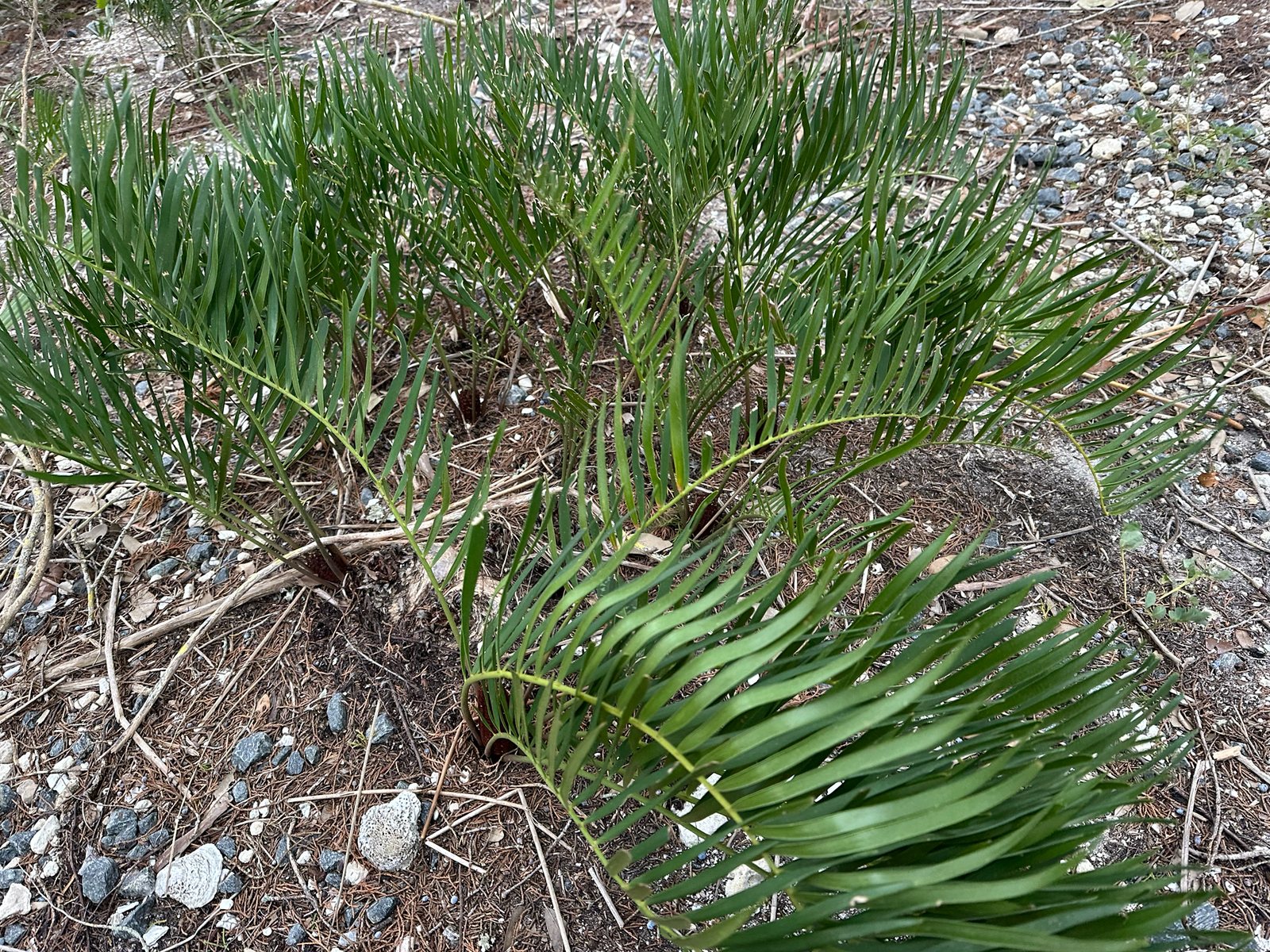
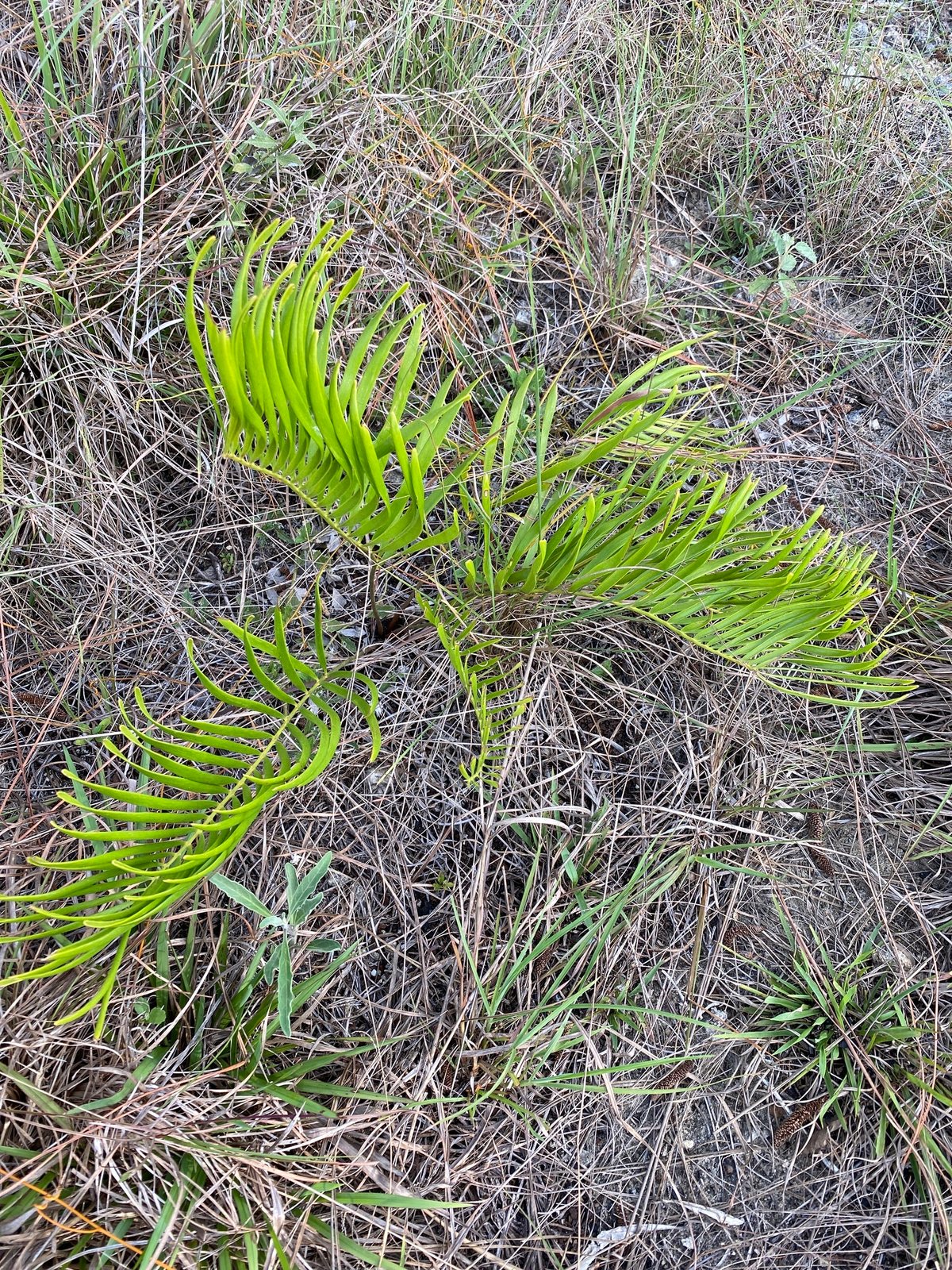
Coontie is a slow-growing evergreen cycad, not a palm or fern, with stiff, arching leaves rising from a mostly underground stem. Gardeners grow it for its compact shape, drought tolerance once established and durable foliage in warm-climate borders and containers. In colder regions, including most of the UK and Canada, grow it in a pot and overwinter it under frost-free cover.
At a glance
- Sun
- Full sun to partial shade; tolerates bright shade, where growth is usually more open.
- Water
- Water regularly while establishing, allowing the soil to dry somewhat between waterings. Established plants tolerate drought; avoid persistently wet soil.
- Soil
- Well-drained sandy or gravelly soil; tolerates acidic to alkaline conditions. Use a freely draining potting mix in containers.
- Height
- 2-3 ft (0.6-0.9 m)
- Spread
- 3-5 ft (0.9-1.5 m)
- Foliage
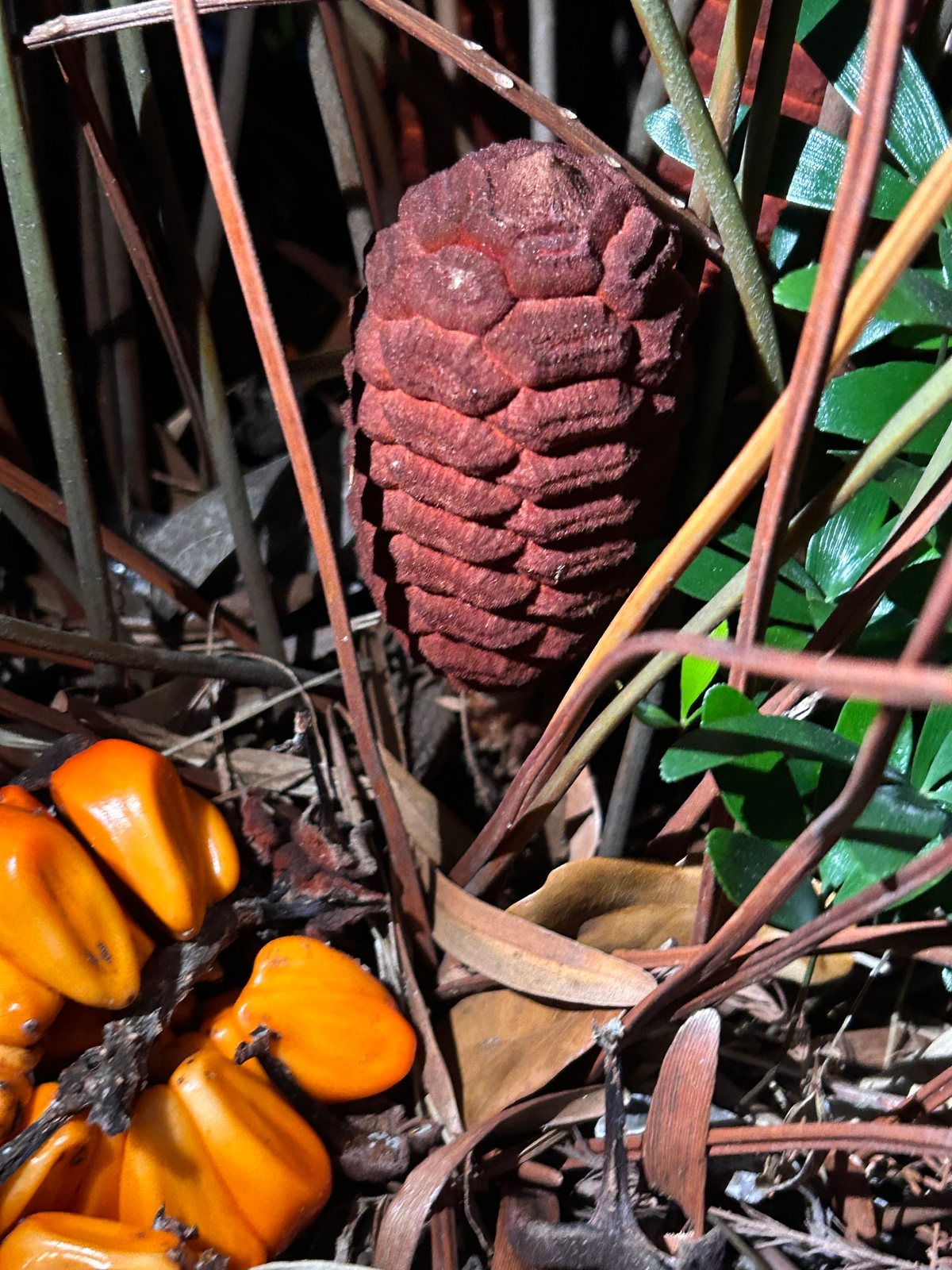
- Evergreen. Dark green, glossy, feather-like leaves with firm, narrow leaflets. Male and female cones form on separate plants; female cones release seeds with orange-red fleshy coverings.
- Growth
- Slow
- Care needed
- Low
The year at a glance
- Drought tolerant
- Heat tolerant
- Wildlife
- Low allergen
| J | F | M | A | M | J | J | A | S | O | N | D | |
|---|---|---|---|---|---|---|---|---|---|---|---|---|
| Fruit | ||||||||||||
| Plant |
Northern hemisphere months. In Australia, shift them by six.
- Difficulty
- Moderate
- Toughness
- Fairly tough
Will it suit your garden?
Pick your zone, country, light and whether you have pets.
Full sun is 6 or more hours of direct sun a day, part shade 3 to 6 hours, shade under 3.
How it grows
Planting day
1.6 ft (0.5 m)
After 1 year
1.7 ft (0.53 m)
After 2 years
1.8 ft (0.56 m)
After 3 years
1.9 ft (0.59 m)
After 5 years
2.2 ft (0.66 m)
About 8 years to full size.
From a typical nursery size, at an average rate for this kind of plant. A rule of thumb, not a forecast.
Good to know
- Cats and dogs
- Toxic
- Native to
- the US
- Growth rate
- Slow
Care
Jobs through the year
- WaterApr–May, Sep–Oct, every 21 days
- Water established outdoor plants only if the root zone has dried; new plants and containers need closer checks.
- WaterJun–Aug, every 14 days
- Water established plants during drought, allowing soil to dry somewhat between soakings.
- WaterJan–Mar, Nov–Dec, every 30 days
- Check frost-free overwintering containers and water sparingly when the mix is nearly dry.
- FeedMay
- Feed lightly only if poor growth or soil conditions indicate a need.
- PruneMay–Jun
- Remove fully brown or damaged leaves at their bases; retain healthy green foliage.
- ProtectJan–Apr, Oct–Dec
- Not hardy in zones 6–7; move containers into bright, frost-free shelter before freezes.
- ProtectJun–Sep, every 14 days
- Inspect leaf undersides for scale; treat significant infestations with labelled horticultural oil.
- ProtectAug–Dec, every 7 days
- Remove fallen seeds promptly; all parts are poisonous to people and pets.
- Plant with the crown at its original soil level; do not bury it beneath soil or mulch.
- Water new plants deeply when the root zone begins to dry; reduce watering once established.
- Keep mulch clear of the crown and maintain sharp drainage, especially during winter.
- Feed lightly in spring only if growth or soil conditions warrant it; avoid heavy nitrogen feeding.
- Move containers into bright, frost-free shelter before freezing weather and water sparingly over winter.
Pruning. Remove fully brown or damaged leaves at their bases with clean secateurs, preferably after the risk of frost has passed. Keep healthy green leaves and do not shear the plant or cut into its crown.
Through the year
- Spring
- Plant or repot once freezing weather has passed, using a well-drained site or container mix.
- Late spring
- Remove winter-damaged leaves once their condition is clear; feed lightly if needed.
- Summer
- Check leaf undersides for scale insects and water establishing plants during dry spells.
- Autumn
- Collect fallen seeds promptly where children or animals could reach them.
- Late autumn
- Bring container plants into frost-free shelter in cold climates.
- Winter
- Keep sheltered plants on the dry side and protect outdoor crowns from prolonged wet conditions.
In the garden
- Repeat small groups along warm-climate paths for a low, structured evergreen edge.
- Plant beneath open-canopied trees with shade-tolerant groundcovers for contrasting leaf textures.
- Use in gravel beds with drought-tolerant plants that share its need for drainage.
- Grow as a container specimen on a sheltered patio, allowing room for the arching leaves.
- Include in Florida native gardens as a larval host for the atala butterfly.
Garden styles it suits: Florida subtropical, Modern tropical, Architectural minimal, Coastal, Low-maintenance and Wildlife garden.
Plant it with: Muhly grass, Dwarf yaupon holly, Firebush, Saw palmetto, Sunshine mimosa and Cast-iron plant.
Wildlife: An important larval host for the atala butterfly in southern Florida. Its cones are pollinated by specialist beetles rather than bees; it is not a nectar plant.
Problems to watch for
- Scale insects, including cycad aulacaspis scale: inspect leaf undersides and bases for white crusts; treat with a labelled horticultural oil and repeat as directed. Seek local advice for severe infestations.
- Root or crown rot: prevent standing water, reduce irrigation and improve drainage; badly rotted plants may not recover.
- Cold-browned foliage: protect during hard freezes and wait until spring to remove dead leaves; surviving crowns can produce new growth.
- Atala caterpillar feeding in Florida: caterpillars can strip leaves, but established plants often recover; tolerate feeding where supporting the butterfly is a priority.
Safety
Highly toxic to people, dogs, cats and horses if eaten. All parts are poisonous, especially the seeds, and ingestion can cause severe liver damage and death. Keep plants and fallen seeds away from children and animals; suspected ingestion requires immediate medical or veterinary attention. The historical name Florida arrowroot does not mean it is safe to eat.
Easily confused with
Cardboard palm (Zamia furfuracea)
Has much broader, thicker, often fuzzy leaflets with a cardboard-like texture; coontie has narrower, smoother leaflets.
Sago palm (Cycas revoluta)
Usually develops a conspicuous trunk and a dense crown of stiff leaves with many very narrow, sharp-pointed leaflets; coontie stays lower and has broader leaflets.
The name
The epithet integrifolia means 'entire-leaved', referring to the smooth, untoothed margins of its leaflets.
Propagation. Usually grown from seed, which may take several months or longer to germinate and develops slowly. Wear gloves when handling seeds, keep them away from children and pets, and sow in a warm, freely draining medium.
Checked against open data
- Accepted botanical name
- Zamia integrifolia
- In the US and Canada
- Native in the lower 48 states and Puerto Rico.
- Native range
- Bahamas, Cayman Is., Cuba, Florida and Georgia.
Sources: GBIF (CC BY 4.0), USDA PLANTS and Trefle (CC BY 4.0). The care and design notes are LandscapeGPT's own.
See it in your own yard.
Upload a photo of your yard and see it redesigned with plants that suit your climate, each checked against your zone.