Saw palmetto
Serenoa repens. Family Arecaceae. Shrub.
Also called Scrub palmetto, Silver saw palmetto.
Saw palmetto is a slow-growing, evergreen palm native to the southeastern United States, with fan-shaped leaves and creeping stems that gradually form broad colonies. Gardeners grow it for its strong foliage shape, drought tolerance and value to wildlife. It performs best with warm summers; in Britain and other cool climates, growth can be very slow even where winter temperatures are mild enough.
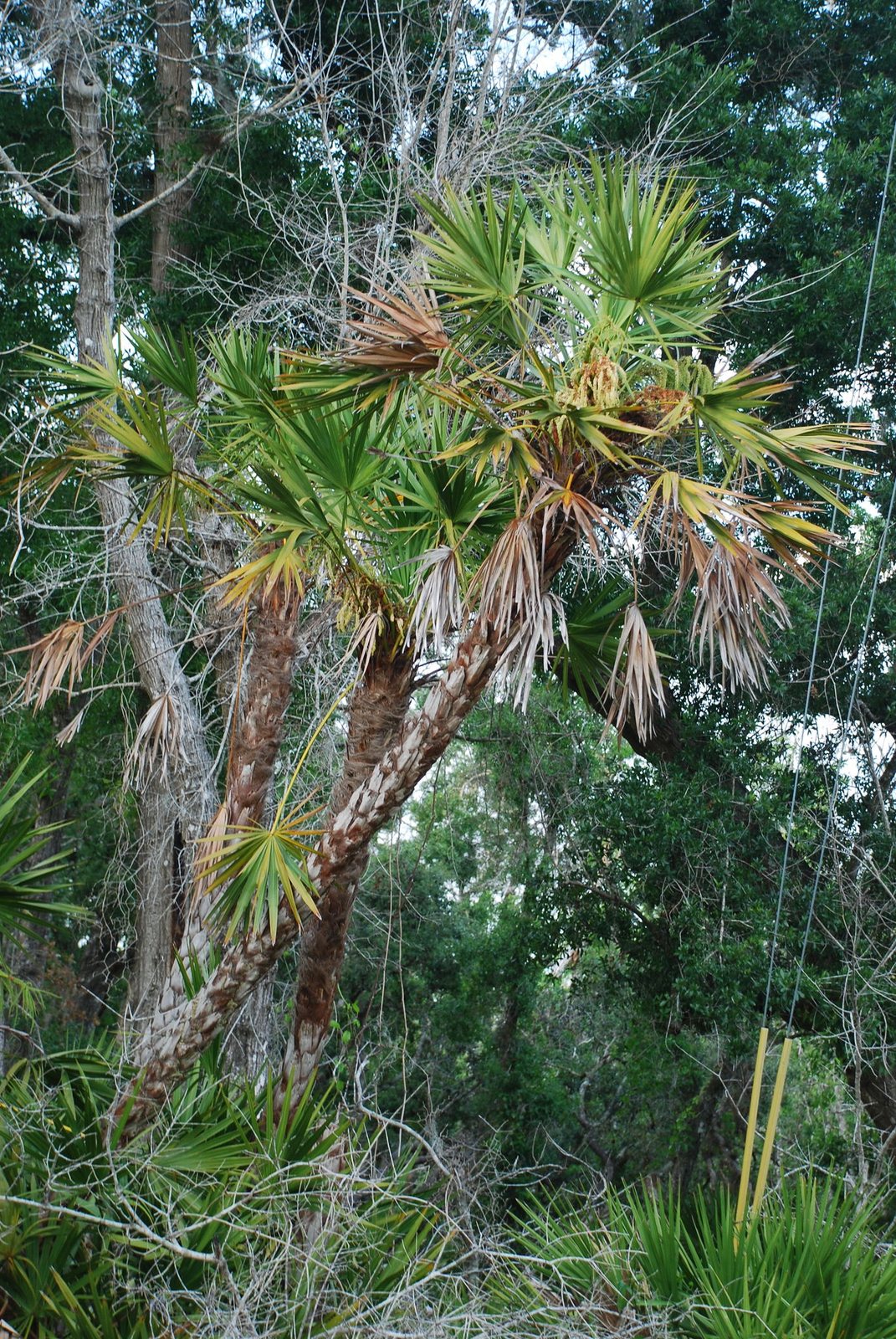
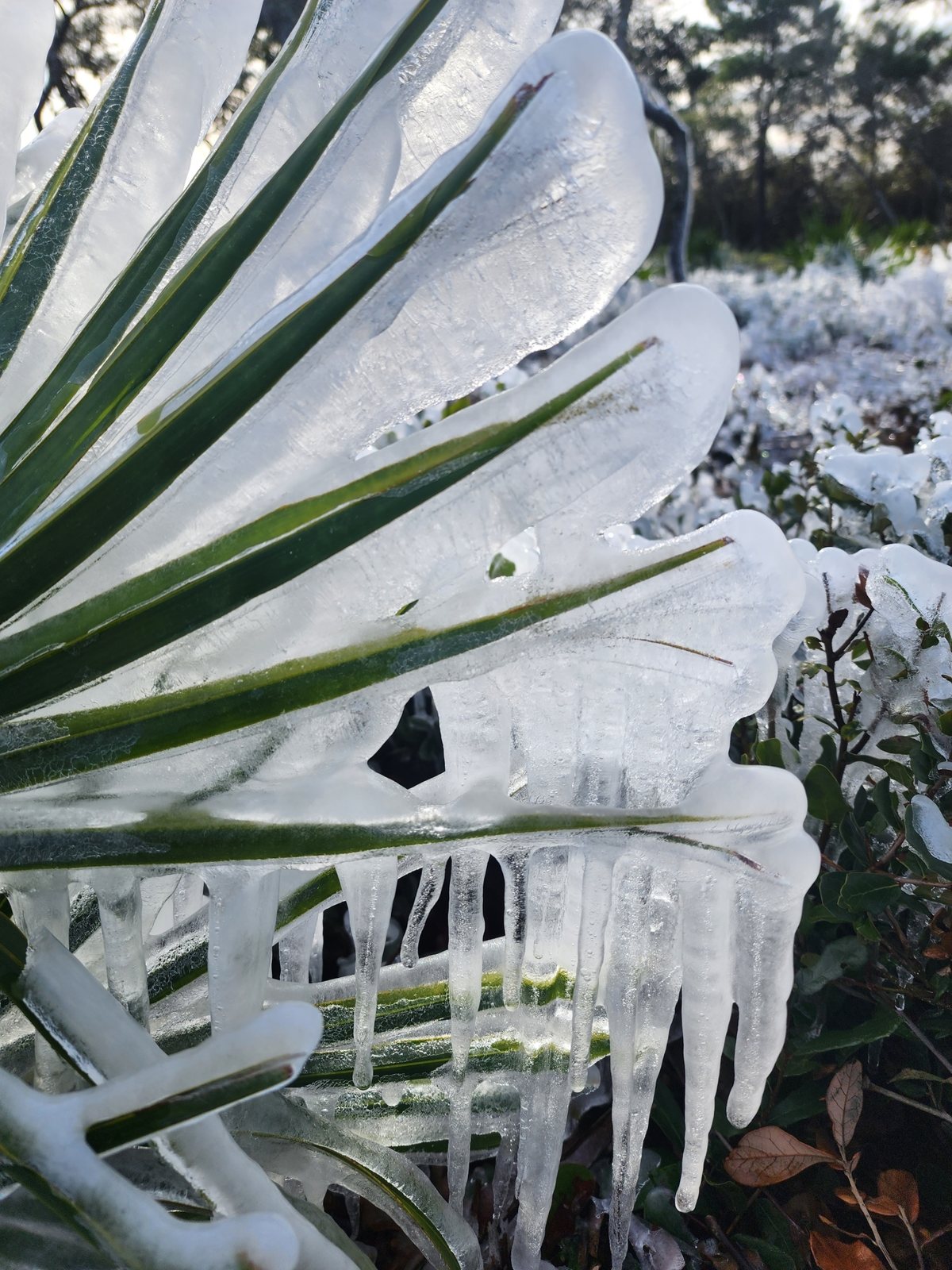
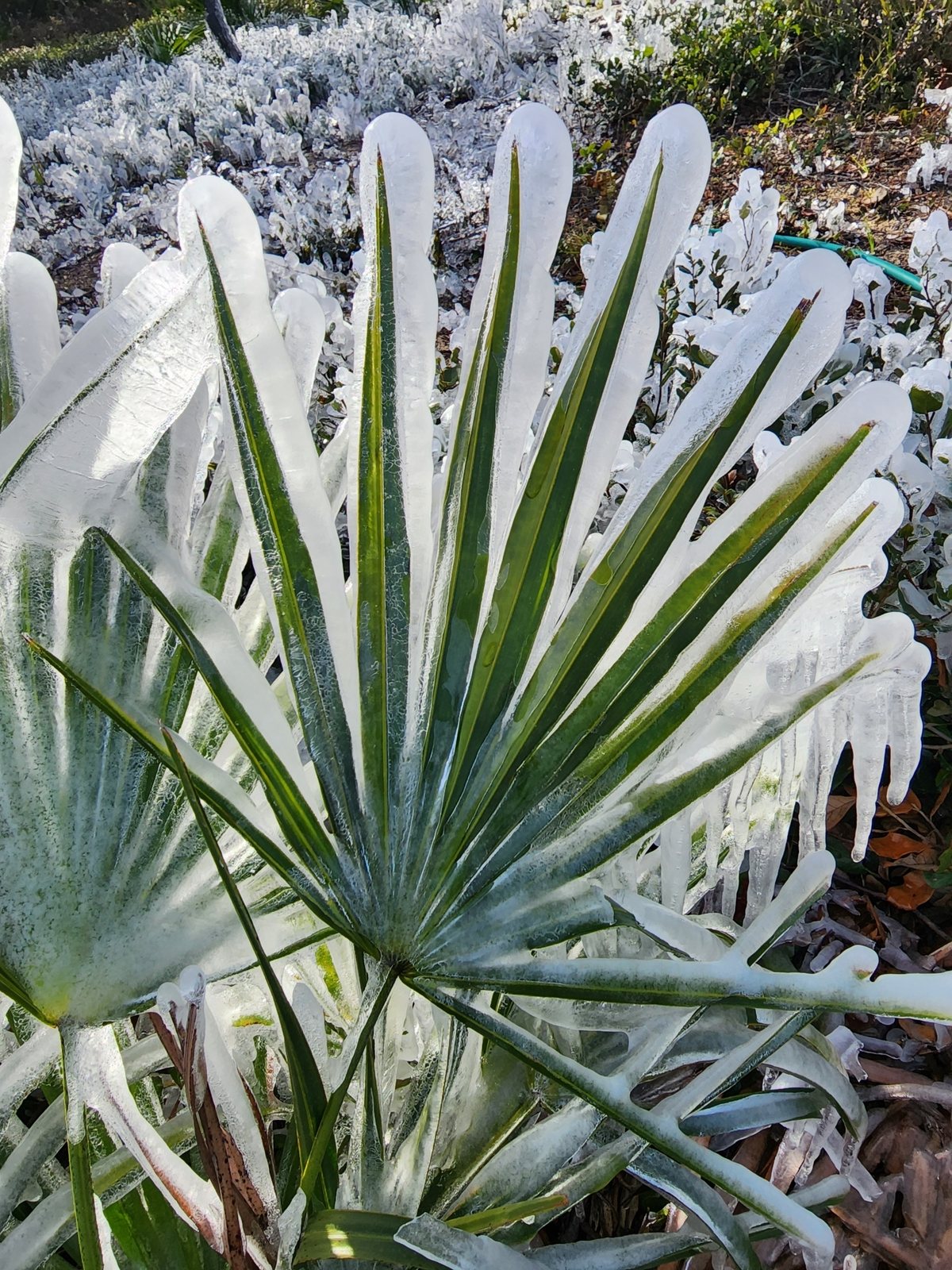
At a glance
- Sun
- Full sun to partial shade; tolerates light woodland shade, but grows more densely in good light.
- Water
- Water regularly while establishing; established plants tolerate prolonged drought.
- Soil
- Well-drained sandy or loamy soil, acidic to alkaline. Avoid persistently wet, poorly aerated soil, especially in winter.
- Height
- 3-8 ft (0.9-2.4 m), occasionally taller
- Spread
- 6-10 ft (1.8-3 m); old colonies can spread much farther
- Flowers
- Small creamy-white flowers in branched clusters among the leaves in spring to early summer, followed by fruits that ripen dark purple-black.
- Foliage
- Evergreen. Stiff, fan-shaped leaves divided into narrow segments, green to silvery blue-green. Leaf stalks have sharp, saw-like teeth.
- Growth
- Slow, especially in cool climates
- Care needed
- Low
The year at a glance
- Pollinators
- Drought tolerant
- Heat tolerant
- Wildlife
| J | F | M | A | M | J | J | A | S | O | N | D | |
|---|---|---|---|---|---|---|---|---|---|---|---|---|
| Flowers | ||||||||||||
| Fruit | ||||||||||||
| Plant |
Northern hemisphere months. In Australia, shift them by six.
- Difficulty
- Hard
- Toughness
- Fairly tough
Will it suit your garden?
Pick your zone, country, light and whether you have pets.
Full sun is 6 or more hours of direct sun a day, part shade 3 to 6 hours, shade under 3.
How it grows
Planting day
1.6 ft (0.5 m)
After 1 year
2.1 ft (0.64 m)
After 2 years
2.6 ft (0.79 m)
After 3 years
3 ft (0.93 m)
After 5 years
4 ft (1.2 m)
About 8 years to full size.
From a typical nursery size, at an average rate for this kind of plant. A rule of thumb, not a forecast.
Good to know
- Cats and dogs
- Safe
- Native to
- the US
- In the garden
- Spreads vigorously: plan to contain it.
- Growth rate
- Slow
Care
Jobs through the year
- WaterApr–May, Sep, every 21 days
- Water established plants only during dry spells; water new plants more frequently.
- WaterJun–Aug, every 21 days
- Deep-water only in prolonged drought; check young and container plants more often.
- WaterJan–Mar, Oct–Dec, every 21 days
- Check sheltered containers and water sparingly when dry, avoiding soggy roots.
- FeedMay–Jun
- Feed only if a deficiency is confirmed, using a slow-release palm fertiliser.
- PruneMay–Jun
- Remove fully dead leaves only; wear thick gloves and avoid damaging creeping stems.
- MulchMay
- Refresh mulch while keeping the crown and exposed stems uncovered.
- ProtectJan–Apr, Oct–Dec
- Below its reliable hardiness range, use containers with bright, frost-free winter shelter.
- Plant in spring once the soil has warmed, leaving room for the colony to widen.
- Water deeply through the first growing season, allowing the soil surface to dry between waterings.
- Keep mulch clear of the crown and exposed stems; do not bury the plant deeper than it grew in its pot.
- Feed only if growth or a soil test indicates a deficiency; use a slow-release palm fertiliser with micronutrients according to its label.
- Wear thick gloves and long sleeves when working nearby, and keep toothed leaf stalks away from paths and play areas.
Pruning. In late spring, remove fully brown leaves by cutting their stalks without damaging the crown or creeping stems. Leave green leaves in place and do not shear or cut out growing points.
Through the year
- Spring
- Plant container-grown specimens after the soil warms and the risk of severe frost has passed.
- Late spring
- Remove fully dead leaves and check that mulch has not accumulated against the crown.
- Summer
- Water new plants deeply during dry spells; established plants usually need little extra water.
- Summer
- Check foliage for persistent yellowing or spotting before deciding whether feeding or treatment is needed.
- Autumn
- Leave ripe fruits for wildlife unless they are falling onto a path.
- Winter
- Check drainage and protect young plants from exceptional freezes at the cold edge of their range.
In the garden
- Use as a broad, architectural foreground beneath widely spaced pines or live oaks.
- Combine with muhly grass and other dry-soil plants for contrasting fans and fine-textured foliage.
- Plant in coastal gardens where established plants can tolerate salt spray and drought.
- Use green or silver-leaved plants in informal masses for evergreen structure and wildlife shelter, well away from walkways.
Garden styles it suits: Architectural minimal, Coastal, Florida subtropical, Wildlife garden, Desert / xeriscape and Low-maintenance.
Plant it with: Muhly grass, Coontie, Yaupon holly, Southern wax myrtle, Longleaf pine and Sand live oak.
Wildlife: Flowers provide nectar and pollen for bees and other insects. Fruits feed birds and mammals, and dense colonies provide shelter for small wildlife.
Problems to watch for
- Root or crown rot in poorly drained soil: improve drainage or move a young plant to a better-drained site; avoid frequent watering in cool weather.
- Cold-damaged leaves: leave partly green foliage in place until spring, then remove fully dead leaves; a killed growing point will not recover, although other stems may survive.
- Yellowing from nutrient deficiency: check soil conditions and drainage first, then use an appropriate palm fertiliser rather than repeated general-purpose feeds.
- Scale insects: inspect leaf undersides and stalks; treat a confirmed infestation with a palm-safe horticultural oil according to its label, avoiding hot sun.
Safety
Not known to be toxic to cats, dogs, horses or people. The fruits have a history of human use, but eating large amounts may cause stomach upset; do not give medicinal extracts to people or animals without professional advice. The sharp teeth on the leaf stalks are the main garden hazard and can cause cuts.
Easily confused with
Dwarf palmetto (Sabal minor)
Has smooth-edged leaf stalks rather than saw-like teeth, and usually forms a clump from a largely underground trunk rather than a spreading network of creeping stems.
Needle palm (Rhapidophyllum hystrix)
Has long, dark, needle-like spines around the base of the leaves, rather than rows of small teeth along the leaf stalks.
Cabbage palm (Sabal palmetto)
Young plants have smooth leaf stalks and a prominent central rib extending into the fan; mature plants usually develop a tall, upright trunk.
The name
Serenoa honours the American botanist Sereno Watson, repens means creeping, and saw palmetto refers to the sharp teeth along the leaf stalks.
Propagation. Usually grown from fresh, cleaned seed sown in a warm, free-draining medium. Germination is slow and irregular and may take several months. Established plants are difficult to transplant, and division is unreliable because creeping stems do not always have enough roots to survive independently.
Checked against open data
- Accepted botanical name
- Serenoa repens
- In the US and Canada
- Native in the lower 48 states.
- Native range
- Alabama, Florida, Georgia, Louisiana, Mississippi and South Carolina.
- Measured
- Soil pH 4.5 to 7.5. Average height 213 cm.
Sources: GBIF (CC BY 4.0), USDA PLANTS and Trefle (CC BY 4.0). The care and design notes are LandscapeGPT's own.
See it in your own yard.
Upload a photo of your yard and see it redesigned with plants that suit your climate, each checked against your zone.