Broad-leaved palm lily
Cordyline petiolaris. Family Asparagaceae. Shrub.
Also called Broad-leaf palm lily.
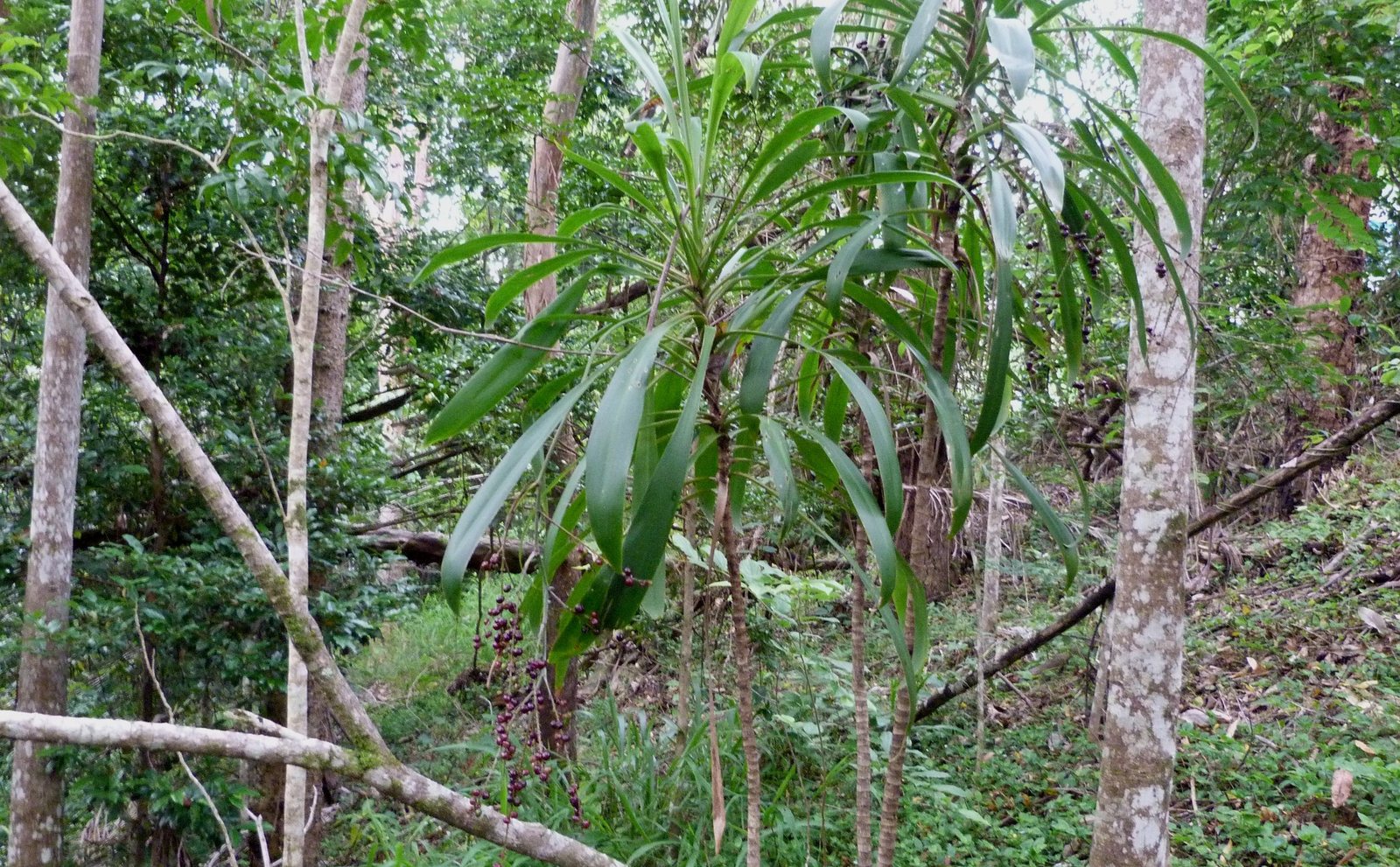
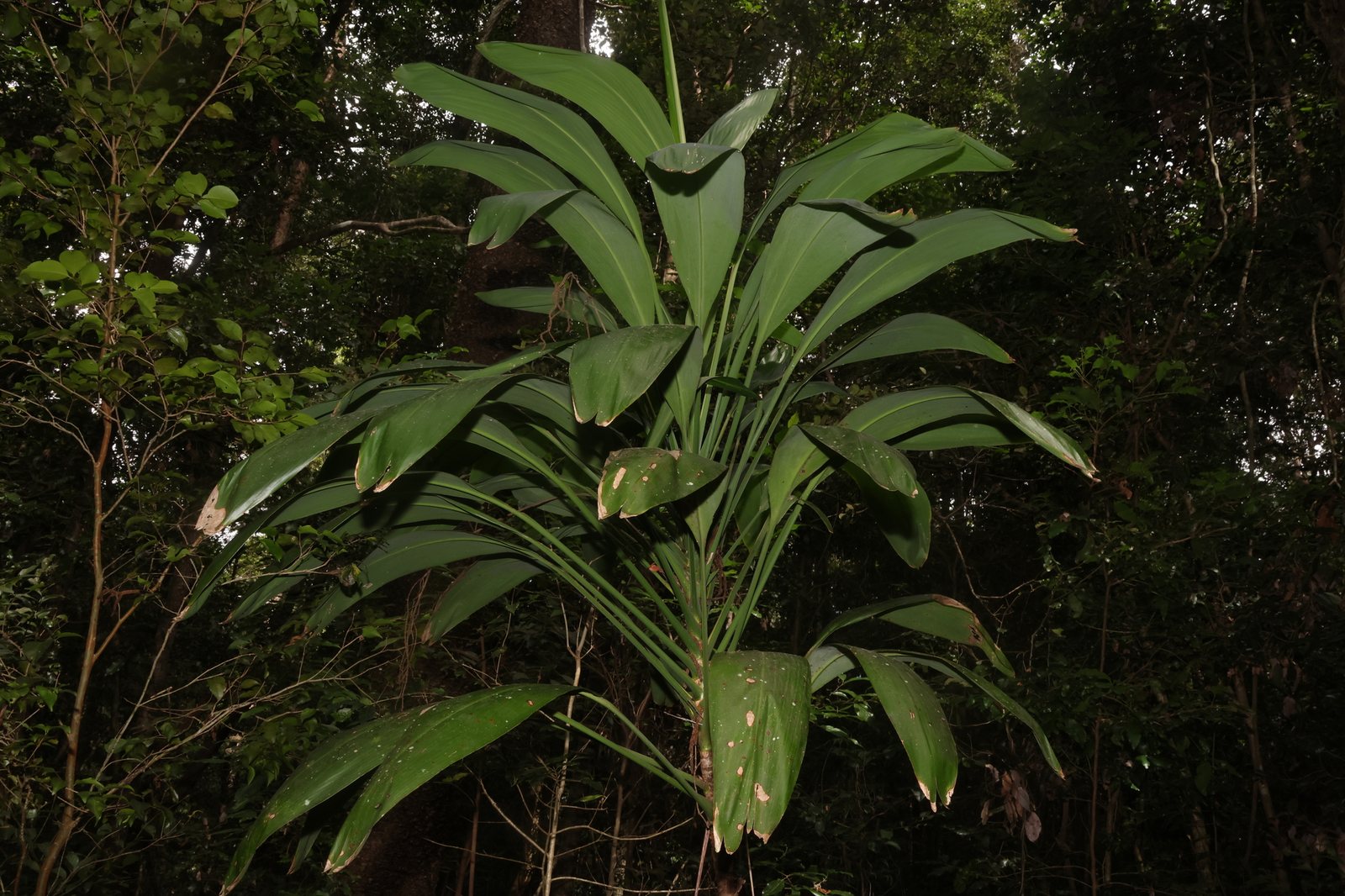
This evergreen rainforest shrub from eastern Australia forms slender, cane-like stems topped with broad, arching green leaves. Grow it for its lush foliage in sheltered, partly shaded gardens; in colder regions, keep it in a container that can be moved under cover for winter.
At a glance
- Sun
- Partial shade or bright, filtered light; protect from strong afternoon sun and drying winds.
- Water
- Keep the root zone evenly moist during active growth, without leaving it waterlogged. Water less in winter, especially in containers.
- Soil
- Humus-rich, well-drained soil, preferably slightly acidic to neutral.
- Height
- 10-16 ft (3-5 m)
- Spread
- 5-8 ft (1.5-2.5 m)
- Flowers
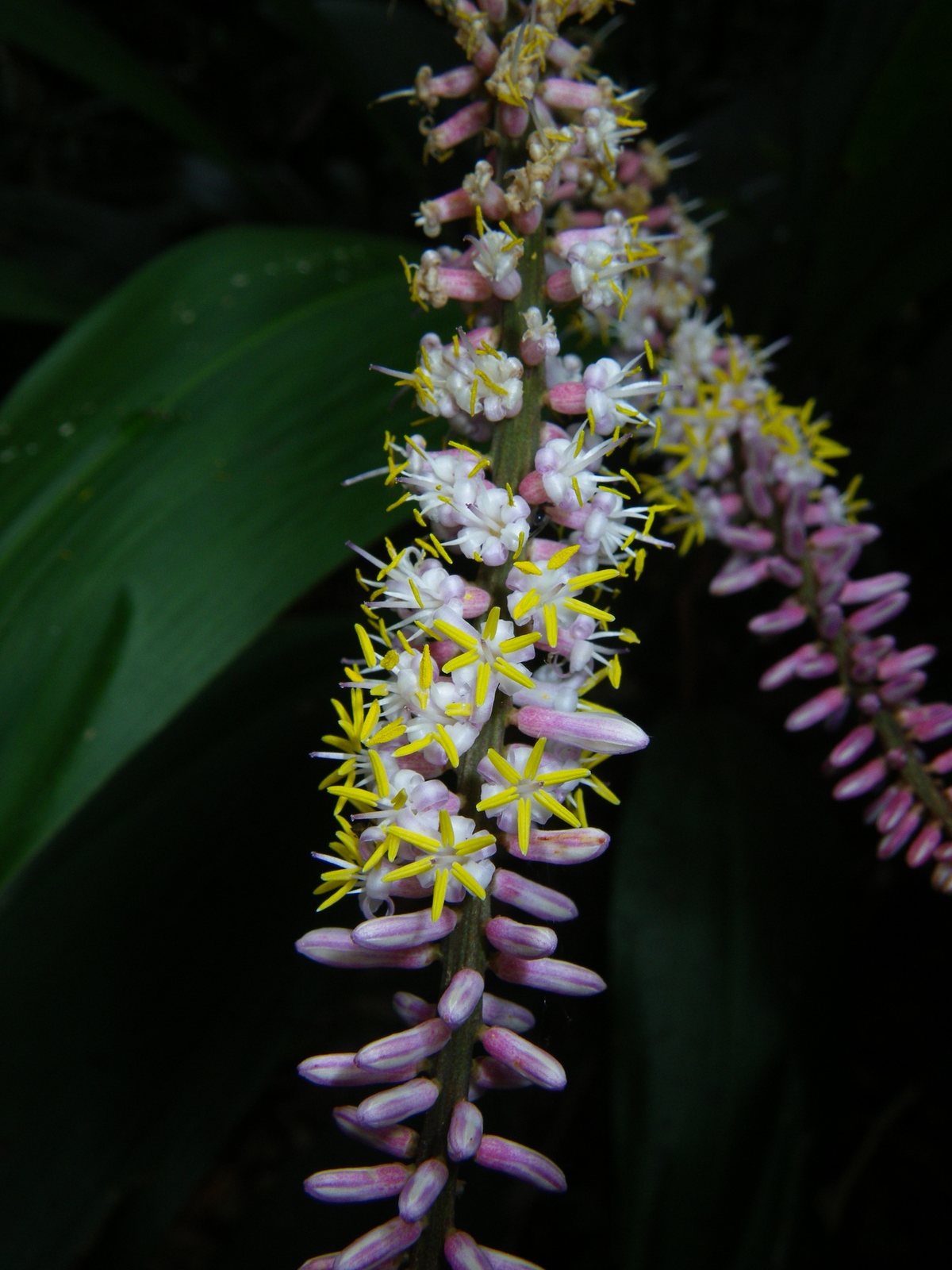
- Branched sprays of small white to pale mauve flowers, usually in spring or summer, followed by red berries.
- Foliage
- Evergreen. Broad, glossy green leaves with conspicuous leaf stalks, clustered near the ends of upright stems.
- Growth
- Moderate in warm, moist conditions; slower in cool climates or containers.
- Care needed
- Low
The year at a glance
- Heat tolerant
- Wildlife
- Low allergen
| J | F | M | A | M | J | J | A | S | O | N | D | |
|---|---|---|---|---|---|---|---|---|---|---|---|---|
| Flowers | ||||||||||||
| Fruit | ||||||||||||
| Plant |
Northern hemisphere months. In Australia, shift them by six.
- Difficulty
- Moderate
- Toughness
- Fairly tough
Will it suit your garden?
Pick your zone, country, light and whether you have pets.
Full sun is 6 or more hours of direct sun a day, part shade 3 to 6 hours, shade under 3.
How it grows
Planting day
1.6 ft (0.5 m)
After 1 year
3 ft (1 m)
After 2 years
5 ft (1.6 m)
After 3 years
7 ft (2.1 m)
After 5 years
10 ft (3.2 m)
About 7 years to full size.
From a typical nursery size, at an average rate for this kind of plant. A rule of thumb, not a forecast.
Good to know
- Cats and dogs
- Toxic
- Native to
- Australia
- Growth rate
- Slow
Care
Jobs through the year
- WaterApr–May, Sep–Oct, every 7 days
- Water established plants when the surface starts drying; young plants and pots need closer checks.
- WaterJun–Aug, every 4 days
- Keep established root zones evenly moist; skip watering if soil remains wet.
- WaterJan–Mar, Nov–Dec, every 14 days
- Under frost-free cover, water lightly when the surface dries; never dry the root ball completely.
- FeedApr–May
- Apply one light spring dose of balanced slow-release fertiliser.
- MulchMay
- Renew organic mulch over the roots, keeping stems clear.
- PruneMay–Jun
- Remove damaged leaves at their bases; shorten selected stems only if needed.
- ProtectSep–Oct
- Move pots into bright, frost-free shelter before cold nights; do not overwinter outdoors in zones 6–7.
- Water deeply when the soil surface starts to dry; do not leave container plants standing in water.
- Spread an organic mulch over the roots, keeping it clear of the stems.
- Feed lightly in spring with a balanced, slow-release fertiliser.
- Choose a position protected from cold winds and frost; young plants are particularly vulnerable.
- Move container plants into a bright, frost-free space before winter temperatures approach freezing.
Pruning. Remove dead or damaged leaves at their base in spring. If a plant becomes too tall or bare, shorten selected stems in late spring after frost risk has passed; healthy plants usually produce new shoots below the cuts.
Through the year
- Spring
- Plant or repot once frost risk has passed and the soil is warming.
- Spring
- Apply a light feed, renew mulch and remove winter-damaged foliage.
- Summer
- Check soil moisture regularly, especially in pots, and water before the root ball dries out.
- Autumn
- Reduce feeding and prepare a bright, frost-free winter position for container plants.
- Winter
- Water sparingly under cover, while keeping the root ball from drying completely.
In the garden
- Use as a tall foliage accent beneath an open tree canopy, with ferns and clivias below.
- Plant in sheltered courtyard beds where its upright stems give height without a dense canopy.
- Grow in a large container beside a shaded entrance or terrace.
- Combine with other eastern Australian rainforest plants in a moist, sheltered native garden.
Garden styles it suits: Australian native, Tropical, Modern tropical, Woodland, Architectural minimal and Modern courtyard.
Plant it with: Bird's nest fern, Soft tree fern, Clivia, Cast-iron plant, Bangalow palm and Native violet.
Wildlife: The red berries provide food for fruit-eating birds in its native Australian range. Its foliage also offers shelter for small garden animals.
Problems to watch for
- Frost injury: leaves scorch and stems may die back; provide shelter and remove dead growth after frost risk has passed.
- Brown leaf tips or scorched patches: check for dry soil, strong sun or drying wind, and improve watering and shelter.
- Scale insects and mealybugs: inspect leaf bases and stems, remove small infestations by hand and use a labelled horticultural oil if needed.
- Root rot in saturated soil: improve drainage, empty saucers and repot affected container plants into fresh, free-draining mix.
Safety
Species-specific toxicity information is limited. Other Cordyline species contain saponins that can cause drooling, vomiting and digestive upset in cats and dogs, so keep pets from chewing any part of this plant. Toxicity to horses and people is not well established; do not treat the berries or other parts as edible.
Easily confused with
Cabbage tree (Cordyline australis)
Has much narrower, sword-shaped leaves without the conspicuous long leaf stalks of broad-leaved palm lily, and usually develops a heavier, branching trunk.
Slender palm lily (Cordyline stricta)
Has narrower leaves with very short stalks and dark purple to black ripe berries rather than red ones.
Red-fruited palm lily (Cordyline rubra)
Also has red berries, but its leaves are generally narrower and carried on shorter stalks; broad-leaved palm lily has notably broad blades and long stalks.
The name
Cordyline comes from the Greek word for a club, referring to the thickened underground stem, while petiolaris refers to the conspicuous leaf stalks.
Propagation. Sow cleaned, fresh seed in a warm, moist propagation mix; germination can be slow and uneven. Stem sections or tip cuttings can also be rooted in warmth and high humidity.
Checked against open data
- Accepted botanical name
- Cordyline petiolaris
- Native range
- New South Wales and Queensland.
Sources: GBIF (CC BY 4.0) and Trefle (CC BY 4.0). The care and design notes are LandscapeGPT's own.
See it in your own yard.
Upload a photo of your yard and see it redesigned with plants that suit your climate, each checked against your zone.