California buckeye
Aesculus californica. Family Sapindaceae. Tree.
Also called California horse chestnut.
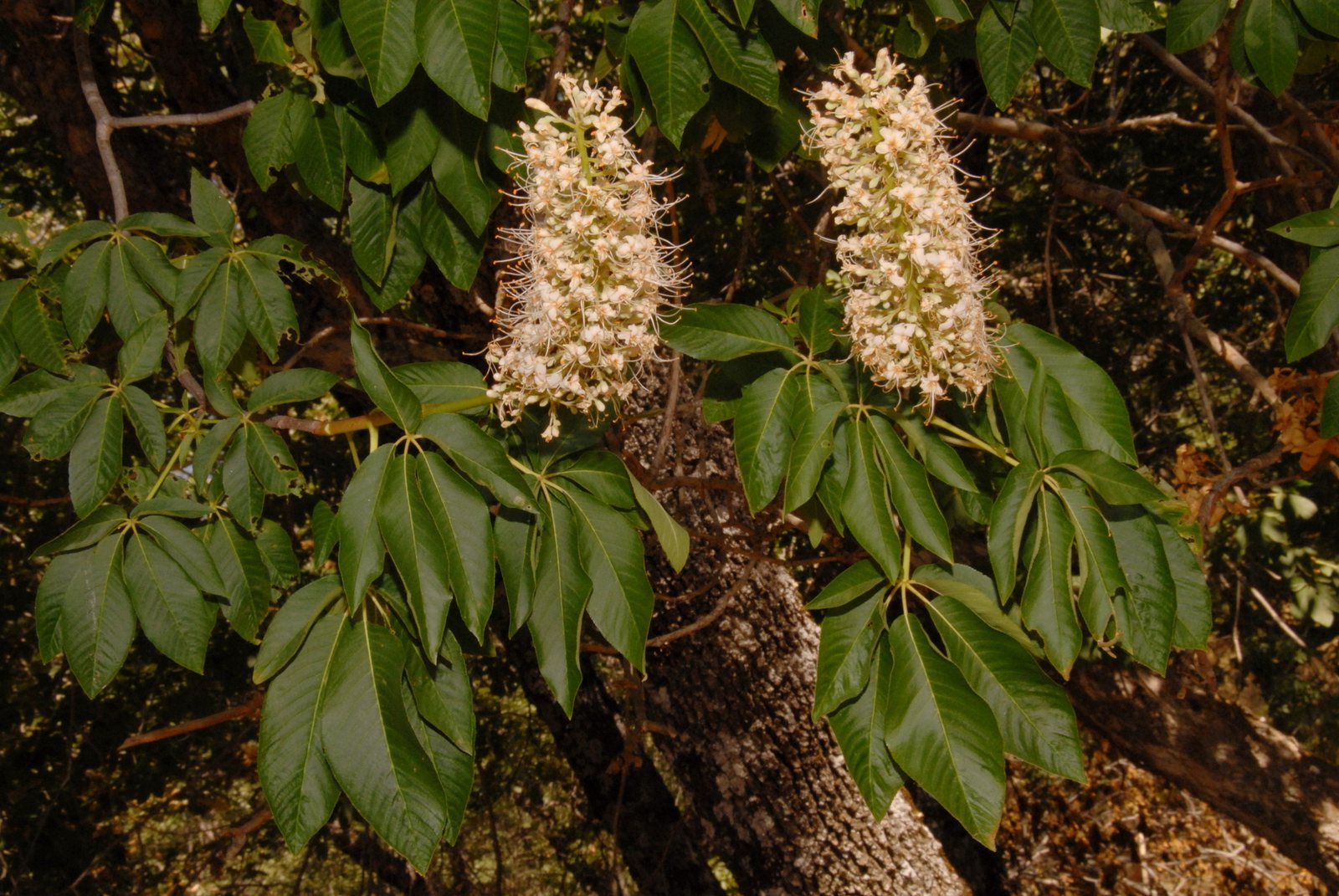
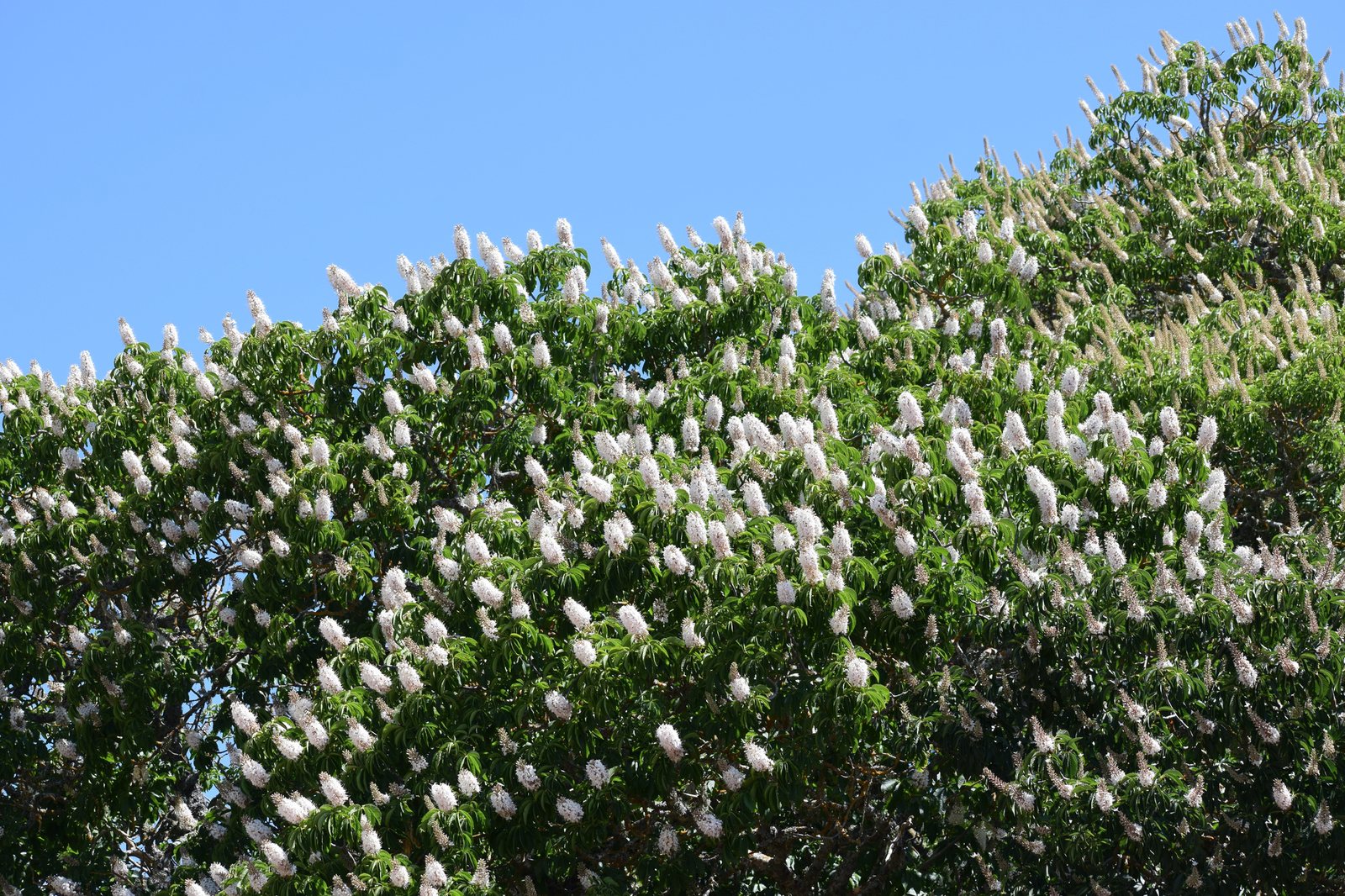
California buckeye is a small, broad-crowned deciduous tree native to California and southwestern Oregon, grown for its fragrant flower spikes, smooth grey bark and sculptural branches. It suits gardens with mild, wet winters and dry summers, often shedding its leaves in summer drought rather than waiting until autumn. Its large seeds are poisonous, not edible chestnuts.
At a glance
- Sun
- Full sun to light partial shade; flowering and branching are best in sun.
- Water
- Low once established in a suitable climate. Water young trees deeply during dry spells; established trees usually need little summer irrigation.
- Soil
- Well-drained soil, including clay, loam or stony ground; tolerates relatively poor soil but not prolonged waterlogging.
- Height
- 15-40 ft (4.6-12.2 m)
- Spread
- 20-40 ft (6.1-12.2 m)
- Flowers
- Late spring to early summer; upright spikes of fragrant white to pale pink flowers.
- Foliage
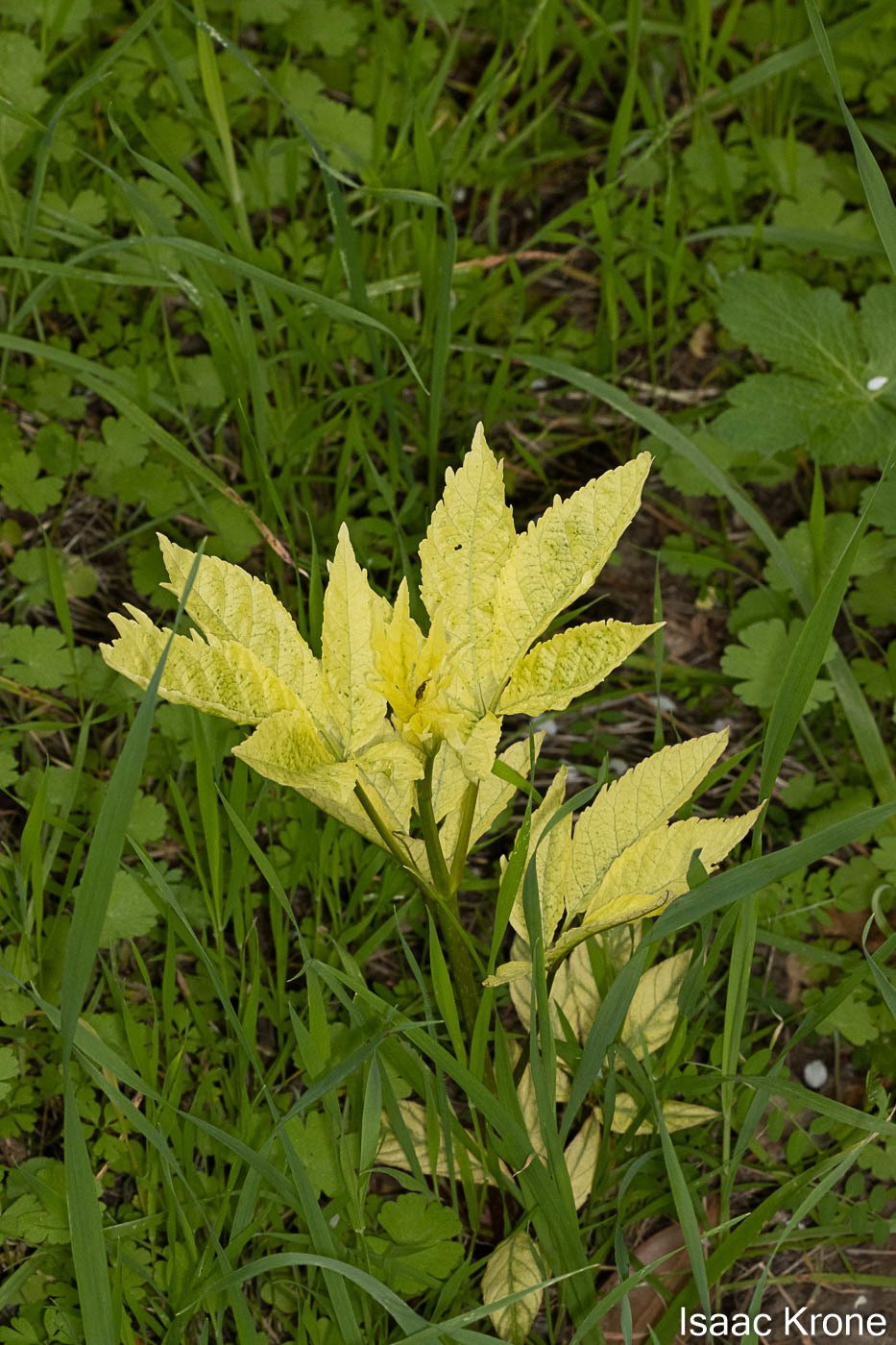
- Large, palmately compound leaves, usually with five to seven toothed leaflets. Leaves emerge early and may yellow and drop in midsummer in hot, dry conditions.
- Growth
- Slow to moderate
- Care needed
- Low
The year at a glance
- Pollinators
- Deer resistant
- Drought tolerant
- Heat tolerant
- Low allergen
- Fragrant
| J | F | M | A | M | J | J | A | S | O | N | D | |
|---|---|---|---|---|---|---|---|---|---|---|---|---|
| Flowers | ||||||||||||
| Fruit | ||||||||||||
| Plant |
Northern hemisphere months. In Australia, shift them by six.
- Difficulty
- Moderate
- Toughness
- Very tough
Will it suit your garden?
Pick your zone, country, light and whether you have pets.
Full sun is 6 or more hours of direct sun a day, part shade 3 to 6 hours, shade under 3.
How it grows
Planting day
7 ft (2 m)
After 1 year
7 ft (2.2 m)
After 2 years
8 ft (2.5 m)
After 3 years
9 ft (2.7 m)
After 5 years
11 ft (3.2 m)
About 26 years to full size.
From a typical nursery size, at an average rate for this kind of plant. A rule of thumb, not a forecast.
Good to know
- Cats and dogs
- Toxic
- Native to
- the US
- Growth rate
- Slow
Care
Jobs through the year
- WaterApr–May, Sep, every 28 days
- Water established trees only if soil is deeply dry; young trees need more frequent deep watering.
- WaterJun–Aug, every 28 days
- Established trees rarely need irrigation; water only in exceptional drought and accept summer leaf drop.
- MulchApr
- Apply 5–8 cm of organic mulch, leaving the trunk clear.
- PruneFeb
- Lightly remove dead, damaged or crossing branches before growth begins.
- ProtectSep–Nov
- Remove fallen poisonous seeds from areas accessible to children, pets or livestock.
- Plant during the cool, wetter season, allowing room for a broad crown and low branches.
- Water deeply through dry spells during the first two or three growing seasons, letting the soil begin to dry between waterings.
- Once established, avoid frequent lawn-style irrigation, particularly around the trunk.
- Spread 2-3 in (5-8 cm) of organic mulch over the root zone, keeping it clear of the trunk.
- Do not routinely fertilise; feed only if a soil test identifies a deficiency.
- Collect fallen seeds where children, pets or grazing animals could reach them.
Pruning. Prune lightly in late winter before growth starts, removing dead, damaged or crossing branches. Establish the main framework while young, and avoid topping or repeatedly cutting back mature limbs.
Through the year
- Autumn
- Collect fallen seeds from paths and areas used by children or animals; sow fresh seed promptly if propagating.
- Late autumn
- Plant when the soil is moist and workable, provided it is not waterlogged or frozen.
- Late winter
- Remove damaged or crossing branches before the early leaf growth begins.
- Spring
- Refresh mulch and check that it is not touching the trunk.
- Late spring
- Check soil moisture around recently planted trees as rainfall decreases.
- Summer
- Water young trees deeply during drought; accept summer leaf drop on established trees rather than trying to reverse it with frequent watering.
In the garden
- Use as a specimen in a spacious dry garden, where its broad crown and pale bark can be seen clearly.
- Combine with drought-tolerant California native shrubs and bunchgrasses that share its low summer water needs.
- Place on a well-drained slope for a natural, open-woodland effect.
- Set against dark evergreen planting to highlight its bare branching structure after leaf fall.
Garden styles it suits: California native, Mediterranean, Desert / xeriscape, Woodland, Low-maintenance and Winter interest.
Plant it with: Toyon, Manzanita, California lilac, Deer grass, Purple needle grass and California fuchsia.
Wildlife: Flowers attract native bees and other insects. Nectar and pollen can poison honeybees, particularly where alternative forage is scarce, so this is not a suitable tree to plant specifically for honeybee forage.
Problems to watch for
- Early summer leaf yellowing and drop: usually normal drought dormancy, not a disease; check establishment and soil moisture before adding water.
- Root and crown rot in wet soil: improve drainage, keep mulch away from the trunk and stop frequent summer irrigation.
- Powdery mildew or leaf blotches: allow good air circulation and clear fallen affected leaves; established trees rarely need treatment for minor damage.
Safety
Toxic to people, dogs, cats and horses if eaten. All parts should be treated as poisonous, especially the seeds and young growth; ingestion can cause vomiting, diarrhoea, weakness and serious neurological signs. Seek urgent medical or veterinary advice after suspected ingestion.
Easily confused with
Horse chestnut (Aesculus hippocastanum)
Usually a much larger tree, with larger leaves and prickly green fruit husks; California buckeye has smooth, pear-shaped husks and often becomes bare during summer drought.
Ohio buckeye (Aesculus glabra)
Has yellow-green flowers and usually prickly or warty fruit husks, rather than California buckeye's white to pale pink flowers and smooth husks.
Sweet chestnut (Castanea sativa)
Has simple, long, sharply toothed leaves and nuts enclosed in densely spiny burrs; California buckeye has hand-shaped compound leaves and poisonous seeds in smooth husks.
The name
The species name californica refers to California, while buckeye describes the brown seed with its pale scar, resembling a deer's eye.
Propagation. Grow from fresh, mature seeds collected after the husks split in autumn. Do not let seeds dry out; sow promptly in deep pots protected from rodents, and plant out while young because the developing roots dislike disturbance.
Checked against open data
- Accepted botanical name
- Aesculus californica
- In the US and Canada
- Native in the lower 48 states.
- Native range
- California and Oregon.
- Measured
- Soil pH 5.5 to 7.5. Average height 914 cm.
Sources: GBIF (CC BY 4.0), USDA PLANTS and Trefle (CC BY 4.0). The care and design notes are LandscapeGPT's own.
See it in your own yard.
Upload a photo of your yard and see it redesigned with plants that suit your climate, each checked against your zone.