California sycamore
Platanus racemosa. Family Platanaceae. Tree.
Also called Western sycamore, California plane tree.
California sycamore is a large deciduous tree native to California and Baja California, grown for its spreading crown, twisting branches and patchwork bark in cream, grey and brown. It makes a substantial shade or specimen tree for a large garden, but its roots, leaf litter and eventual size make it unsuitable for small plots or narrow planting strips.
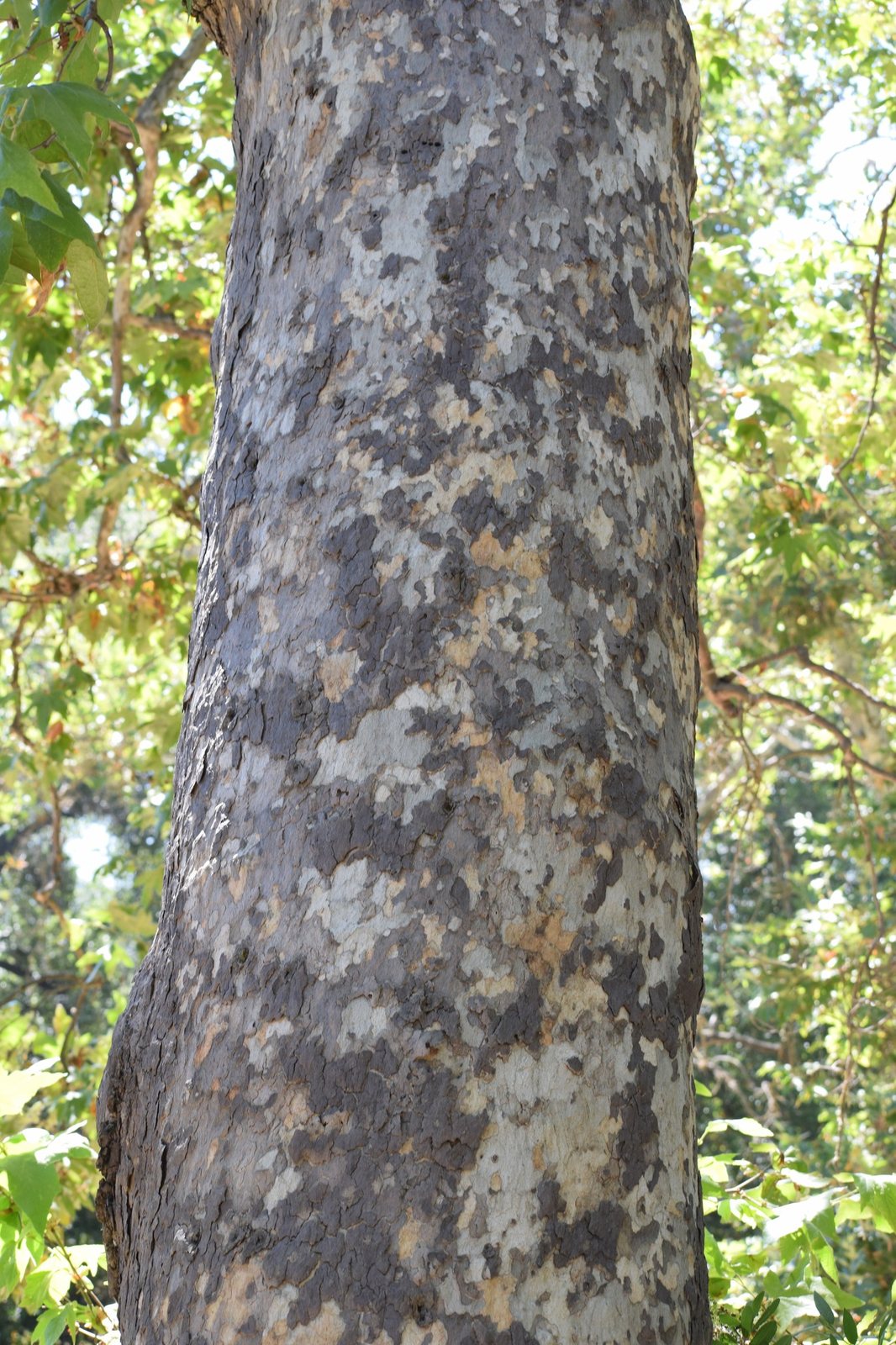
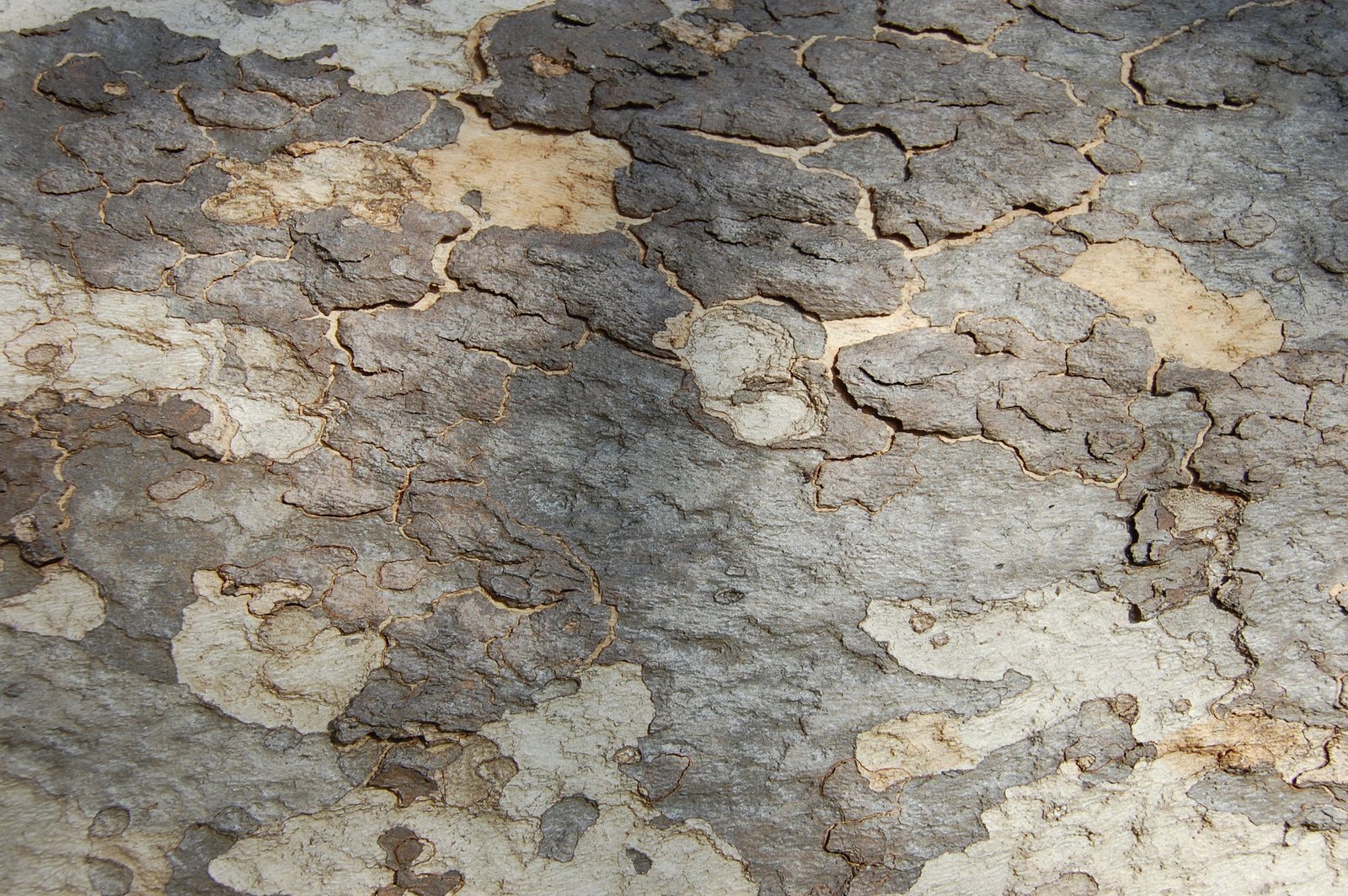
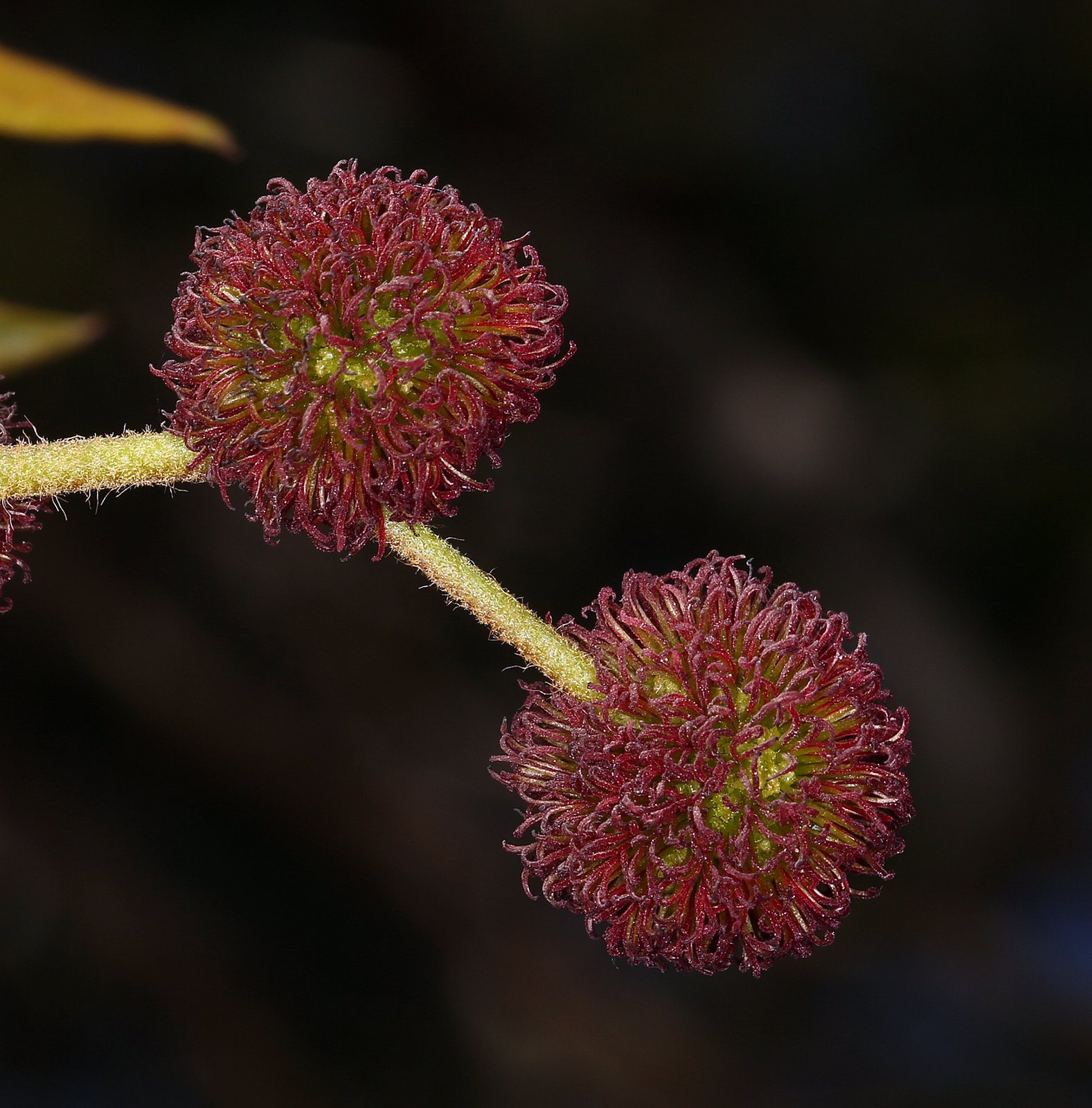
At a glance
- Sun
- Full sun; tolerates light partial shade.
- Water
- Water deeply while establishing. Established trees tolerate seasonal drought, but grow best with access to deep soil moisture; prolonged drought can cause early leaf drop.
- Soil
- Deep loam, sand or clay with room for extensive roots. Tolerates alkaline soil and seasonal flooding, but avoid permanently stagnant, waterlogged ground.
- Height
- 40-80 ft (12-24 m)
- Spread
- 30-60 ft (9-18 m)
- Flowers
- Spring; small, inconspicuous reddish flowers in rounded clusters, followed by hanging chains of brown seed balls.
- Foliage
- Large, alternate leaves with three to five pointed lobes and hairy undersides; green in summer, turning yellow-brown or brown before falling.
- Growth
- Moderate to fast where moisture is available.
- Care needed
- Medium
The year at a glance
- Drought tolerant
- Heat tolerant
- Wildlife
| J | F | M | A | M | J | J | A | S | O | N | D | |
|---|---|---|---|---|---|---|---|---|---|---|---|---|
| Flowers | ||||||||||||
| Fruit | ||||||||||||
| Plant |
Northern hemisphere months. In Australia, shift them by six.
- Difficulty
- Moderate
- Toughness
- Fairly tough
Will it suit your garden?
Pick your zone, country, light and whether you have pets.
Full sun is 6 or more hours of direct sun a day, part shade 3 to 6 hours, shade under 3.
How it grows
Planting day
7 ft (2.2 m)
After 1 year
10 ft (3.2 m)
After 2 years
14 ft (4.1 m)
After 3 years
17 ft (5.1 m)
After 5 years
23 ft (7.1 m)
About 16 years to full size.
From a typical nursery size, at an average rate for this kind of plant. A rule of thumb, not a forecast.
Good to know
- Cats and dogs
- Safe
- Native to
- the US
- Growth rate
- Fast
Care
Jobs through the year
- WaterApr–May, Sep–Oct, every 28 days
- For established trees, water deeply only during prolonged drought; young trees need more frequent watering.
- WaterJun–Aug, every 21 days
- Deeply irrigate established trees during prolonged drought if soil is dry; water young trees more often.
- MulchMay
- Maintain 5–8 cm of organic mulch over the root zone, clear of the trunk.
- PruneJan–Feb
- Remove damaged or crossing branches in dry weather; use an arborist for large limbs and never top.
- ProtectOct–Nov
- Clear diseased fallen leaves to reduce anthracnose carryover.
- Plant well away from paving, drains and buildings, allowing for the full mature crown and extensive roots.
- Water the root zone deeply during dry weather for the first two or three growing seasons; let the surface soil begin to dry between waterings.
- Give established trees occasional deep irrigation during prolonged drought if leaves scorch or drop early; avoid frequent shallow lawn watering.
- Spread 2-3 in (5-8 cm) of organic mulch over the root zone, keeping it clear of the trunk.
- Do not routinely fertilise; feed only if a soil test or clear deficiency indicates a need.
- Stake only if the young tree cannot stand securely, and remove supports once roots anchor it.
Pruning. In winter while dormant, remove dead, damaged or crossing branches and develop a sound branch structure while the tree is young. Do not top it; have a qualified arborist assess large limbs, weak unions or branches over buildings.
Through the year
- Autumn
- Plant in mild climates while the soil is still warm, and water thoroughly.
- Late autumn
- Collect fallen leaves from paths and drains; remove diseased leaves from beneath trees affected by anthracnose.
- Winter
- Inspect branch structure and carry out necessary formative pruning during dry weather.
- Spring
- Plant in colder areas after the ground thaws; check new leaves for anthracnose damage.
- Late spring
- Renew mulch and check that stakes and ties are not rubbing or constricting the trunk.
- Summer
- Water young trees deeply during dry spells and inspect leaf undersides if foliage becomes stippled or bronzed.
In the garden
- Use as a single specimen in a large lawn or open landscape where its mottled trunk and broad crown can be seen.
- Plant along a spacious swale or seasonal watercourse with other locally appropriate riparian plants.
- Create high, dappled shade over a broad informal seating area, allowing for falling leaves, twigs and seed balls.
- Combine with deer grass and western redbud for a California-native landscape with contrasting foliage and seasonal interest.
Garden styles it suits: California native, Woodland, Wildlife garden, Grand estate, Winter interest and Mediterranean.
Plant it with: Deer grass, Western redbud, California wild rose, California mugwort and Douglas iris.
Wildlife: Provides shelter and nesting sites for birds, and older trees can develop useful cavities. Seeds feed some birds and small mammals, while foliage supports native insects within its home range; wind-pollinated flowers offer little nectar value.
Problems to watch for
- Anthracnose causes blotched leaves, twig dieback and early leaf fall, especially in cool, wet springs. Collect fallen diseased material, prune dead twigs in dry weather and maintain tree vigour; affected trees often produce replacement leaves.
- Sycamore lace bugs cause pale stippling and bronzing, with dark specks beneath leaves. Tolerate light damage and conserve predators; seek locally approved treatment advice if a young tree is repeatedly defoliated.
- Drought stress causes leaf scorch and premature leaf drop. Check moisture below the surface, mulch broadly and irrigate deeply rather than frequently.
- Large surface roots can lift paving and compete with nearby plants. Prevent trouble by allowing generous space at planting; do not cut major roots without an arborist's assessment.
Safety
Not known to be toxic to people, cats, dogs or horses. Fine hairs from leaves and seed balls can irritate skin, eyes and airways, and airborne pollen can trigger allergies; wear gloves and avoid raising dust when clearing dry litter.
Easily confused with
American sycamore (Platanus occidentalis)
Usually has broader, more shallowly lobed leaves and a single seed ball on each stalk; California sycamore usually carries several seed balls in a hanging chain.
London plane (Platanus × acerifolia)
Usually has two seed balls per stalk and less deeply divided leaves. California sycamore typically has more deeply cut, hairier leaves and longer chains of seed balls, though these features vary.
Arizona sycamore (Platanus wrightii)
Generally has narrower, more deeply divided leaf lobes. Both have mottled bark and chains of seed balls, so several leaves and the tree's origin may be needed for confident identification.
The name
Platanus comes from the Greek name for the plane tree, and racemosa refers to its flower and fruit heads arranged along a stalk.
Propagation. Grow from ripe seed collected from mature brown seed balls and sown in a moist seedbed or containers. Remove the irritating hairs carefully and keep seedlings evenly moist; seedlings vary in form.
Checked against open data
- Accepted botanical name
- Platanus racemosa
- In the US and Canada
- Native in the lower 48 states.
- Native range
- California and Mexico Northwest.
- Measured
- Soil pH 5.8 to 7.3. Average height 2286 cm.
Sources: GBIF (CC BY 4.0), USDA PLANTS and Trefle (CC BY 4.0). The care and design notes are LandscapeGPT's own.
See it in your own yard.
Upload a photo of your yard and see it redesigned with plants that suit your climate, each checked against your zone.