Canada anemone
Anemone canadensis. Family Ranunculaceae. Perennial.
Also called Canadian anemone, Meadow anemone, Roundleaf anemone.
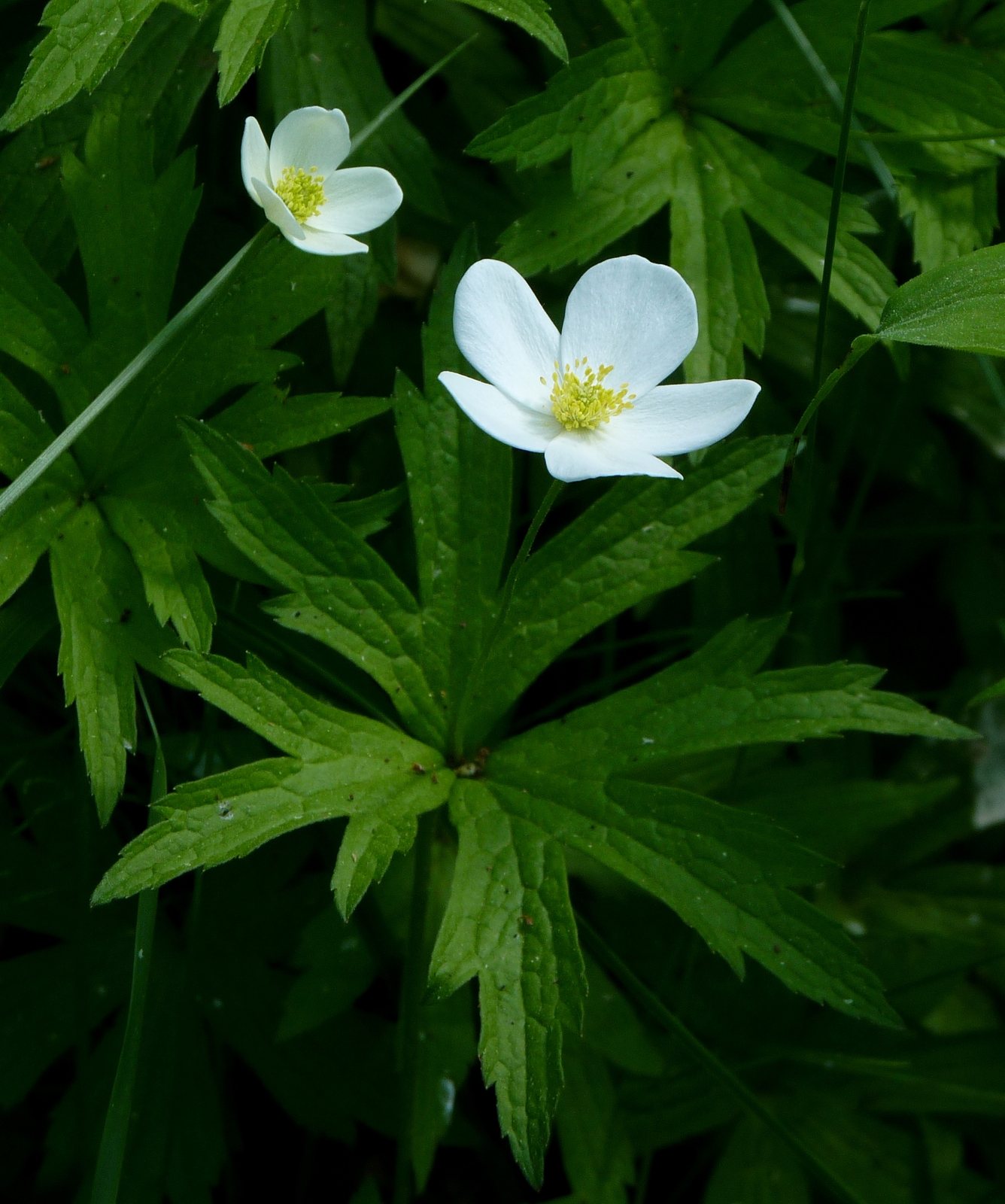
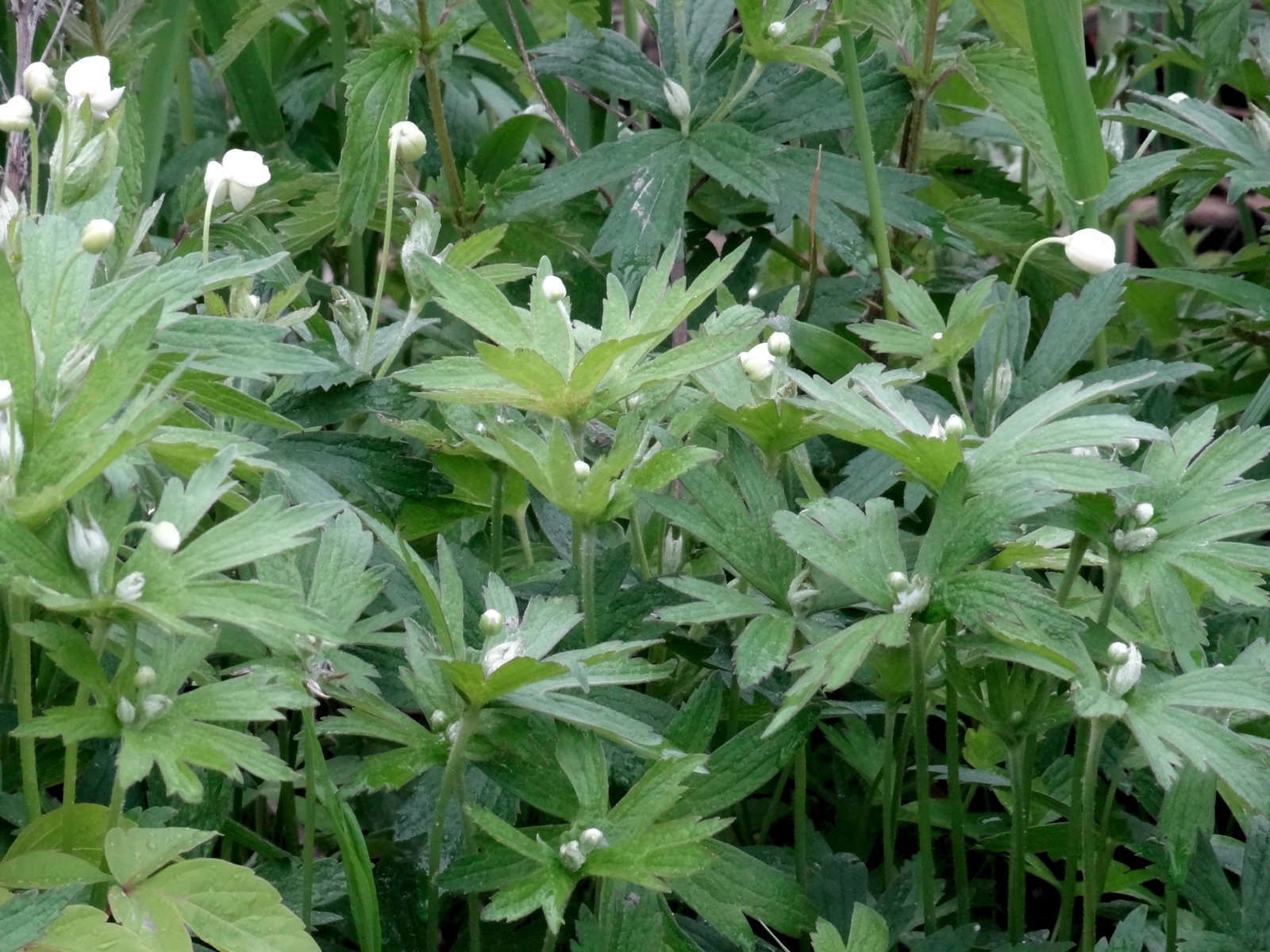
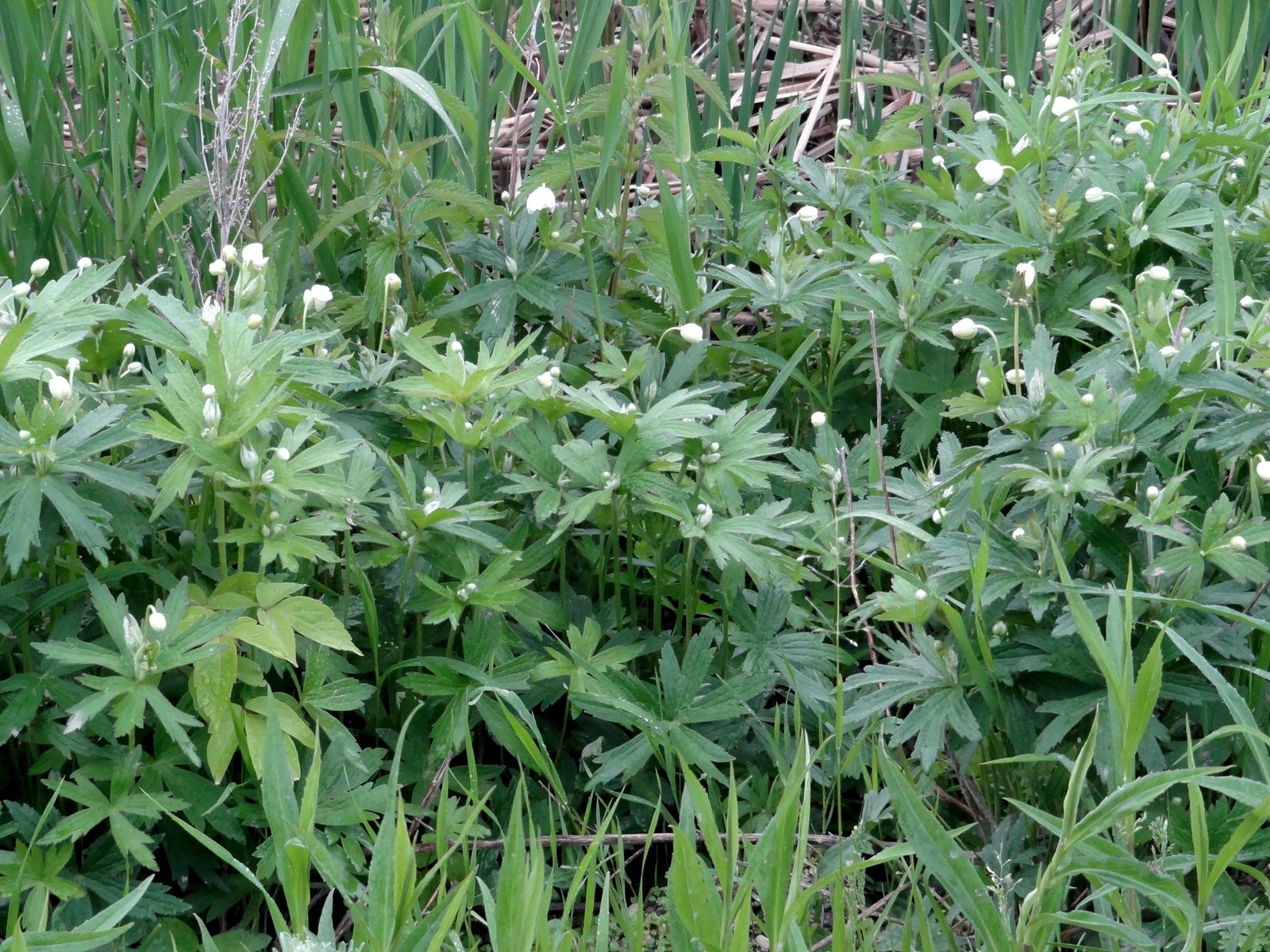
Canada anemone is a spreading North American perennial with white flowers above deeply lobed green leaves. Gardeners grow it for late-spring colour and dense groundcover in moist ground, but its vigorous underground stems can overwhelm smaller neighbours.
At a glance
- Sun
- Full sun to partial shade; afternoon shade helps where summers are hot.
- Water
- Keep consistently moist, especially during establishment. Established colonies tolerate brief dry spells, but prolonged drought can scorch foliage or cause early dormancy.
- Soil
- Moist, humus-rich soil; tolerates clay and seasonal wetness. Avoid sites that remain deeply waterlogged.
- Height
- 1-2 ft (0.3-0.6 m)
- Spread
- 2-3 ft (0.6-0.9 m) initially; colonies spread much farther over time.
- Flowers
- Late spring to early summer; white flowers with yellow centres, sometimes followed by scattered later flowers.
- Foliage
- Green, deeply lobed and toothed leaves form a dense, leafy colony; foliage dies back for winter.
- Growth
- Fast once established, spreading by underground rhizomes.
- Care needed
- Medium
The year at a glance
- Pollinators
- Deer resistant
- Cold hardy
- Wildlife
- Low allergen
| J | F | M | A | M | J | J | A | S | O | N | D | |
|---|---|---|---|---|---|---|---|---|---|---|---|---|
| Flowers | ||||||||||||
| Plant |
Northern hemisphere months. In Australia, shift them by six.
- Difficulty
- Moderate
- Toughness
- Very tough
Will it suit your garden?
Pick your zone, country, light and whether you have pets.
Full sun is 6 or more hours of direct sun a day, part shade 3 to 6 hours, shade under 3.
How it grows
Planting day
1 ft (0.3 m)
After 1 year
1.2 ft (0.38 m)
After 2 years
1.5 ft (0.45 m)
full size
About 2 years to full size.
From a typical nursery size, at an average rate for this kind of plant. A rule of thumb, not a forecast.
Good to know
- Cats and dogs
- Toxic
- Native to
- Canada
- In the garden
- Spreads vigorously: plan to contain it.
- Growth rate
- Fast
Care
Jobs through the year
- WaterApr–May, Sep–Oct, every 10 days
- Water established colonies when rainfall is insufficient; keep new plants consistently moist.
- WaterJun–Aug, every 7 days
- During dry weather, water deeply to prevent prolonged drying and foliage scorch.
- MulchMar–Apr
- Apply thin compost and leaf mould, keeping crowns uncovered.
- PruneFeb–Mar
- Cut remaining dead stems and leaves to ground level.
- PruneApr–Sep, every 30 days
- Lift unwanted shoots with attached rhizomes to contain spreading colonies.
- DivideMar–Apr, Sep–Oct
- Divide crowded colonies or reduce their size, allowing autumn divisions time to root before frost.
- DeadheadJun–Jul
- Remove spent flower stems if you want to reduce self-seeding.
- ProtectMar–Apr
- Inspect young shoots for slugs and control only where damage warrants it.
- Water new plants regularly through their first growing season; do not let the root zone dry out completely.
- Apply a thin layer of compost in spring; rich soil rarely needs additional fertiliser.
- Mulch lightly with leaf mould to conserve moisture, keeping the crown uncovered.
- Remove unwanted shoots with their attached rhizomes before they spread into nearby plants.
- Divide crowded colonies in spring or autumn; staking is usually unnecessary.
Pruning. Cut dead stems and leaves to ground level in late autumn or late winter. If foliage becomes scorched or ragged after flowering, trim it back and water during dry weather to encourage fresh leaves.
Through the year
- Late winter
- Remove remaining dead foliage before new shoots emerge.
- Spring
- Plant or divide while soil is moist, then water thoroughly.
- Spring
- Top-dress with compost and check the edges of established colonies for unwanted spread.
- Early summer
- Enjoy flowering; remove spent flower stems if you want to reduce self-seeding.
- Summer
- Water during prolonged dry spells and remove scorched foliage if necessary.
- Autumn
- Divide or reduce colonies after flowering has finished, allowing divisions time to root before hard freezes.
In the garden
- Use as a broad groundcover beneath deciduous trees where the soil stays moist and receives some sun.
- Plant along a pond margin above the standing-water line for white flowers and dense summer foliage.
- Combine with robust moisture-loving perennials such as blue flag iris and Joe-Pye weed in a naturalistic border.
- Allow it to form colonies in a North American native meadow rather than placing it among small, slow-growing plants.
Garden styles it suits: Native meadow, Woodland, Wildlife garden, Wildflower, Rewilded and White garden.
Plant it with: Blue flag iris, Joe-Pye weed, Turtlehead, Cardinal flower, Tufted hair grass and Sensitive fern.
Wildlife: Flowers provide pollen for bees and other visiting insects; they offer little or no nectar. Dense colonies provide shelter for small invertebrates.
Problems to watch for
- Aggressive spread: lift unwanted shoots with all attached rhizomes, and avoid planting beside delicate perennials.
- Drought scorch or early dieback: water deeply during extended dry weather and mulch to conserve moisture.
- Powdery mildew or leaf spots: improve airflow, avoid wetting leaves unnecessarily and remove badly affected foliage.
- Slugs and snails on young growth: inspect emerging shoots and use hand-picking or labelled iron-phosphate bait where needed.
Safety
Treat all parts, especially fresh leaves and stems, as toxic to people, cats, dogs and horses if eaten. Anemones contain irritants that can cause mouth irritation, drooling, vomiting or diarrhoea; large amounts can cause more serious poisoning. Sap may irritate skin, so wear gloves when cutting or dividing.
Where it spreads. Spreads aggressively by rhizomes in moist gardens across its growing range, including gardens in the United States, Canada, the United Kingdom and suitable cool parts of Australia. It is native across much of Canada and the United States; vigorous garden spread is not the same as a formal invasive listing.
Easily confused with
Wood anemone (Anemone nemorosa)
Usually much shorter, flowers earlier in spring and typically becomes dormant in summer. Its leaves are more finely divided than the broad, toothed lobes of Canada anemone.
Tall thimbleweed (Anemone virginiana)
Usually taller, with smaller greenish-white flowers and conspicuous elongated, thimble-shaped seed heads; Canada anemone has showier white flowers and rounder seed heads.
The name
The species name canadensis means 'of Canada', referring to part of its native North American range.
Propagation. Divide rooted sections of the rhizomes in spring or autumn and replant promptly. Seed can be sown outdoors when ripe, but germination may be slow and irregular and can require seasonal temperature changes.
Checked against open data
- Accepted botanical name
- Anemonastrum canadense Anemone canadensis is an older name for Anemonastrum canadense.
- Native range
- Alberta, British Columbia, Colorado, Connecticut, Illinois, Indiana, Iowa, Kansas, Kentucky, Maine, Manitoba and Maryland.
- Measured
- Average height 44 cm.
Sources: GBIF (CC BY 4.0) and Trefle (CC BY 4.0). The care and design notes are LandscapeGPT's own.
See it in your own yard.
Upload a photo of your yard and see it redesigned with plants that suit your climate, each checked against your zone.