Chuparosa
Justicia californica. Family Acanthaceae. Shrub.
Also called Hummingbird bush, Beloperone.
Chuparosa is an open, green-stemmed desert shrub native to the southwestern United States and northwestern Mexico. Gardeners grow it for its tubular red flowers, which attract hummingbirds, and its ability to survive heat and drought. It needs a warm, exceptionally well-drained site; in colder climates, grow it in a container brought under cover for winter.
At a glance
- Sun
- Full sun; tolerates light afternoon shade in very hot inland gardens.
- Water
- Low once established. Water deeply but infrequently during prolonged dry weather, allowing the soil to dry between waterings.
- Soil
- Sharply drained sandy, gravelly or rocky soil; tolerates poor and alkaline soil but dislikes wet clay.
- Height
- 3-6 ft (0.9-1.8 m)
- Spread
- 4-6 ft (1.2-1.8 m)
- Flowers
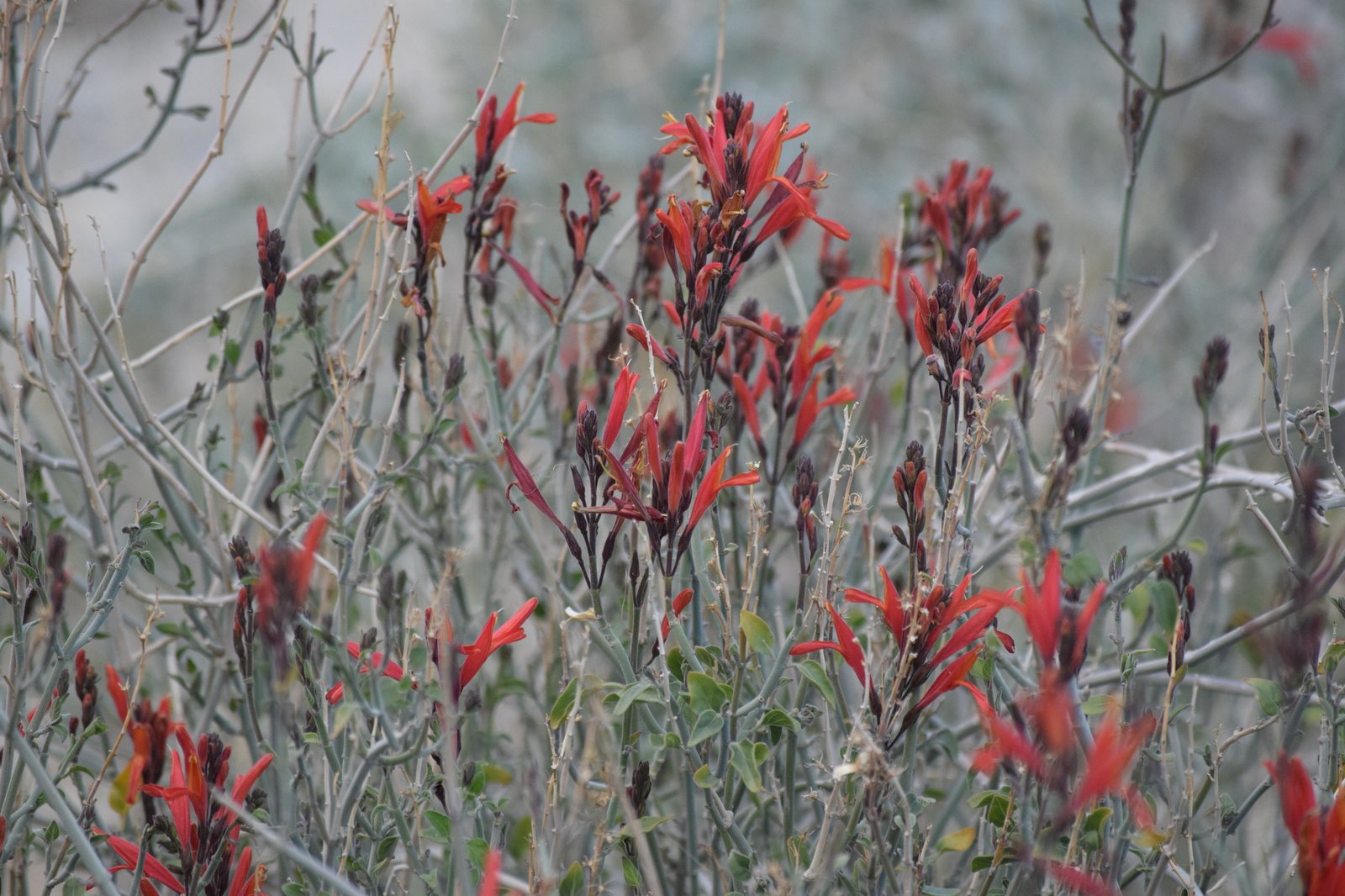
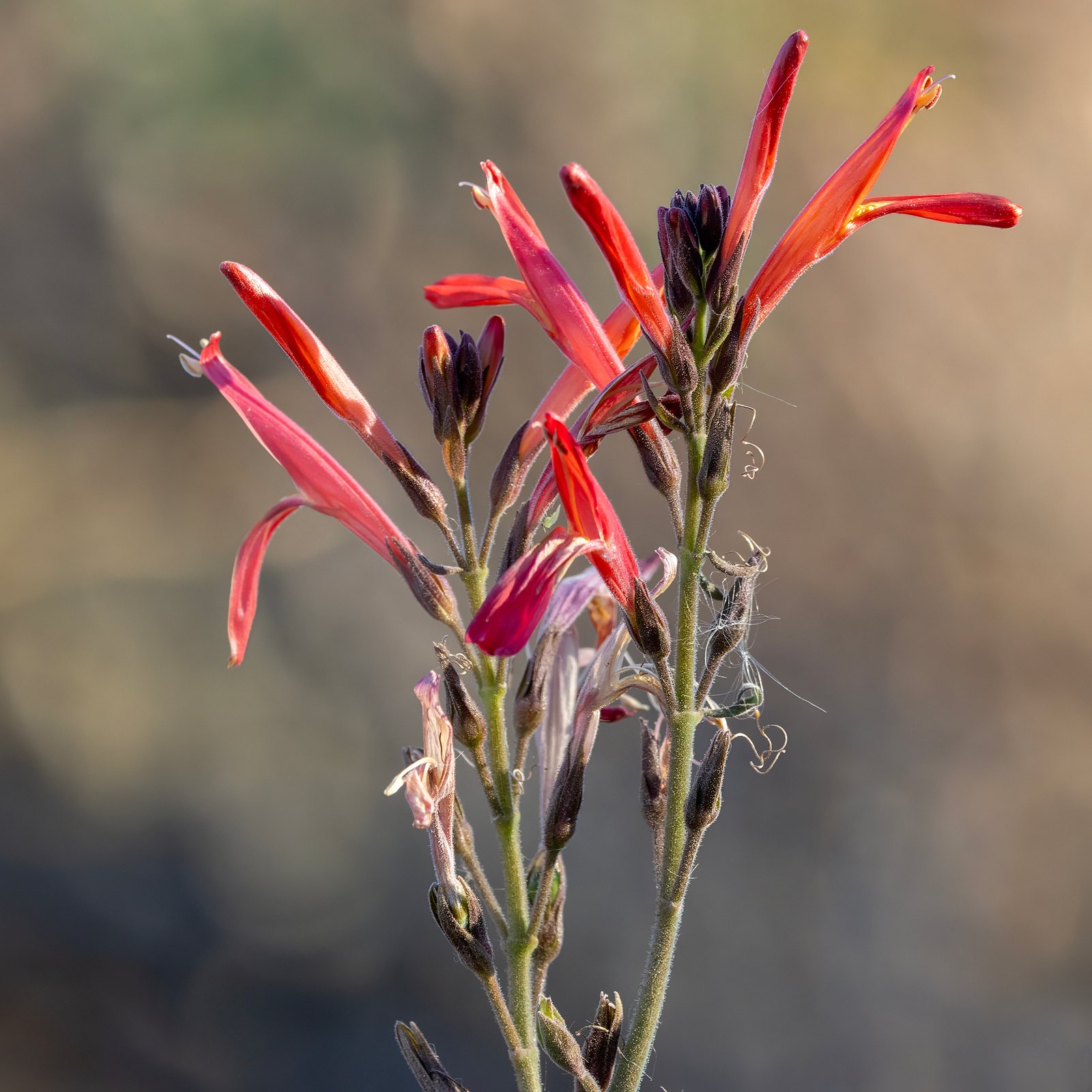
- Mainly late winter through spring, with further flushes after rain or watering; tubular scarlet-red flowers, occasionally yellow.
- Foliage
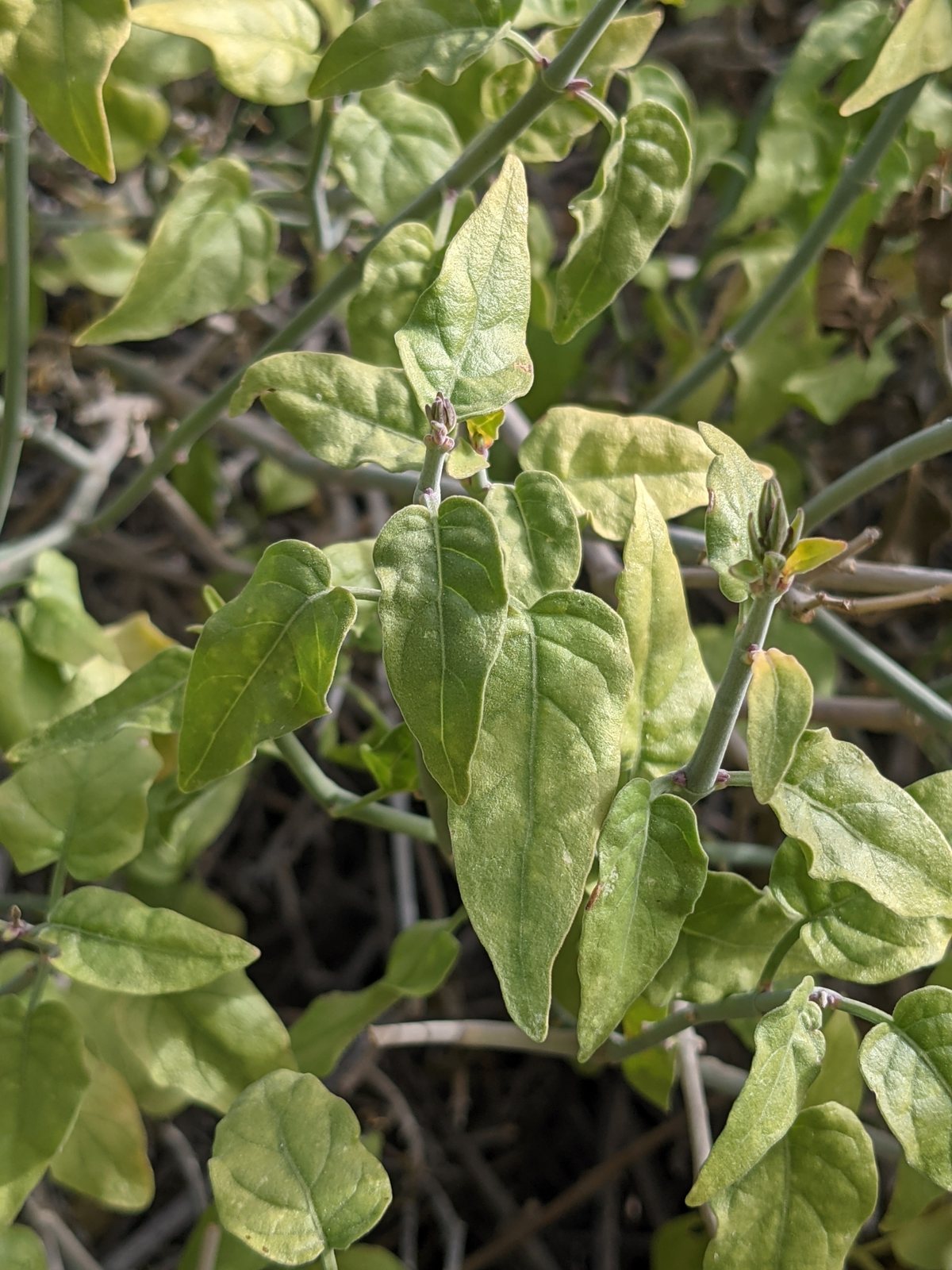
- Small, soft, oval green leaves on slender green stems. Leaves drop during drought or cold, leaving the stems to carry on photosynthesis.
- Growth
- Moderate; faster with warmth and occasional deep watering.
- Care needed
- Low
The year at a glance
- Pollinators
- Drought tolerant
- Heat tolerant
- Wildlife
- Low allergen
| J | F | M | A | M | J | J | A | S | O | N | D | |
|---|---|---|---|---|---|---|---|---|---|---|---|---|
| Flowers | ||||||||||||
| Plant |
Northern hemisphere months. In Australia, shift them by six.
- Difficulty
- Moderate
- Toughness
- Fairly tough
Will it suit your garden?
Pick your zone, country, light and whether you have pets.
Full sun is 6 or more hours of direct sun a day, part shade 3 to 6 hours, shade under 3.
How it grows
Planting day
1.6 ft (0.5 m)
After 1 year
2.3 ft (0.71 m)
After 2 years
3 ft (0.93 m)
After 3 years
4 ft (1.1 m)
After 5 years
4 ft (1.4 m)
full size
About 4 years to full size.
From a typical nursery size, at an average rate for this kind of plant. A rule of thumb, not a forecast.
Good to know
- Cats and dogs
- Safe
- Native to
- the US
- Growth rate
- Fast
Care
Jobs through the year
- WaterMay, Sep, every 21 days
- For established ground plants, water only during drought after soil dries; young plants need closer checks.
- WaterJun–Aug, every 14 days
- Deep-water only during prolonged dry weather; let soil dry and keep water off the crown.
- WaterJan–Apr, Oct–Dec, every 30 days
- For frost-free overwintering pots only, water sparingly when dry; avoid wet, cold roots.
- MulchMay
- Use a light gravel mulch, keeping it clear of the crown.
- PruneMay–Jun
- After spring flowering, lightly shorten wayward stems and remove confirmed dead wood.
- ProtectJan–Apr, Oct–Dec
- In zone 6–7, keep in a movable pot and overwinter somewhere bright and frost-free.
- Water new plants deeply, then let the root zone dry before watering again; gradually reduce watering as roots establish.
- Plant on a mound or slope if drainage is uncertain, and keep irrigation away from the crown.
- Use gravel mulch rather than moisture-retentive mulch around the base.
- Avoid routine feeding; rich soil and heavy fertilising encourage weak, sprawling growth.
- In containers, use a gritty potting mix and overwinter in a bright, frost-free place with sparse watering.
Pruning. After the main spring flowering flush, remove dead wood and shorten wayward stems lightly to preserve the loose shape. Wait until new growth begins before cutting out frost-damaged stems, and avoid repeated shearing.
Through the year
- Late winter
- Enjoy the early flowers and protect container plants from frost; keep sheltered plants on the dry side.
- Spring
- Plant once damaging frosts have passed, choosing a sunny position with excellent drainage.
- Late spring
- After the main flowering flush, remove dead stems and lightly reduce sprawling growth.
- Summer
- Water established plants only during prolonged dry spells; leaf drop alone is a normal drought response.
- Autumn
- Reduce watering as temperatures fall and move containers under cover before frost.
In the garden
- Plant among boulders and gravel for a loose, natural desert planting.
- Combine with agaves and yuccas so its fine stems and red flowers soften their strong outlines.
- Use near a patio or window where visiting hummingbirds can be watched in regions where they occur.
- Group on a sunny, dry slope with other desert shrubs, allowing room for its spreading branches.
Garden styles it suits: Desert modern, Southwestern, Desert / xeriscape, California native, Wildlife garden and Dry gravel garden.
Plant it with: Brittlebush, Desert marigold, Desert globemallow, Parry's agave, Red yucca and Fairy duster.
Wildlife: The nectar-rich flowers are valuable to hummingbirds within their range and are also visited by insects. Its loose branches provide light cover for small desert wildlife.
Problems to watch for
- Root rot in wet or poorly drained soil: improve drainage, reduce watering and avoid sites that stay wet in winter.
- Frost damage to stems: provide a sheltered position and remove dead growth only after spring growth reveals what has survived.
- Sparse flowering or floppy growth in shade: move to a sunnier position and avoid heavy feeding.
- Aphids on tender shoots: wash off small colonies with water and allow natural predators to control the remainder.
Safety
Not known to be toxic to people, cats, dogs or horses, but species-specific safety information is limited. No particular plant part is established as poisonous; do not treat it as an edible plant.
Easily confused with
Mexican honeysuckle (Justicia spicigera)
Usually has orange flowers and larger, more persistent leaves, giving it a much leafier appearance than chuparosa.
California fuchsia (Epilobium canum)
Usually forms a lower, leafy perennial clump with narrow grey-green leaves and flowers mainly in late summer and autumn, rather than a tall, open framework of green stems.
The name
Chuparosa is a Spanish name used for hummingbirds, referring to their nectar feeding, while Justicia honours the Scottish botanist James Justice and californica refers to California.
Propagation. Sow fresh seed in a free-draining mix in warmth, or take semi-ripe stem cuttings during warm weather. Keep cuttings lightly moist rather than wet.
Checked against open data
- Accepted botanical name
- Justicia californica
- In the US and Canada
- Native in the lower 48 states.
- Native range
- Arizona, California and Mexico Northwest.
Sources: GBIF (CC BY 4.0), USDA PLANTS and Trefle (CC BY 4.0). The care and design notes are LandscapeGPT's own.
See it in your own yard.
Upload a photo of your yard and see it redesigned with plants that suit your climate, each checked against your zone.