Desert globemallow
Sphaeralcea ambigua. Family Malvaceae. Perennial.
Also called Apricot mallow, Desert mallow.
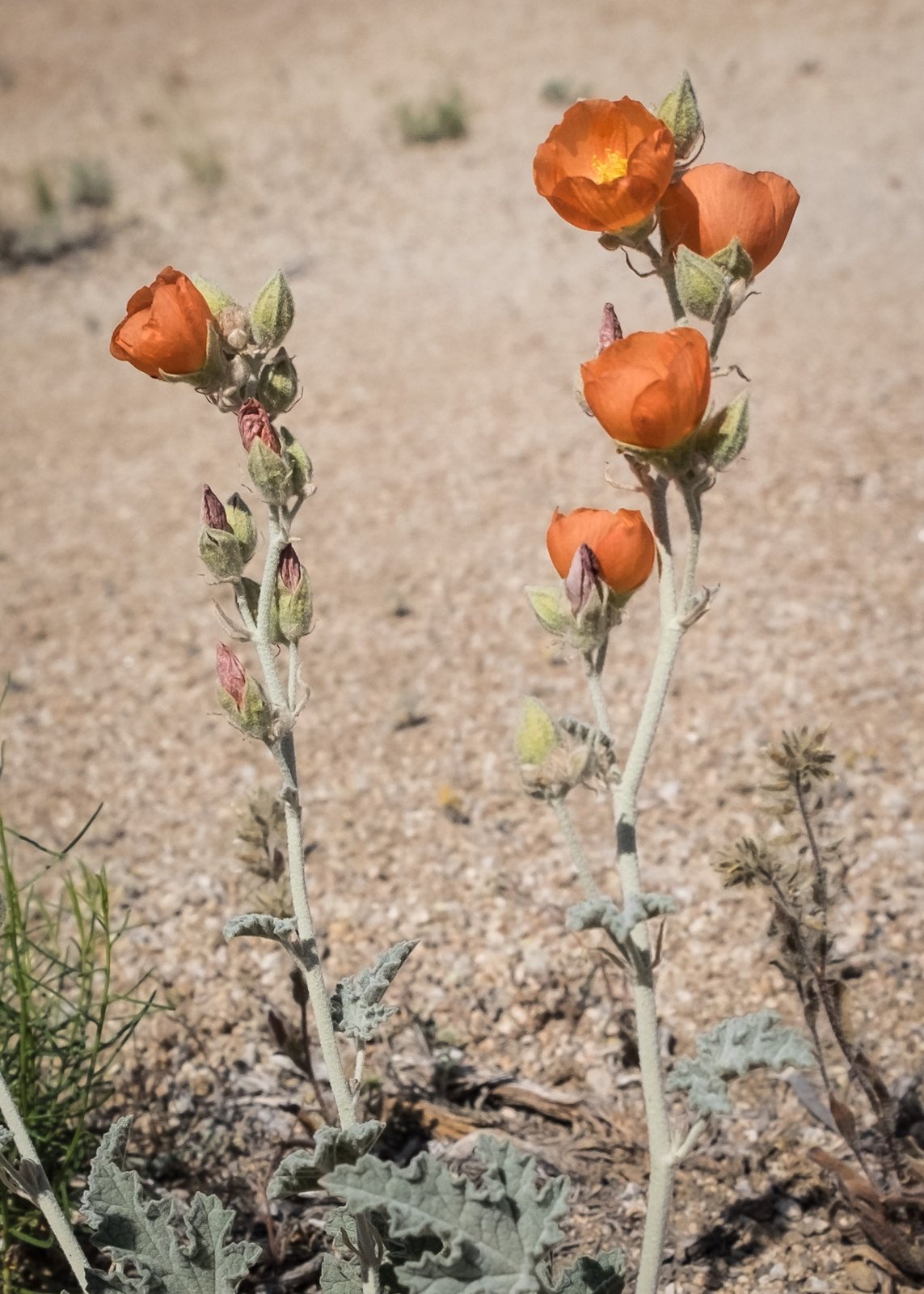
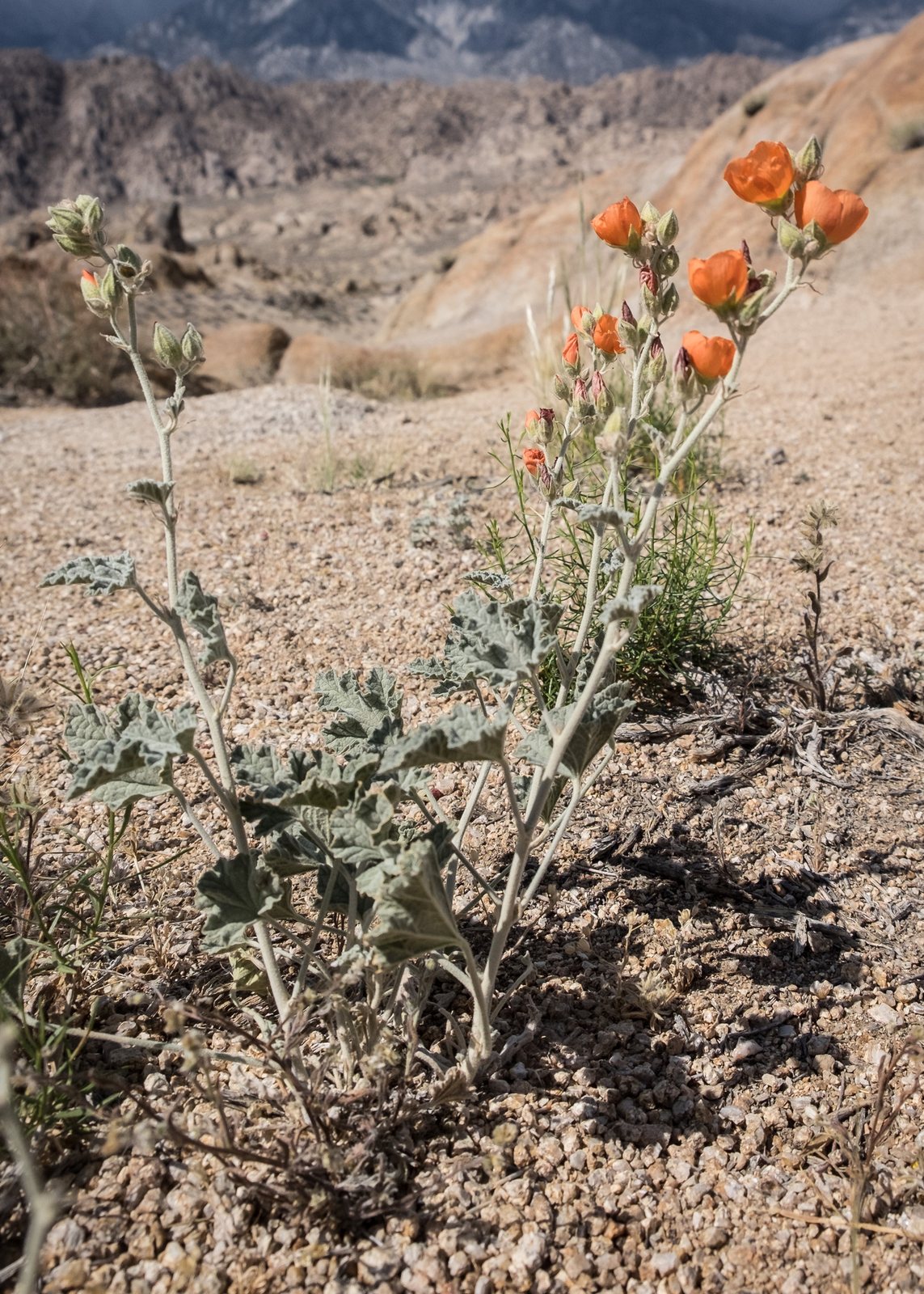
Desert globemallow is a woody-based perennial from the southwestern United States and northwestern Mexico, grown for its apricot-orange flowers and softly hairy, grey-green leaves. It thrives in sunny, dry gardens with excellent drainage and attracts native bees. Winter wet is often a greater problem than cold, especially in the United Kingdom and wetter parts of Canada.
At a glance
- Sun
- Full sun; flowering and growth become looser in shade.
- Water
- Low once established. Water young plants regularly while roots establish, then water deeply but infrequently during prolonged dry weather.
- Soil
- Lean, sharply drained sandy, gravelly or rocky soil; tolerates alkaline soil. Avoid wet clay and rich, moisture-retentive beds.
- Height
- 2-4 ft (0.6-1.2 m)
- Spread
- 2-3 ft (0.6-0.9 m)
- Flowers
- Mainly spring into summer, with repeat flowering after rain or occasional watering into autumn in mild climates. Usually apricot-orange; wild populations also include pink, lavender and white forms.
- Foliage
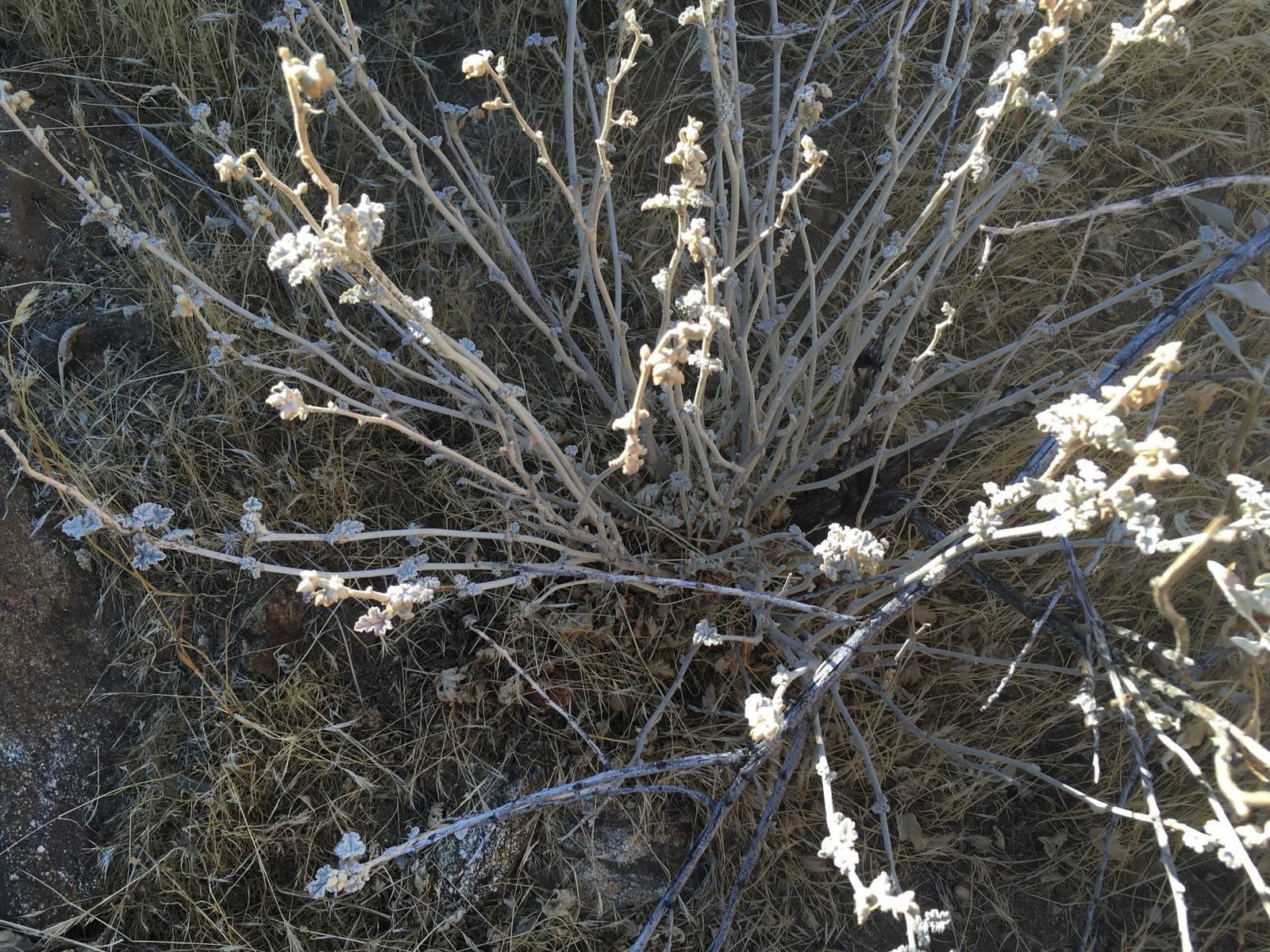
- Grey-green, shallowly lobed leaves covered in fine, star-shaped hairs. Usually evergreen or semi-evergreen in mild climates, but may lose leaves during hard frost or severe drought.
- Growth
- Fast in warm weather.
- Care needed
- Low
The year at a glance
- Pollinators
- Deer resistant
- Drought tolerant
- Heat tolerant
- Wildlife
- Low allergen
| J | F | M | A | M | J | J | A | S | O | N | D | |
|---|---|---|---|---|---|---|---|---|---|---|---|---|
| Flowers | ||||||||||||
| Fruit | ||||||||||||
| Plant |
Northern hemisphere months. In Australia, shift them by six.
- Difficulty
- Moderate
- Toughness
- Fairly tough
Will it suit your garden?
Pick your zone, country, light and whether you have pets.
Full sun is 6 or more hours of direct sun a day, part shade 3 to 6 hours, shade under 3.
How it grows
Planting day
1 ft (0.3 m)
After 1 year
2 ft (0.61 m)
After 2 years
3 ft (0.9 m)
full size
About 2 years to full size.
From a typical nursery size, at an average rate for this kind of plant. A rule of thumb, not a forecast.
Good to know
- Cats and dogs
- Safe
- Native to
- the US
- Growth rate
- Fast
Care
Jobs through the year
- WaterApr–May, Sep, every 28 days
- Water established ground plants only during prolonged drought; young plants need more frequent checks.
- WaterJun–Aug, every 21 days
- Soak established ground plants only during extended dry weather; let the root zone dry afterward.
- PruneMar–Apr
- After severe frosts, remove dead stems and shorten surviving leafy growth by about one-third.
- DeadheadJun–Sep, every 21 days
- Lightly trim faded flower stems for repeat bloom; retain some if seed is wanted.
- MulchApr–May
- Use a thin gravel mulch and keep damp organic material away from the crown.
- ProtectJan–Mar, Oct–Dec
- Keep crowns free of wet leaves and prevent winter waterlogging with a raised, sharply drained bed.
- Let the soil dry between waterings; do not put established plants on a lawn-watering schedule.
- Plant in a raised gravel bed or on a slope where winter drainage is poor.
- Avoid routine feeding; rich soil and excess nitrogen encourage floppy growth.
- Use a light gravel mulch and keep the crown clear of damp organic mulch.
- Wear gloves and avoid rubbing your eyes after handling the hairy stems and leaves.
Pruning. In early spring, after the worst frosts, remove dead stems and shorten surviving growth by about one-third to encourage branching. Lightly trim spent flower stems after the main flush, but avoid cutting hard into bare old wood.
Through the year
- Early spring
- Remove winter-damaged stems and lightly reshape established plants.
- Spring
- Plant after severe frost risk has passed, choosing full sun and sharp drainage.
- Late spring
- Check newly planted specimens and water deeply when their root zone dries.
- Summer
- Trim spent flower stems if desired; give established plants occasional deep watering only during extended drought.
- Autumn
- Collect ripe, dry seed capsules if you want more plants, or remove unwanted seedlings.
- Winter
- Keep irrigation off during wet weather and make sure water does not collect around the crown.
In the garden
- Plant in gravel gardens among rocks, with space for its loose, branching shape.
- Combine with agaves and yuccas to contrast soft foliage and orange flowers with rigid leaves.
- Repeat through dry borders with penstemons and drought-tolerant grasses for a long informal display.
- Use in sunny native-bee gardens away from heavily irrigated planting.
Garden styles it suits: Desert modern, Desert / xeriscape, Dry gravel garden, Southwestern, Pollinator garden and California native.
Plant it with: Parry's agave, Banana yucca, Desert marigold, Firecracker penstemon, Blackfoot daisy and Blue grama.
Wildlife: Flowers supply pollen and nectar to bees, including specialist globemallow bees. Plants may also host caterpillars of painted lady butterflies.
Problems to watch for
- Root or crown rot in wet soil: improve drainage, keep the crown clear and reduce watering; replace badly rotted plants.
- Rust, seen as orange-brown pustules on leaves: remove badly affected foliage, improve airflow and avoid overhead watering.
- Aphids on soft shoots: rinse off with water and allow ladybirds and other predators to control small colonies.
- Leggy or floppy growth: provide full sun, stop feeding and excess watering, and shorten stems lightly in spring.
Safety
Not known to be toxic to people, cats, dogs or horses, although species-specific safety information is limited. Fine hairs on the leaves and stems can irritate skin and eyes; it is not recommended as a food plant.
Easily confused with
Narrowleaf globemallow (Sphaeralcea angustifolia)
Usually has much narrower, lance-shaped leaves rather than the broader, shallowly lobed leaves typical of desert globemallow; flower colour alone is not a reliable distinction.
Munro's globemallow (Sphaeralcea munroana)
Usually has more distinctly cut, angular leaf lobes. The species overlap in appearance, so reliable identification may require mature fruit and a regional botanical key.
The name
Sphaeralcea combines Greek words for sphere and mallow, referring to the rounded fruit, while ambigua means ambiguous or uncertain.
Propagation. Grow from seed sown in spring; lightly scarifying the hard seed coat can improve germination, which may otherwise be uneven. Take softwood cuttings in late spring or early summer to preserve a particular flower colour. Seedlings may appear nearby in open gravel.
Checked against open data
- Accepted botanical name
- Sphaeralcea ambigua
- In the US and Canada
- Native in the lower 48 states.
- Native range
- Arizona, California, Mexico Northwest, Nevada and Utah.
- Measured
- Soil pH 7.5 to 8.5. Average height 117 cm.
Sources: GBIF (CC BY 4.0), USDA PLANTS and Trefle (CC BY 4.0). The care and design notes are LandscapeGPT's own.
See it in your own yard.
Upload a photo of your yard and see it redesigned with plants that suit your climate, each checked against your zone.