Cimarron sage
Leucophyllum langmaniae. Family Scrophulariaceae. Shrub.
Also called Cimarron Texas ranger, Langman's sage, Langman's Texas ranger.
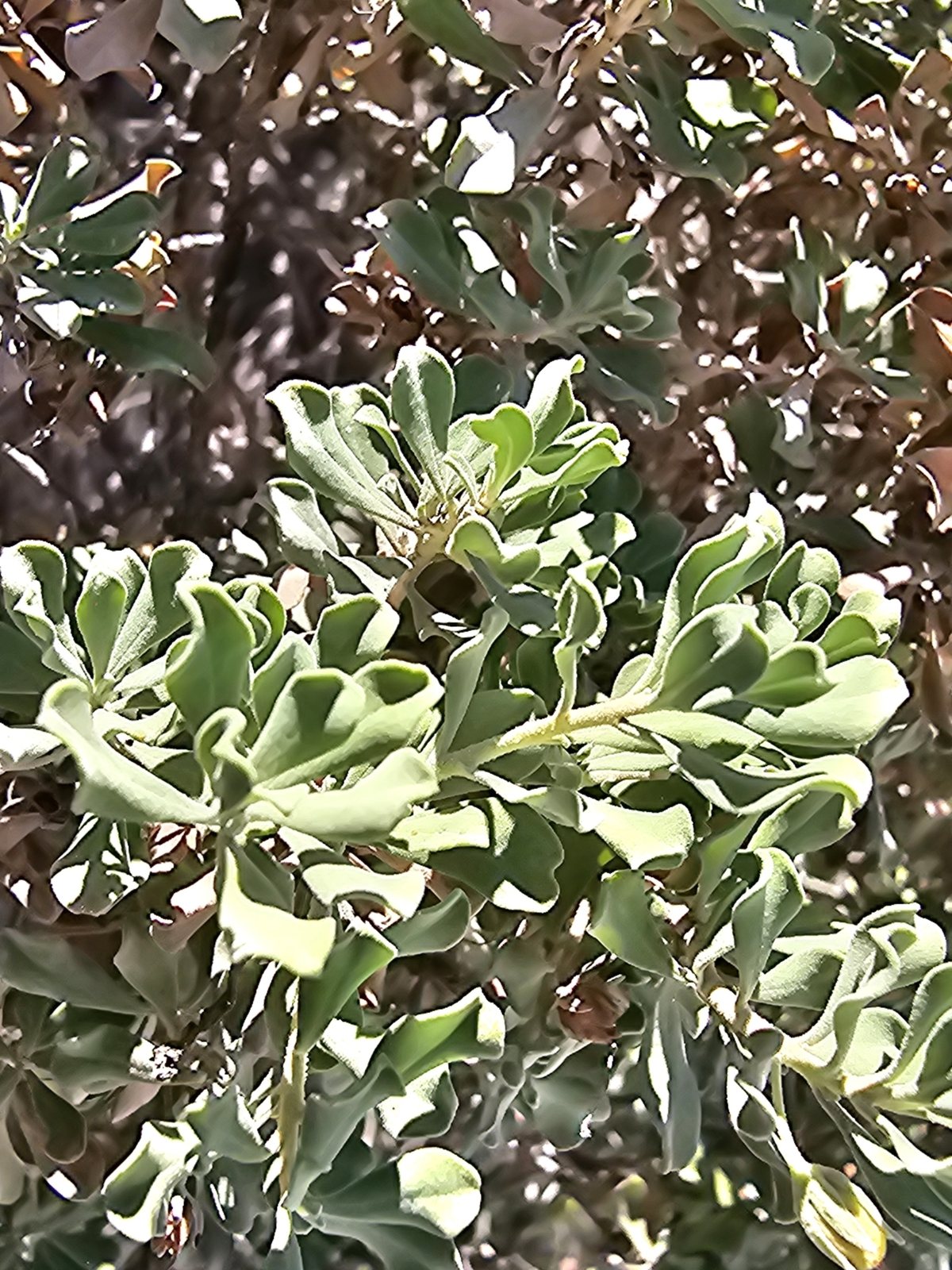
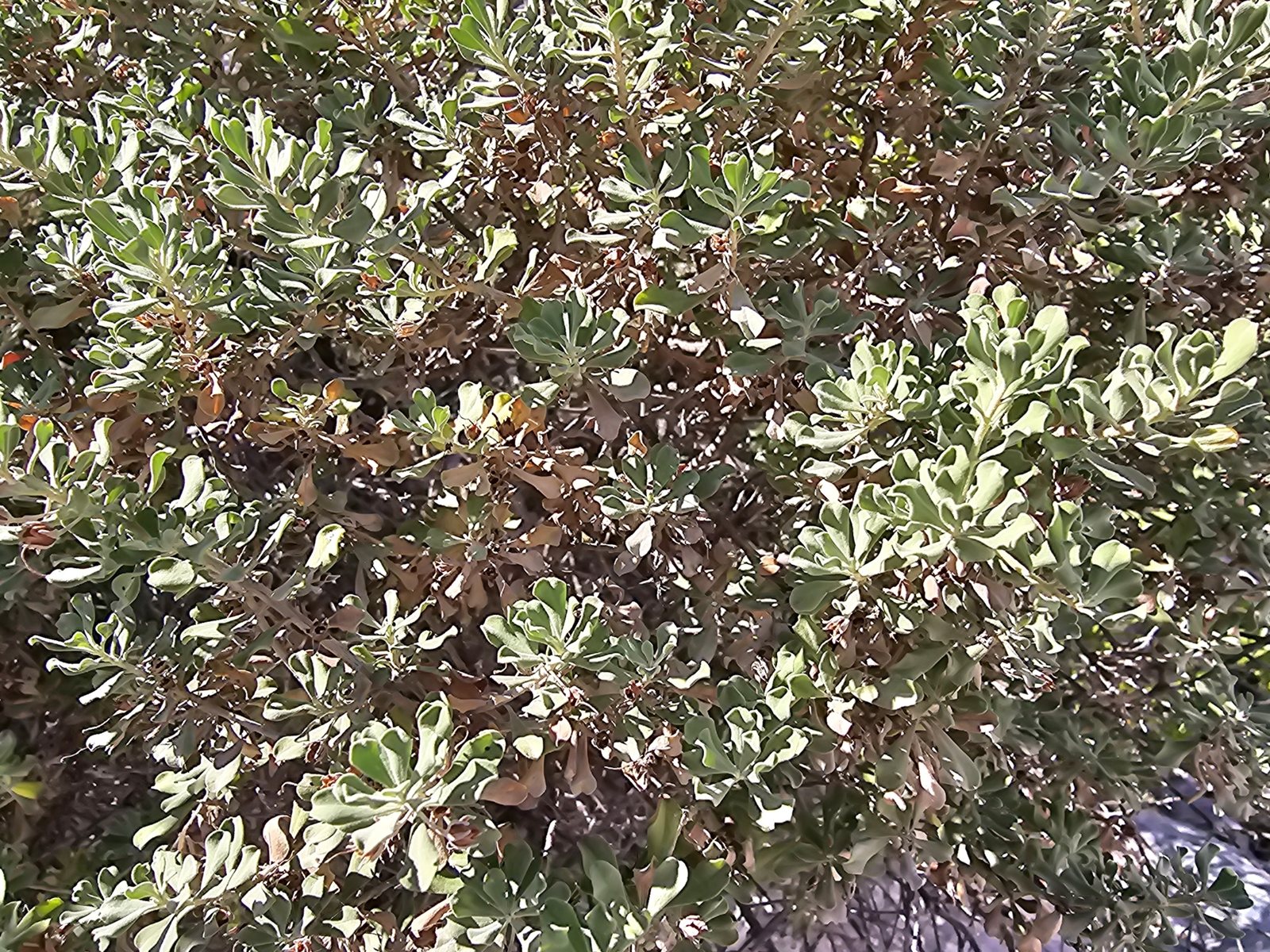
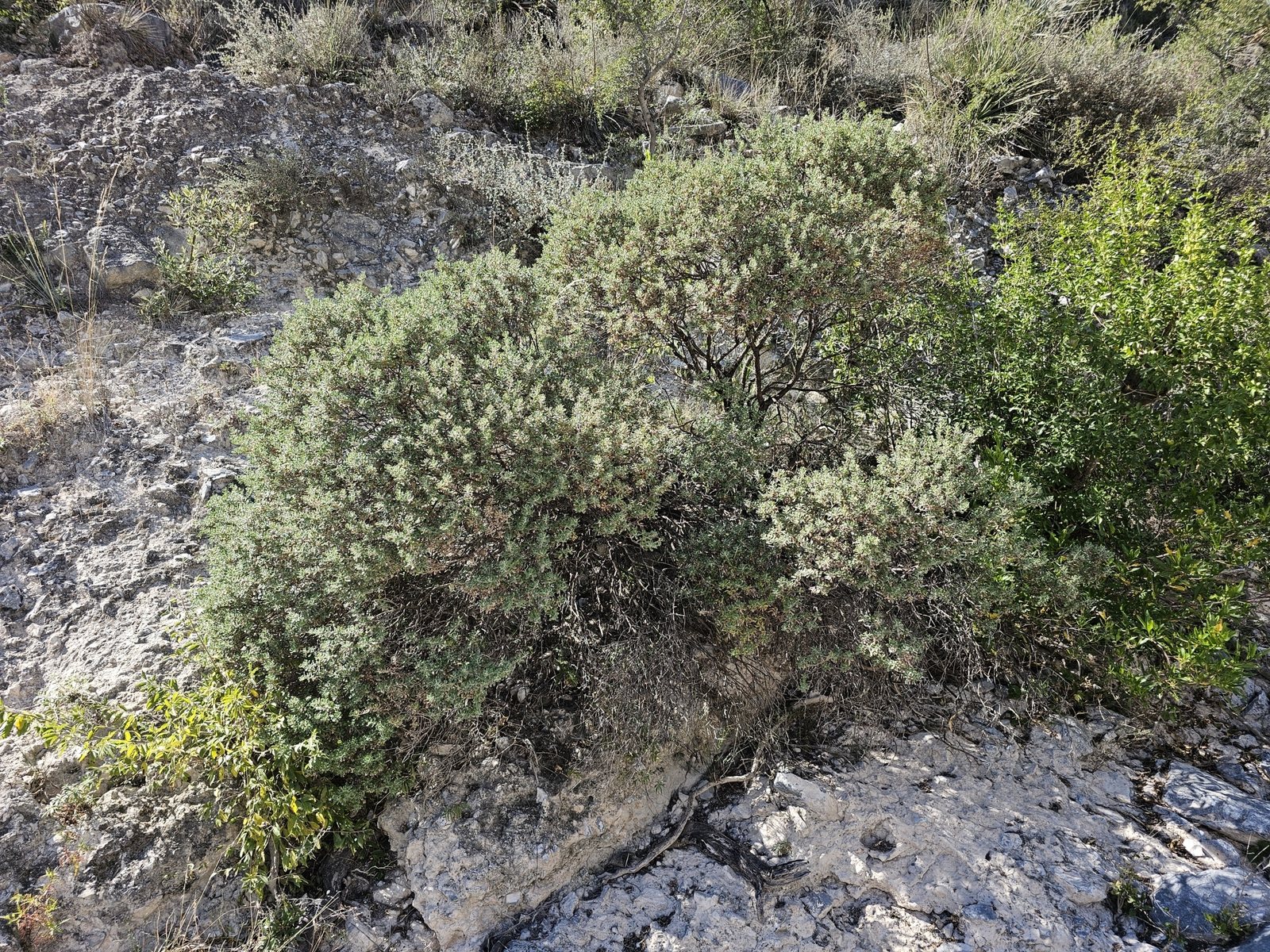
Cimarron sage is a compact selection of Leucophyllum langmaniae, an evergreen shrub native to Mexico, grown for its grey-green leaves and flushes of lavender-purple flowers after summer rain. It suits hot, sunny, dry gardens but needs excellent drainage, especially where winters are wet; it is not a culinary sage.
At a glance
- Sun
- Full sun; shade makes growth loose and reduces flowering.
- Water
- Low once established. Water deeply during establishment, then let the soil dry between waterings; avoid frequent lawn-style irrigation.
- Soil
- Very well-drained sandy, gravelly or rocky soil, including alkaline soil. Avoid waterlogged ground and heavily enriched planting beds.
- Height
- 3-4 ft (0.9-1.2 m); unselected forms of the species can grow taller
- Spread
- 3-4 ft (0.9-1.2 m)
- Flowers
- Lavender-purple, bell-shaped flowers in repeated flushes from summer into autumn, often following rain or humid weather.
- Foliage
- Evergreen. Small, soft, finely hairy grey-green leaves on densely branched stems; some leaves may drop during cold weather or severe drought.
- Growth
- Moderate in warm conditions.
- Care needed
- Low
The year at a glance
- Pollinators
- Deer resistant
- Drought tolerant
- Heat tolerant
- Wildlife
- Low allergen
| J | F | M | A | M | J | J | A | S | O | N | D | |
|---|---|---|---|---|---|---|---|---|---|---|---|---|
| Flowers | ||||||||||||
| Plant |
Northern hemisphere months. In Australia, shift them by six.
- Difficulty
- Moderate
- Toughness
- Fairly tough
Will it suit your garden?
Pick your zone, country, light and whether you have pets.
Full sun is 6 or more hours of direct sun a day, part shade 3 to 6 hours, shade under 3.
How it grows
Planting day
1.6 ft (0.5 m)
After 1 year
2 ft (0.61 m)
After 2 years
2.4 ft (0.72 m)
After 3 years
2.7 ft (0.83 m)
After 5 years
3 ft (1.1 m)
full size
About 5 years to full size.
From a typical nursery size, at an average rate for this kind of plant. A rule of thumb, not a forecast.
Good to know
- Cats and dogs
- Safe
- Growth rate
- Moderate
Care
Jobs through the year
- WaterApr–May, Sep–Oct, every 28 days
- Water established ground shrubs only in prolonged drought; young plants need more frequent watering.
- WaterJun–Aug, every 21 days
- Deep-water established ground shrubs only during prolonged dry spells, allowing soil to dry afterward.
- PruneApr–May
- After hard frosts, remove dead wood and lightly shorten wayward shoots; do not shear.
- MulchMay
- Use a light gravel mulch, keeping it away from stem bases.
- ProtectJan–Apr, Oct–Dec
- Not reliably hardy in zones 6–7; overwinter in a bright, frost-free container position away from persistent rain.
- Plant in full sun with enough room for its natural rounded shape.
- Water deeply through the first growing season, allowing the soil to dry between soakings.
- Once established, water only during prolonged dry spells rather than on a frequent fixed schedule.
- Use gravel mulch, keeping it away from the base of the stems.
- Avoid routine feeding and rich compost; excessive fertility encourages weak, leafy growth.
- In cool, wet climates, use a raised bed or a container with sharp drainage and shelter from persistent winter rain.
Pruning. In spring, after the risk of hard frost has passed, remove dead or frost-damaged wood and lightly shorten wayward shoots. Avoid repeated shearing, which spoils the natural shape and removes flowering growth.
Through the year
- Spring
- Plant after hard frosts have passed, choosing a sunny position with excellent drainage.
- Spring
- Remove winter-damaged stems once new growth shows which wood is alive.
- Summer
- Check newly planted shrubs regularly and water deeply when the root zone has dried.
- Late summer
- Enjoy rain-triggered flower flushes; avoid shearing off developing buds.
- Autumn
- Reduce supplemental watering as temperatures fall and clear wet debris from around the base.
- Winter
- Keep container plants out of prolonged rain and protect them from severe frost.
In the garden
- Plant as a loose, low hedge beside a sunny path without clipping it into a rigid shape.
- Repeat rounded shrubs through a gravel garden with agaves and ornamental grasses.
- Use against pale walls or paving, where the grey-green foliage and purple flowers provide contrast.
- Grow in a large, freely draining container in a hot courtyard.
Garden styles it suits: Desert / xeriscape, Desert modern, Southwestern, Dry gravel garden, Low-maintenance and Pollinator garden.
Plant it with: Red yucca, Autumn sage, Blackfoot daisy, Desert marigold, Blue grama and Parry's agave.
Wildlife: Flowers provide nectar and pollen for bees and attract other flower-visiting insects. Dense branching offers cover for small garden wildlife.
Problems to watch for
- Root rot in wet soil: improve drainage before planting, keep the crown above surrounding soil level and stop frequent irrigation.
- Sparse growth and few flowers in shade: move to a position receiving full sun.
- Frost-damaged shoots: wait until spring growth begins, then prune back to healthy wood.
- Dense outer growth and bare interiors after repeated shearing: stop clipping and selectively thin or shorten branches in spring.
Safety
Not known to be toxic to people, cats, dogs or horses. Species-specific toxicity information is limited, and no particular toxic part is established; do not use the leaves as a substitute for culinary sage.
Easily confused with
Texas sage (Leucophyllum frutescens)
Usually has broader, more obviously silvery leaves and a larger mature framework, although cultivars vary and labels may be needed for certainty.
Chihuahuan sage (Leucophyllum laevigatum)
Typically has a looser, more open habit and narrower, greener leaves rather than Cimarron's compact, densely leafy outline.
Culinary sage (Salvia officinalis)
Has larger, strongly aromatic, wrinkled leaves and upright spikes of flowers; Cimarron sage bears flowers singly in the leaf axils.
The name
Leucophyllum comes from Greek words meaning 'white leaf', referring to the pale hairs on the foliage.
Propagation. Take semi-ripe cuttings in summer and root them in a free-draining medium. Seed-grown plants may vary and will not reliably retain the compact character of the named selection.
Checked against open data
- Accepted botanical name
- Leucophyllum langmaniae
- Native range
- Mexico Northeast.
Sources: GBIF (CC BY 4.0) and Trefle (CC BY 4.0). The care and design notes are LandscapeGPT's own.
See it in your own yard.
Upload a photo of your yard and see it redesigned with plants that suit your climate, each checked against your zone.