Coconut palm
Cocos nucifera. Family Arecaceae. Tree.
Also called Coconut tree.
Coconut palm is a tall, evergreen tropical palm grown for its arching fronds, distinctive trunk and edible coconuts. It needs year-round warmth and suits frost-free parts of southern Florida, Hawaii and tropical Australia; in the United Kingdom and Canada it needs a heated conservatory or greenhouse and usually remains a short-lived container specimen.
At a glance
- Sun
- Full sun; give young indoor plants the brightest available light and acclimatise them gradually before moving into direct outdoor sun.
- Water
- Water regularly while establishing. Once established, water deeply during prolonged dry spells; fruiting is best with consistent moisture. Avoid standing water and seawater irrigation.
- Soil
- Deep, freely draining sandy or loamy soil. Tolerates coastal salt spray and a broad pH range, but struggles in cold, waterlogged ground.
- Height
- 50-100 ft (15-30 m)
- Spread
- 15-25 ft (4.5-7.5 m)
- Flowers
- Small cream to pale yellow flowers in branched clusters among the leaf bases, produced throughout the year in tropical conditions.
- Foliage
- Evergreen. Long, arching, feather-like green fronds, commonly 10-20 ft (3-6 m) long; seedlings initially have broad, undivided leaves.
- Growth
- Moderate to fast in consistently warm, moist conditions; very slow in cool climates.
- Care needed
- High
The year at a glance
- Pollinators
- Heat tolerant
- Wildlife
| J | F | M | A | M | J | J | A | S | O | N | D | |
|---|---|---|---|---|---|---|---|---|---|---|---|---|
| Flowers | ||||||||||||
| Fruit | ||||||||||||
| Plant |
Northern hemisphere months. In Australia, shift them by six.
- Difficulty
- Hard
- Toughness
- Needs looking after
Will it suit your garden?
Pick your zone, country, light and whether you have pets.
Full sun is 6 or more hours of direct sun a day, part shade 3 to 6 hours, shade under 3.
How it grows
Planting day
9 ft (2.7 m)
After 1 year
12 ft (3.7 m)
After 2 years
15 ft (4.7 m)
After 3 years
19 ft (5.7 m)
After 5 years
25 ft (7.7 m)
About 20 years to full size.
From a typical nursery size, at an average rate for this kind of plant. A rule of thumb, not a forecast.
Good to know
- Cats and dogs
- Mildly toxic: may upset a stomach
- Native to
- Australia
- Invasive in
- the US
- Growth rate
- Moderate
Care
Jobs through the year
- WaterApr–May, Sep–Oct, every 7 days
- Check container moisture and water when the surface begins drying; outdoor ground culture is unsuitable in zones 6–7.
- WaterJun–Aug, every 3 days
- Check summer containers frequently; water thoroughly when the surface starts drying and drain freely.
- WaterJan–Mar, Nov–Dec, every 10 days
- Check heated indoor containers; reduce watering with slower growth but never let the root ball dry completely.
- FeedApr–Aug, every 30 days
- Feed actively growing containers with palm fertilizer containing potassium, magnesium and micronutrients at label rates.
- PruneMay–Aug
- Remove only fully brown fronds as needed; never cut green leaves or the central growing point.
- ProtectJan–May, Sep–Dec
- Keep in bright heated shelter, ideally above 18°C; a chilly frost-free room is insufficient.
- ProtectJun–Aug
- Move outdoors only in consistently warm weather and acclimatize gradually to direct sun.
- Plant in warm weather with the root ball at its original depth, allowing ample clearance from buildings and overhead wires.
- Keep the root zone evenly moist while establishing, but let excess water drain freely.
- Apply a palm fertiliser containing potassium, magnesium and micronutrients according to its label during active growth.
- Mulch the root zone, keeping mulch clear of the trunk.
- Keep container plants warm year-round; a frost-free but chilly room is not sufficient for healthy long-term growth.
- Arrange professional removal of heavy fruit clusters where falling coconuts could injure people or damage property.
Pruning. Remove only dead or fully brown fronds as needed, leaving green and partly green leaves to feed the palm. Never cut the central growing point, and use a qualified arborist for work on tall palms.
Through the year
- Spring
- Plant or repot once conditions are consistently warm; use a container with unrestricted drainage.
- Spring
- Begin feeding actively growing palms with a balanced palm fertiliser following the label.
- Summer
- Check soil moisture frequently and water deeply during dry weather.
- Summer
- Inspect older fronds for yellow spotting or scorched edges that may indicate nutrient deficiency.
- Autumn
- Move container plants into heated shelter before nights become cool, providing maximum light.
- Winter
- Water indoor plants less as growth slows, without letting the root ball dry completely; check for mites and scale.
In the garden
- Use as a tall focal point in a spacious tropical lawn, away from seating and paths beneath fruiting crowns.
- Plant in loose groups with hibiscus and crotons for a layered tropical garden.
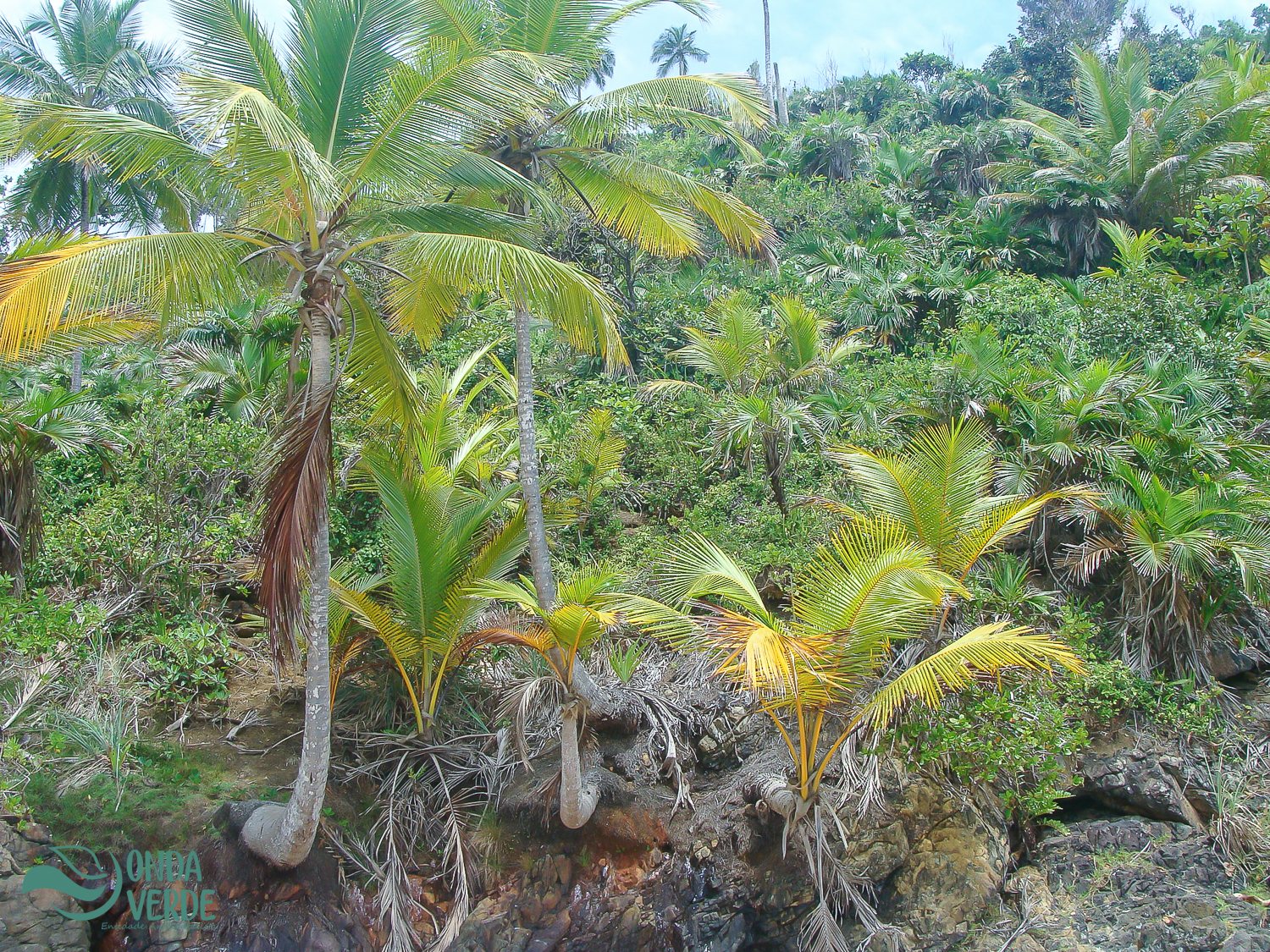
- Use along broad coastal garden boundaries where its salt-spray tolerance and open crown are useful.
- Grow a young specimen in a large container in a bright, heated conservatory for bold foliage.
Garden styles it suits: Tropical, Modern tropical, Coastal, Luxury resort, Caribbean and Hawaiian.
Plant it with: Tropical hibiscus, Croton, Frangipani, Beach morning glory, Spider lily and Heliconia.
Wildlife: Flowers provide pollen and nectar for insects. The crown can shelter birds and other animals, although dense coconut stands can replace more diverse coastal habitat.
Problems to watch for
- Cold damage: chilling causes browning, stalled growth and eventual decline. Grow outdoors only in genuinely warm climates; move containers into heated shelter before cold weather.
- Potassium or magnesium deficiency: older fronds develop yellow spotting, yellow margins or dead tips. Use a suitable palm fertiliser and avoid removing affected leaves while they remain partly green.
- Lethal yellowing: in affected regions, including parts of Florida and the Caribbean, premature fruit drop and progressive crown yellowing require prompt professional diagnosis. There is no cure; follow local advice on preventive treatment and removal.
- Palm weevils and rhinoceros beetles: boring damage can destroy the growing point in regions where these pests occur. Avoid trunk wounds, inspect the crown and seek local pest-control advice promptly.
Safety
Not known to be toxic to cats, dogs, horses or people. The flesh is edible, but large amounts of flesh or oil can upset pets' stomachs; avoid giving pets coconut water because of its high potassium content. Hard shell pieces can cause choking or obstruction, and falling coconuts and fronds can cause serious injury.
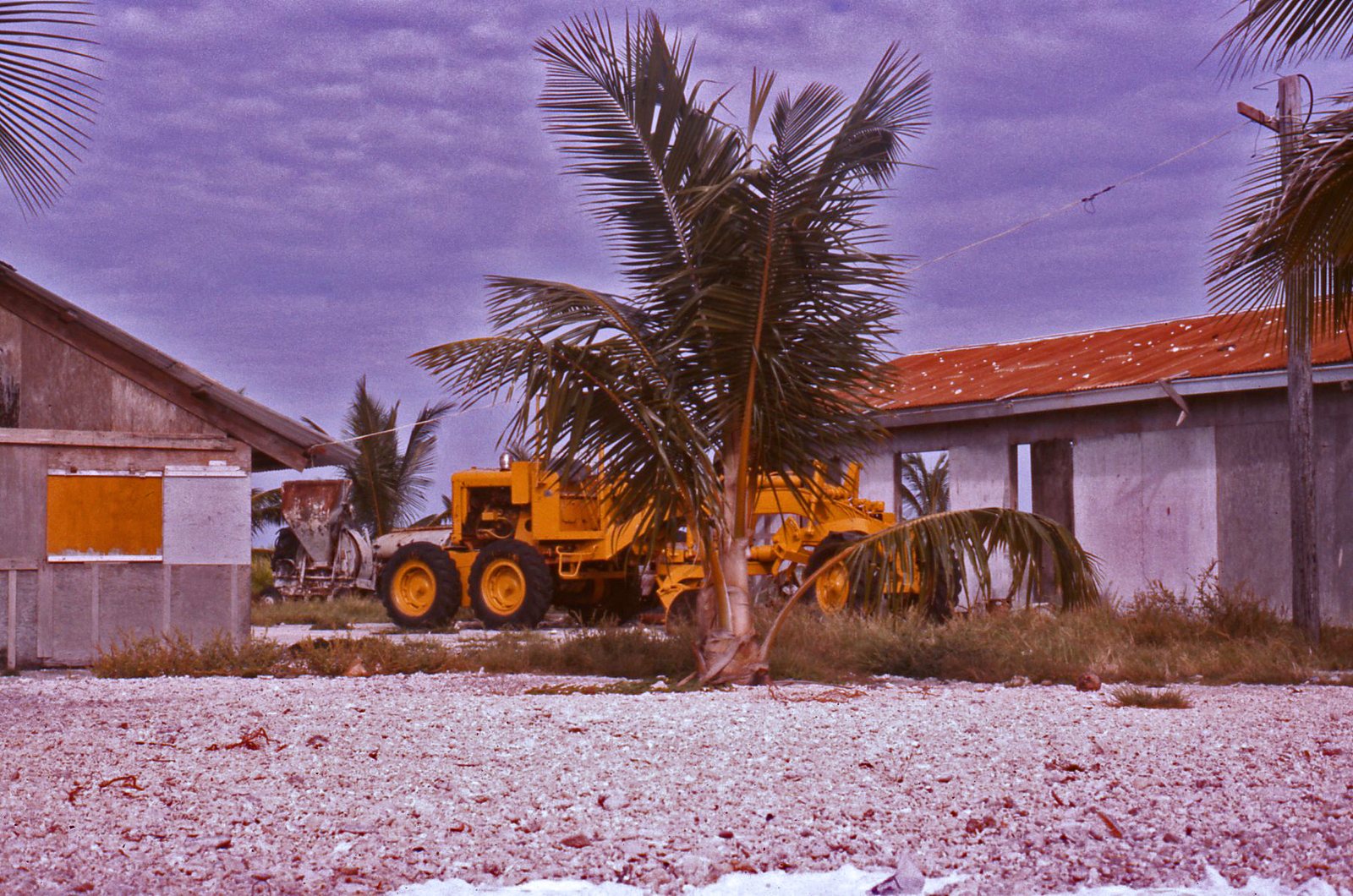
Where it spreads. Can form dense, habitat-altering stands on tropical oceanic islands; it is managed as invasive on Palmyra Atoll in the central Pacific. Check local guidance before planting near natural coastal habitat.
Easily confused with
Queen palm (Syagrus romanzoffiana)
Has fluffy-looking fronds with leaflets arranged in several planes and clusters of small orange fruits, rather than large coconuts.
Majesty palm (Ravenea rivularis)
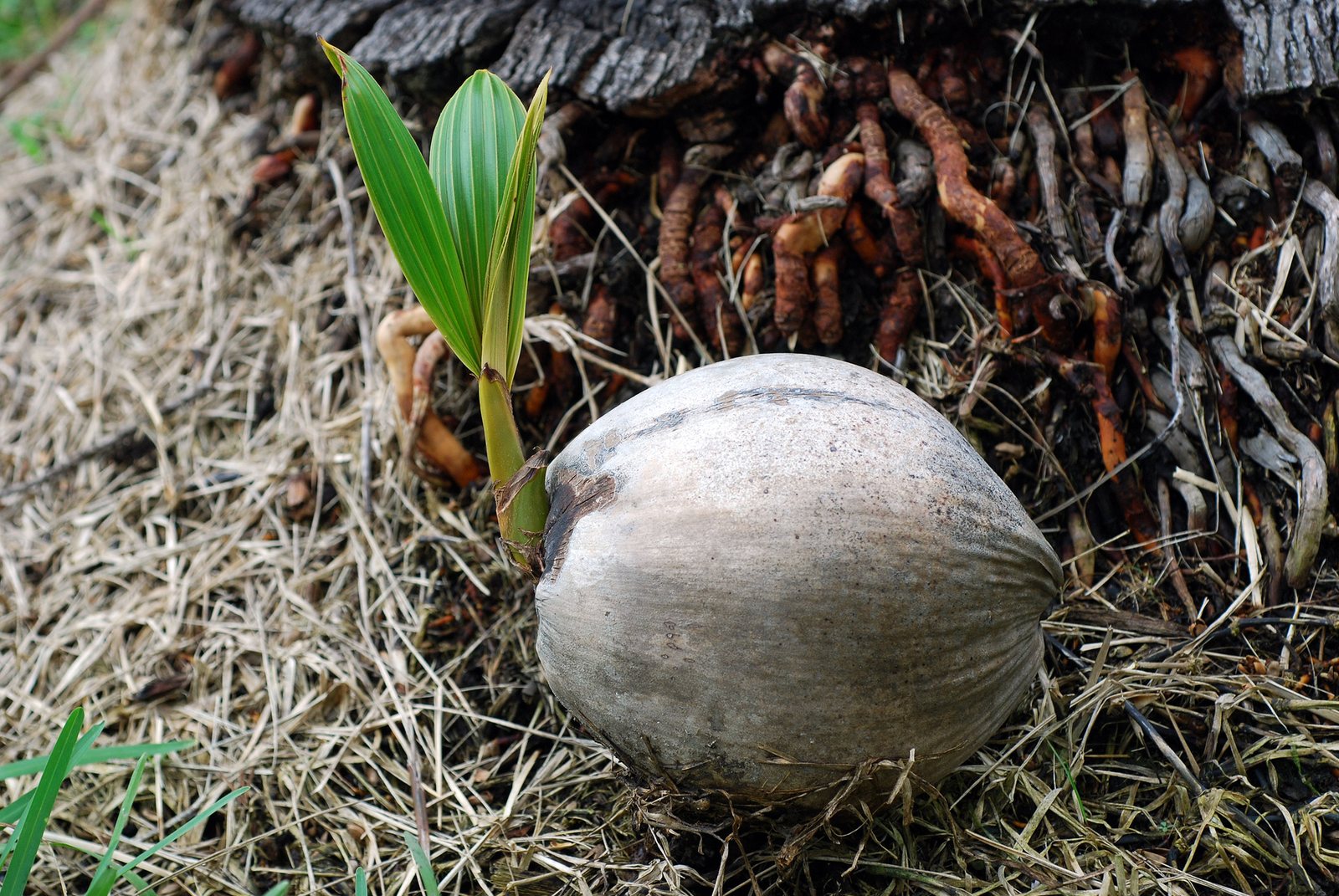
Often sold as a young indoor palm; it has a dense, more upright crown and lacks the large attached coconut often visible on coconut seedlings.
African oil palm (Elaeis guineensis)
Has a much stouter trunk, spiny leaf stalks and dense bunches of small reddish-orange fruits rather than individual large coconuts.
The name
Cocos comes from the Portuguese coco, referring to a face or bogeyman suggested by the nut's three pores, while nucifera means nut-bearing.
Propagation. Grow from a fresh, mature, unhusked coconut with liquid inside. Lay it on its side, partly buried in a warm, moist, freely draining medium; germination usually takes several months. It cannot be propagated by cuttings or division.
Checked against open data
- Accepted botanical name
- Cocos nucifera
- In the US and Canada
- Introduced in Hawaii, the lower 48 states, Pacific Basin, Puerto Rico and US Virgin Islands.
- Native range
- Bismarck Archipelago, Maluku, New Guinea, Philippines, Queensland, Samoa, Santa Cruz Is., Solomon Is., Tonga, Vanuatu and Tokelau-Manihiki.
- Measured
- Soil pH 4 to 8. Average height 1829 cm.
Sources: GBIF (CC BY 4.0), USDA PLANTS and Trefle (CC BY 4.0). The care and design notes are LandscapeGPT's own.
See it in your own yard.
Upload a photo of your yard and see it redesigned with plants that suit your climate, each checked against your zone.