Cocoplum
Chrysobalanus icaco. Family Chrysobalanaceae. Shrub.
Also called Coco plum, Icaco.
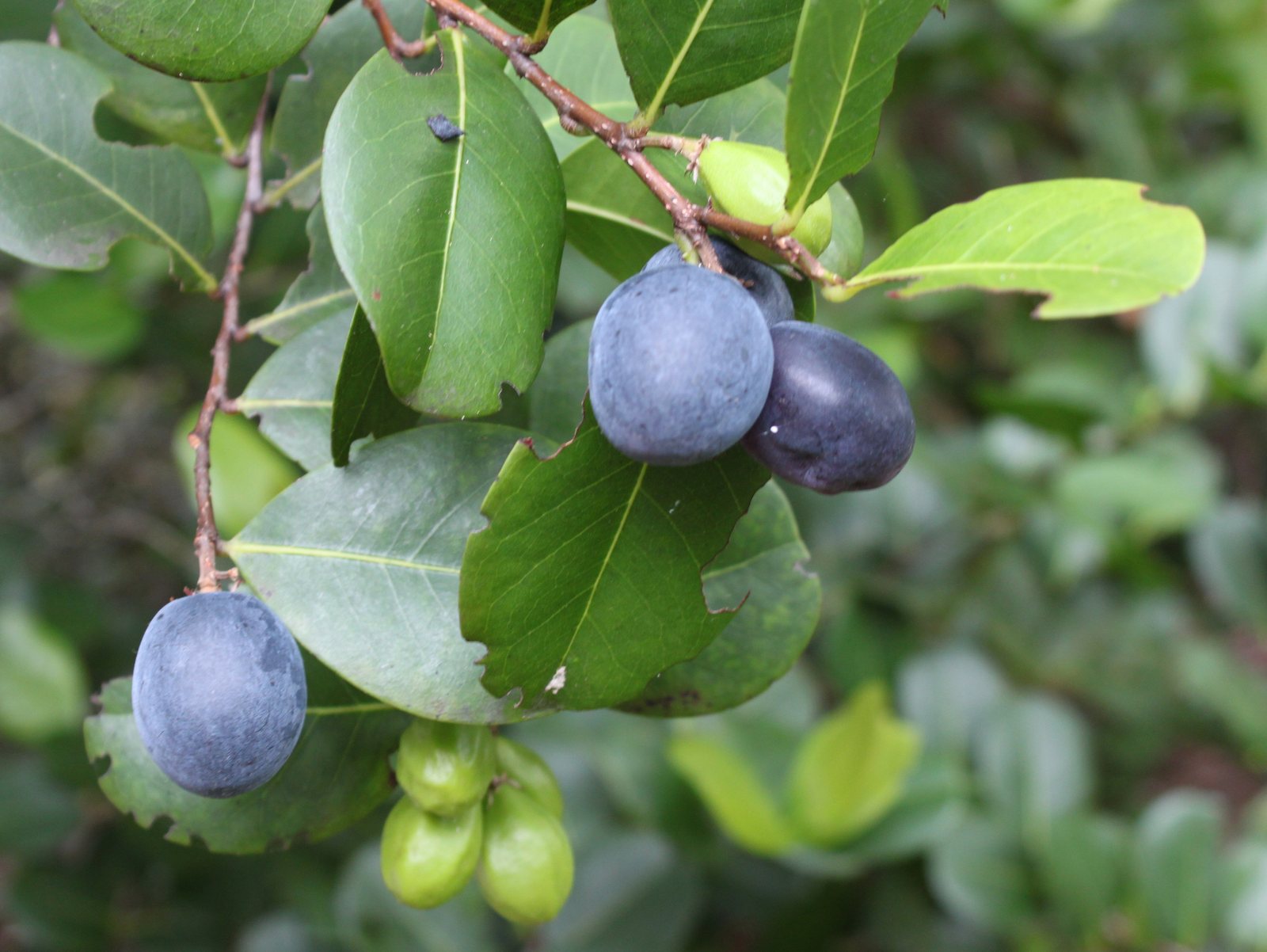
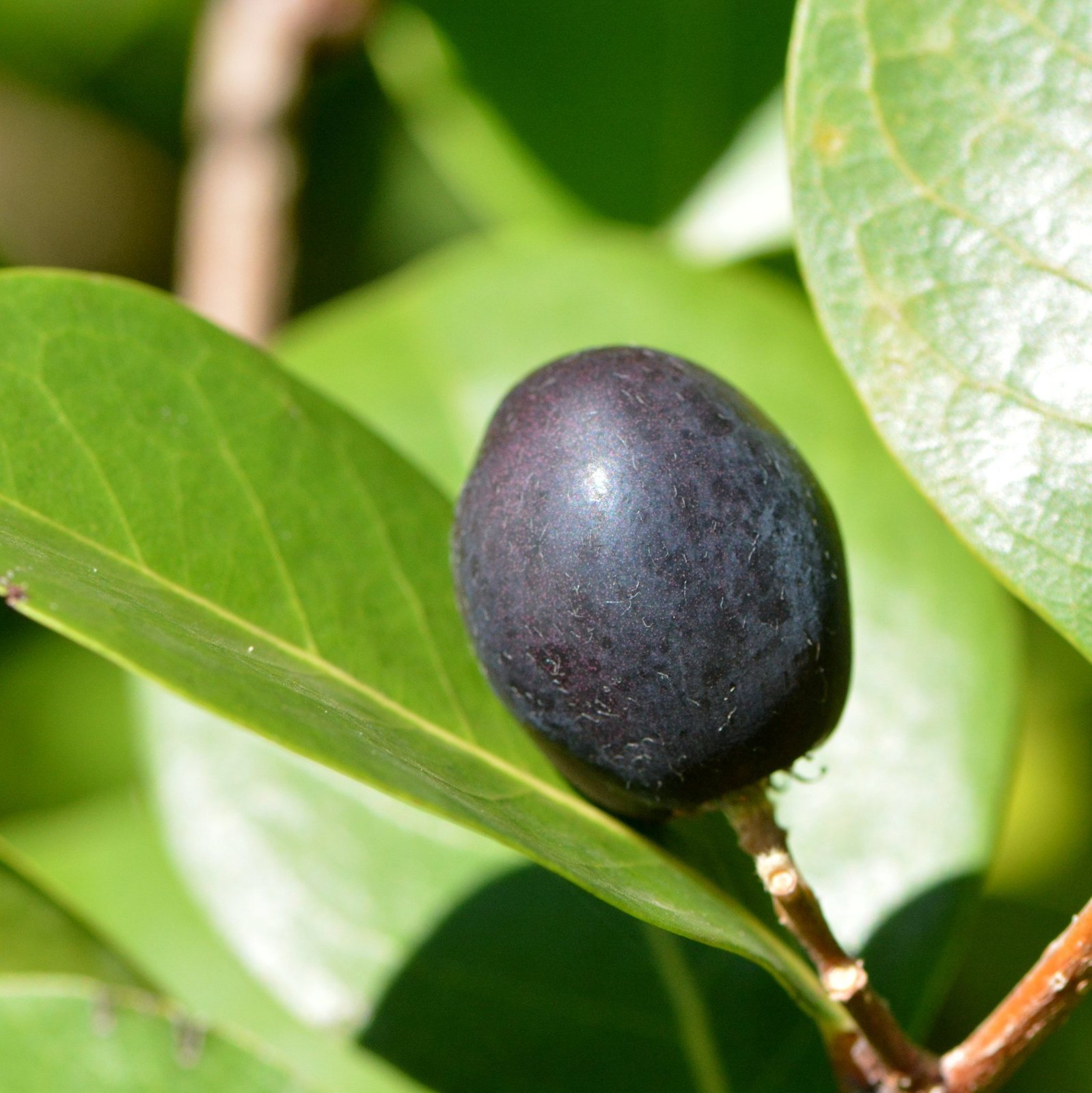
Cocoplum is a dense evergreen shrub or small tree grown for glossy, rounded leaves, screening and edible, plum-like fruit. It suits frost-free coastal and tropical gardens, although salt tolerance varies between coastal and inland forms. In the United Kingdom, Canada and colder parts of the United States and Australia, grow it in a container with warm, bright winter protection.
At a glance
- Sun
- Full sun to partial shade; growth is denser and fruiting generally better in full sun.
- Water
- Water regularly while establishing. Established plants tolerate short dry periods, but appreciate watering during prolonged drought.
- Soil
- Sand, loam or clay, including alkaline soils; tolerates periodically wet ground but performs well in moist, well-drained soil.
- Height
- 10-15 ft (3-4.6 m), occasionally reaching 25-30 ft (7.6-9.1 m) as a small tree
- Spread
- 10-15 ft (3-4.6 m), depending on form and pruning
- Flowers
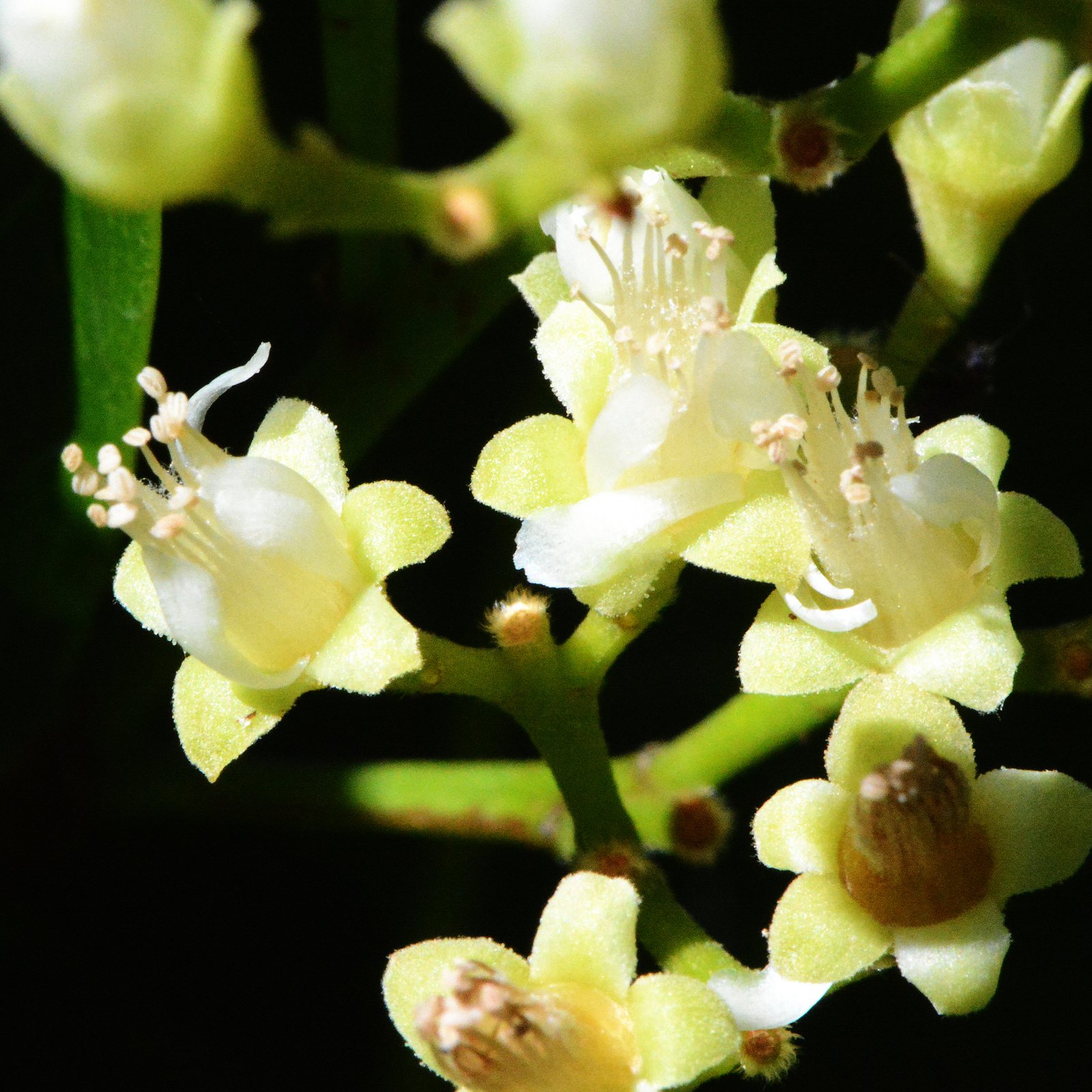
- Small, inconspicuous white flowers, mainly in spring and summer; flowering can occur intermittently throughout the year in tropical climates.
- Foliage
- Evergreen. Thick, glossy, rounded to oval green leaves; new growth can be bronze or reddish.
- Growth
- Moderate, becoming faster in warm weather with adequate moisture.
- Care needed
- Low
The year at a glance
- Pollinators
- Drought tolerant
- Heat tolerant
- Wildlife
- Low allergen
| J | F | M | A | M | J | J | A | S | O | N | D | |
|---|---|---|---|---|---|---|---|---|---|---|---|---|
| Flowers | ||||||||||||
| Fruit | ||||||||||||
| Plant |
Northern hemisphere months. In Australia, shift them by six.
- Difficulty
- Hard
- Toughness
- Fairly tough
Will it suit your garden?
Pick your zone, country, light and whether you have pets.
Full sun is 6 or more hours of direct sun a day, part shade 3 to 6 hours, shade under 3.
How it grows
Planting day
1.6 ft (0.5 m)
After 1 year
4 ft (1.3 m)
After 2 years
7 ft (2.2 m)
After 3 years
10 ft (3 m)
After 5 years
12 ft (3.8 m)
full size
About 4 years to full size.
From a typical nursery size, at an average rate for this kind of plant. A rule of thumb, not a forecast.
Good to know
- Cats and dogs
- Safe
- Native to
- the US
- Growth rate
- Fast
Care
Jobs through the year
- WaterApr–May, Sep–Oct, every 14 days
- For established ground plants in warm climates, water during prolonged drought; young plants need regular watering.
- WaterJun–Aug, every 7 days
- Water established plants during dry spells; in zones 6–7 use pots and check them more frequently.
- WaterJan–Mar, Nov–Dec, every 14 days
- In bright winter shelter, water when the surface dries without letting the root ball dry completely.
- MulchMay–Jun
- Apply 5–8 cm of organic mulch over outdoor roots, keeping stems clear.
- FeedMay
- Feed lightly only if growth is weak or the soil is poor.
- PruneMay–Jun
- After new growth starts, remove damaged or crossing shoots and shorten long stems.
- ProtectSep–Oct
- Move pots into a bright, frost-free conservatory or greenhouse before cold weather.
- ProtectJun
- Acclimatise overwintered pots outdoors only once nights and soil are warm.
- Water deeply through the first growing season, allowing the soil surface to begin drying between waterings.
- Spread 2-3 in (5-8 cm) of mulch over the root area, keeping it clear of the stems.
- Feed lightly in spring only if growth is weak or the soil is poor; avoid repeated heavy feeding.
- For exposed seaside planting, choose a locally proven coastal form rather than assuming all cocoplums tolerate salt spray equally.
- Protect container plants from frost in a bright conservatory or greenhouse, and water less during cool weather.
Pruning. Prune in late spring after the risk of cold damage has passed, shortening long shoots and removing dead or crossing branches. Lightly trim hedges during warm growth, but expect frequent clipping to reduce flowers and fruit.
Through the year
- Spring
- Plant once the soil is warm and frost risk has passed; water thoroughly and mulch.
- Late spring
- Remove winter-damaged shoots and shape hedges after new growth begins.
- Summer
- Water young plants during dry spells and inspect new growth for scale insects.
- Summer
- Take semi-ripe cuttings from healthy, nonflowering shoots.
- Autumn
- Collect ripe fruit when it softens; remove fallen fruit where seedlings are unwanted.
- Winter
- Keep container plants frost-free in bright light and reduce watering without letting the root ball dry completely.
In the garden
- Plant as a dense evergreen boundary hedge or informal privacy screen in frost-free gardens.
- Use a locally suitable coastal form behind dunes or beside seaside patios for wind filtering and year-round foliage.
- Combine with sea grape, saw palmetto and muhly grass for a layered subtropical planting.
- Train a single specimen into a small, rounded tree where its fruit and branching can be appreciated.
Garden styles it suits: Coastal, Tropical, Florida subtropical, Caribbean, Wildlife garden and Edible landscape.
Plant it with: Sea grape, Green buttonwood, Saw palmetto, Coontie, Pink muhly grass and Dune sunflower.
Wildlife: Flowers attract small insect visitors, and birds and other wildlife eat the fruit. Dense branching provides shelter and nesting cover.
Problems to watch for
- Scale insects can cause sticky honeydew and black sooty mould; prune heavily infested shoots, manage ants and apply horticultural oil according to the label.
- Leaf spots sometimes develop in humid conditions; remove badly affected fallen leaves, improve airflow and avoid repeatedly wetting the foliage.
- Frost can scorch leaves and kill shoots; protect young plants and wait until spring growth begins before cutting back damaged wood.
- Sparse growth often results from deep shade; move young plants to a brighter position or allow more light through surrounding vegetation.
Safety
Not known to be toxic to people, cats, dogs or horses, although animal-specific safety information is limited. The ripe fruit flesh is edible; remove the large, hard stone before eating or offering fruit to children because it presents a choking hazard.
Where it spreads. Introduced cocoplum forms invasive thickets in the Seychelles and parts of French Polynesia, including Tahiti and Moorea. Avoid planting where it is locally listed as invasive, and prevent fruit and garden waste from reaching natural areas.
Easily confused with
Natal plum (Carissa macrocarpa)
Natal plum has paired, forked thorns, opposite leaves and conspicuous star-shaped white flowers; cocoplum is thornless with alternate leaves and much smaller flowers.
Clusia (Clusia rosea)
Clusia has larger, opposite, paddle-shaped leaves and capsules that split open to expose red-coated seeds; cocoplum has alternate leaves and fleshy fruit containing a single stone.
Sea grape (Coccoloba uvifera)
Sea grape has much larger, nearly circular leaves with prominent veins and fruit in hanging grape-like clusters; cocoplum has smaller leaves and fruit in small groups.
The name
Chrysobalanus comes from Greek words meaning 'golden acorn', while icaco is derived from an Indigenous Caribbean name for the plant.
Propagation. Sow cleaned, fresh seed in a warm place; germination can be slow and uneven. Root semi-ripe cuttings in a humid propagator during warm weather to preserve the characteristics of a particular plant.
Checked against open data
- Accepted botanical name
- Chrysobalanus icaco
- In the US and Canada
- Native in the lower 48 states, Puerto Rico and US Virgin Islands.
- Native range
- Angola, Bahamas, Belize, Benin, Bermuda, Brazil North, Brazil Northeast, Brazil Southeast, Cameroon, Cayman Is., Central African Repu and Central American Pac.
Sources: GBIF (CC BY 4.0), USDA PLANTS and Trefle (CC BY 4.0). The care and design notes are LandscapeGPT's own.
See it in your own yard.
Upload a photo of your yard and see it redesigned with plants that suit your climate, each checked against your zone.