Common snowberry
Symphoricarpos albus. Family Caprifoliaceae. Shrub.
Also called Snowberry, White snowberry, Waxberry.
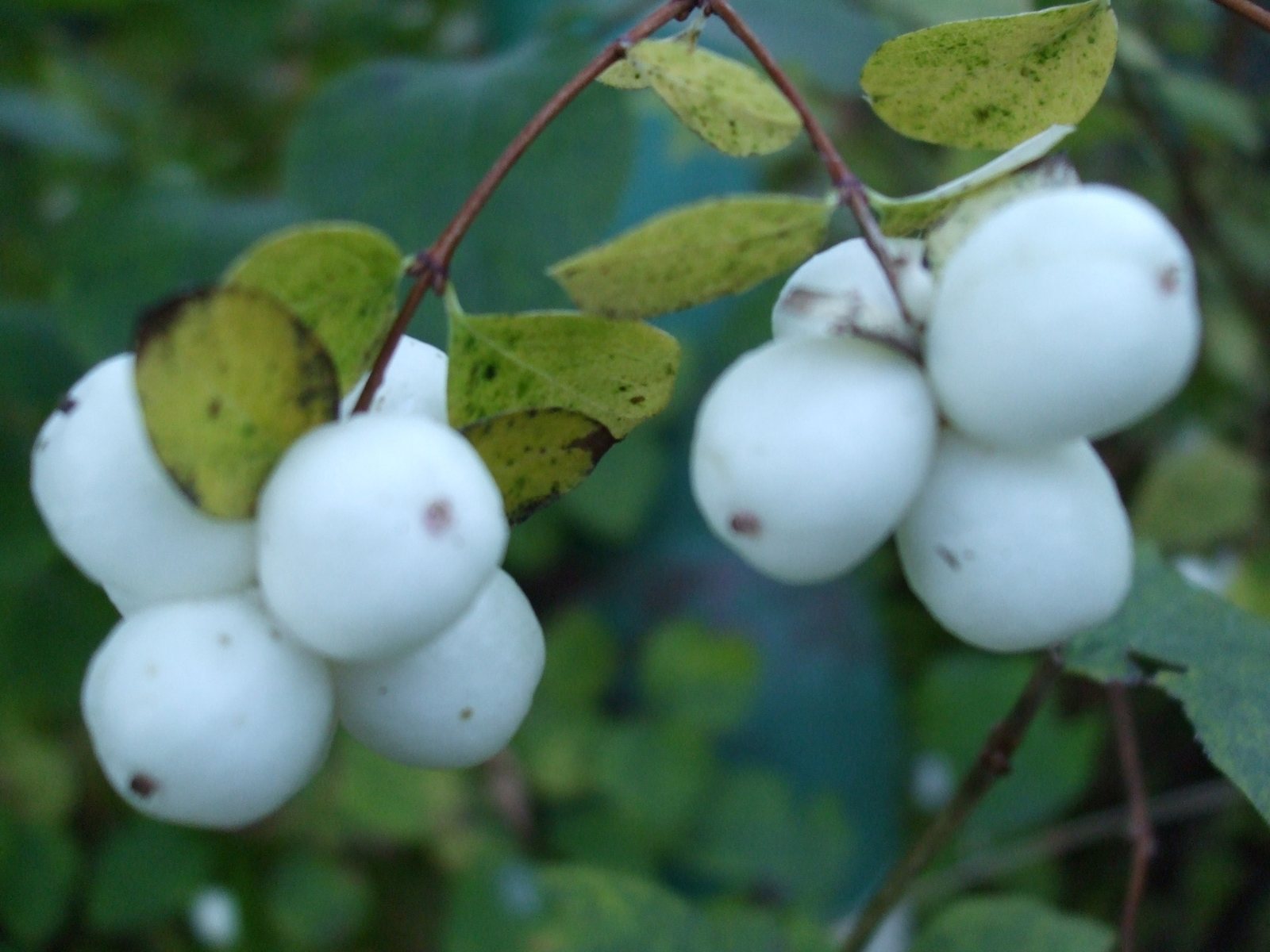
Common snowberry is a deciduous North American shrub grown for its rounded white berries, which often remain on bare stems into winter. It tolerates shade, poor soil and established drought, but spreads by suckers and is better suited to informal hedges and woodland edges than small, tightly planted borders.
At a glance
- Sun
- Full sun to partial shade; tolerates deeper shade, but flowers and fruits less heavily.
- Water
- Water regularly during the first growing season; once established, usually needs extra water only during prolonged drought.
- Soil
- Adaptable to sandy, loamy, clay and chalky soils, from mildly acidic to alkaline; prefers reasonable drainage rather than permanently waterlogged ground.
- Height
- 3-6 ft (0.9-1.8 m)
- Spread
- 3-6 ft (0.9-1.8 m), eventually wider through suckering
- Flowers
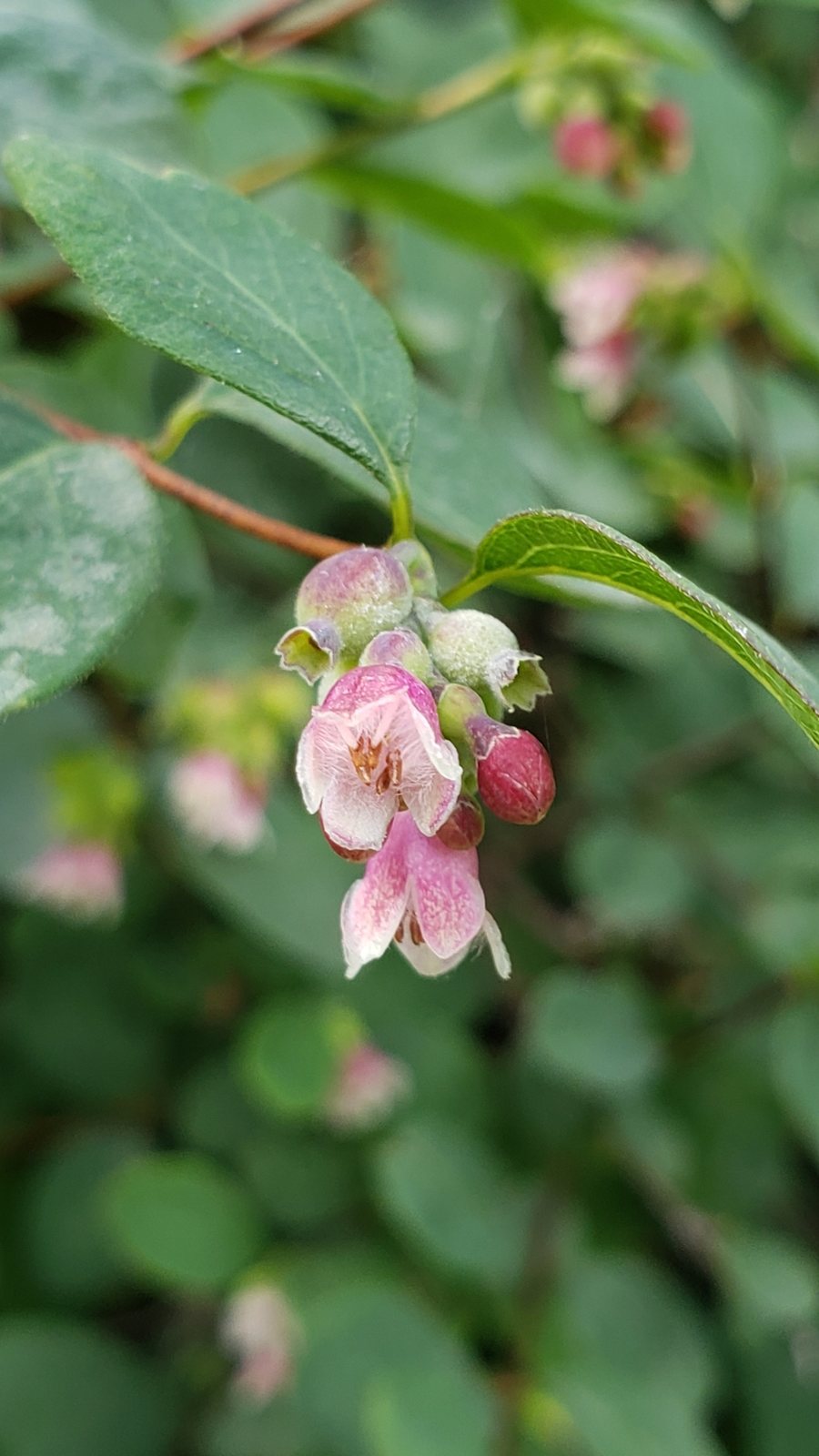
- Small pinkish-white bells in clusters from late spring through summer, followed by white berries.
- Foliage
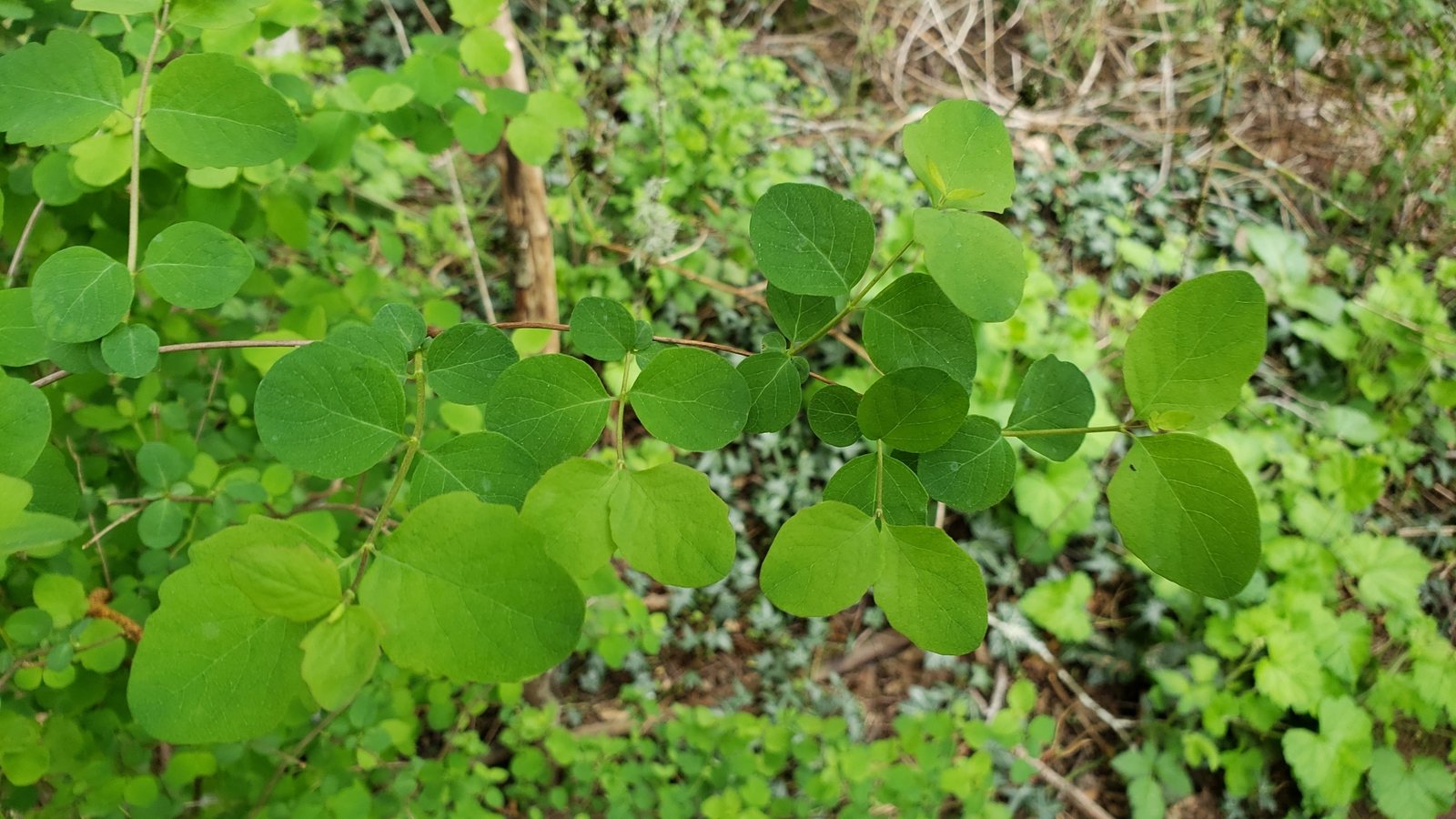
- Small, opposite, oval green leaves; vigorous shoots may carry lobed leaves. Autumn colour is usually inconspicuous yellow-green.
- Growth
- Moderate to fast
- Care needed
- Low
The year at a glance
- Pollinators
- Deer resistant
- Drought tolerant
- Cold hardy
- Wildlife
- Low allergen
| J | F | M | A | M | J | J | A | S | O | N | D | |
|---|---|---|---|---|---|---|---|---|---|---|---|---|
| Flowers | ||||||||||||
| Fruit | ||||||||||||
| Plant |
Northern hemisphere months. In Australia, shift them by six.
- Difficulty
- Easy
- Toughness
- Very tough
Will it suit your garden?
Pick your zone, country, light and whether you have pets.
Full sun is 6 or more hours of direct sun a day, part shade 3 to 6 hours, shade under 3.
How it grows
Planting day
1.6 ft (0.5 m)
After 1 year
2.3 ft (0.71 m)
After 2 years
3 ft (0.93 m)
After 3 years
4 ft (1.1 m)
After 5 years
4 ft (1.4 m)
full size
About 4 years to full size.
From a typical nursery size, at an average rate for this kind of plant. A rule of thumb, not a forecast.
Good to know
- Cats and dogs
- Toxic
- Native to
- the US and Canada
- Invasive in
- the UK
- In the garden
- Spreads vigorously: plan to contain it.
- Growth rate
- Fast
Care
Jobs through the year
- WaterApr–May, Sep–Oct, every 28 days
- Water established shrubs only in prolonged drought; water new plants more regularly during their first season.
- WaterJun–Aug, every 21 days
- Deep-water during prolonged dry spells, directing water onto the soil.
- MulchMar–Apr
- Apply 5–8 cm of organic mulch, keeping it away from the stems.
- PruneFeb–Mar
- Remove dead wood and up to one-third of the oldest stems at ground level.
- PruneApr–Sep, every 30 days
- Remove unwanted suckers with their connecting roots; avoid clipping berry-bearing shoots.
- Water deeply during dry spells in the first growing season.
- Apply a 2-3 in (5-8 cm) organic mulch in spring, keeping it clear of the stems.
- Avoid routine feeding; use a little compost in spring if growth is weak on poor soil.
- Dig out unwanted suckers with their connecting roots before the colony expands.
- Leave enough room for arching stems rather than repeatedly clipping the shrub into a tight shape.
Pruning. In late winter or early spring, remove dead stems and cut up to one-third of the oldest stems to ground level. An overgrown shrub can be cut back hard at this time, though it may produce vigorous suckers.
Through the year
- Autumn
- Plant while soil is workable, water thoroughly and mulch around the root area.
- Winter
- Leave berry-bearing stems for seasonal interest and birds.
- Late winter
- Thin out old stems and remove dead or damaged growth before new leaves emerge.
- Spring
- Refresh mulch and lift rooted suckers for propagation or removal.
- Summer
- Water young plants during dry spells and check the edges of the planting for unwanted suckers.
- Late summer
- Avoid clipping off developing berries if winter display is the main aim.
In the garden
- Plant as an informal hedge where its suckering growth can form a dense screen.
- Use along woodland edges with ferns and shade-tolerant groundcover for a layered planting.
- Combine with red-twig dogwood so white berries contrast with coloured winter stems.
- Mass on roomy banks for soil cover, allowing access to control spreading shoots.
Garden styles it suits: Woodland, Wildlife garden, Native hedgerow, Winter interest, Low-maintenance and Rewilded.
Plant it with: Red-twig dogwood, Oregon grape, Red-flowering currant, Western sword fern and Bigroot geranium.
Wildlife: Flowers provide nectar and pollen for bees and other insects. Dense stems offer shelter, and some birds eat the berries, often later in winter when other food is scarce; it is native across much of the United States and Canada.
Problems to watch for
- Unwanted suckers: dig out shoots with their connecting roots, repeating as needed; avoid planting beside sensitive natural habitats outside its native range.
- Powdery mildew: thin crowded stems for airflow and water the soil during drought rather than wetting the foliage.
- Leaf spot: collect badly affected fallen leaves and avoid overhead watering; established plants usually tolerate minor spotting.
- Sparse berries: move to a brighter position if heavily shaded and avoid repeated summer clipping, which removes flowers and developing fruit.
Safety
The berries are not edible and can cause nausea, vomiting and diarrhoea in people, cats and dogs; most reported human poisonings are mild. Keep berries away from young children and pets. Information on toxicity to horses is limited, so do not assume it is safe as forage.
Where it spreads. Spreads vigorously by suckers. Outside its North American native range, it is invasive in parts of the United Kingdom and Ireland and parts of continental Europe, where dense colonies can displace woodland and hedgerow vegetation. Avoid planting near natural habitats in these regions.
Easily confused with
Coralberry (Symphoricarpos orbiculatus)
Produces small pink to purplish-red berries clustered along the stems rather than the larger white berries of common snowberry.
Western snowberry (Symphoricarpos occidentalis)
Usually has larger, thicker leaves and more crowded terminal flower clusters; its bell-shaped flowers have conspicuously hairy interiors. White-fruited plants can be difficult to separate without flowers.
Hybrid snowberry (Symphoricarpos × doorenbosii)
Many garden selections bear pink or pink-flushed berries in heavy clusters. White-fruited selections can closely resemble common snowberry, so a reliable nursery label may be needed.
The name
Symphoricarpos comes from Greek words referring to fruits borne together, while albus means white, describing the berries.
Propagation. Lift rooted suckers in autumn or early spring and replant promptly. Softwood cuttings in early summer or hardwood cuttings during dormancy are also suitable.
Checked against open data
- Accepted botanical name
- Symphoricarpos albus
- In the US and Canada
- Native in Alaska, Canada and the lower 48 states.
- Native range
- Alaska, Alberta, British Columbia, California, Colorado, Connecticut, Delaware, District of Columbia, Idaho, Illinois, Indiana and Iowa.
- Measured
- Soil pH 6 to 7.8. Average height 100 cm.
Sources: GBIF (CC BY 4.0), USDA PLANTS and Trefle (CC BY 4.0). The care and design notes are LandscapeGPT's own.
See it in your own yard.
Upload a photo of your yard and see it redesigned with plants that suit your climate, each checked against your zone.