Oregon grape
Mahonia aquifolium. Family Berberidaceae. Shrub.
Also called Oregon grape holly, Holly-leaved barberry, Tall Oregon grape.
Oregon grape is a suckering evergreen shrub native to western North America, with prickly, holly-like leaves, yellow spring flowers and blue-black berries. Gardeners grow it for year-round structure, winter leaf colour and wildlife value, especially beneath trees and along informal boundaries.
At a glance
- Sun
- Partial shade is ideal. Tolerates full shade, with fewer flowers, and full sun where the soil stays moist; shelter from drying winds.
- Water
- Water regularly during the first growing season. Established plants tolerate some drought, but benefit from deep watering during prolonged dry weather.
- Soil
- Well-drained, humus-rich soil, preferably acidic to neutral. Tolerates clay if drainage is adequate; very alkaline soil can cause yellow leaves.
- Height
- 3-6 ft (0.9-1.8 m), occasionally taller
- Spread
- 3-5 ft (0.9-1.5 m); suckers can eventually form wider colonies
- Flowers
- Spring; dense clusters of small, fragrant yellow flowers at the shoot tips.
- Foliage
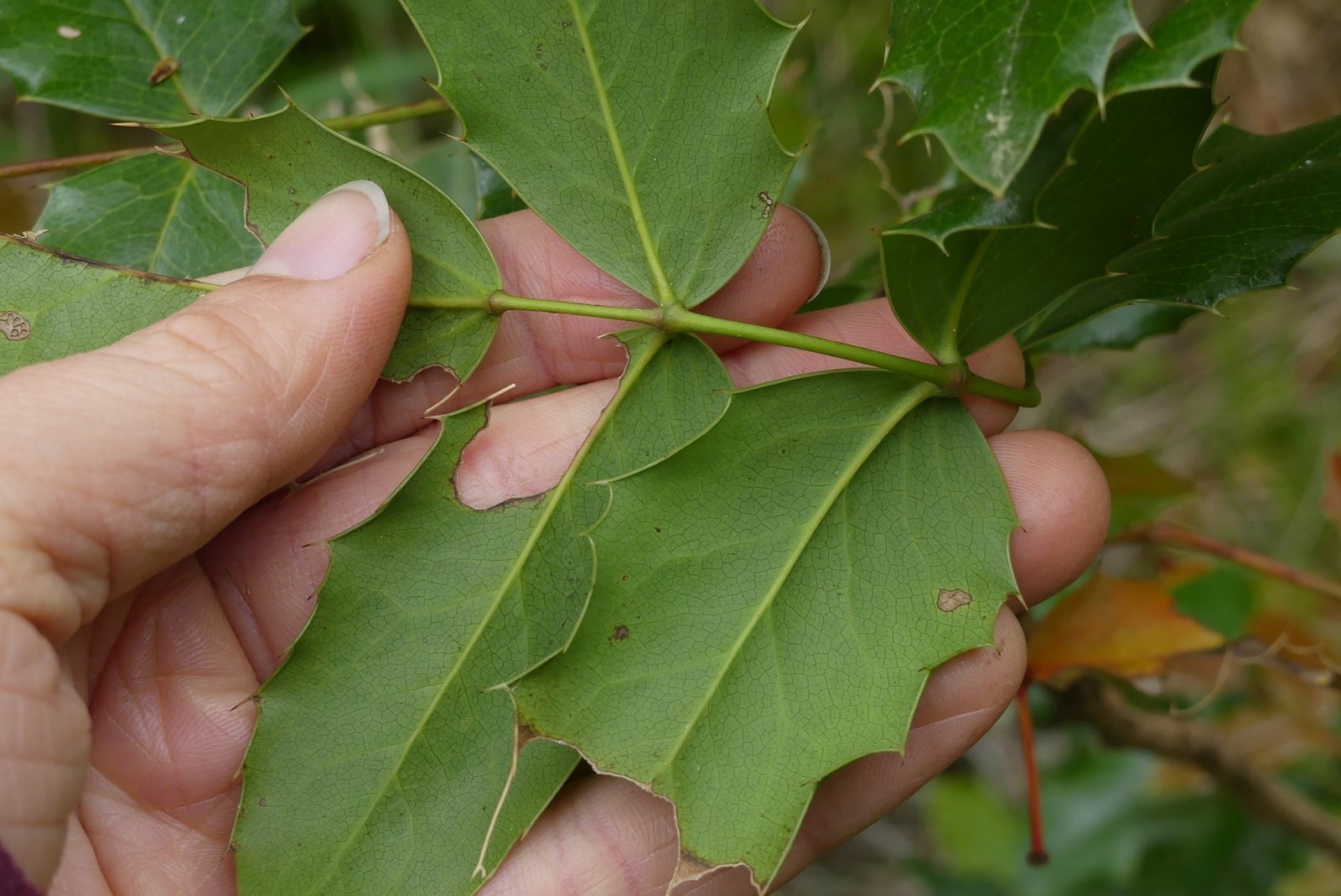
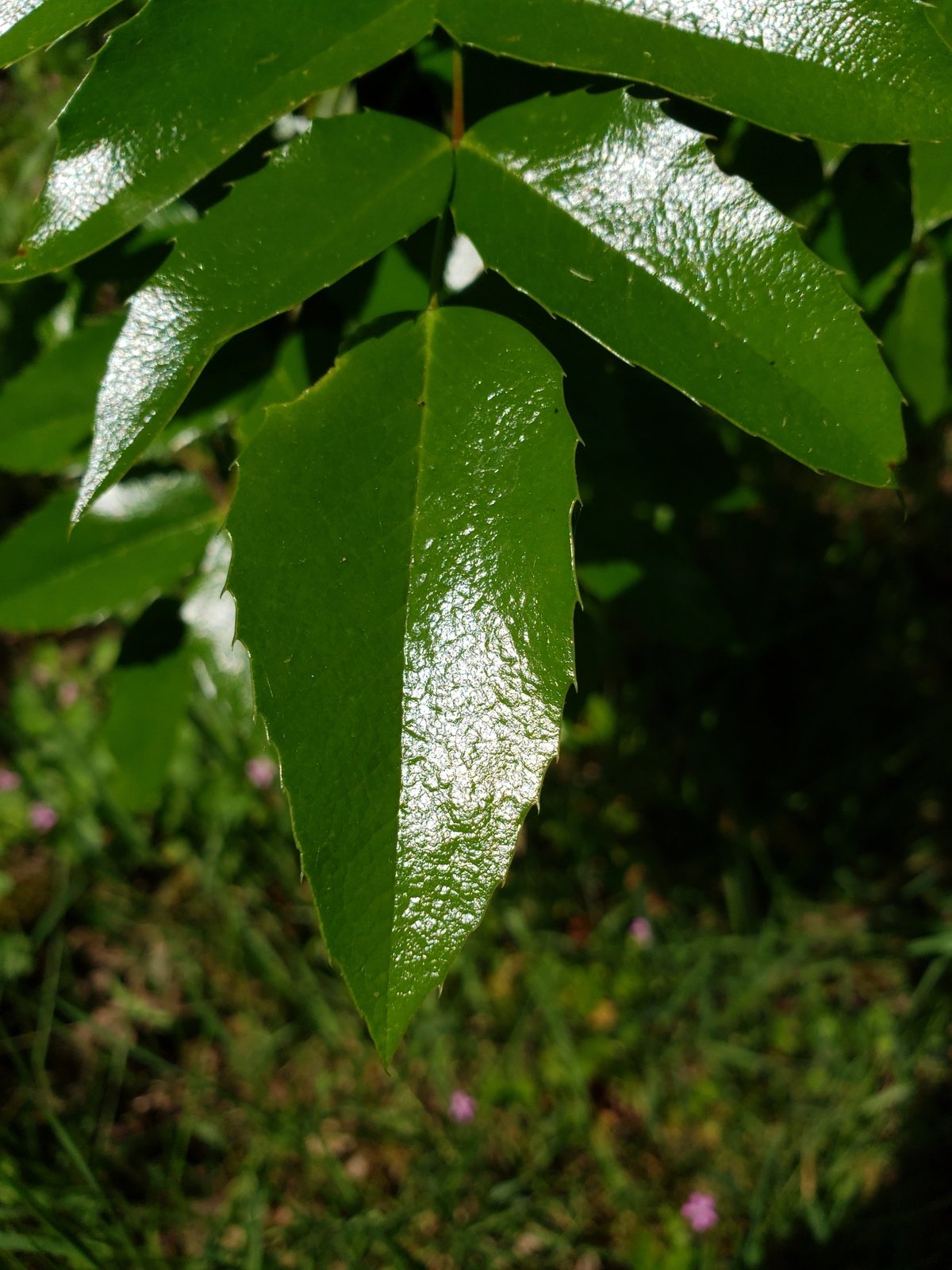
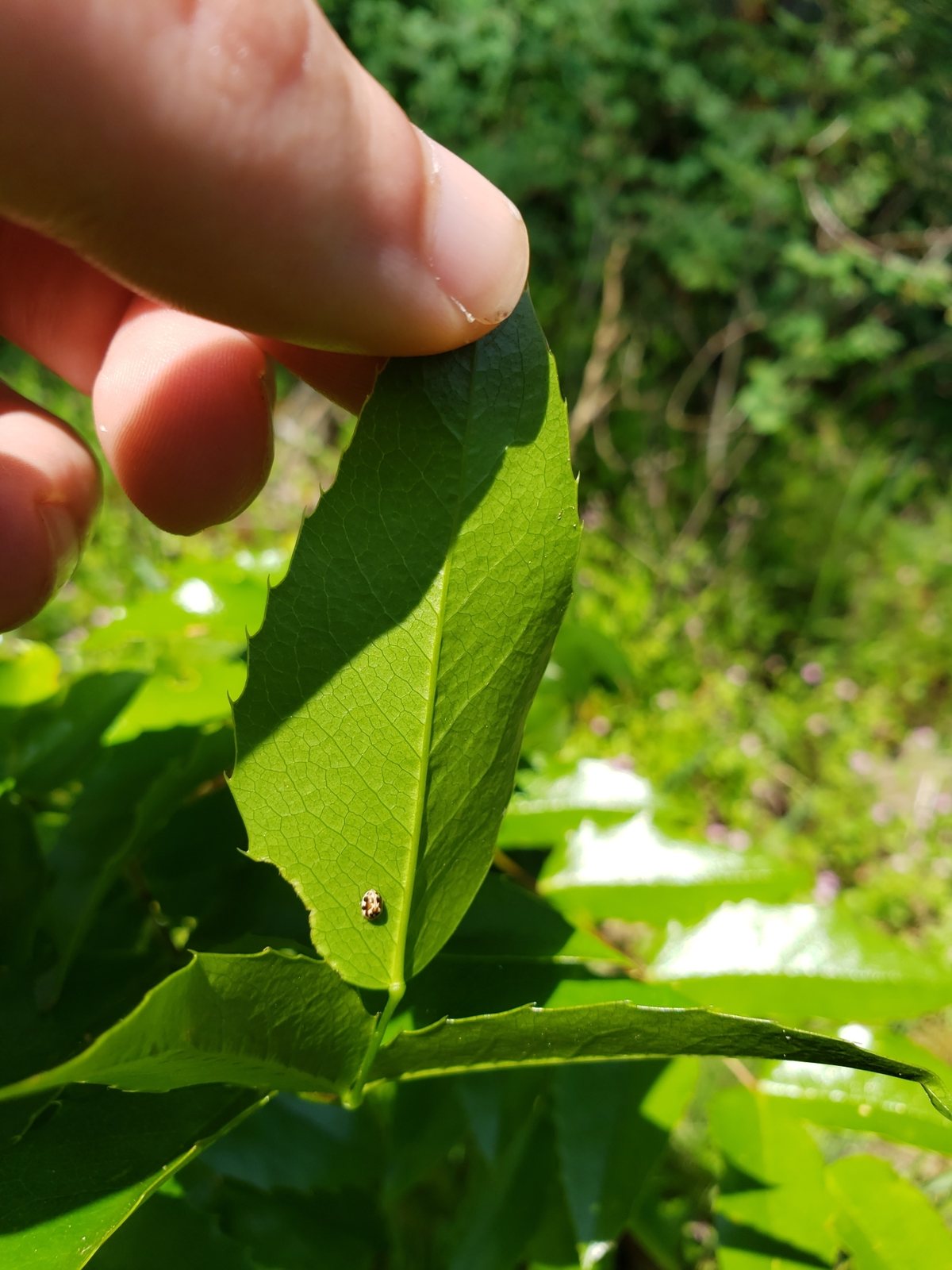
- Evergreen. Glossy, dark green compound leaves with sharply toothed leaflets. New growth is often bronze, and exposed leaves may turn reddish-purple in winter.
- Growth
- Slow to moderate
- Care needed
- Low
The year at a glance
- Pollinators
- Deer resistant
- Drought tolerant
- Wildlife
- Low allergen
- Fragrant
| J | F | M | A | M | J | J | A | S | O | N | D | |
|---|---|---|---|---|---|---|---|---|---|---|---|---|
| Flowers | ||||||||||||
| Fruit | ||||||||||||
| Plant |
Northern hemisphere months. In Australia, shift them by six.
- Difficulty
- Easy
- Toughness
- Very tough
Will it suit your garden?
Pick your zone, country, light and whether you have pets.
Full sun is 6 or more hours of direct sun a day, part shade 3 to 6 hours, shade under 3.
How it grows
Planting day
1.6 ft (0.5 m)
After 1 year
2.1 ft (0.63 m)
After 2 years
2.5 ft (0.76 m)
After 3 years
2.9 ft (0.89 m)
After 5 years
4 ft (1.2 m)
About 7 years to full size.
From a typical nursery size, at an average rate for this kind of plant. A rule of thumb, not a forecast.
Good to know
- Cats and dogs
- Mildly toxic: may upset a stomach
- Native to
- the US and Canada
- Invasive in
- the UK
- In the garden
- Spreads vigorously: plan to contain it.
- Growth rate
- Slow
Care
Jobs through the year
- WaterApr–May, Sep–Oct, every 14 days
- Water established plants only if soil is dry; check newly planted shrubs more often.
- WaterJun–Aug, every 14 days
- Water established plants deeply during prolonged drought; water first-year shrubs more frequently.
- MulchMar–Apr
- Apply 5–8 cm of compost or leaf mould, leaving stems clear.
- PruneMay–Jun
- After flowering, remove damaged or wayward stems; retain flowering shoots where berries are wanted.
- PruneJun–Aug
- Remove unwanted suckers at their origin to contain the clump; wear gloves.
- ProtectJan–Feb, Nov–Dec
- Shelter exposed young plants from cold, drying winds to limit winter scorch.
- Water deeply during dry spells in the first year, allowing the surface soil to dry slightly between waterings.
- Apply 2-3 in (5-8 cm) of leaf mould or compost mulch in spring, keeping it clear of the stems.
- On reasonably fertile soil, use compost rather than routine fertiliser.
- Remove unwanted suckers at their point of origin to keep the clump within bounds.
- Wear gloves when handling the prickly foliage.
Pruning. Prune just after flowering, removing dead or damaged stems and shortening wayward shoots. If an old plant becomes bare at the base, cut a few of the oldest stems close to ground level each year; pruning flowering shoots reduces the berry crop.
Through the year
- Autumn
- Plant in workable, well-drained soil; in cold regions, wait until spring.
- Late winter
- Check for wind scorch and winter damage, but delay substantial pruning until after flowering.
- Spring
- Mulch with leaf mould or compost and water newly planted shrubs during dry weather.
- Late spring
- After flowering, remove damaged stems and carry out any shaping.
- Summer
- Water during prolonged drought and remove suckers spreading into paths or neighbouring plants.
- Late summer
- Leave berries for birds, or collect ripe fruit for seed propagation where spread is not a concern.
In the garden
- Plant beneath deciduous trees with ferns and hellebores for evergreen structure beneath the winter canopy.
- Use as an informal boundary or woodland-edge shrub where its suckering habit has room to develop.
- Combine with soft-leaved shade plants to contrast with its glossy, sharply toothed foliage.
- Plant in a wildlife border for spring flowers and summer berries, away from narrow paths where the leaves can scratch.
Garden styles it suits: Woodland, Wildlife garden, Pacific Northwest woodland, Winter interest, Low-maintenance and Arts and Crafts.
Plant it with: Western sword fern, Hellebores, Epimediums, Hostas, Vine maple and Red-flowering currant.
Wildlife: Flowers provide pollen and nectar for bees and other insects in spring. Birds eat the berries, disperse the seeds and use dense growth for cover.
Problems to watch for
- Powdery mildew: white patches can develop on leaves in dry, crowded conditions. Improve airflow, mulch and water the root zone during drought.
- Rust or leaf spot: remove badly affected leaves and fallen debris, avoid overhead watering and thin crowded growth.
- Yellow leaves on alkaline soil: check soil pH and drainage; relocate to a more suitable site rather than repeatedly applying general fertiliser.
- Winter scorch: exposed leaves can brown in cold, drying winds. Provide shelter and keep young plants watered when the soil is unfrozen.
Safety
Not generally considered toxic to people, cats or dogs; ripe berries are edible but very tart. Roots, bark and leaves contain alkaloids and should not be eaten or used in homemade remedies. Horse-specific safety information is limited, so do not offer it as fodder. The prickly leaves can scratch skin.
Where it spreads. Naturalised and locally invasive in woodland in the United Kingdom and parts of continental Europe, including Germany. It spreads by suckers and bird-dispersed seed; outside its native western North American range, check local guidance before planting near natural areas.
Easily confused with
English holly (Ilex aquifolium)
Holly has single leaves rather than leaves divided into several leaflets, and usually red rather than blue-black berries.
Creeping Oregon grape (Mahonia repens)
Usually forms a much lower, spreading groundcover, with duller blue-green leaflets rather than the tall stems and glossy foliage of Oregon grape.
Leatherleaf mahonia (Mahonia bealei)
Has much larger, stiffer leaves with more numerous leaflets, and upright flower clusters that commonly open in late winter rather than spring.
The name
Mahonia honours horticulturist Bernard McMahon, aquifolium means holly-leaved, and Oregon grape refers to its western North American origin and grape-like berry clusters.
Propagation. Separate rooted suckers in autumn or spring, or take semi-ripe cuttings in late summer. Sow cleaned, fresh seed outdoors in autumn; germination can be slow and irregular.
Checked against open data
- Accepted botanical name
- Mahonia aquifolium
- In the US and Canada
- Native in Canada and the lower 48 states.
Sources: GBIF (CC BY 4.0) and USDA PLANTS. The care and design notes are LandscapeGPT's own.
See it in your own yard.
Upload a photo of your yard and see it redesigned with plants that suit your climate, each checked against your zone.