Red-flowering currant
Ribes sanguineum. Family Grossulariaceae. Shrub.
Also called Flowering currant, Blood currant.
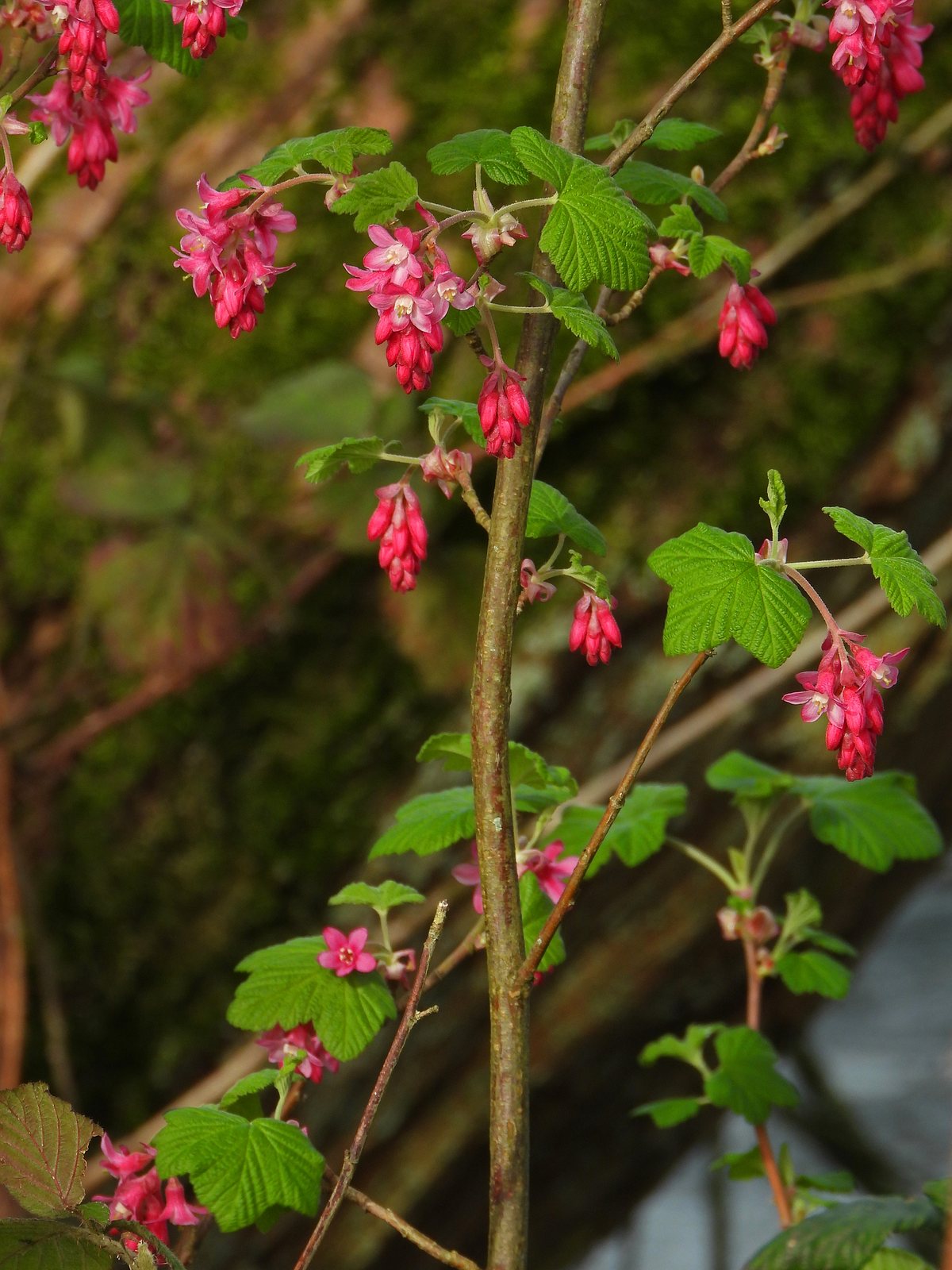
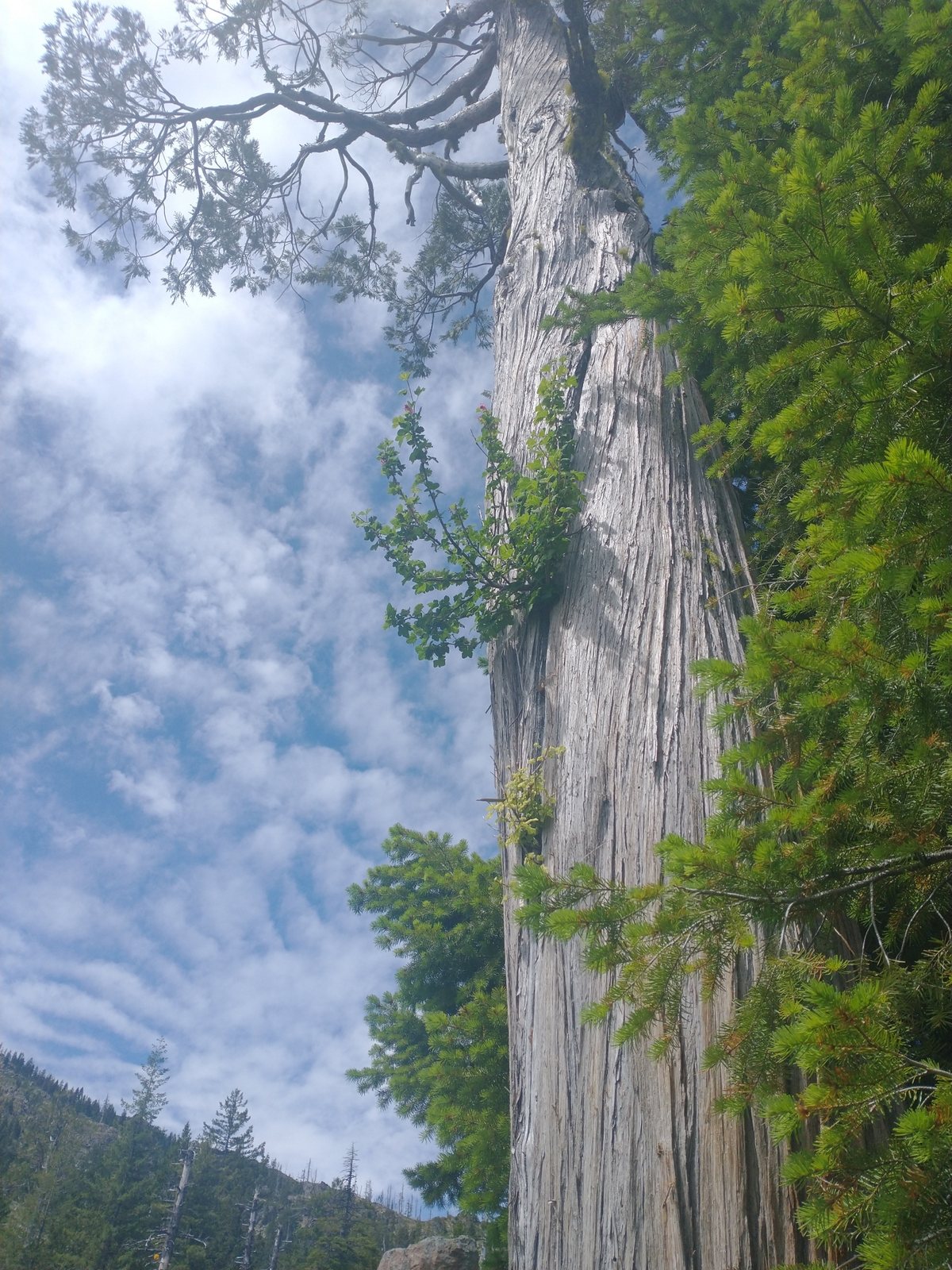
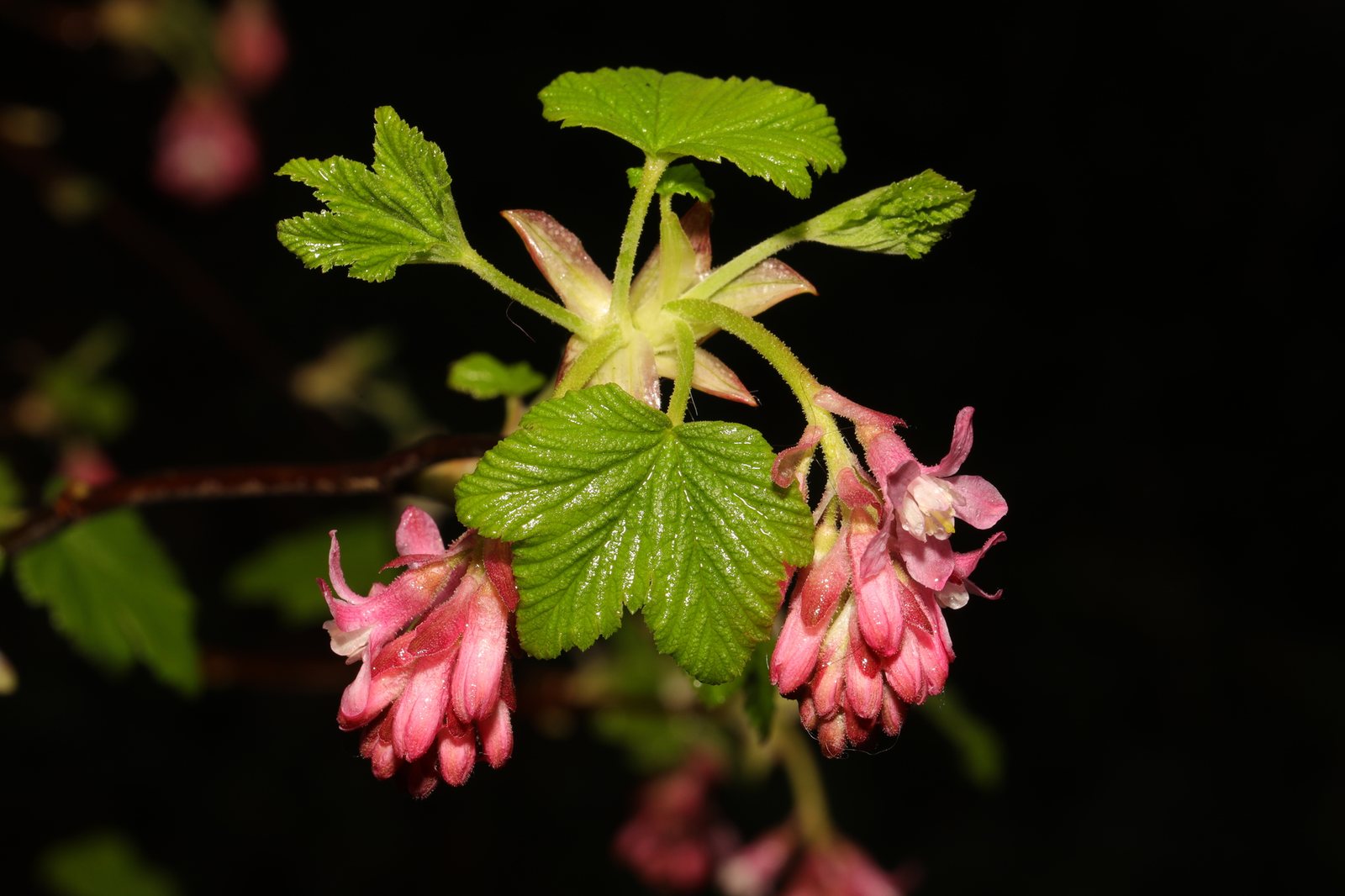
A deciduous shrub native to western North America, grown for hanging clusters of pink to deep rose-red flowers in early spring. It makes an informal hedge or woodland-edge shrub, providing early nectar and later blue-black berries for birds.
At a glance
- Sun
- Full sun to partial shade; flowering is usually best in sun. Afternoon shade helps in hotter locations.
- Water
- Water regularly during establishment; once established, water during prolonged drought. Avoid persistently wet soil.
- Soil
- Well-drained loam, sand or clay; tolerates moderately poor soil and a broad pH range, but dislikes waterlogging.
- Height
- 6-10 ft (1.8-3 m)
- Spread
- 5-8 ft (1.5-2.4 m)
- Flowers
- Early to mid-spring; hanging clusters of pink to rose-red flowers, occasionally white in some forms.
- Foliage
- Rounded, three- to five-lobed green leaves with a resinous scent when crushed; usually yellowish before falling in autumn.
- Growth
- Moderate
- Care needed
- Low
The year at a glance
- Pollinators
- Wildlife
- Low allergen
| J | F | M | A | M | J | J | A | S | O | N | D | |
|---|---|---|---|---|---|---|---|---|---|---|---|---|
| Flowers | ||||||||||||
| Fruit | ||||||||||||
| Plant |
Northern hemisphere months. In Australia, shift them by six.
- Difficulty
- Easy
- Toughness
- Very tough
Will it suit your garden?
Pick your zone, country, light and whether you have pets.
Full sun is 6 or more hours of direct sun a day, part shade 3 to 6 hours, shade under 3.
How it grows
Planting day
1.6 ft (0.5 m)
After 1 year
2.9 ft (0.88 m)
After 2 years
4 ft (1.3 m)
After 3 years
5 ft (1.6 m)
After 5 years
8 ft (2.4 m)
full size
About 5 years to full size.
From a typical nursery size, at an average rate for this kind of plant. A rule of thumb, not a forecast.
Good to know
- Cats and dogs
- Safe
- Native to
- the US and Canada
- Growth rate
- Moderate
Care
Jobs through the year
- WaterApr–May, Sep, every 21 days
- Water established shrubs deeply during prolonged dry spells; young shrubs need more through their first two seasons.
- WaterJun–Aug, every 14 days
- During prolonged drought, soak the root zone; skip watering when rainfall keeps soil moist.
- MulchMar
- Refresh organic mulch to 5–8 cm deep, leaving a clear gap around the stems.
- PruneApr–May
- Immediately after flowering, remove dead or crossing wood and up to one-third of the oldest stems if renewal is needed.
- Water deeply during dry spells for the first two growing seasons.
- Apply a 2-3 in (5-8 cm) mulch in spring, keeping it clear of the stems.
- Avoid routine feeding; on poor soil, add a thin layer of compost in spring.
- Allow room for its arching branches rather than keeping it tightly clipped.
- Remove unwanted seedlings while small, especially near natural woodland.
Pruning. Prune immediately after flowering, since next spring's flowers form on older growth. Remove dead or crossing branches and, when renewal is needed, cut up to one-third of the oldest stems to ground level.
Through the year
- Autumn
- Plant while the soil is workable, water thoroughly and mulch.
- Winter
- Take hardwood cuttings from healthy dormant shoots.
- Early spring
- Refresh mulch and check soil moisture around recently planted shrubs.
- Late spring
- After flowering, remove selected old stems and lightly reshape if needed.
- Summer
- Water young shrubs during dry spells; check new growth for aphids.
- Late summer
- Leave berries for birds and pull unwanted seedlings.
In the garden
- Plant as a loose flowering hedge with other deciduous shrubs for seasonal screening.
- Use at a woodland edge with ferns and spring bulbs, where the flowers show against darker foliage.
- Place behind a mixed border to provide spring colour and a leafy summer backdrop.
- Include in western North American native gardens with Oregon grape and sword fern.
Garden styles it suits: Woodland, Wildlife garden, Cottage garden, Native hedgerow, Pacific Northwest woodland and California native.
Plant it with: Oregon grape, Western sword fern, Pacific bleeding heart, Vine maple, Daffodils and Hellebores.
Wildlife: Flowers feed early bees and, in its native range, hummingbirds. Birds eat the berries, and the branching growth offers shelter.
Problems to watch for
- Aphids can curl young leaves: dislodge small colonies with water and encourage ladybirds and other predators.
- Powdery mildew may affect crowded or drought-stressed plants: improve airflow and water the root zone during prolonged dry weather.
- Poor flowering often follows winter pruning or deep shade: prune only after flowering and provide a brighter position.
- White pine blister rust can involve Ribes as an alternate host: check local currant-planting restrictions in the United States, especially near susceptible five-needle pines.
Safety
Not known to be toxic to people, cats, dogs or horses. The berries are edible but usually bland or unpleasant; eating large quantities of fruit or foliage may cause digestive upset.
Where it spreads. Regarded as an environmental weed in parts of New Zealand, where bird-spread seedlings can invade scrub and woodland. It is also naturalised in parts of Britain and Ireland; remove seedlings where it spreads into nearby natural vegetation.
Easily confused with
Redcurrant (Ribes rubrum)
Has small, inconspicuous greenish flowers followed by translucent red berries, rather than showy pink flower clusters and dusty blue-black berries.
Fuchsia-flowered gooseberry (Ribes speciosum)
Has conspicuous spines and narrow, hanging red flowers with long projecting stamens; red-flowering currant is spineless.
Golden currant (Ribes aureum)
Produces yellow, often strongly fragrant flowers rather than pink or red clusters.
The name
The Latin species name sanguineum means blood-red, referring to the flower colour.
Propagation. Take hardwood cuttings after leaf fall or softwood cuttings in early summer. Seed-grown plants vary in flower colour; use cuttings to preserve a named cultivar.
Checked against open data
- Accepted botanical name
- Ribes sanguineum
- In the US and Canada
- Native in Canada and the lower 48 states.
- Native range
- British Columbia, California, Idaho, Oregon and Washington.
- Measured
- Soil pH 6 to 7.5. Average height 333 cm.
Sources: GBIF (CC BY 4.0), USDA PLANTS and Trefle (CC BY 4.0). The care and design notes are LandscapeGPT's own.
See it in your own yard.
Upload a photo of your yard and see it redesigned with plants that suit your climate, each checked against your zone.