Corncockle
Agrostemma githago. Family Caryophyllaceae. Annual.
Also called Common corncockle, Corn cockle.
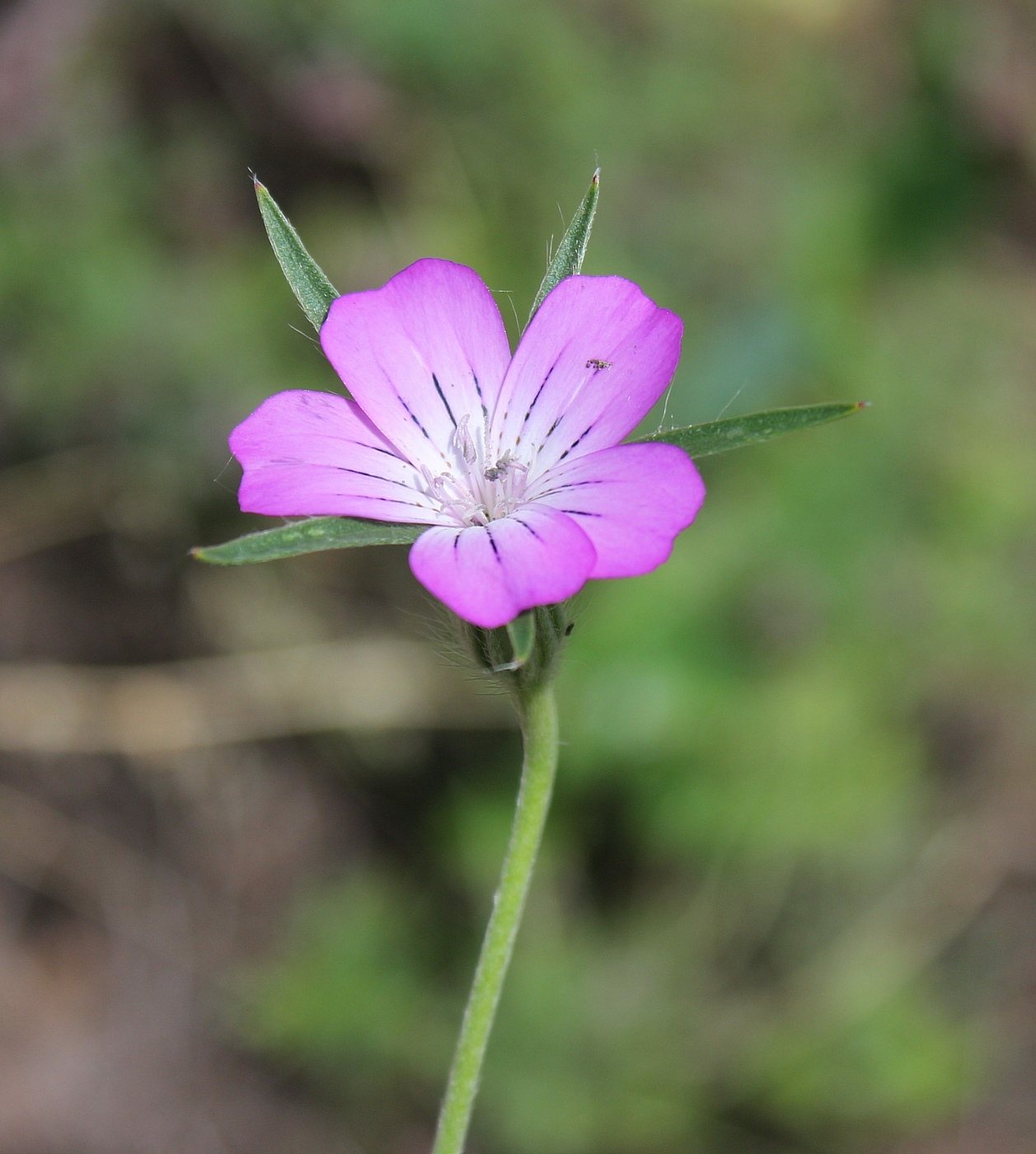
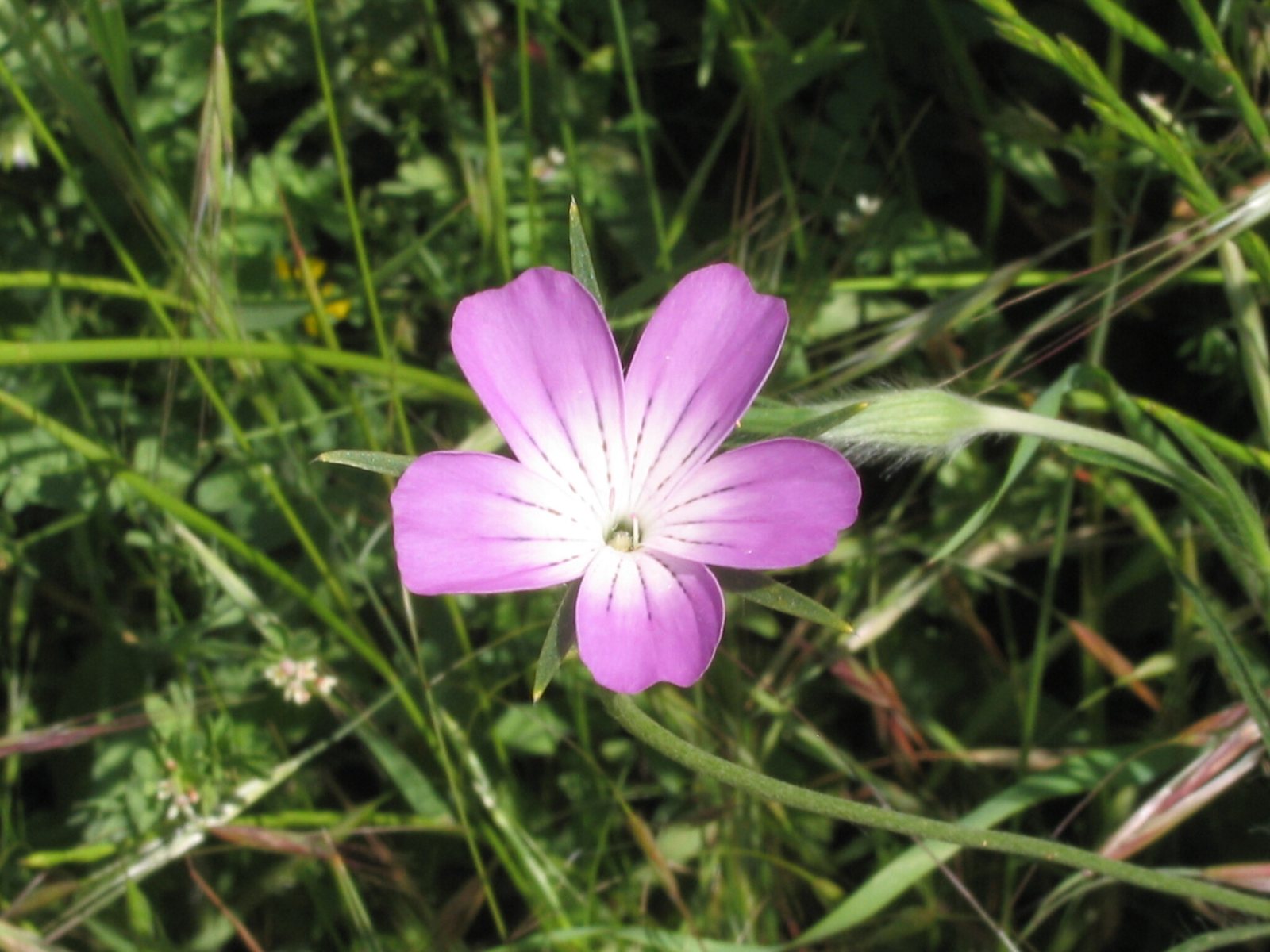
Corncockle is grown as an annual for its pink-purple flowers on slender, softly hairy stems. It brings an airy, informal look to sunny borders and annual flower patches, but its poisonous seeds make it unsuitable near food crops or grazing animals.
At a glance
- Sun
- Full sun.
- Water
- Water regularly during germination and establishment, then during prolonged dry spells. Avoid persistently wet soil.
- Soil
- Well-drained sandy, chalky or loamy soil of low to moderate fertility. Avoid waterlogged ground and heavily enriched beds.
- Height
- 2-3.5 ft (0.6-1.1 m)
- Spread
- 1-1.5 ft (0.3-0.45 m)
- Flowers
- Late spring through summer, depending on sowing time and climate; pink to purple-pink flowers with darker veins and a pale centre. White-flowered forms are also grown.
- Foliage
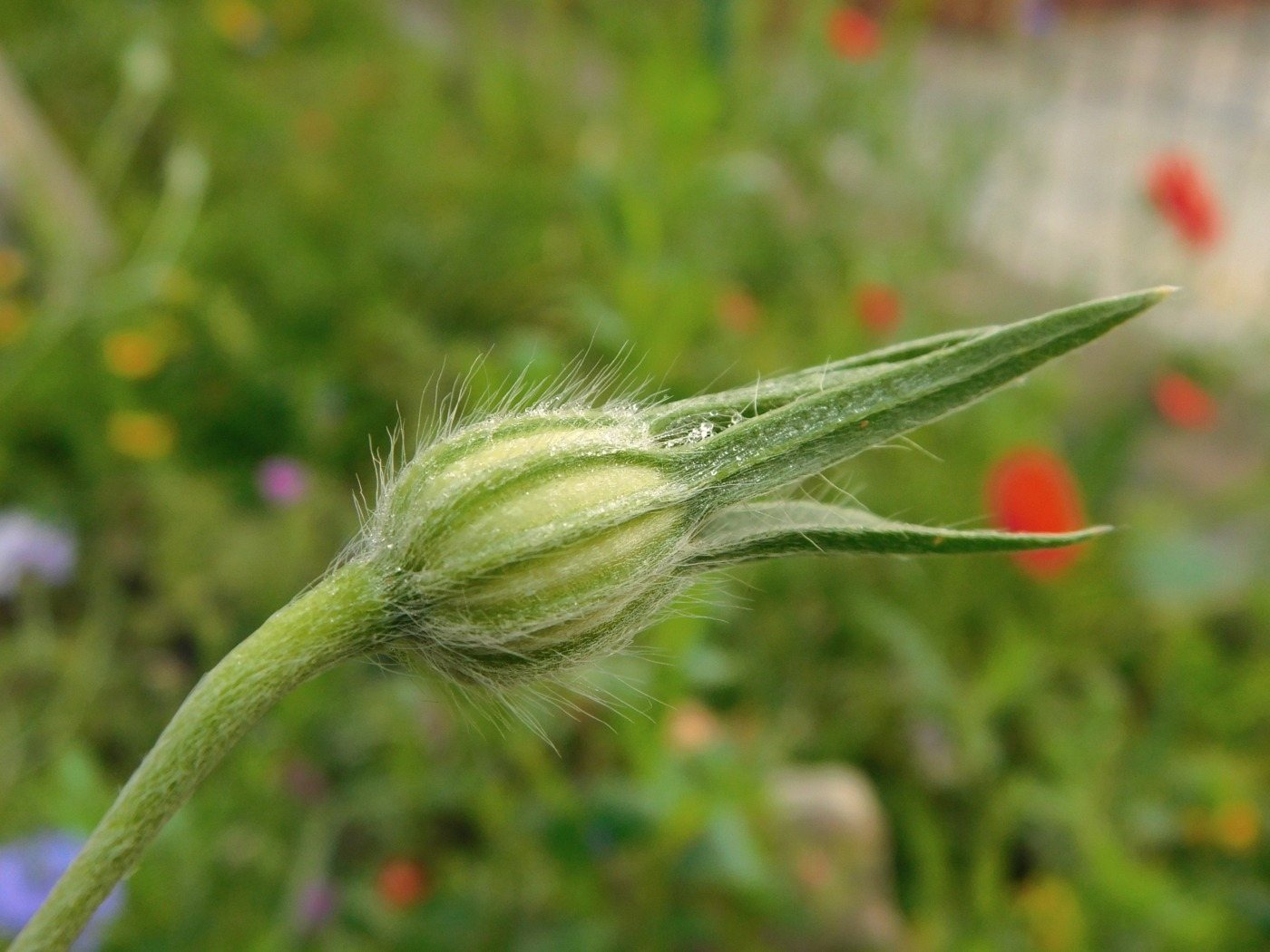
- Narrow, opposite, grey-green leaves covered with fine hairs.
- Growth
- Fast; flowers within one growing season.
- Care needed
- Low
The year at a glance
- Pollinators
- Low allergen
| J | F | M | A | M | J | J | A | S | O | N | D | |
|---|---|---|---|---|---|---|---|---|---|---|---|---|
| Flowers | ||||||||||||
| Fruit | ||||||||||||
| Plant |
Northern hemisphere months. In Australia, shift them by six.
- Difficulty
- Easy
- Toughness
- Fairly tough
Will it suit your garden?
Pick your zone, country, light and whether you have pets.
Full sun is 6 or more hours of direct sun a day, part shade 3 to 6 hours, shade under 3.
How it grows
Planting day
0.5 ft (0.15 m)
After 1 year
2.8 ft (0.85 m)
full size
Full size in one season.
From a typical nursery size, at an average rate for this kind of plant. A rule of thumb, not a forecast.
Good to know
- Cats and dogs
- Toxic
- Invasive in
- the US, Canada and Australia
- In the garden
- Spreads vigorously: plan to contain it.
- Growth rate
- Fast
Care
Jobs through the year
- WaterMar–May, Sep, every 14 days
- Water established plants only in extended dry weather; keep seedbeds moist until seedlings establish.
- WaterJun–Aug, every 7 days
- During prolonged dry spells, water established plants deeply without leaving soil saturated.
- DeadheadMay–Aug, every 7 days
- Remove faded flowers before capsules develop to prolong flowering and prevent unwanted seeding.
- PruneJul–Sep
- Remove finished plants before capsules open; keep poisonous seed material out of compost and livestock feed.
- Sow directly into weed-free soil; corncockle dislikes root disturbance.
- Thin seedlings to about 9-12 in (23-30 cm) apart.
- Keep the seedbed moist until seedlings are established, then water during extended dry weather.
- Avoid routine feeding or rich manure, which encourages weak, floppy growth.
- Use twiggy supports in exposed positions, and remove seed capsules before they ripen if you do not want seedlings.
Pruning. Remove faded flowers during the flowering season to limit seed production and encourage further bloom. Pull up or cut down plants before their seed capsules open; do not leave mature seed heads in home compost.
Through the year
- Early spring
- Prepare a sunny, well-drained seedbed and sow directly once the soil is workable.
- Mid-spring
- Thin crowded seedlings and remove competing weeds.
- Late spring
- Add discreet twiggy supports where stems are exposed to wind.
- Summer
- Water during prolonged dry spells and remove fading flowers before seed capsules develop.
- Late summer
- Remove finished plants before ripe seeds scatter.
- Early autumn
- In mild-winter areas, sow a small batch directly for earlier flowering the following year.
In the garden
- Thread through cottage borders among cornflowers and annual poppies for a loose, traditional display.
- Grow in a managed annual flower patch, away from farmland and natural habitats.
- Place behind low edging plants so the narrow stems and open flowers rise above them.
- Combine with fine-textured ornamental grasses for a light, meadow-like effect.
Garden styles it suits: Cottage garden, English country, Wildflower, Romantic rose garden, Pastel border and Blues and silvers.
Plant it with: Cornflower, Field poppy, Love-in-a-mist, Pot marigold and Quaking grass.
Wildlife: Flowers provide nectar and pollen for visiting insects, including bees. Keep plants and seed-bearing material away from livestock feed.
Problems to watch for
- Flopping stems: avoid rich soil and excess fertiliser; provide twiggy supports in windy sites.
- Poor establishment after transplanting: direct-sow instead, or move very young seedlings with minimal root disturbance.
- Rotting roots or seedlings: improve drainage and avoid overwatering or sowing into cold, saturated soil.
- Unwanted self-seeding: remove flowers or green seed capsules before seeds mature, and pull out volunteer seedlings.
Safety
Toxic to people, cats, dogs and horses if eaten. All parts are poisonous, especially the seeds, which contain toxic saponins; ingestion can cause severe gastrointestinal illness and potentially fatal poisoning. Keep seeds away from children, pets, grain and animal feed, and seek urgent medical or veterinary advice after suspected ingestion.
Where it spreads. Can self-seed freely in disturbed soil and is an introduced agricultural weed in parts of the United States, Canada and Australia. Its main risk is contamination of cereal crops with poisonous seeds rather than vigorous spread through established garden vegetation. Keep it away from farmland and check local weed restrictions before sowing.
Easily confused with
Rose campion (Silene coronaria)
Rose campion has broader, densely woolly silver leaves and usually brighter magenta flowers. Corncockle has narrow leaves and five conspicuously long, pointed calyx teeth extending beyond the petals.
Red campion (Silene dioica)
Red campion has broader green leaves, clusters of flowers and deeply notched petals. Corncockle usually bears larger, solitary flowers with unnotched or only shallowly notched petals and long, projecting calyx teeth.
The name
Agrostemma comes from Greek words meaning 'field crown', referring to its conspicuous flowers among crops, while 'corn' in corncockle refers to cereal grain.
Propagation. Propagate by seed sown directly outdoors in spring, or in early autumn where winters are mild. Cover lightly with soil and keep moist until germination; prevent seed escape and label stored seed clearly as poisonous.
Checked against open data
- Accepted botanical name
- Agrostemma githago
- In the US and Canada
- Introduced in Alaska, Canada and the lower 48 states.
- Native range
- Albania, Bulgaria, East Aegean Is., Greece, Haiti, Iran, Iraq, Italy, Kriti, Krym, Lebanon-Syria and North Caucasus.
- Measured
- Soil pH 7.5 to 8. Average height 73 cm.
Sources: GBIF (CC BY 4.0), USDA PLANTS and Trefle (CC BY 4.0). The care and design notes are LandscapeGPT's own.
See it in your own yard.
Upload a photo of your yard and see it redesigned with plants that suit your climate, each checked against your zone.