Curry leaf
Murraya koenigii. Family Rutaceae. Tree.
Also called Curry leaf tree, Curry tree, Sweet neem, Bergera koenigii.
Curry leaf is a small tropical tree grown for its aromatic leaves, which are used fresh in South Asian cooking. It grows outdoors in frost-free gardens; in cooler parts of the United States, Canada, the United Kingdom and Australia, grow it in a container and overwinter it indoors in bright light.
At a glance
- Sun
- Full sun to light partial shade; protect container plants from intense afternoon sun in very hot, dry conditions.
- Water
- Water thoroughly, then let the surface of the soil dry slightly before watering again. Water much less in cool winter conditions, without letting the root ball dry out completely.
- Soil
- Fertile, well-drained soil; use a free-draining potting mix in containers. Avoid waterlogged ground and pots standing in water.
- Height
- 10-20 ft (3-6 m); usually smaller in containers
- Spread
- 6-12 ft (1.8-3.7 m)
- Flowers
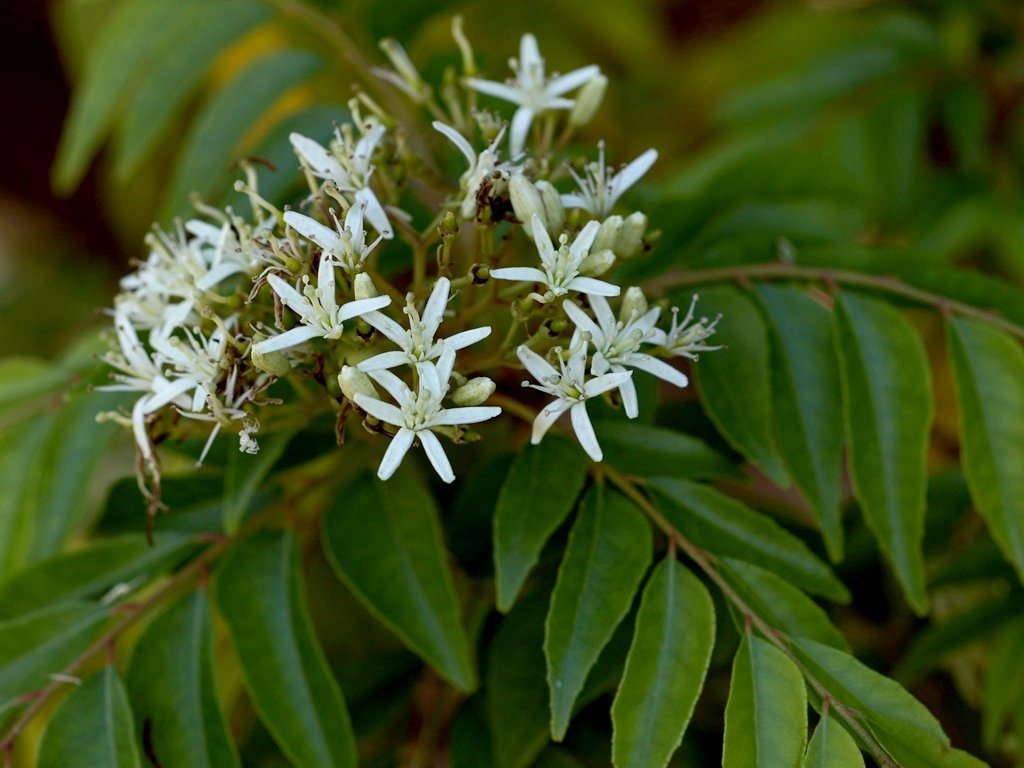
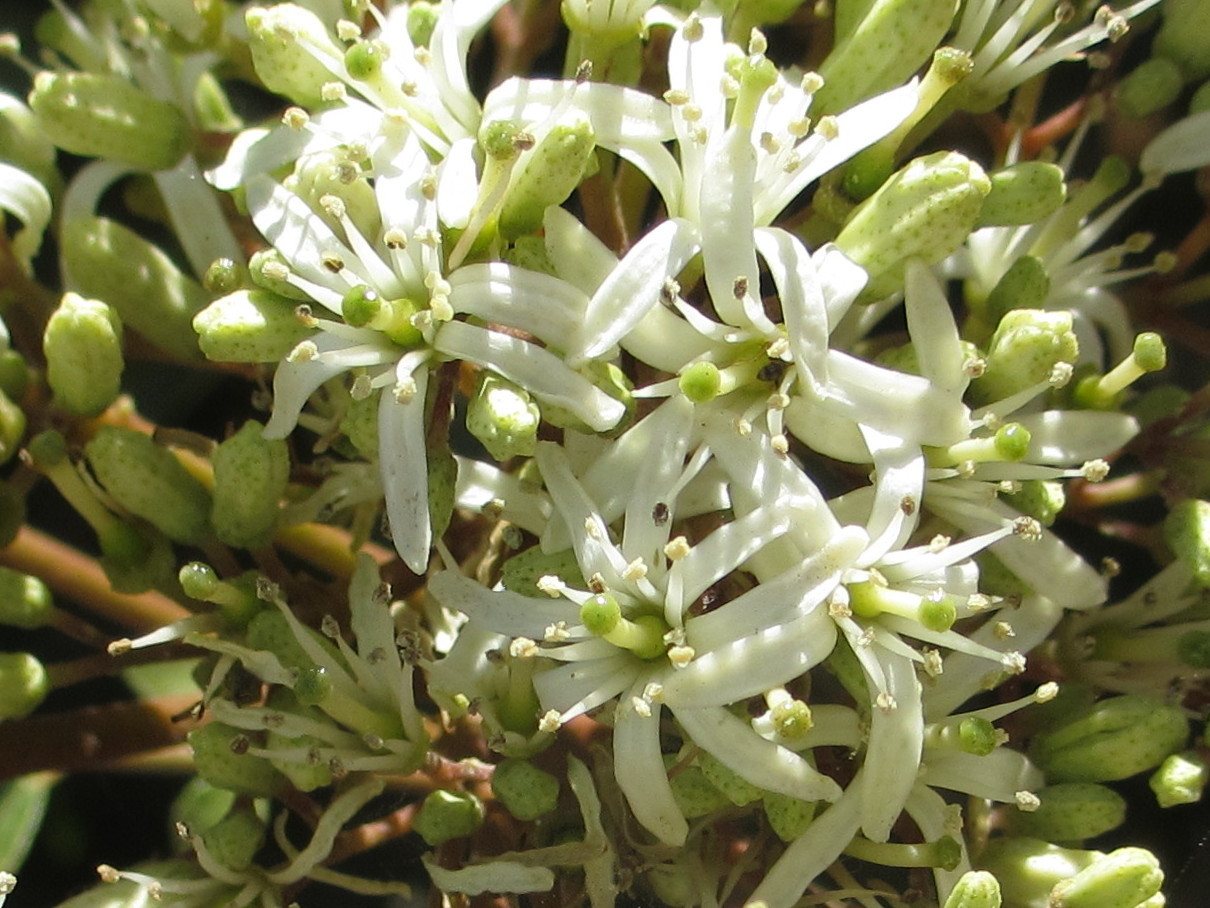
- Small, fragrant white flowers in clusters, usually in late spring and summer
- Foliage
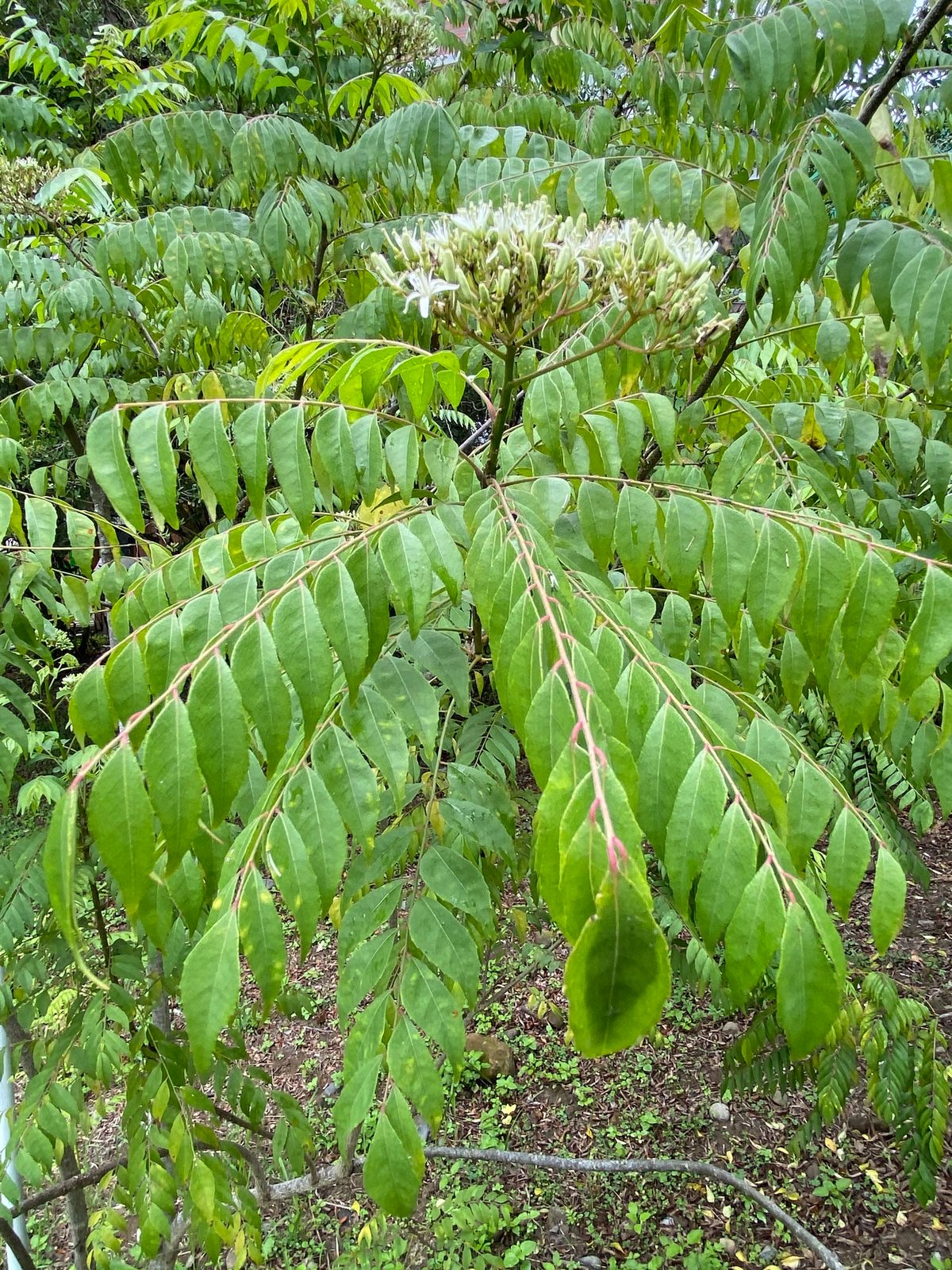
- Evergreen. Glossy green leaves divided into pointed leaflets, strongly aromatic when crushed; foliage may yellow and drop during cool weather.
- Growth
- Moderate in sustained warmth; slow in cool conditions
- Care needed
- Medium
The year at a glance
- Pollinators
- Heat tolerant
- Wildlife
- Low allergen
- Fragrant
- Edible
| J | F | M | A | M | J | J | A | S | O | N | D | |
|---|---|---|---|---|---|---|---|---|---|---|---|---|
| Flowers | ||||||||||||
| Fruit | ||||||||||||
| Plant |
Northern hemisphere months. In Australia, shift them by six.
- Difficulty
- Hard
- Toughness
- Needs looking after
Will it suit your garden?
Pick your zone, country, light and whether you have pets.
Full sun is 6 or more hours of direct sun a day, part shade 3 to 6 hours, shade under 3.
How it grows
Planting day
7 ft (2 m)
After 1 year
7 ft (2.1 m)
After 2 years
7 ft (2.2 m)
After 3 years
8 ft (2.3 m)
After 5 years
8 ft (2.5 m)
About 26 years to full size.
From a typical nursery size, at an average rate for this kind of plant. A rule of thumb, not a forecast.
Good to know
- Cats and dogs
- Toxic
- Invasive in
- Australia
- In the garden
- Spreads vigorously: plan to contain it.
- Growth rate
- Slow
Care
Jobs through the year
- WaterApr–May, Sep–Oct, every 7 days
- Let the surface dry slightly between waterings; in zones 6–7 grow in a pot and adjust to compost moisture.
- WaterJun–Aug, every 4 days
- For established ground plants in warm climates, water when dry; check outdoor pots more frequently.
- WaterJan–Mar, Nov–Dec, every 14 days
- Indoors, water sparingly as the surface dries, without completely drying the root ball.
- FeedApr–Aug, every 14 days
- Feed with balanced liquid fertiliser at the label rate only while actively growing.
- PruneApr–May
- Once growth resumes, shorten long shoots above leaf joints and remove dead wood or unwanted suckers.
- HarvestMay–Sep, every 14 days
- Pick mature green leaves lightly, leaving plenty of foliage; use fresh or freeze.
- ProtectSep–Oct
- Bring pots into bright shelter before nights regularly fall below 10°C.
- ProtectJun
- Move outdoors only after frost and cold nights have passed; introduce direct sun gradually.
- PruneAug–Sep
- Remove developing fruit if unwanted seedlings or bird-dispersed spread are a concern.
- Move container plants indoors before frost, ideally before nights regularly fall below 50°F (10°C).
- Provide the brightest available indoor position and keep away from cold draughts.
- Feed container plants with a balanced liquid fertiliser at label strength during active spring and summer growth.
- Repot in spring when roots crowd the container, using a pot with drainage holes.
- Mulch outdoor plants to conserve moisture, keeping mulch clear of the trunk.
- Remove unwanted root suckers and fruit where seedlings could spread.
Pruning. In spring, once active growth starts, shorten long shoots just above a leaf joint to encourage branching and keep the canopy within reach. Remove dead wood, and avoid heavy pruning while the plant is cold or dormant.
Harvest
Pick healthy, fully expanded green leaflets or snip off a whole leafy stalk once the plant is well established and growing strongly. Harvest lightly from young plants, leave plenty of foliage, and use the leaves fresh or freeze them for cooking.
Through the year
- Early spring
- As growth resumes, check roots, repot if necessary and prune long shoots.
- Spring
- Restart feeding and increase watering as new leaves develop.
- Late spring
- In cool climates, move pots outdoors only after frost risk has passed; introduce direct sun gradually.
- Summer
- Harvest leaves regularly but lightly, and check leaf undersides for pests.
- Late summer
- Remove developing fruit if you do not want seedlings or bird-dispersed spread.
- Autumn
- Bring pots under cover before cold nights and reduce feeding as growth slows.
- Winter
- Keep frost-free in bright light and water sparingly, especially if leaves have dropped.
In the garden
- Grow in a large movable pot near the kitchen for convenient leaf picking.
- Use as a small edible specimen tree in a sheltered, frost-free courtyard.
- Combine with lemongrass, ginger and turmeric in a warm culinary planting, allowing each plant its preferred light.
- Use its fine-textured foliage as a light canopy above lower herbs in a tropical edible garden.
Garden styles it suits: Potager (kitchen garden), Edible landscape, Tropical, Modern courtyard, Sensory garden and Small-space.
Plant it with: Lemongrass, Ginger, Turmeric, Chilli pepper and Basil.
Wildlife: Flowers attract bees and other insects, and birds eat the ripe fruit and can disperse the seeds. In parts of its growing range, the foliage supports swallowtail butterfly caterpillars.
Problems to watch for
- Scale insects and mealybugs: inspect stems and leaf undersides, isolate affected pots and remove small infestations by hand; use a treatment labelled for edible plants if needed.
- Spider mites in warm, dry indoor conditions: look for fine webbing and stippled leaves, rinse foliage thoroughly and repeat checks.
- Root rot from wet soil: improve drainage, empty saucers and reduce watering during cool weather.
- Yellowing or leaf drop after cold exposure: move to a warmer, bright position and water cautiously until growth resumes; do not try to force recovery with fertiliser.
Safety
The leaves are not known to be toxic to people when used in normal culinary amounts. Seeds are commonly reported as poisonous and should not be eaten; the likely severity is not well established. Reliable species-specific toxicity information for cats, dogs and horses is limited, so do not treat it as a confirmed pet-safe plant and keep fruit and seeds out of reach.
Where it spreads. It can spread by root suckers and bird-dispersed seed. It is recognised as an environmental weed in parts of south-eastern Queensland and north-eastern New South Wales, Australia; check local advice before planting outdoors.
Easily confused with
Curry plant (Helichrysum italicum)
A low shrub with narrow silver-grey leaves and yellow flower heads, rather than a green-leaved tree. It smells of curry but is not the usual source of culinary curry leaves.
Orange jasmine (Murraya paniculata)
Usually has fewer, broader, glossier leaflets and orange-red ripe fruit; curry leaf has more numerous, narrower leaflets and black ripe fruit. Do not substitute orange jasmine leaves in cooking.
Neem (Azadirachta indica)
Typically becomes a much larger tree, with more strongly toothed leaflets and yellowish ripe fruit. Its leaves lack the characteristic culinary curry-leaf aroma.
The name
The common name refers to its use in cooking, while the botanical name honours botanist Johann Andreas Murray and naturalist Johann Gerhard König.
Propagation. Sow fresh seed promptly after removing the fruit pulp; seed loses viability quickly and needs warmth to germinate. Rooted suckers can also be separated carefully during warm weather.
Checked against open data
- Accepted botanical name
- Murraya koenigii
- In the US and Canada
- Introduced in Pacific Basin.
Sources: GBIF (CC BY 4.0) and USDA PLANTS. The care and design notes are LandscapeGPT's own.
See it in your own yard.
Upload a photo of your yard and see it redesigned with plants that suit your climate, each checked against your zone.