Fava bean (broad bean)
Vicia faba. Family Fabaceae. Annual.
Also called Broad bean, Fava bean, Field bean, Horse bean.
Broad beans are upright, cool-season legumes grown as an annual for their large, edible seeds and tender young pods. They crop best before hot weather arrives; autumn sowing is also possible in mild-winter areas with suitable varieties.
At a glance
- Sun
- Full sun; light afternoon shade can help in warmer regions.
- Water
- Keep soil evenly moist, especially during flowering and pod development, but never waterlogged.
- Soil
- Well-drained, moisture-retentive loam or clay loam, ideally pH 6.5-7.5. Avoid strongly acidic soil.
- Height
- 2-5 ft (0.6-1.5 m), depending on variety
- Spread
- 1-1.5 ft (0.3-0.45 m)
- Flowers
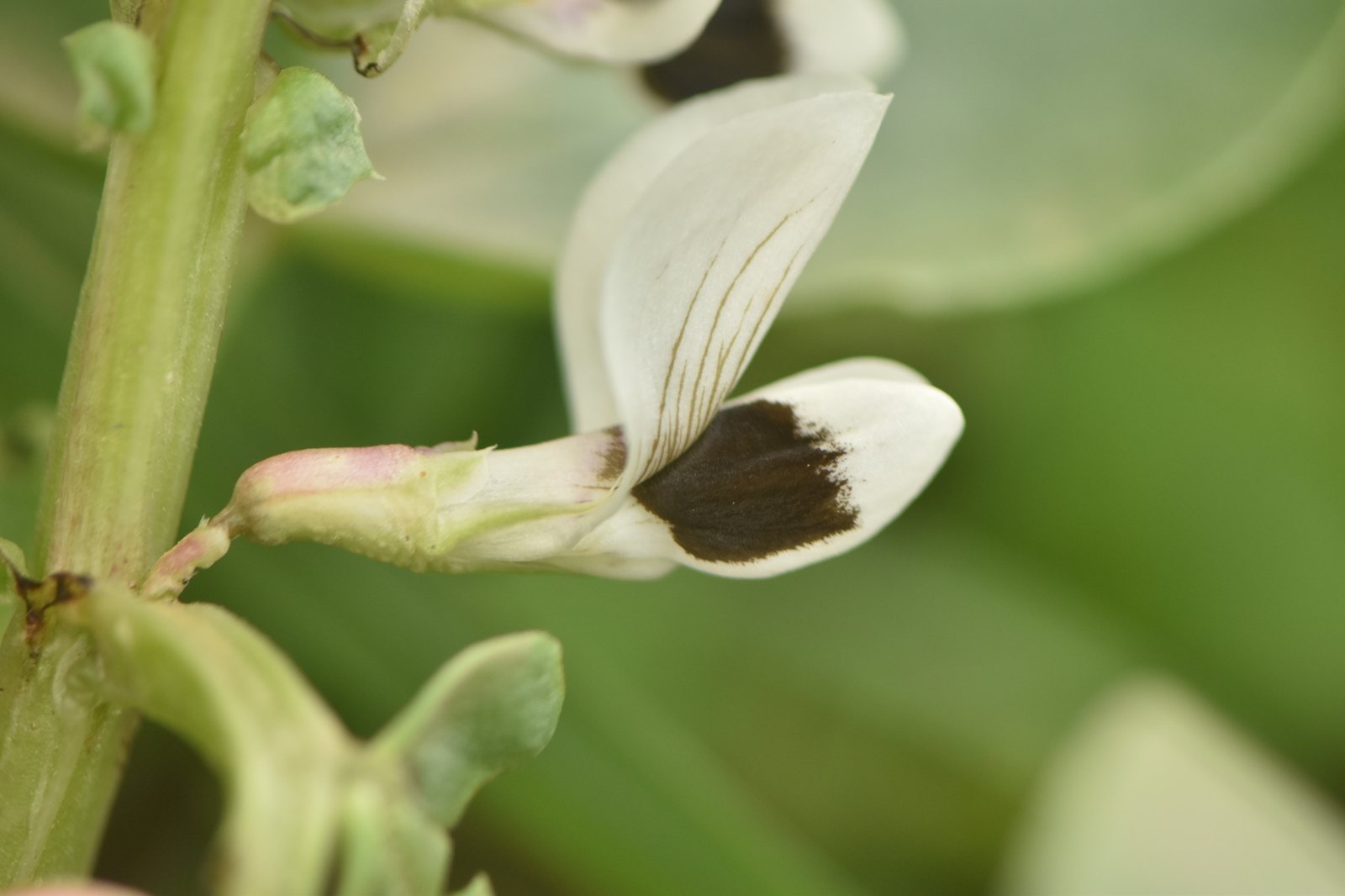
- Spring to early summer, or winter to spring in mild climates; usually white flowers with dark purple-black blotches.
- Foliage
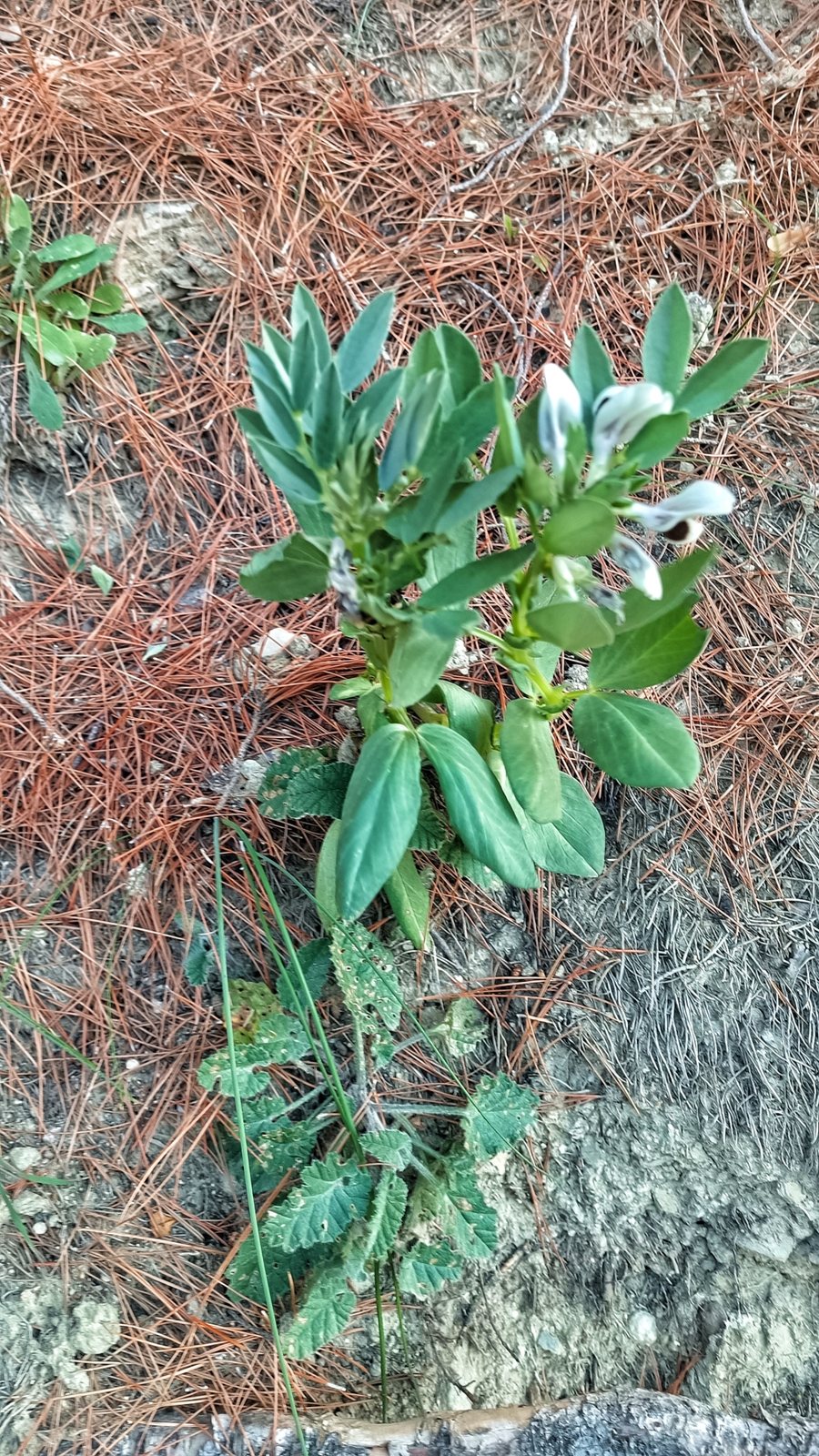
- Upright, stout stems carry broad, oval, grey-green leaflets; unlike peas, the plants have no climbing tendrils.
- Growth
- Fast in cool weather; slows in winter and stops cropping well in heat.
- Care needed
- Medium
The year at a glance
- Pollinators
- Low allergen
- Edible
| J | F | M | A | M | J | J | A | S | O | N | D | |
|---|---|---|---|---|---|---|---|---|---|---|---|---|
| Flowers | ||||||||||||
| Fruit | ||||||||||||
| Plant |
Northern hemisphere months. In Australia, shift them by six.
- Difficulty
- Moderate
- Toughness
- Fairly tough
Will it suit your garden?
Pick your zone, country, light and whether you have pets.
Full sun is 6 or more hours of direct sun a day, part shade 3 to 6 hours, shade under 3.
How it grows
Planting day
0.5 ft (0.15 m)
After 1 year
3 ft (1.1 m)
full size
Full size in one season.
From a typical nursery size, at an average rate for this kind of plant. A rule of thumb, not a forecast.
Good to know
- Cats and dogs
- Mildly toxic: may upset a stomach
- Growth rate
- Moderate
Care
Jobs through the year
- WaterMar–Apr, Oct–Nov, every 7 days
- Water established crops if soil begins drying; autumn sowing suits mild sites and hardy varieties only.
- WaterMay–Jul, every 4 days
- Water at soil level when rain is insufficient, prioritising flowering and swelling pods.
- MulchApr–May
- Apply a light organic mulch after soil warms, keeping stems clear.
- ProtectMar–May
- Install stakes and horizontal strings before taller plants begin to lean.
- ProtectJan–Mar, Nov–Dec
- Cover young or overwintering plants with fleece when severe frost is forecast.
- PruneMay–Jun
- Pinch out soft shoot tips once the lowest pods set to discourage black bean aphids.
- HarvestMay–Jul
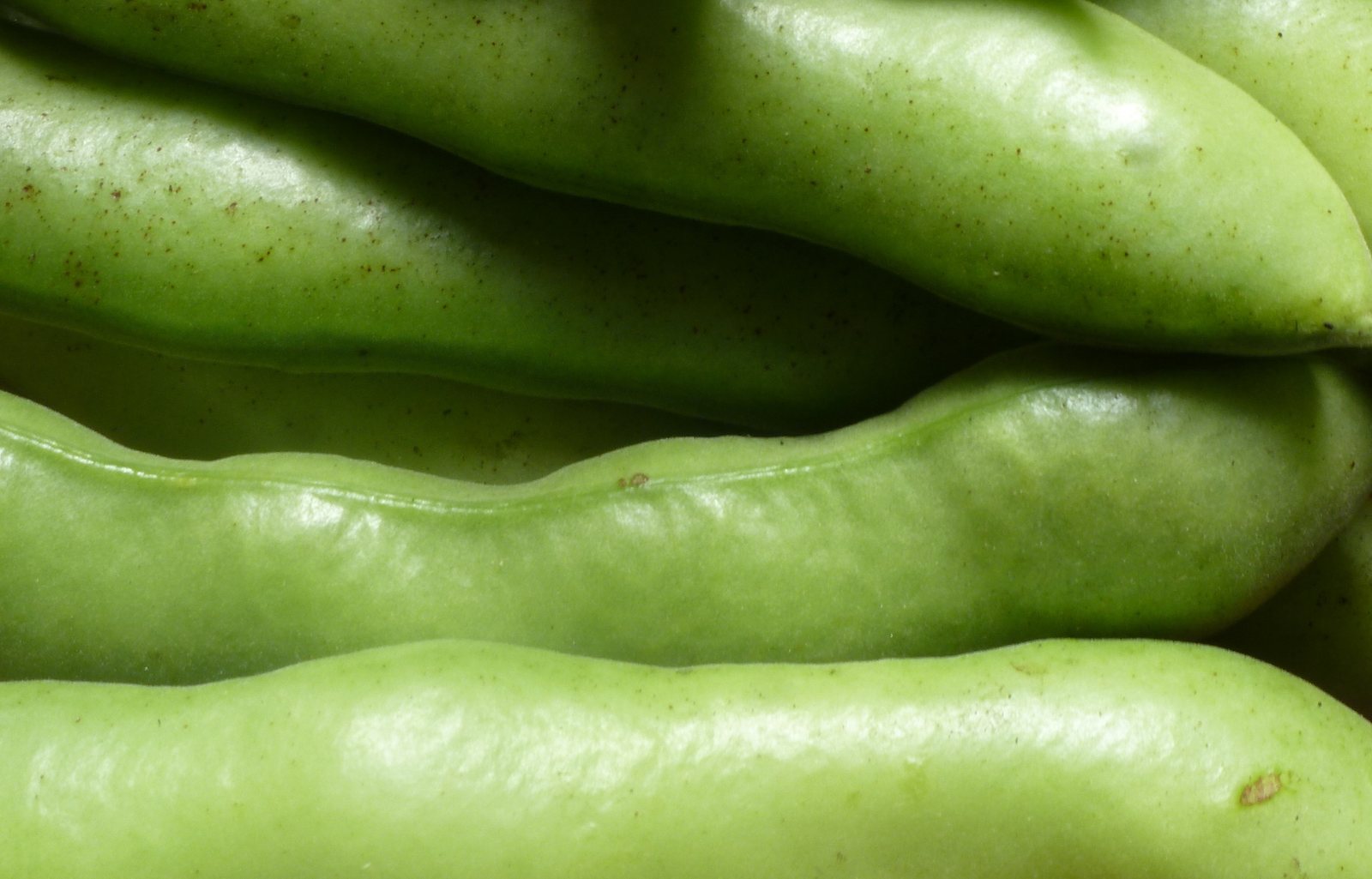
- Pick tender young pods or plump green pods with tender beans.
- HarvestJul–Aug
- For dry beans, let pods darken and dry, then shell and finish drying indoors.
- PruneJul–Aug
- After the final harvest, cut healthy stems at soil level and leave roots to decay.
- Sow directly about 2 in (5 cm) deep and 6-8 in (15-20 cm) apart, with roughly 18-24 in (45-60 cm) between rows.
- Work mature compost into the bed before sowing; avoid heavy nitrogen feeding, which encourages leafy growth rather than pods.
- Water at soil level during dry spells, giving priority to flowering plants and swelling pods.
- Support taller varieties with stakes and horizontal strings before stems lean or lodge.
- Apply a light organic mulch once the soil has warmed, keeping it clear of the stems.
- Protect young plants from severe frost; autumn sow only winter-suitable varieties in mild, well-drained sites.
Pruning. Once the lowest pods have set, pinch out the soft growing tips to discourage black bean aphids. After the final harvest, cut healthy plants at soil level and leave the roots to decay.
Harvest
Pick very young pods whole while they are tender and before the seeds swell noticeably. For shelled beans, pick plump, green pods when the seeds are well formed but still tender; frequent picking keeps quality high. For dry beans, let pods darken and dry, then shell and finish drying the seeds indoors before storage.
Through the year
- Late winter
- In mild climates, sow as soon as the soil is workable and not waterlogged; use protection if severe frost is forecast.
- Early spring
- In cold-winter regions, direct-sow once the ground can be worked, rather than waiting for summer warmth.
- Spring
- Thin crowded seedlings, install supports and check shoot tips for aphids.
- Late spring
- Keep flowering plants watered and pinch out soft tips once the lowest pods have set.
- Early summer
- Harvest pods regularly before beans become tough; remove badly diseased plants.
- Autumn
- In mild-winter regions, including many Australian growing areas, sow suitable varieties for a cool-season crop; elsewhere clear finished plants and compost healthy tops.
In the garden
- Plant in orderly double rows in a kitchen garden, with low lettuce or radishes along the edges.
- Use the upright grey-green foliage as a temporary backdrop to lower vegetables in a potager.
- Grow compact varieties in large containers beside a sunny patio or kitchen door.
- Use as an early cool-season crop in beds that will later hold warm-season vegetables.
Garden styles it suits: Potager (kitchen garden), Cottage garden, Edible landscape, Homestead, Farmhouse and Family-friendly.
Plant it with: Lettuce, Radish, Spinach, Calendula, Sweet alyssum and Dill.
Wildlife: Flowers provide nectar and pollen for bumblebees and other bees. Aphid colonies attract ladybirds, lacewings and hoverfly larvae; mice may dig up newly sown seeds.
Problems to watch for
- Black bean aphids cluster on soft tips: pinch out tips after the first pods set, wash off small colonies and encourage ladybirds and hoverflies.
- Chocolate spot causes reddish-brown leaf spots and stem damage, especially in damp, crowded crops: improve spacing, avoid wetting foliage and remove badly affected material.
- Broad bean rust produces orange-brown pustules on leaves: provide airflow, remove infected debris and rotate crops.
- Poor pod set often follows hot weather or drought: sow early enough to flower in cool conditions and water consistently during flowering.
Safety
The seeds and very young pods are human foods, usually eaten cooked. In people with glucose-6-phosphate dehydrogenase (G6PD) deficiency, eating broad beans can cause favism, a potentially life-threatening breakdown of red blood cells; cooking does not reliably prevent this. Broad beans can also cause food allergy. Species-specific toxicity information for cats, dogs and horses is limited, so do not offer raw seeds, pods or foliage as pet food;
Easily confused with
Garden pea (Pisum sativum)
Peas have tendrils and usually climb; broad beans have thick, upright stems, broad leaflets and no tendrils.
Common bean (Phaseolus vulgaris)
Common beans have leaves divided into three pointed leaflets and need warmer growing conditions; broad beans have several oval leaflets arranged along each leaf.
Runner bean (Phaseolus coccineus)
Runner beans usually twine up supports, have three-part leaves and often red flowers; broad beans stand upright and usually have white flowers marked with dark blotches.
The name
The species name faba is Latin for bean, while broad bean refers to the broad, flattened seeds.
Propagation. Grow from seed, usually sown directly into the final position in cool weather. In wet soils or where mice are troublesome, start seeds in deep modules and transplant while young; saved seed may cross with nearby varieties.
Checked against open data
- Accepted botanical name
- Vicia faba
- In the US and Canada
- Introduced in the lower 48 states.
- Measured
- Soil pH 7.5 to 8. Average height 78 cm.
Sources: GBIF (CC BY 4.0), USDA PLANTS and Trefle (CC BY 4.0). The care and design notes are LandscapeGPT's own.
See it in your own yard.
Upload a photo of your yard and see it redesigned with plants that suit your climate, each checked against your zone.