Garden pea
Pisum sativum. Family Fabaceae. Annual.
Also called Pea, English pea, Shelling pea, Snow pea.
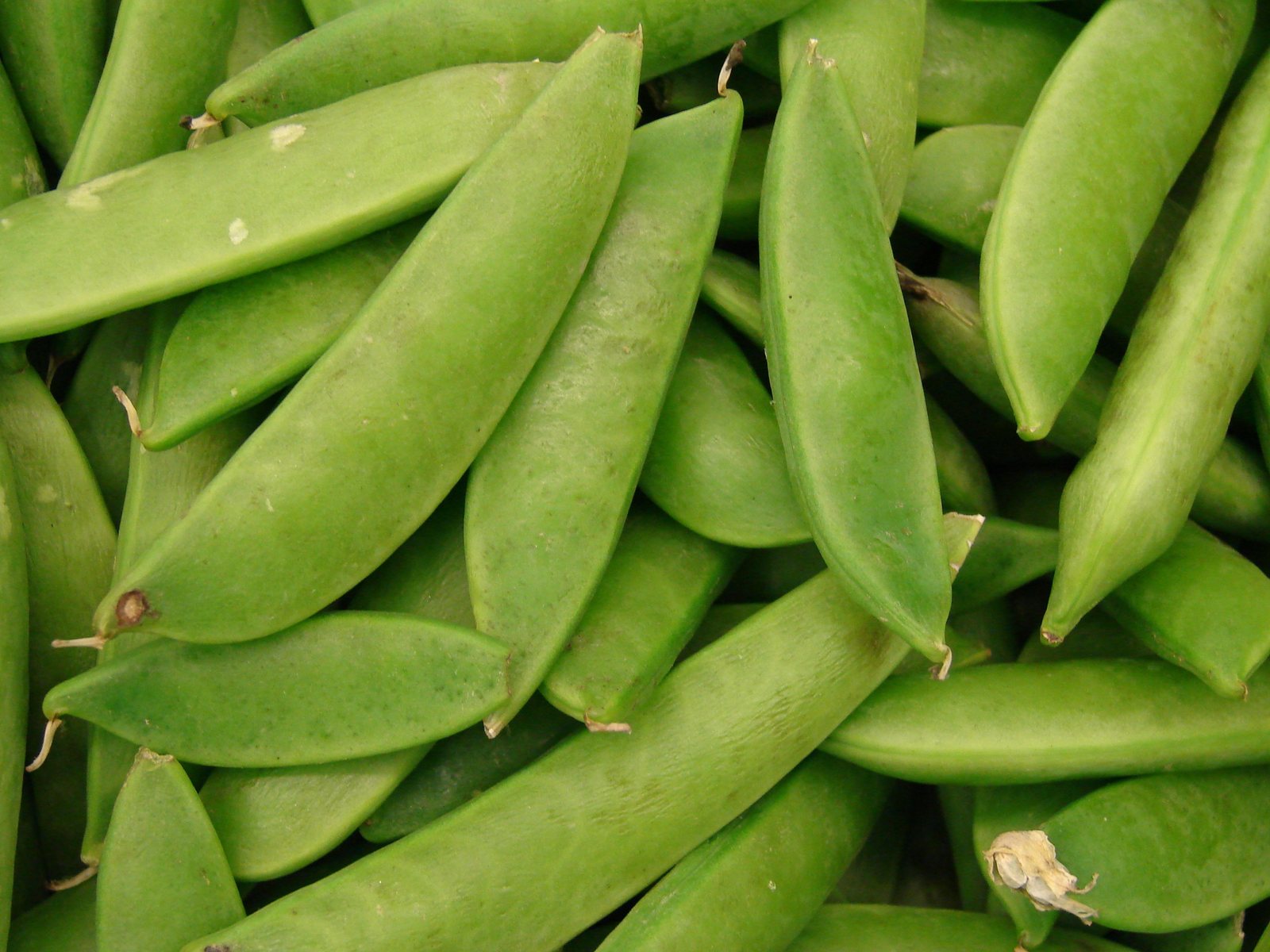
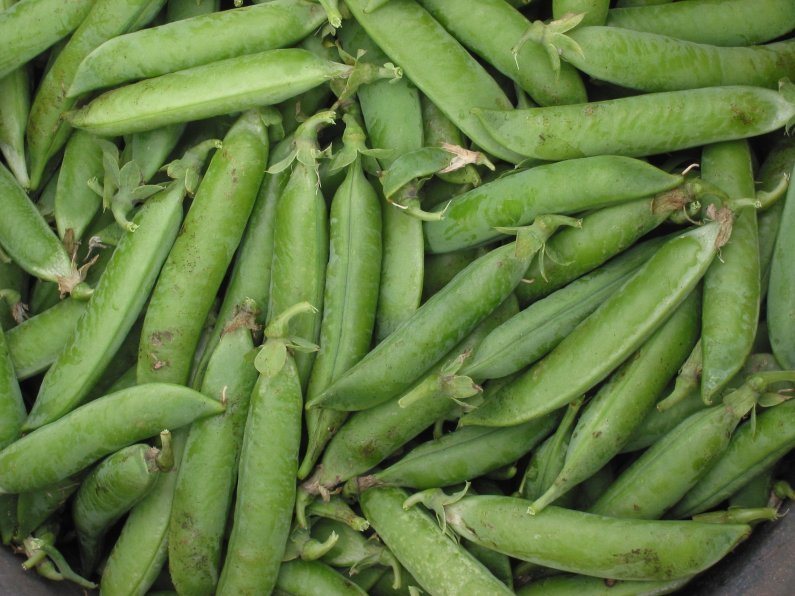
Garden pea is a cool-season climbing vegetable grown as an annual for its sweet seeds, edible shoots or, in snow and sugar snap varieties, whole pods. Dwarf varieties suit containers and short supports, while tall varieties make productive screens on netting or trellises.
At a glance
- Sun
- Full sun, ideally at least 6 hours daily; light afternoon shade can help in warmer districts.
- Water
- Keep soil evenly moist, especially during flowering and pod filling; avoid waterlogged soil.
- Soil
- Fertile, well-drained soil with compost incorporated before planting; ideally pH 6.0-7.5.
- Height
- 1.5-7 ft (0.45-2.1 m), depending on variety and support
- Spread
- 0.5-1 ft (0.15-0.3 m) per plant when supported
- Flowers
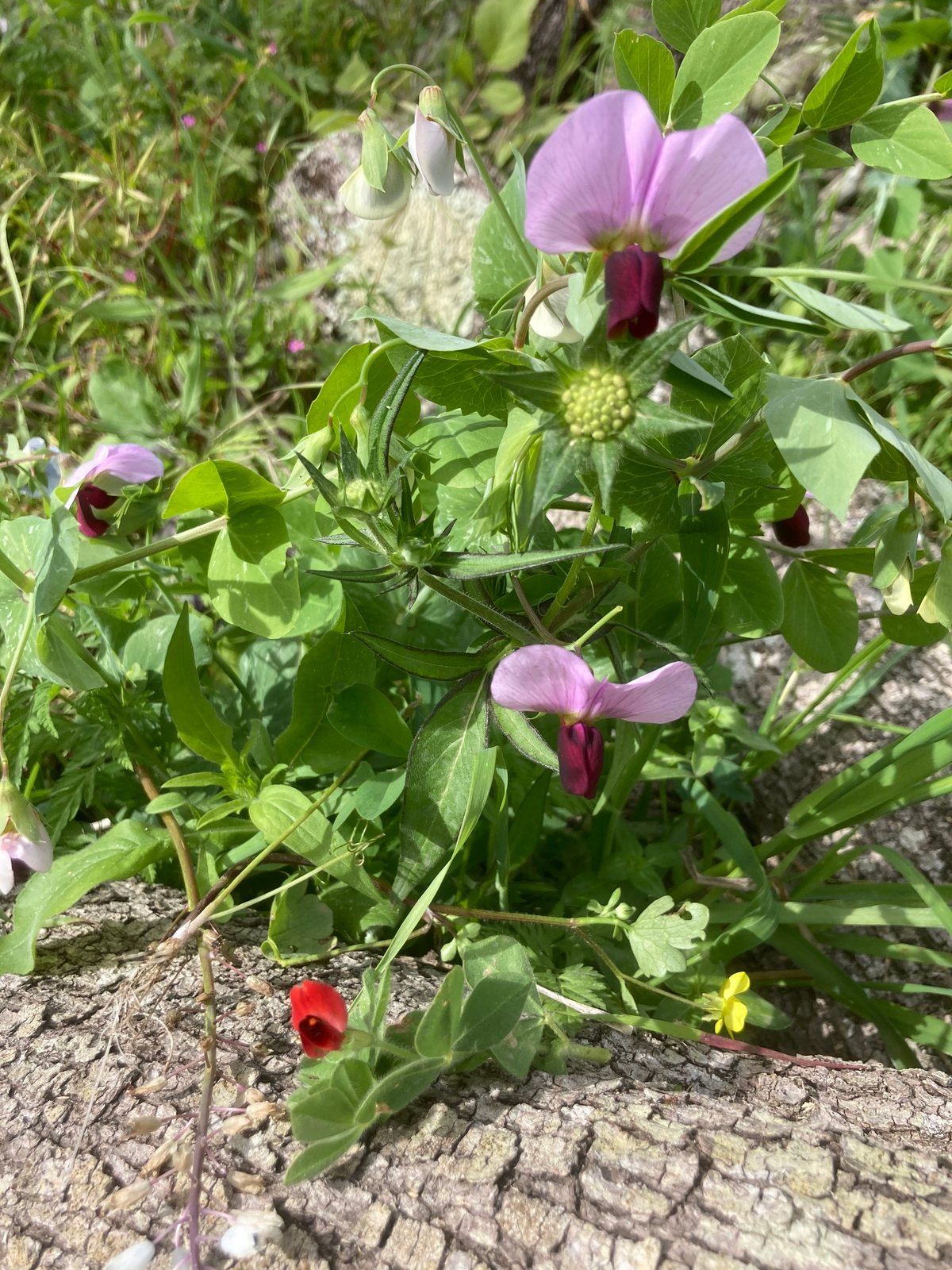
- White, occasionally pink or purple, in spring to early summer; timing varies with sowing date and climate.
- Foliage
- Soft green to blue-green compound leaves, with broad stipules at the stem joints and curling tendrils that grip supports.
- Growth
- Fast in cool weather; many varieties begin cropping about 60-90 days after sowing.
- Care needed
- Medium
The year at a glance
- Low allergen
- Edible
| J | F | M | A | M | J | J | A | S | O | N | D | |
|---|---|---|---|---|---|---|---|---|---|---|---|---|
| Flowers | ||||||||||||
| Fruit | ||||||||||||
| Plant |
Northern hemisphere months. In Australia, shift them by six.
- Difficulty
- Moderate
- Toughness
- Needs looking after
Will it suit your garden?
Pick your zone, country, light and whether you have pets.
Full sun is 6 or more hours of direct sun a day, part shade 3 to 6 hours, shade under 3.
How it grows
Planting day
0.5 ft (0.15 m)
After 1 year
4 ft (1.3 m)
full size
Full size in one season.
From a typical nursery size, at an average rate for this kind of plant. A rule of thumb, not a forecast.
Good to know
- Cats and dogs
- Safe
- Growth rate
- Fast
Care
Jobs through the year
- WaterMar–Apr, every 7 days
- Water established rows if soil is drying; keep newly sown seed moist but never saturated.
- WaterMay–Jul, every 4 days
- During dry weather, water established rows deeply to maintain moisture through flowering and pod filling.
- MulchApr–May
- Add a light compost mulch once seedlings establish, keeping stems clear.
- ProtectMar–May
- Protect seeds and seedlings from birds with taut secure mesh, and control slugs.
- HarvestMay–Jul
- Pick tender pods: snow peas flat, snap peas plump and crisp, shelling peas full but not starchy.
- Sow directly into workable, well-drained soil about 1-2 in (2.5-5 cm) deep; avoid cold, saturated ground.
- Install pea sticks, netting or a trellis at sowing, including short supports for dwarf varieties.
- Water at soil level during dry spells, giving particular attention to flowering and developing pods.
- Apply a light compost mulch once seedlings are established, keeping it clear of their stems.
- Avoid heavy nitrogen feeding, which encourages leafy growth at the expense of pods.
- Pick pods frequently: snow peas while flat, snap peas while plump and tender, and shelling peas before seeds become starchy.
Pruning. Routine pruning is unnecessary; guide young stems onto their supports rather than cutting them back. After the final harvest, cut healthy plants at soil level and compost the tops, leaving roots to decay in place.
Harvest
Harvest pea pods roughly 60–90 days after sowing, depending on the variety and weather, while pods are green and tender. Pick shelling peas when the pods feel full and the peas are rounded, snow peas while pods are flat with barely developed seeds, and snap peas when pods are plump but still crisp. Check every day or two, and hold the vine while picking or snip the stalk with scissors to avoid damaging the plant.
Through the year
- Late winter
- Prepare a sunny bed and supports. In mild districts, sow only when soil is workable and not waterlogged.
- Early spring
- Direct-sow the main crop; protect emerging seedlings from birds and slugs.
- Mid-spring
- Guide tendrils onto supports and make a second sowing if enough cool growing weather remains.
- Late spring
- Check flowering plants for aphids and keep the root zone evenly moist.
- Early summer
- Harvest every few days and remove finished crops as heat reduces flowering and pod quality.
- Autumn
- In mild-winter districts, including many parts of Australia, sow for a cool-season crop where severe frost is unlikely.
In the garden
- Train tall varieties over narrow trellises in a kitchen garden to add height without using much ground space.
- Grow dwarf varieties in deep containers beside a sunny patio, with short twiggy supports.
- Use orderly rows and rustic pea sticks in a potager alongside lettuce, carrots and radishes.
- Grow on an accessible trellis near a path so pods are easy to see and pick.
Garden styles it suits: Potager (kitchen garden), Cottage garden, Edible landscape, Homestead, Family-friendly and Small-space.
Plant it with: Lettuce, Carrot, Radish, Spinach, Calendula and Sweet alyssum.
Wildlife: Flowers are largely self-pollinating but may be visited by bees. Birds and small mammals may eat newly sown seeds or seedlings; secure any protective mesh so wildlife cannot become entangled.
Problems to watch for
- Slugs and snails eat seedlings: check after dark, remove hiding places nearby and use locally approved iron phosphate bait if needed.
- Aphids cluster on tender tips and may transmit viruses: wash small colonies off with water and encourage ladybirds and other predators; remove badly distorted, virus-suspect plants.
- Powdery mildew coats leaves, especially on late crops: choose resistant varieties, allow airflow and avoid letting roots dry out.
- Seed rot and root rot cause poor emergence or collapsing plants: sow into well-drained soil, avoid overwatering and rotate crops away from previous pea and bean beds.
Safety
Garden pea is not known to be toxic to people, cats, dogs or horses. Its seeds and tender shoots are edible, and snow and snap varieties also have edible pods; mature dried peas should be cooked before eating. Do not confuse garden pea with sweet pea, whose seeds are toxic.
Easily confused with
Sweet pea (Lathyrus odoratus)
Usually has strongly scented, colourful flowers, winged stems and just one pair of leaflets per leaf. Its pods and seeds are not edible and can be toxic.
Everlasting pea (Lathyrus latifolius)
A perennial with conspicuously winged stems, paired broad leaflets and clusters of usually pink flowers. It returns from a persistent rootstock, unlike annual garden pea, and is not an edible substitute.
The name
Pisum is the Latin name for pea, and sativum means cultivated or sown.
Propagation. Grow from seed, preferably sown directly because roots resent disturbance. For an early start, sow in deep modules and transplant while young without breaking the root ball; save fully mature, dry seeds from healthy open-pollinated plants.
Checked against open data
- Accepted botanical name
- Lathyrus oleraceus Pisum sativum is an older name for Lathyrus oleraceus.
- Native range
- Afghanistan, Albania, Algeria, Bulgaria, Corse, Cyprus, Egypt, France, Greece, Iran, Iraq and Italy.
- Measured
- Soil pH 6.5 to 7. Average height 50 cm.
Sources: GBIF (CC BY 4.0) and Trefle (CC BY 4.0). The care and design notes are LandscapeGPT's own.
See it in your own yard.
Upload a photo of your yard and see it redesigned with plants that suit your climate, each checked against your zone.