Giant wild rye
Leymus condensatus. Family Poaceae. Ornamental grass.
Also called Giant ryegrass, Elymus condensatus.
Giant wild rye is a large perennial grass native to California and Baja California, with broad, arching leaves and tall, upright flower spikes. Gardeners grow it for bold foliage, screening and structure in dry gardens; allow plenty of room for its substantial clumps and slowly spreading rhizomes.
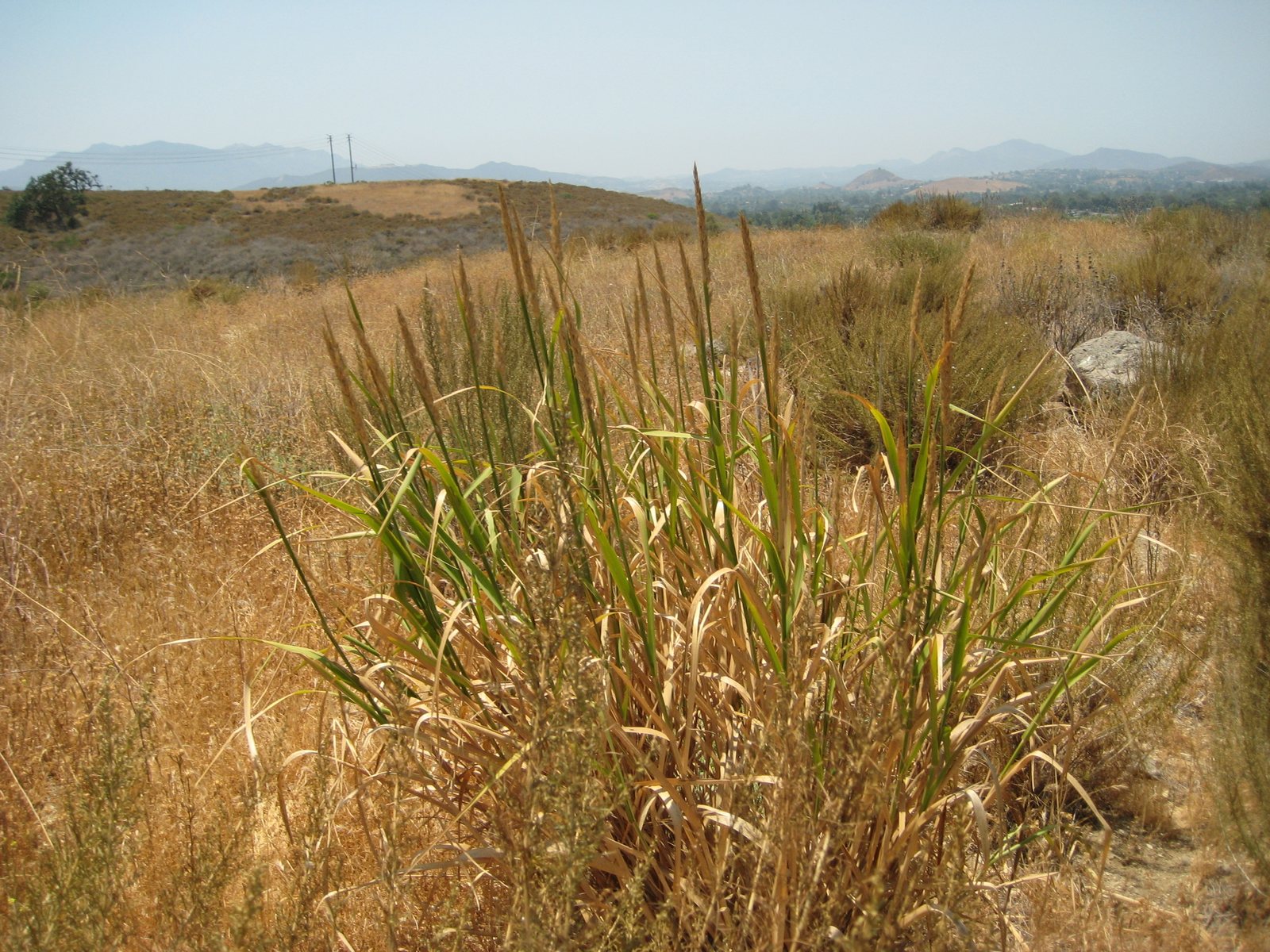
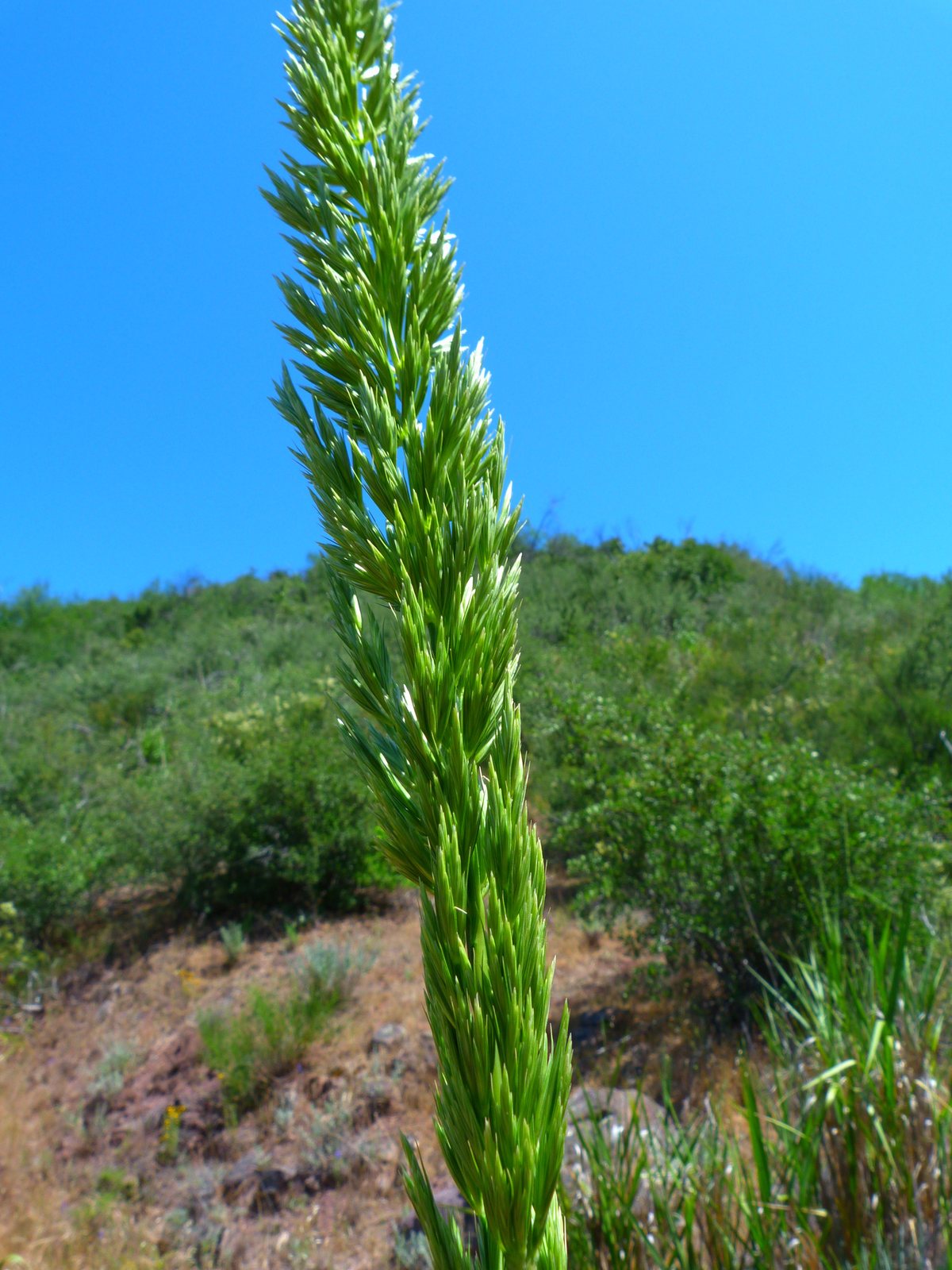
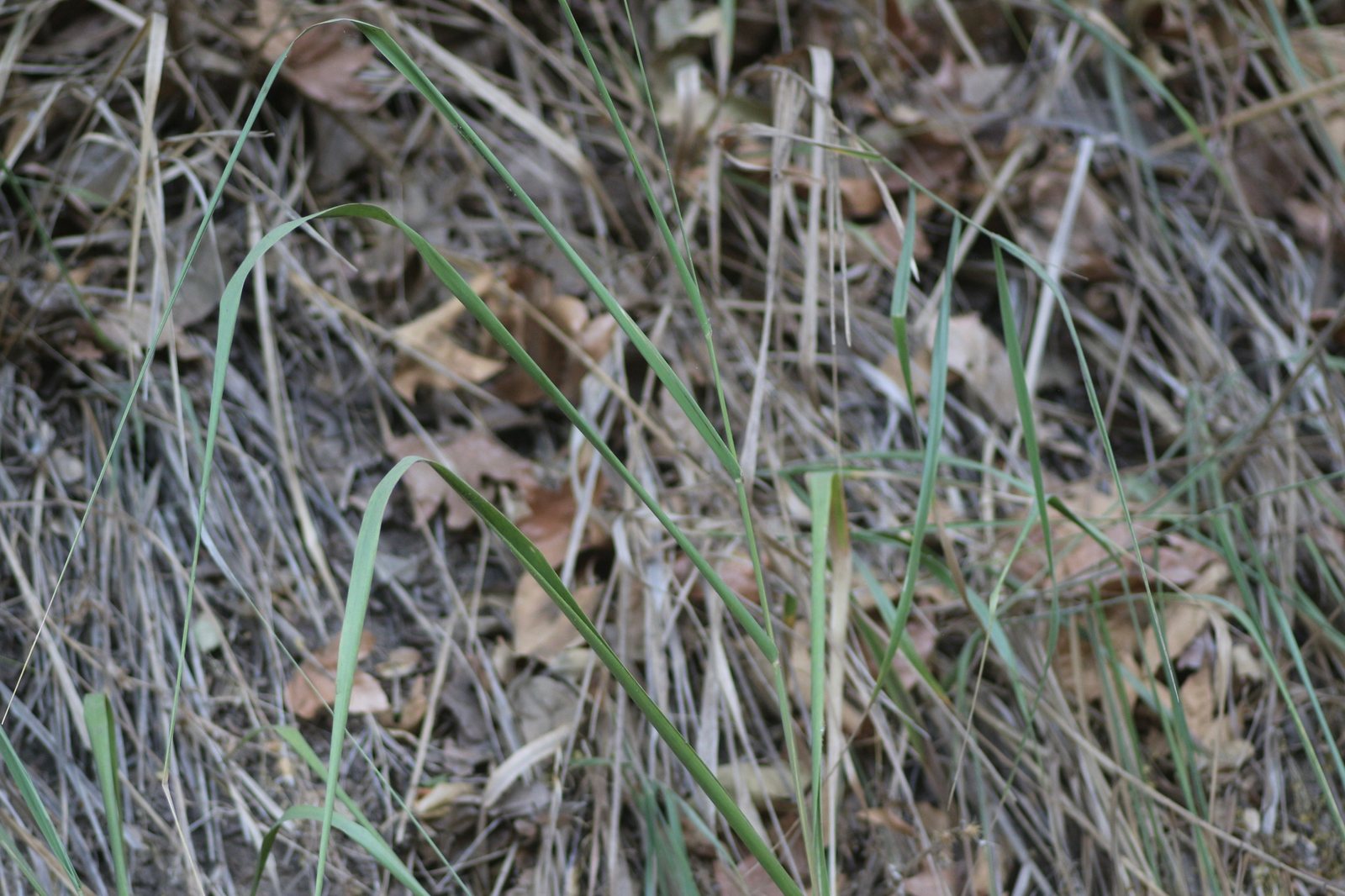
At a glance
- Sun
- Full sun to partial shade; some afternoon shade is helpful in hot inland gardens.
- Water
- Low once established. Water deeply during establishment, then occasionally during prolonged dry weather; regular irrigation encourages larger, looser growth.
- Soil
- Well-drained sandy, loamy or clay soil. Tolerates poor soil, but avoid persistently waterlogged ground.
- Height
- 5-8 ft (1.5-2.4 m), including flower stems
- Spread
- 3-6 ft (0.9-1.8 m), gradually widening
- Flowers
- Late spring to summer; upright greenish flower spikes mature to pale straw-brown.
- Foliage
- Broad, coarse, arching leaves, usually grey-green to blue-green. Usually evergreen in mild climates, but foliage can brown in cold weather or prolonged drought.
- Growth
- Moderate to fast when moisture is available.
- Care needed
- Low
The year at a glance
- Deer resistant
- Drought tolerant
- Heat tolerant
- Wildlife
| J | F | M | A | M | J | J | A | S | O | N | D | |
|---|---|---|---|---|---|---|---|---|---|---|---|---|
| Flowers | ||||||||||||
| Fruit | ||||||||||||
| Plant |
Northern hemisphere months. In Australia, shift them by six.
- Difficulty
- Hard
- Toughness
- Needs looking after
Will it suit your garden?
Pick your zone, country, light and whether you have pets.
Full sun is 6 or more hours of direct sun a day, part shade 3 to 6 hours, shade under 3.
How it grows
Planting day
1.1 ft (0.35 m)
After 1 year
4 ft (1.2 m)
After 2 years
6 ft (2 m)
full size
About 2 years to full size.
From a typical nursery size, at an average rate for this kind of plant. A rule of thumb, not a forecast.
Good to know
- Cats and dogs
- Safe
- Native to
- the US and Canada
- In the garden
- Spreads vigorously: plan to contain it.
- Growth rate
- Fast
Care
Jobs through the year
- WaterApr–May, Sep, every 28 days
- Water established clumps only if deeply dry; young plants need more frequent watering.
- WaterJun–Aug, every 21 days
- Give established clumps occasional deep water during prolonged drought; excess irrigation encourages flopping.
- MulchApr
- Apply a light gravel or organic mulch, keeping the crown clear.
- PruneMar–Apr
- Wear gloves to remove dead leaves and old stems; cut back hard only when renovation is needed.
- DivideApr
- Divide only overcrowded clumps as growth resumes, retaining vigorous rooted sections.
- PruneAug–Sep
- Dig out escaping shoots with their attached rhizomes to contain spread.
- ProtectJan–Mar, Oct–Dec
- Not reliably hardy in zones 6–7; overwinter container plants in a cool frost-free shelter.
- Water deeply through the first dry season, allowing the soil surface to dry between waterings.
- Once established, irrigate sparingly; too much water can make the clump oversized and floppy.
- Avoid routine feeding; rich soil and heavy fertilising encourage soft growth.
- Apply a light gravel or organic mulch, keeping it away from the crown.
- Remove unwanted rhizomes at the edge, or divide an overgrown clump during cool, moist weather.
Pruning. Remove dead leaves and spent flower stems in late winter or early spring, wearing gloves against the rough leaf edges. If an old clump needs renovation, cut it back to 6-12 in (15-30 cm) as fresh growth begins rather than shearing it every year.
Through the year
- Autumn
- Plant in mild-winter regions while the soil is still warm and seasonal rain is approaching.
- Winter
- Check drainage and keep the crown clear of wet, matted debris.
- Late winter
- Remove dead foliage and old flower stems before they become tangled with new leaves.
- Spring
- Plant where winters are colder, or divide established clumps as active growth resumes.
- Summer
- Water young plants deeply during dry spells; give established plants only occasional water if needed.
- Late summer
- Check the clump's boundaries and remove shoots spreading into neighbouring plants.
In the garden
- Use as a tall backdrop behind California buckwheat, sages and other lower dry-garden plants.
- Plant in broad groups on spacious slopes for foliage cover and a naturalistic appearance.
- Use individual clumps as architectural accents in gravel gardens, allowing room for arching leaves.
- Create an informal screen along a boundary away from narrow paths and seating.
Garden styles it suits: California native, Coastal, Desert / xeriscape, Architectural minimal, Dry gravel garden and Wildlife garden.
Plant it with: California sagebrush, California buckwheat, White sage, Deergrass and Toyon.
Wildlife: Dense clumps provide cover for small birds and other wildlife, and seed heads can provide food for seed-eating birds. Like most grasses, it is wind-pollinated rather than a nectar source for bees.
Problems to watch for
- Crown or root rot in saturated soil: improve drainage and reduce watering; replace badly rotted plants.
- Flopping growth in rich soil or heavy shade: reduce irrigation and feeding, and move to a brighter position if necessary.
- Unwanted spread from rhizomes: cut back the perimeter and dig out escaping shoots with their attached rhizomes.
- Brown, untidy foliage after drought or cold: remove dead leaves when growth resumes; avoid watering heavily simply to force green foliage.
Safety
Not known to be toxic to people, cats, dogs or horses; no part is recognised as poisonous. Rough leaf edges can scratch skin, and the foliage is not intended for human consumption.
Where it spreads. Rhizomes can spread beyond the original clump in irrigated gardens, including within its native California range. It is not generally regarded as a major invasive garden grass, but allow space and remove unwanted shoots.
Easily confused with
Basin wildrye (Leymus cinereus)
Also forms tall clumps with upright flower spikes, but usually has a more upright, fountain-like habit and narrower leaves; giant wild rye has conspicuously broad, coarse, arching foliage.
Lyme grass (Leymus arenarius)
Usually shorter, with strongly blue-grey leaves and long-running rhizomes that rapidly form colonies, rather than the large, more concentrated clumps of giant wild rye.
The name
The common name refers to its large size and rye-like flower spikes, while condensatus means crowded or condensed, referring to the dense spikes.
Propagation. Divide established clumps in autumn in mild climates or in spring where winters are colder. Seed can also be sown in autumn or spring, but seedlings will not reliably retain the foliage colour of named selections.
Checked against open data
- Accepted botanical name
- Leymus condensatus
- In the US and Canada
- Native in Canada and the lower 48 states.
- Native range
- California, Mexico Northeast and Mexico Northwest.
- Measured
- Soil pH 6.5 to 7.9.
Sources: GBIF (CC BY 4.0), USDA PLANTS and Trefle (CC BY 4.0). The care and design notes are LandscapeGPT's own.
See it in your own yard.
Upload a photo of your yard and see it redesigned with plants that suit your climate, each checked against your zone.