Golden shower tree
Cassia fistula. Family Fabaceae. Tree.
Also called Golden rain tree, Indian laburnum, Purging cassia.
Golden shower tree is a tropical tree grown for long, hanging clusters of yellow flowers, often displayed on nearly leafless branches. It makes a broad-canopied specimen in frost-free gardens but is not reliably hardy outdoors in the United Kingdom or Canada.
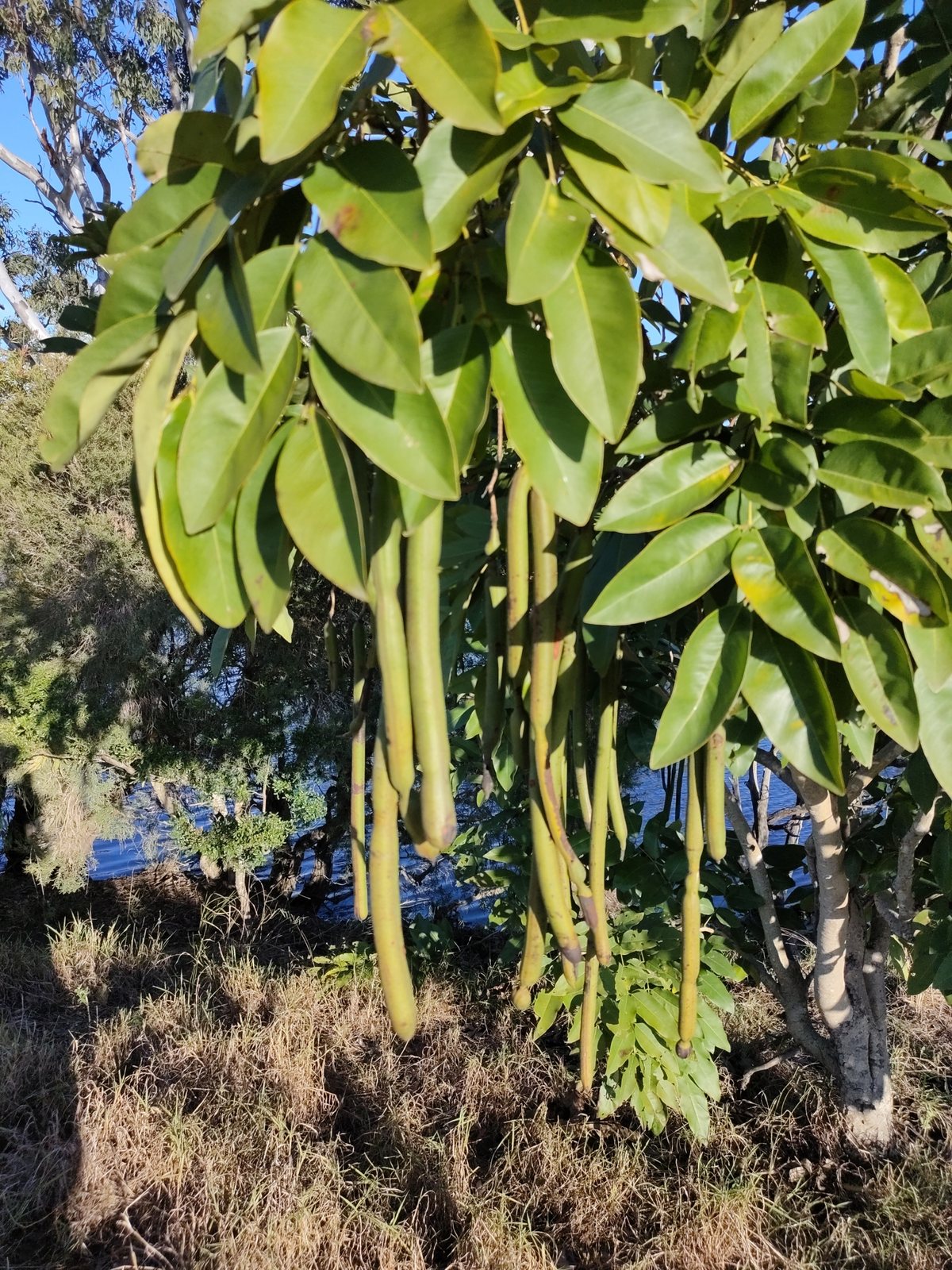
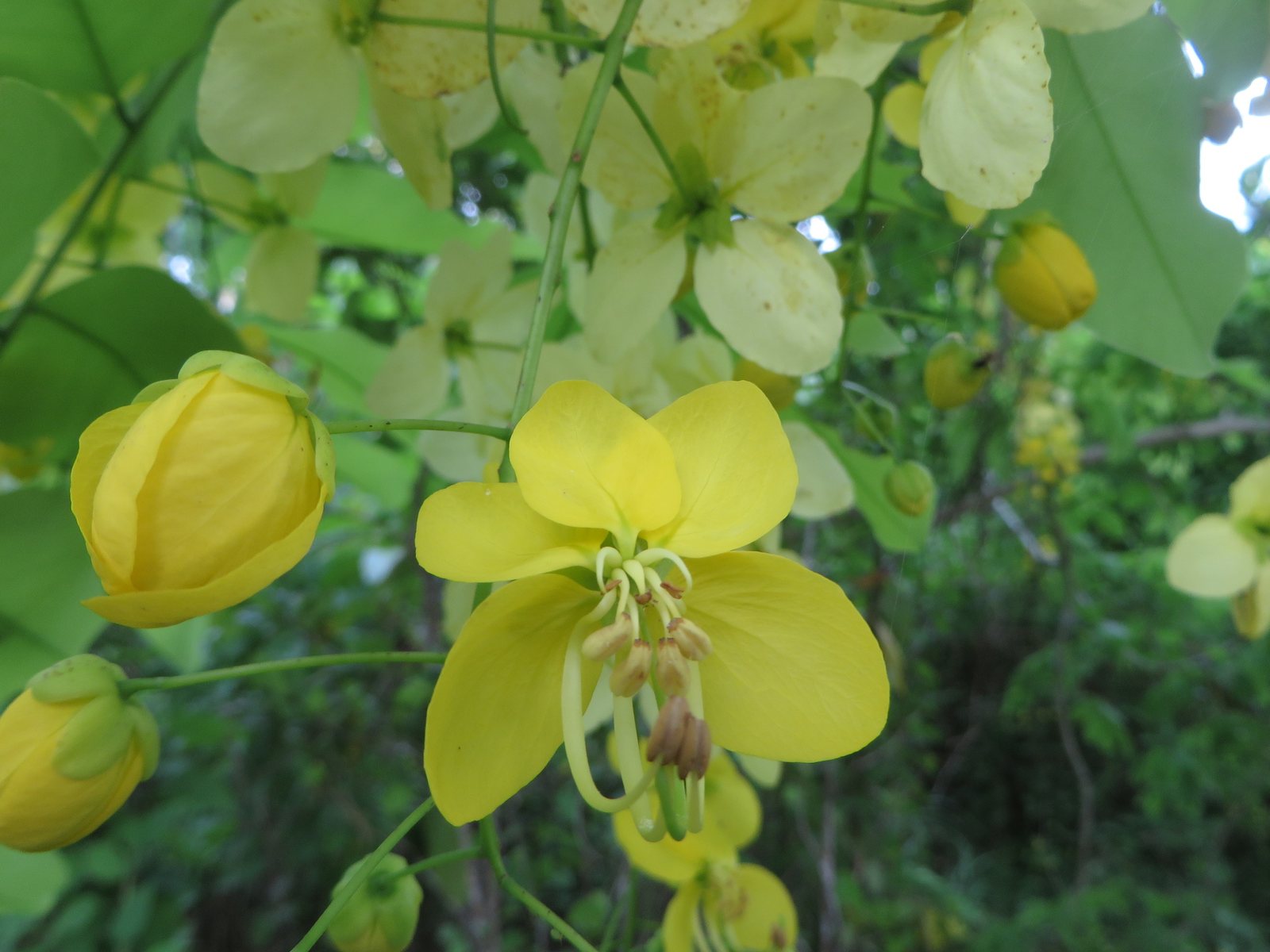
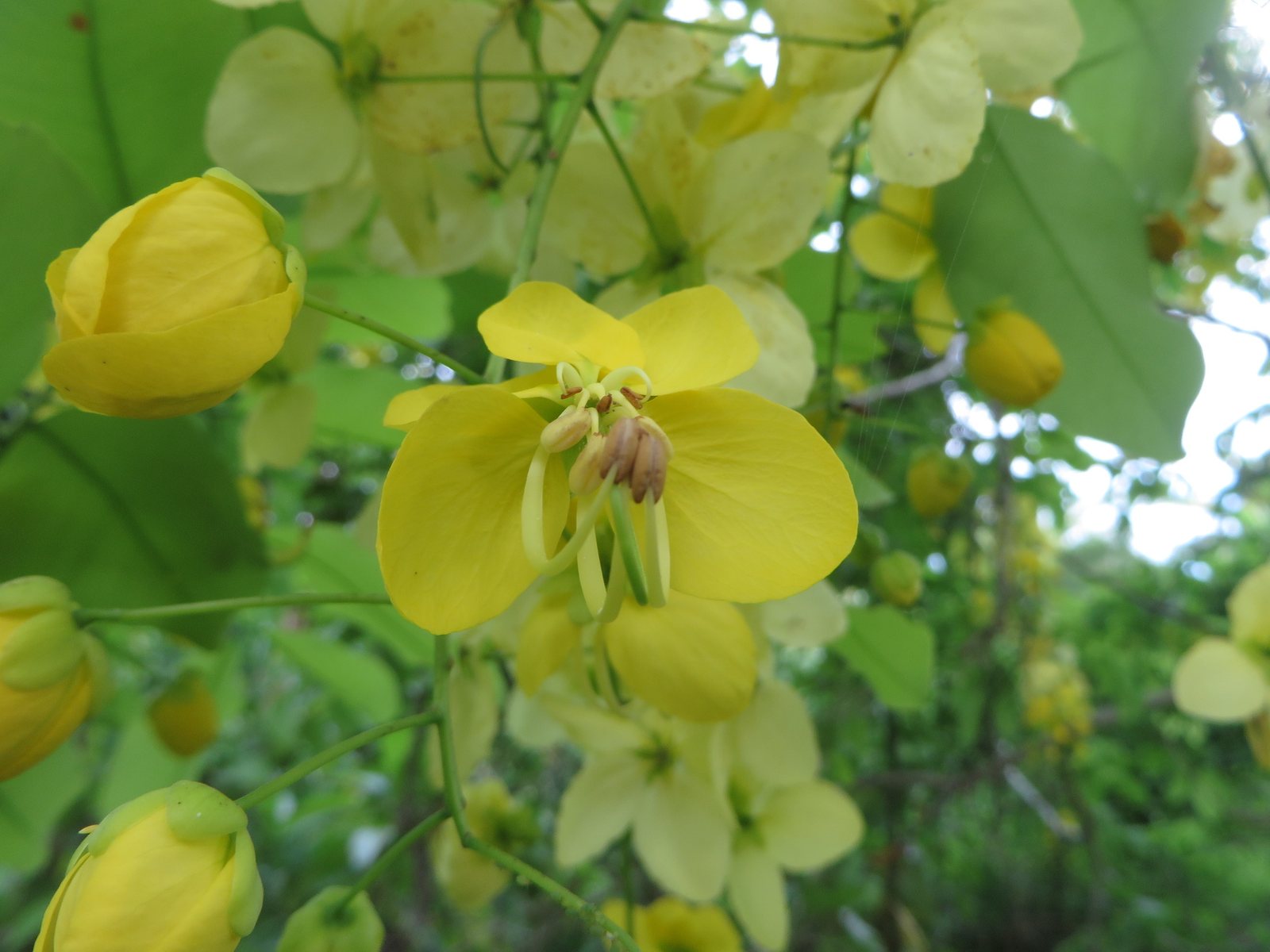
At a glance
- Sun
- Full sun; flowering is poorer in shade.
- Water
- Water regularly while establishing. Established trees tolerate seasonal drought but need occasional deep watering during prolonged dry weather.
- Soil
- Well-drained sandy, loamy or gravelly soil; tolerates a range of soil pH but dislikes waterlogged ground.
- Height
- 30-50 ft (9-15 m)
- Spread
- 20-40 ft (6-12 m)
- Flowers
- Long, hanging clusters of golden-yellow flowers, usually in late spring and summer; timing varies with local dry and wet seasons.
- Foliage
- Large, pinnate leaves with paired oval leaflets. Often briefly deciduous in dry weather or around flowering.
- Growth
- Moderate to fast in warm conditions.
- Care needed
- Medium
The year at a glance
- Pollinators
- Drought tolerant
- Heat tolerant
- Wildlife
- Low allergen
| J | F | M | A | M | J | J | A | S | O | N | D | |
|---|---|---|---|---|---|---|---|---|---|---|---|---|
| Flowers | ||||||||||||
| Fruit | ||||||||||||
| Plant |
Northern hemisphere months. In Australia, shift them by six.
- Difficulty
- Hard
- Toughness
- Needs looking after
Will it suit your garden?
Pick your zone, country, light and whether you have pets.
Full sun is 6 or more hours of direct sun a day, part shade 3 to 6 hours, shade under 3.
How it grows
Planting day
7 ft (2 m)
After 1 year
9 ft (2.6 m)
After 2 years
11 ft (3.3 m)
After 3 years
13 ft (3.9 m)
After 5 years
17 ft (5.1 m)
About 16 years to full size.
From a typical nursery size, at an average rate for this kind of plant. A rule of thumb, not a forecast.
Good to know
- Cats and dogs
- Mildly toxic: may upset a stomach
- Invasive in
- Australia
- Growth rate
- Fast
Care
Jobs through the year
- WaterMar–May, Sep–Oct, every 14 days
- Requires a large container and heated shelter here; water when the upper mix dries.
- WaterJun–Aug, every 7 days
- Water summer containers deeply as the upper mix dries; check young plants more often.
- WaterJan–Feb, Nov–Dec, every 21 days
- During slow winter growth, water sparingly after checking moisture; avoid saturated roots.
- FeedApr
- Feed lightly with balanced fertilizer only if growth is weak; avoid excess nitrogen.
- MulchMay
- Apply a light organic surface mulch, keeping the trunk clear.
- PruneAug
- After flowering, remove competing leaders and damaged or crossing branches; never top.
- ProtectJan–May, Sep–Dec
- Use a bright heated conservatory; outdoor overwintering is unsuitable and flowering is unreliable here.
- ProtectJun
- Move outdoors gradually only in reliably warm weather.
- ProtectSep–Nov
- If pods form, collect fallen ones and keep them away from children and pets.
- Plant in a warm, sheltered position with room for the mature canopy, away from paths where fallen pods would be a nuisance.
- Water deeply during establishment, allowing the surface soil to dry between waterings.
- Spread mulch over the root zone, keeping it clear of the trunk.
- Feed young trees lightly with a balanced fertiliser if growth is weak; avoid heavy nitrogen feeding.
- Stake only if needed for stability, and remove supports once the roots anchor the tree.
Pruning. Train young trees to a sound framework by removing competing leaders and poorly attached branches. Prune lightly after flowering to remove dead, damaged or crossing growth; avoid topping or severe canopy reduction.
Through the year
- Spring
- Plant once the soil is warm and any risk of frost has passed.
- Spring
- Refresh mulch and check young trees for weak or competing leaders.
- Summer
- Water newly planted trees deeply during dry spells.
- Late summer
- After flowering, remove dead or damaged branches and make any necessary light shaping cuts.
- Autumn
- Collect fallen pods where children, pets or livestock could reach them.
- Winter
- Protect young trees from unexpected cold and reduce watering when growth slows.
In the garden
- Use as a flowering specimen in a generous lawn or open tropical garden.
- Place beyond a terrace so the hanging flowers can be enjoyed without pods falling onto seating.
- Combine with palms and bold-leaved shrubs for contrasting canopy shapes.
- Plant against a dark evergreen background to make the yellow flowers stand out.
Garden styles it suits: Tropical, Modern tropical, Luxury resort, Caribbean, Florida subtropical and Balinese.
Plant it with: Frangipani, Hibiscus, Ixora, Bird of paradise and Lomandra.
Wildlife: Flowers attract bees, including large bees that collect pollen. The canopy provides shelter for birds.
Problems to watch for
- Cold injury: frost can damage foliage, branches or the whole tree; choose a frost-free site and protect young specimens during brief cold snaps.
- Poor flowering: provide full sun and avoid excessive nitrogen fertiliser; young trees may take several years to flower well.
- Root decline in wet soil: improve drainage before planting and avoid frequent watering of already moist ground.
- Scale insects and sooty mould: inspect stems and leaf undersides, control tending ants, and treat accessible infestations with a labelled horticultural oil.
Safety
Do not eat the pods, seeds or other parts. Pod pulp has a strong laxative action, and ingestion can cause abdominal pain, vomiting or diarrhoea. Keep pods away from children, cats, dogs and horses; species-specific poisoning information for pets and horses is limited, so treat ingestion as potentially harmful and seek medical or veterinary advice.
Where it spreads. Can escape cultivation in tropical Queensland, Australia, where it is reported as an environmental weed. Check local weed guidance before planting and remove unwanted seedlings.
Easily confused with
Golden rain tree (Koelreuteria paniculata)
Has upright, branched flower clusters followed by papery, inflated capsules, rather than hanging flower chains and long cylindrical pods.
Common laburnum (Laburnum anagyroides)
A hardy temperate tree with three-part leaves and much shorter pods; golden shower tree has pinnate leaves with several pairs of leaflets.
Rainbow shower tree (Cassia × nealiae)
Usually bears flowers that mix yellow with pink, peach or cream, rather than the consistently golden-yellow flowers of Cassia fistula.
The name
The Latin epithet fistula means a pipe or tube, referring to the long cylindrical pods, while golden shower describes the hanging yellow flowers.
Propagation. Usually grown from seed. Carefully nick the hard seed coat away from the embryo, soak overnight, then sow in a warm, freely draining propagation mix; seedlings vary and may take several years to flower.
Checked against open data
- Accepted botanical name
- Cassia fistula
- In the US and Canada
- Introduced in the lower 48 states, Pacific Basin, Puerto Rico and US Virgin Islands.
- Native range
- India and Sri Lanka.
- Measured
- Average height 850 cm.
Sources: GBIF (CC BY 4.0), USDA PLANTS and Trefle (CC BY 4.0). The care and design notes are LandscapeGPT's own.
See it in your own yard.
Upload a photo of your yard and see it redesigned with plants that suit your climate, each checked against your zone.