Hemp-agrimony
Eupatorium cannabinum. Family Asteraceae. Perennial.
Also called Hemp agrimony, Holy rope.
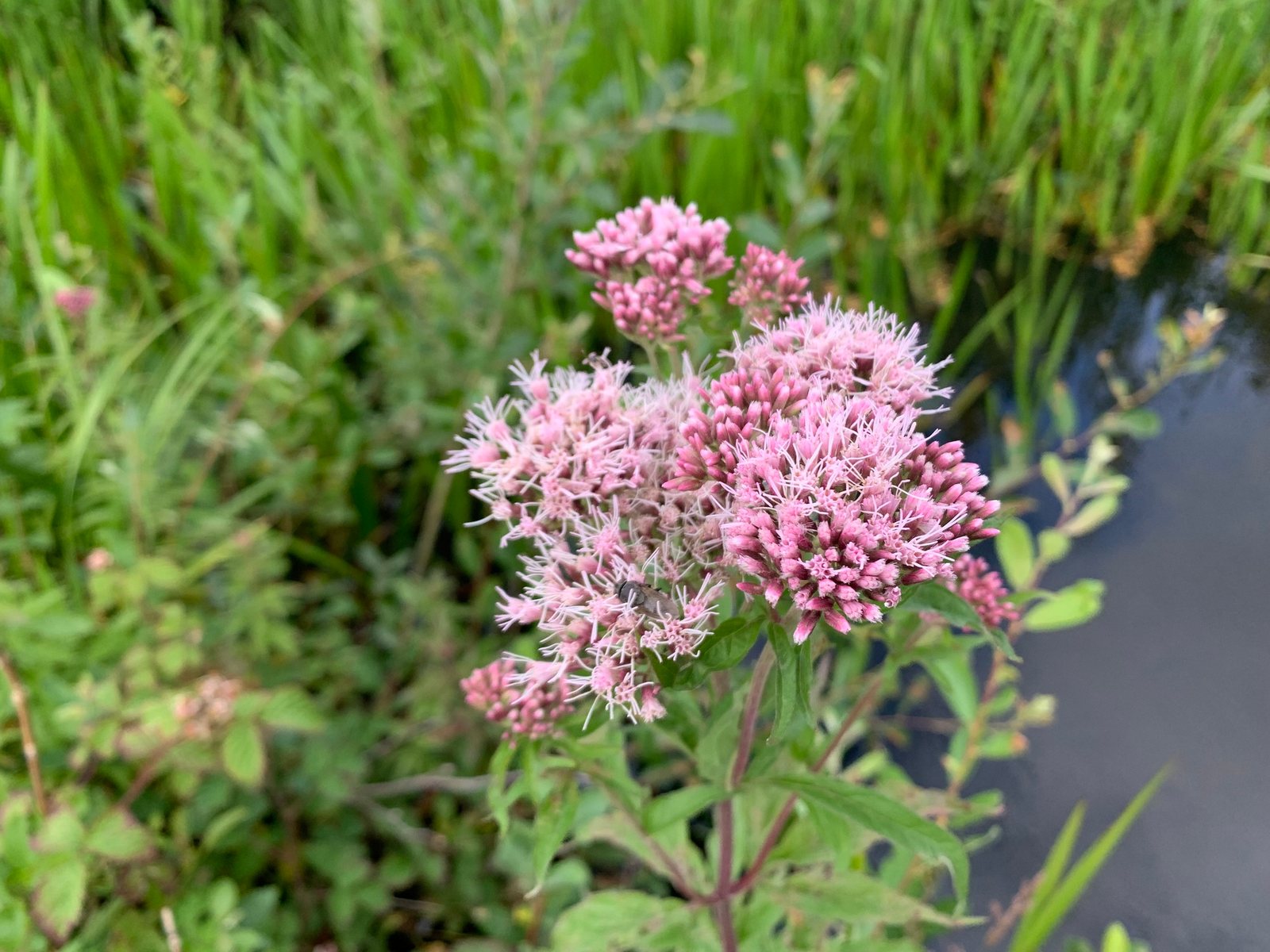
Hemp-agrimony is a tall, clump-forming perennial with clusters of dusky pink flowers that attract butterflies and other pollinators. Native to Europe, including Britain, and parts of Asia and North Africa, it suits damp, informal borders and pond margins but can seed freely.
At a glance
- Sun
- Full sun to partial shade; flowers best with several hours of direct sun.
- Water
- Keep the soil consistently moist, especially during establishment and dry summers. Tolerates periodically waterlogged ground but is not an aquatic plant.
- Soil
- Moist, fertile soil rich in organic matter; tolerates heavy clay and a broad range of soil pH.
- Height
- 4-6 ft (1.2-1.8 m)
- Spread
- 2-4 ft (0.6-1.2 m), widening gradually
- Flowers
- Mid-summer to early autumn; small dusky pink to mauve flowers in broad, fluffy clusters.
- Foliage
- Opposite, toothed green leaves, usually deeply divided into three to five narrow lobes or leaflets; dies back in winter.
- Growth
- Moderate to fast
- Care needed
- Low
The year at a glance
- Pollinators
- Wildlife
- Low allergen
| J | F | M | A | M | J | J | A | S | O | N | D | |
|---|---|---|---|---|---|---|---|---|---|---|---|---|
| Flowers | ||||||||||||
| Fruit | ||||||||||||
| Plant |
Northern hemisphere months. In Australia, shift them by six.
- Difficulty
- Easy
- Toughness
- Fairly tough
Will it suit your garden?
Pick your zone, country, light and whether you have pets.
Full sun is 6 or more hours of direct sun a day, part shade 3 to 6 hours, shade under 3.
How it grows
Planting day
1 ft (0.3 m)
After 1 year
2.6 ft (0.8 m)
After 2 years
4 ft (1.3 m)
After 3 years
5 ft (1.5 m)
full size
About 2 years to full size.
From a typical nursery size, at an average rate for this kind of plant. A rule of thumb, not a forecast.
Good to know
- Cats and dogs
- Toxic
- Native to
- the UK
- In the garden
- Spreads vigorously: plan to contain it.
- Growth rate
- Fast
Care
Jobs through the year
- WaterApr–May, Sep–Oct, every 7 days
- Water established plants when rainfall fails to keep soil moist; check young plants more often.
- WaterJun–Aug, every 4 days
- During dry weather, water deeply to maintain moisture; skip watering if soil remains moist.
- MulchMar–Apr
- Apply compost or leaf mould, keeping it clear of emerging shoots.
- PruneFeb–Mar
- Cut dead stems just above ground before fresh shoots emerge.
- DivideMar–Apr
- Divide crowded clumps as growth starts.
- ProtectMay–Jun
- Install discreet supports before tall stems lean in exposed positions.
- ProtectMar–May, every 7 days
- Check emerging shoots for slug and snail damage and control pests as needed.
- DeadheadAug–Oct, every 7 days
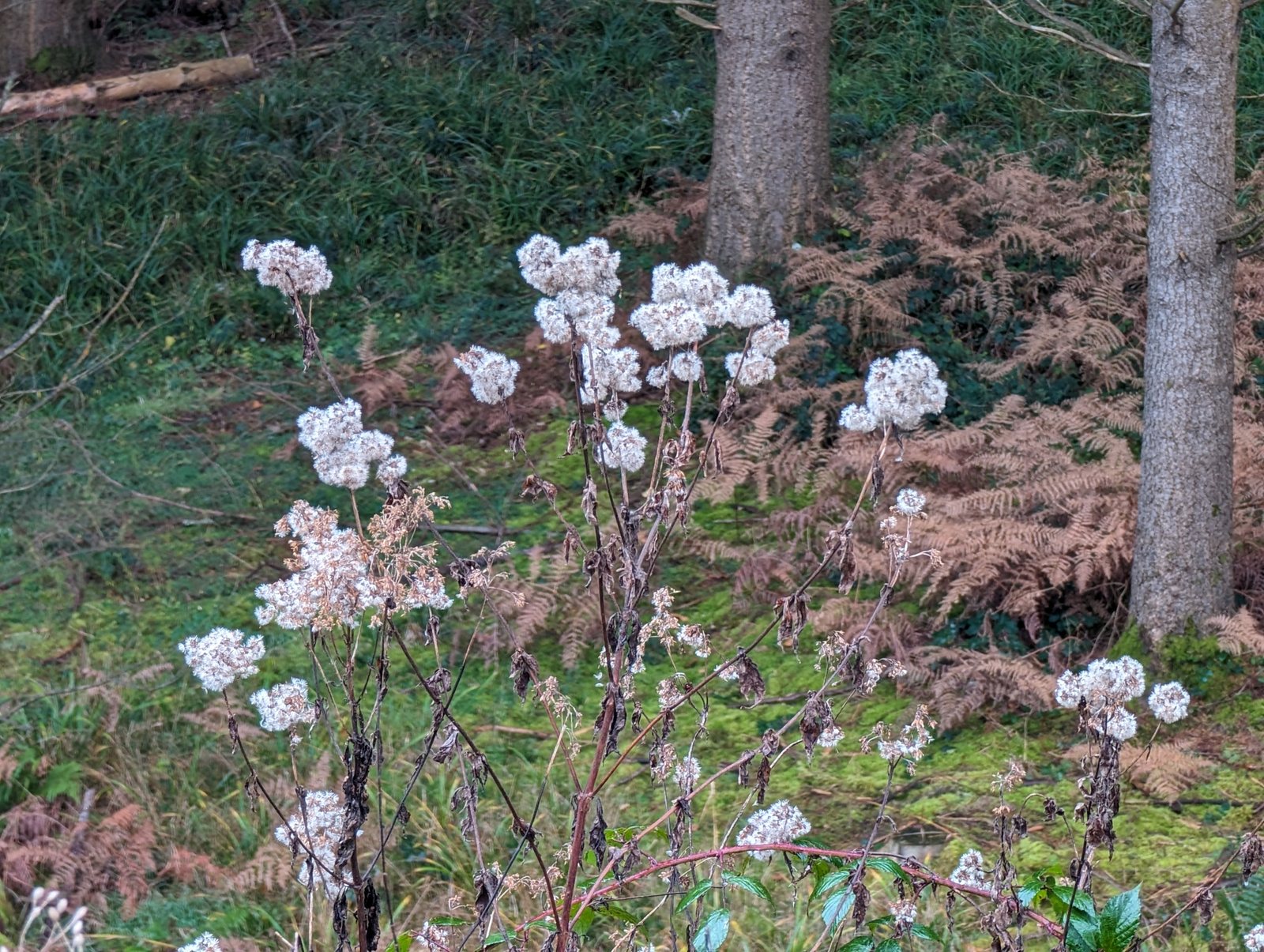
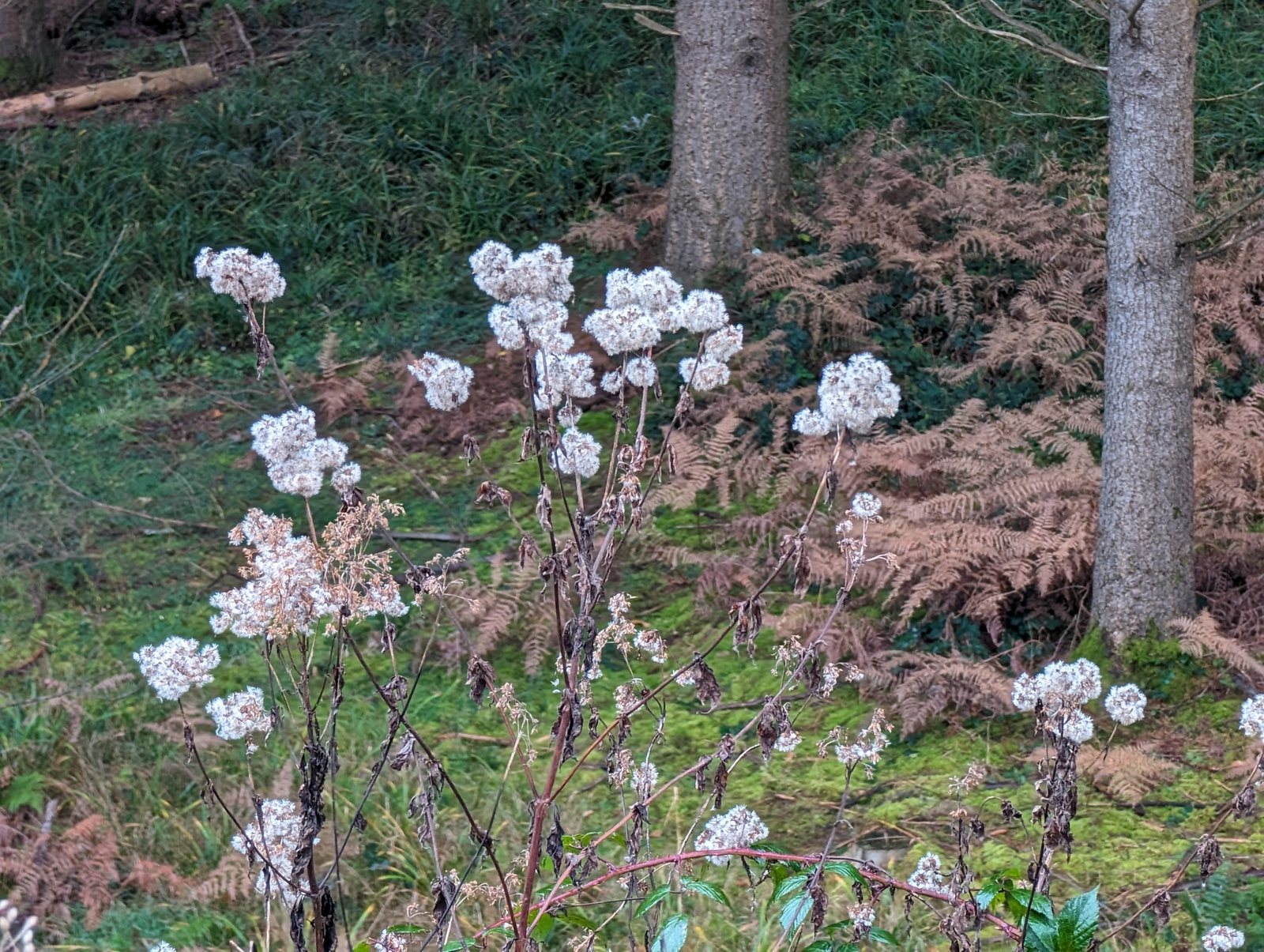
- Remove fading heads before fluffy seeds disperse only where self-seeding is unwanted.
- Water deeply during dry spells so the root zone does not dry out.
- Mulch in spring with compost or leaf mould, keeping it clear of emerging shoots.
- Avoid heavy feeding; fertile soil usually supplies enough nutrients.
- Support tall stems early in exposed gardens or where rich soil encourages floppy growth.
- Divide crowded clumps in spring and remove unwanted seedlings while small.
Pruning. Cut dead stems to just above ground level in late winter or early spring. Where self-seeding is unwanted, remove flower heads as they fade, before the fluffy seeds disperse.
Through the year
- Late winter
- Cut down old stems before new shoots emerge.
- Spring
- Plant or divide clumps and apply an organic mulch.
- Late spring
- Install discreet supports where stems are likely to lean.
- Summer
- Water during dry weather and check that surrounding plants are not being crowded.
- Late summer
- Remove fading flower heads if you need to prevent self-seeding.
- Autumn
- Leave standing stems for winter shelter where seed spread is acceptable.
In the garden
- Plant at the back of a damp border for height and soft pink flower clusters.
- Use beside ponds or rain gardens, above the permanently submerged zone.
- Combine with meadowsweet, great burnet and moisture-loving grasses for a loose, naturalistic planting.
- Grow in generous groups in wildlife gardens where its spread can be managed.
Garden styles it suits: Cottage garden, Wildflower, New perennial (prairie), Wildlife garden, Pollinator garden and Bog garden.
Plant it with: Meadowsweet, Great burnet, Purple moor grass, Siberian iris, Astilbe and Marsh marigold.
Wildlife: Flowers provide nectar and pollen for butterflies, bees, hoverflies and other insects. Standing stems offer overwintering shelter; its native ecological role is strongest within its European and adjacent native range.
Problems to watch for
- Powdery mildew can affect crowded plants: improve airflow, divide congested clumps and water the soil rather than the foliage.
- Slugs and snails may damage emerging shoots: inspect young growth and use barriers or locally approved controls where needed.
- Stems may flop in shade or overly rich soil: provide more light, avoid excessive feeding and support stems early.
- Dry soil causes wilting and poor flowering: water deeply and mulch, or move the plant to a reliably moist position.
Safety
Contains pyrrolizidine alkaloids that can damage the liver if swallowed, particularly with repeated exposure. Treat all parts as unsafe for people, cats, dogs and horses; do not use it as a culinary herb or home remedy, and keep it out of grazing areas.
Where it spreads. Can spread aggressively by windblown seed and expanding clumps in moist ground. It has escaped cultivation in parts of northeastern North America; check local invasive-plant guidance before planting in the United States or Canada.
Easily confused with
Sweet Joe-Pye weed (Eutrochium purpureum)
Has undivided leaves arranged in whorls around the stem, rather than the opposite, usually deeply divided leaves of hemp-agrimony.
Hemp (Cannabis sativa)
Usually has five to nine distinctly separate, narrow leaflets and inconspicuous greenish flowers, not fluffy pink flower clusters. Hemp-agrimony is unrelated.
Common agrimony (Agrimonia eupatoria)
Has slender spikes of yellow flowers and pinnate leaves with several pairs of leaflets, rather than broad pink flower heads.
The name
The epithet cannabinum means hemp-like, referring to the divided leaves, while the common name combines that resemblance with the older name agrimony.
Propagation. Divide established clumps in spring. Sow seed in autumn in a cold frame, or give spring-sown seed a period of moist chilling; seed-grown plants may vary.
Checked against open data
- Accepted botanical name
- Eupatorium cannabinum
- In the US and Canada
- Introduced in Canada and the lower 48 states.
- Native range
- Albania, Algeria, Austria, Baleares, Baltic States, Belarus, Belgium, Bulgaria, Central European Rus, Corse, Cyprus and Czechoslovakia.
- Measured
- Soil pH 7 to 7.5. Average height 39 cm.
Sources: GBIF (CC BY 4.0), USDA PLANTS and Trefle (CC BY 4.0). The care and design notes are LandscapeGPT's own.
See it in your own yard.
Upload a photo of your yard and see it redesigned with plants that suit your climate, each checked against your zone.