Hummingbird sage
Salvia spathacea. Family Lamiaceae. Perennial.
Also called Pitcher sage.
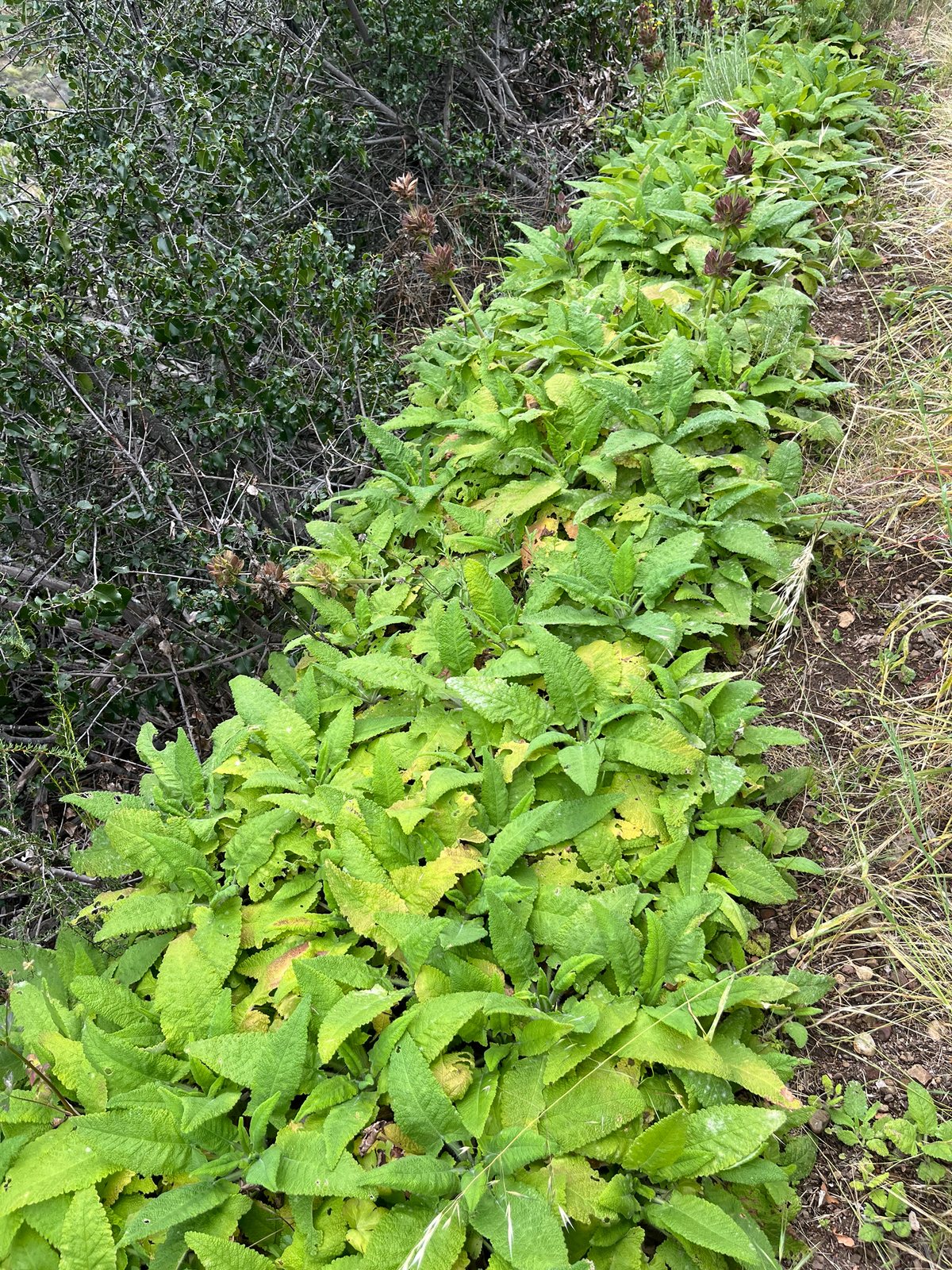
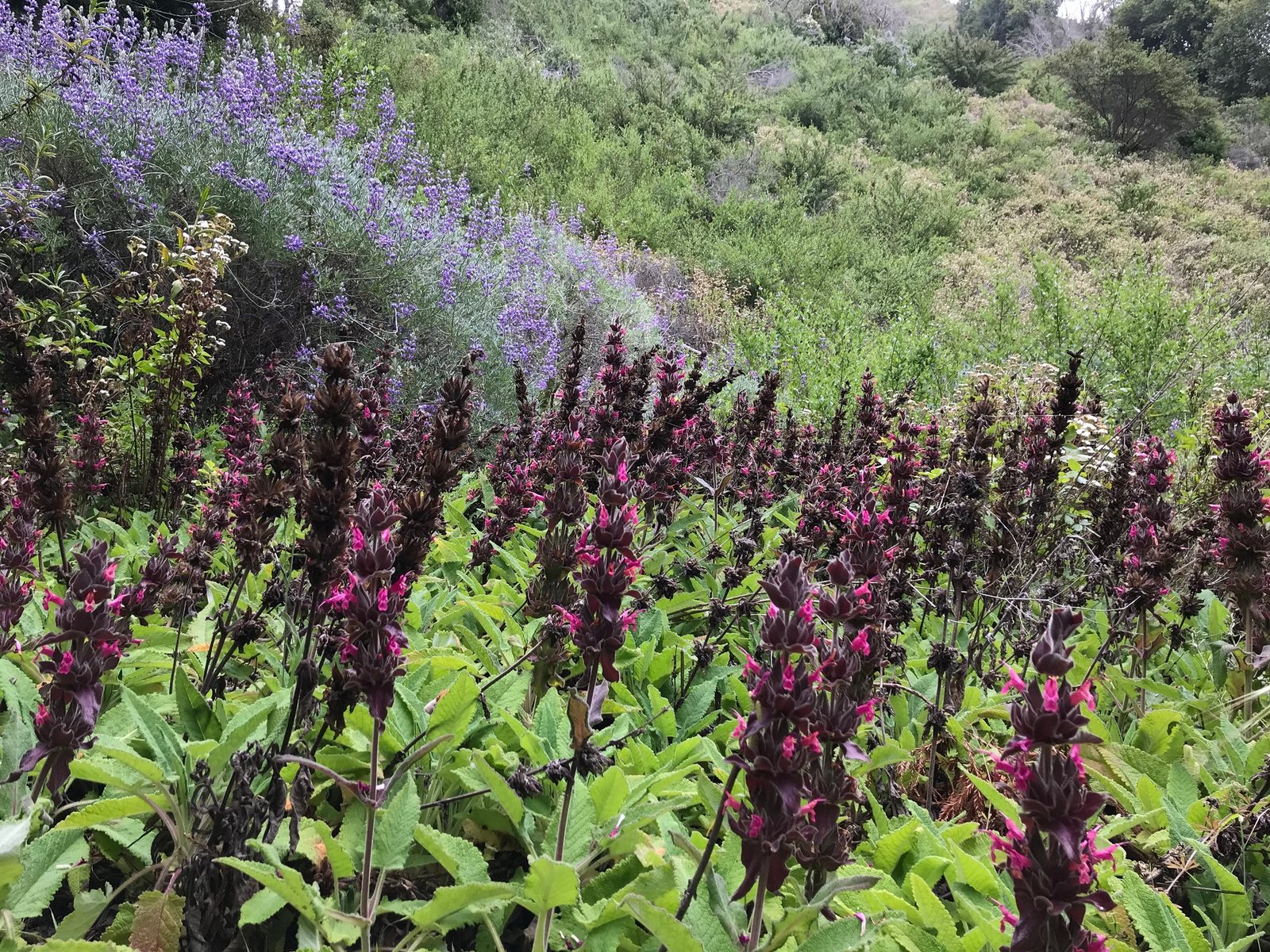
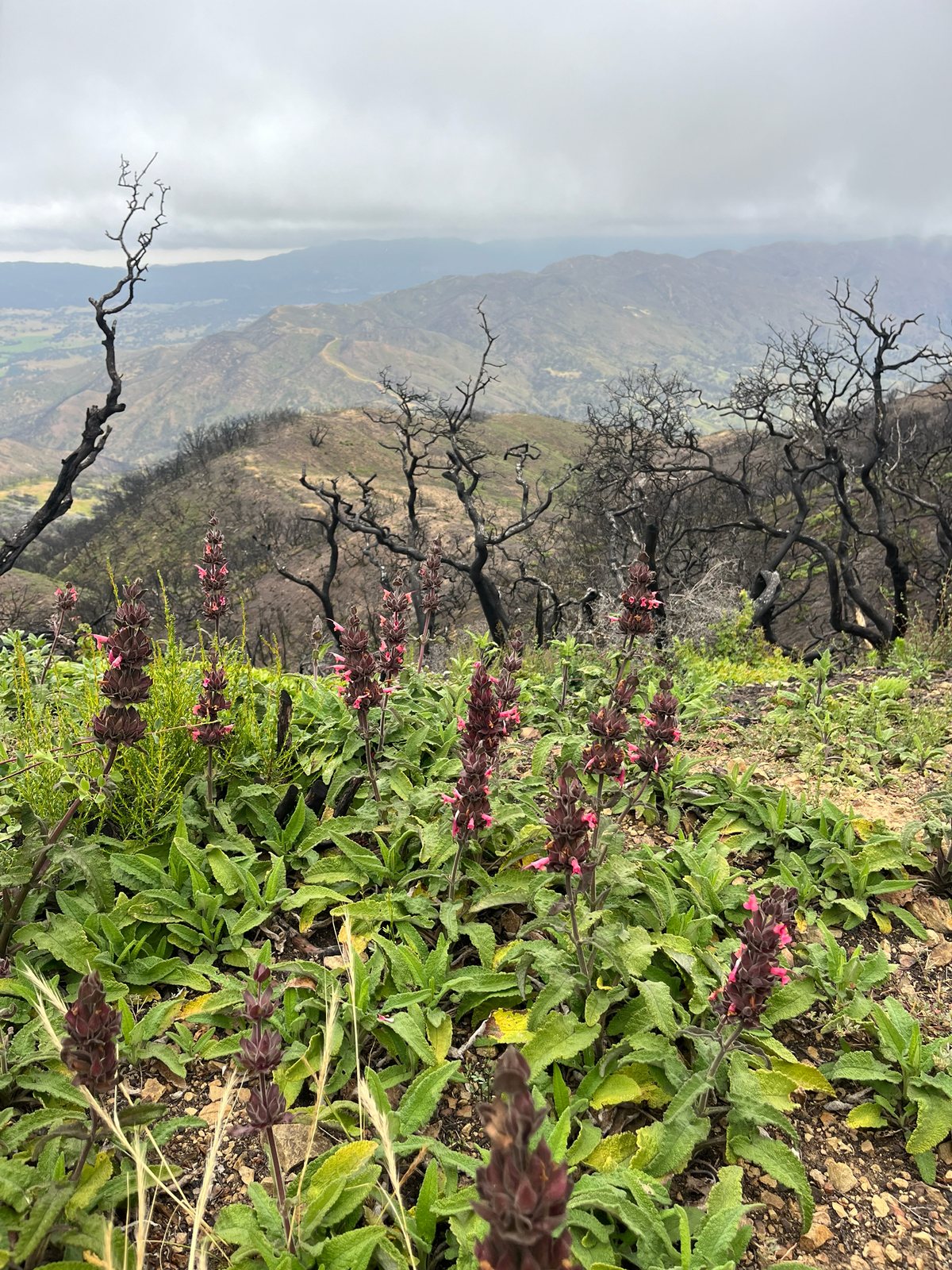
Hummingbird sage is a spreading California native perennial with broad, aromatic leaves and upright clusters of deep rose-pink flowers. Grow it as a groundcover beneath open trees or along shaded borders, where its flowers attract hummingbirds in North America. It stays evergreen in mild conditions but may lose foliage during frost or prolonged summer drought.
At a glance
- Sun
- Partial shade; tolerates full sun near the coast if the soil does not dry out completely. Give it afternoon shade in hot inland gardens.
- Water
- Low once established in mild climates. Water occasionally during prolonged dry weather to keep the foliage attractive; avoid constantly wet soil.
- Soil
- Well-drained soil, including loam and clay that does not remain waterlogged. Tolerates a range of soil pH.
- Height
- 1-3 ft (0.3-0.9 m), including flower stems
- Spread
- 3-5 ft (0.9-1.5 m), spreading farther over time by rhizomes
- Flowers
- Spring to early summer; deep rose-pink to magenta flowers in spaced whorls along upright stems.
- Foliage
- Evergreen. Broad, wrinkled, softly hairy green leaves with a strong fruity scent when rubbed.
- Growth
- Moderate; faster with moisture and room to spread.
- Care needed
- Low
The year at a glance
- Pollinators
- Deer resistant
- Drought tolerant
- Heat tolerant
- Wildlife
- Low allergen
- Fragrant
| J | F | M | A | M | J | J | A | S | O | N | D | |
|---|---|---|---|---|---|---|---|---|---|---|---|---|
| Flowers | ||||||||||||
| Plant |
Northern hemisphere months. In Australia, shift them by six.
- Difficulty
- Moderate
- Toughness
- Fairly tough
Will it suit your garden?
Pick your zone, country, light and whether you have pets.
Full sun is 6 or more hours of direct sun a day, part shade 3 to 6 hours, shade under 3.
How it grows
Planting day
1 ft (0.3 m)
After 1 year
1.4 ft (0.42 m)
After 2 years
1.8 ft (0.55 m)
After 3 years
2 ft (0.6 m)
full size
About 2 years to full size.
From a typical nursery size, at an average rate for this kind of plant. A rule of thumb, not a forecast.
Good to know
- Cats and dogs
- Safe
- Native to
- the US
- In the garden
- Spreads vigorously: plan to contain it.
- Growth rate
- Fast
Care
Jobs through the year
- WaterApr–May, Sep–Oct, every 21 days
- Water established plants only when soil is drying; check new plants more frequently.
- WaterJun–Aug, every 14 days
- During prolonged drought, water deeply to retain foliage, allowing soil to partly dry between waterings.
- PruneMar–Apr
- Remove dead and frost-damaged foliage without cutting healthy new growth.
- DeadheadJun–Jul
- Cut finished flower stems to the leafy base, leaving some if seed is wanted.
- DivideMay
- When needed, lift rooted edge shoots to limit spread or propagate.
- ProtectJan–Apr, Oct–Dec
- Not reliably hardy in zones 6–7; overwinter containers in a bright, cool, frost-free place.
- Water deeply during the first growing season, letting the soil partly dry between waterings.
- Once established, water occasionally in summer if you want to retain a leafy groundcover.
- Keep mulch away from the crowns and avoid sites that stay wet through winter.
- Skip routine feeding; rich soil and heavy feeding are unnecessary.
- Lift rooted shoots at the edges when the patch exceeds its allotted space.
Pruning. Cut spent flower stems back to the leafy base after flowering. In late winter or early spring, remove frost-damaged and dead foliage without cutting away healthy new growth.
Through the year
- Late winter
- Remove dead leaves and frost-damaged stems as new growth begins.
- Spring
- Plant after severe frosts have passed in colder areas; water new plants thoroughly.
- Late spring
- Enjoy flowering and leave some flower stems if you want to collect seed.
- Early summer
- Cut finished flower stems to the base unless saving seed.
- Summer
- Water occasionally during extended drought to prevent substantial leaf loss.
- Autumn
- Plant or divide in mild climates once rain returns; remove unwanted rooted runners.
In the garden
- Plant in broad patches beneath open-canopied trees for a leafy, flowering groundcover.
- Use along a partly shaded path where brushing the leaves releases their scent.
- Combine with alum roots and California fescue for contrasting leaf shapes in a dry woodland border.
- Place beneath taller native shrubs to fill bare ground and provide spring nectar.
Garden styles it suits: California native, Woodland, Wildlife garden, Pollinator garden, Sensory garden and Mediterranean.
Plant it with: Coast live oak, Western redbud, Island alum root, California fescue and Evergreen currant.
Wildlife: The tubular flowers attract hummingbirds where these birds occur naturally, especially in its native western North American range. Bees also visit the flowers.
Problems to watch for
- Root and crown rot in waterlogged soil: improve drainage, keep crowns clear of mulch and reduce watering.
- Slugs and snails on young growth: remove hiding places, hand-pick or use an iron-phosphate bait according to its label.
- Powdery mildew in crowded, poorly ventilated growth: thin the patch and avoid wetting the foliage when watering.
- Summer leaf loss during prolonged drought: give occasional deep watering, or accept seasonal dormancy and wait for cooler, wetter weather.
Safety
Not known to be toxic to people, cats, dogs or horses, although species-specific safety information is limited. No particular part is established as poisonous; do not treat this ornamental sage as a substitute for culinary sage.
Easily confused with
Scarlet sage (Salvia splendens)
Usually has brighter scarlet flowers in dense terminal spikes, smoother leaves and a compact bedding-plant habit rather than a spreading rhizomatous groundcover.
Pineapple sage (Salvia elegans)
Forms a taller, upright, woody-based plant with narrower leaves and slender red flowers, usually appearing later in the growing season.
The name
The common name refers to its hummingbird visitors, while spathacea refers to the conspicuous, spathe-like bracts surrounding the flower clusters.
Propagation. Divide rooted rhizomes in autumn in mild climates or in spring in colder areas. Sow seed in autumn or spring; seedlings may take longer than divisions to form a substantial patch.
Checked against open data
- Accepted botanical name
- Salvia spathacea
- In the US and Canada
- Native in the lower 48 states.
- Native range
- California.
Sources: GBIF (CC BY 4.0), USDA PLANTS and Trefle (CC BY 4.0). The care and design notes are LandscapeGPT's own.
See it in your own yard.
Upload a photo of your yard and see it redesigned with plants that suit your climate, each checked against your zone.