Island alum root
Heuchera maxima. Family Saxifragaceae. Perennial.
Also called Island alumroot, Island coral bells.
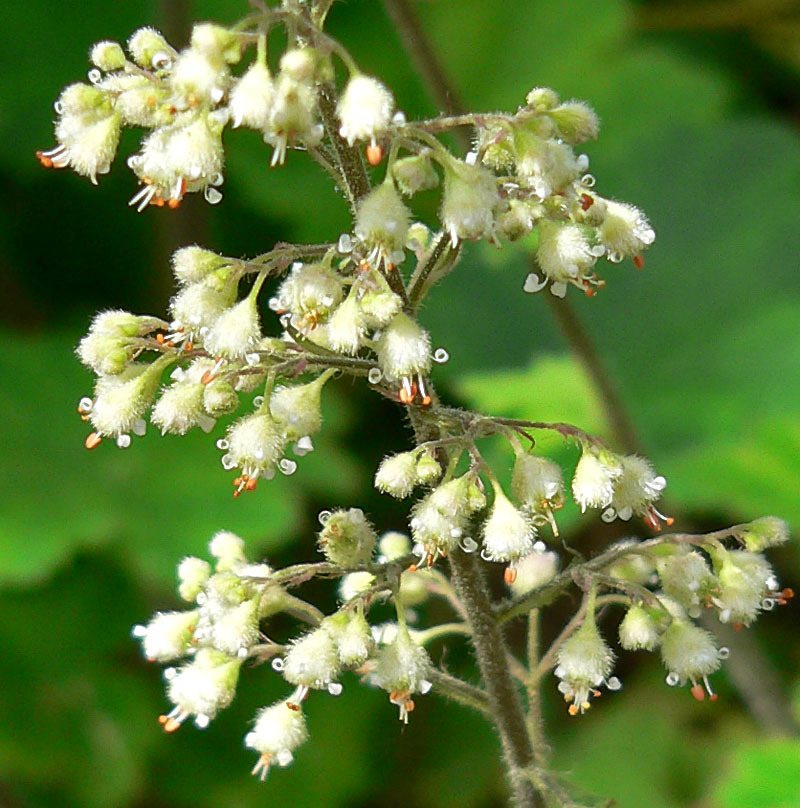
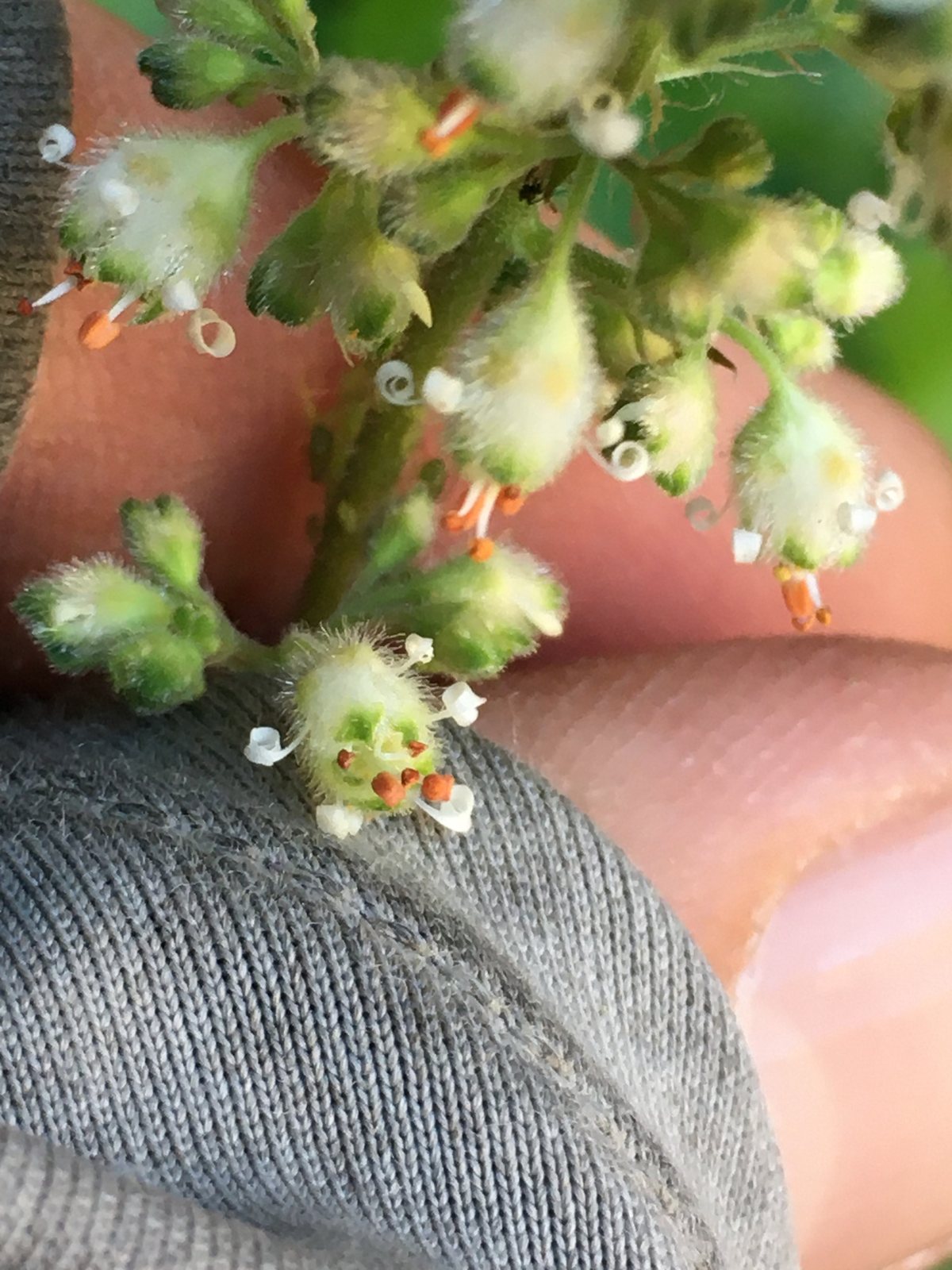
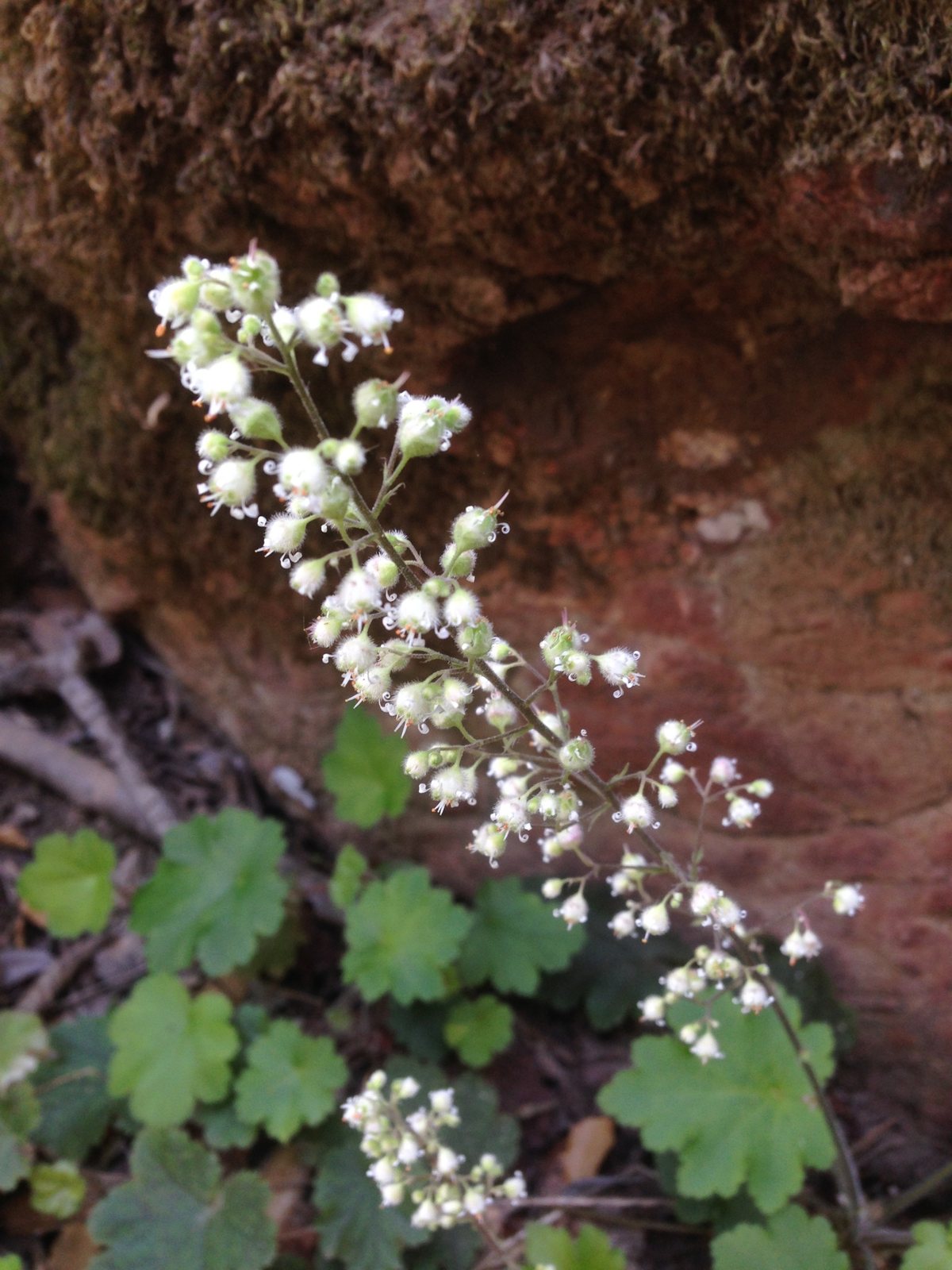
Island alum root is an evergreen perennial native to California's Channel Islands, grown for broad, rounded leaves and tall, airy sprays of small flowers. It makes a useful leafy ground layer beneath trees or along shaded paths, especially in mild coastal gardens.
At a glance
- Sun
- Partial shade; tolerates full sun near the coast if the soil does not dry out completely. Protect from hot afternoon sun inland.
- Water
- Water regularly during establishment. Established plants tolerate some summer dryness in shade, but occasional deep watering keeps the foliage fuller; avoid constantly wet soil.
- Soil
- Well-drained soil, preferably with some leaf mould or compost. Tolerates clay where drainage is good, but dislikes waterlogged winter soil.
- Height
- 1-2 ft (0.3-0.6 m) in leaf; 3-4 ft (0.9-1.2 m) in flower
- Spread
- 2-3 ft (0.6-0.9 m)
- Flowers
- Spring to early summer; small creamy-white to pale pink flowers on tall, branching stems.
- Foliage
- Broad, rounded, shallowly lobed green leaves form a substantial basal clump. Foliage is generally evergreen in mild climates but may look worn after frost or drought.
- Growth
- Moderate
- Care needed
- Low
The year at a glance
- Pollinators
- Drought tolerant
- Heat tolerant
- Low allergen
| J | F | M | A | M | J | J | A | S | O | N | D | |
|---|---|---|---|---|---|---|---|---|---|---|---|---|
| Flowers | ||||||||||||
| Plant |
Northern hemisphere months. In Australia, shift them by six.
- Difficulty
- Moderate
- Toughness
- Fairly tough
Will it suit your garden?
Pick your zone, country, light and whether you have pets.
Full sun is 6 or more hours of direct sun a day, part shade 3 to 6 hours, shade under 3.
How it grows
Planting day
1 ft (0.3 m)
After 1 year
1.1 ft (0.35 m)
After 2 years
1.3 ft (0.4 m)
After 3 years
1.5 ft (0.45 m)
full size
About 3 years to full size.
From a typical nursery size, at an average rate for this kind of plant. A rule of thumb, not a forecast.
Good to know
- Cats and dogs
- Safe
- Native to
- the US
- Growth rate
- Moderate
Care
Jobs through the year
- WaterApr–May, Sep–Oct, every 14 days
- Water established clumps when soil is drying; check new plants more frequently.
- WaterJun–Aug, every 14 days
- During dry spells, water deeply to maintain foliage; avoid saturated crowns.
- MulchApr–May
- Apply a thin layer of leaf mould or compost, leaving the crown exposed.
- PruneMar–Apr
- Remove dead or damaged leaves individually without cutting into the crown.
- DeadheadJun–Jul
- Cut finished flower stems to their bases after insects have finished visiting.
- DivideMay
- Divide only ageing, woody or weakened clumps and replant with crowns at soil level.
- ProtectJan–Apr, Oct–Dec
- Not reliably hardy in zones 6–7; overwinter containers in a bright, cool, frost-free place.
- Plant with the crown at soil level, not buried beneath soil or mulch.
- Water deeply during the first growing season, allowing the surface soil to dry slightly between waterings.
- Apply a thin layer of leaf mould or compost in spring; routine heavy feeding is unnecessary.
- Mulch around the clump to conserve moisture, keeping the crown clear.
- Divide ageing clumps in spring if the centre becomes woody or growth weakens.
Pruning. Remove dead or damaged leaves in late winter or early spring without cutting into the crown. Cut spent flower stems back to their base after flowering.
Through the year
- Early spring
- Remove winter-damaged leaves and check that soil or mulch has not covered the crown.
- Spring
- Plant or divide clumps, water them in well, and add a light compost dressing.
- Late spring
- Enjoy the flower sprays; leave some standing while insects are visiting.
- Summer
- Water established plants occasionally during prolonged dry spells and remove finished flower stems.
- Autumn
- Plant in mild climates while the soil is warm, leaving enough time for roots to establish before winter.
- Winter
- Check drainage and clear wet debris from around the crown.
In the garden
- Plant in loose groups beneath open-canopied trees for a broad-leaved, evergreen ground layer.
- Edge shaded paths with clumps, allowing room for the leaves to spread without covering the walkway.
- Combine with ferns and fine-leaved grasses to contrast bold leaves with softer textures.
- Use in coastal California native planting, where the pale flower sprays lighten shaded areas.
Garden styles it suits: California native, Woodland, Coastal, Wildlife garden, Low-maintenance and Mediterranean.
Plant it with: Western sword fern, Douglas iris, California fescue, Hummingbird sage and Western columbine.
Wildlife: The flowers provide nectar and pollen for visiting insects, including bees. Hummingbirds may also visit within their range.
Problems to watch for
- Crown or root rot in wet soil: improve drainage, reduce watering and keep mulch away from the crown.
- Leaf scorch in hot sun or dry wind: provide afternoon shade and water deeply during extended dry weather.
- Vine weevil larvae, especially in pots: inspect declining plants for root damage and use an appropriate biological control where available.
- Slugs and snails on young foliage: remove hiding places near the crown and use traps or locally approved controls if damage is significant.
Safety
Not known to be toxic to people, cats, dogs or horses; no poisonous parts are recognised. It is an ornamental plant, not a food crop.
Easily confused with
Small-flowered alumroot (Heuchera micrantha)
Usually has smaller, more angular or sharply lobed leaves and a less substantial clump; island alum root has notably broad, rounded foliage.
Coral bells (Heuchera sanguinea)
Usually has smaller leaves and conspicuous red or deep pink flowers, rather than the large leafy clump and pale flower sprays of island alum root.
The name
Heuchera honours the German physician and botanist Johann Heinrich von Heucher, while maxima means largest, referring to its unusually large size among heucheras.
Propagation. Divide healthy clumps in spring, retaining roots and growing points on each section. Sow seed in a free-draining seed compost with only a very light covering; seedlings from plants growing near other heucheras may be hybrids.
Checked against open data
- Accepted botanical name
- Heuchera maxima
- In the US and Canada
- Native in the lower 48 states.
- Native range
- California.
Sources: GBIF (CC BY 4.0), USDA PLANTS and Trefle (CC BY 4.0). The care and design notes are LandscapeGPT's own.
See it in your own yard.
Upload a photo of your yard and see it redesigned with plants that suit your climate, each checked against your zone.