Loblolly pine
Pinus taeda. Family Pinaceae. Tree.
Also called Old-field pine, North Carolina pine.
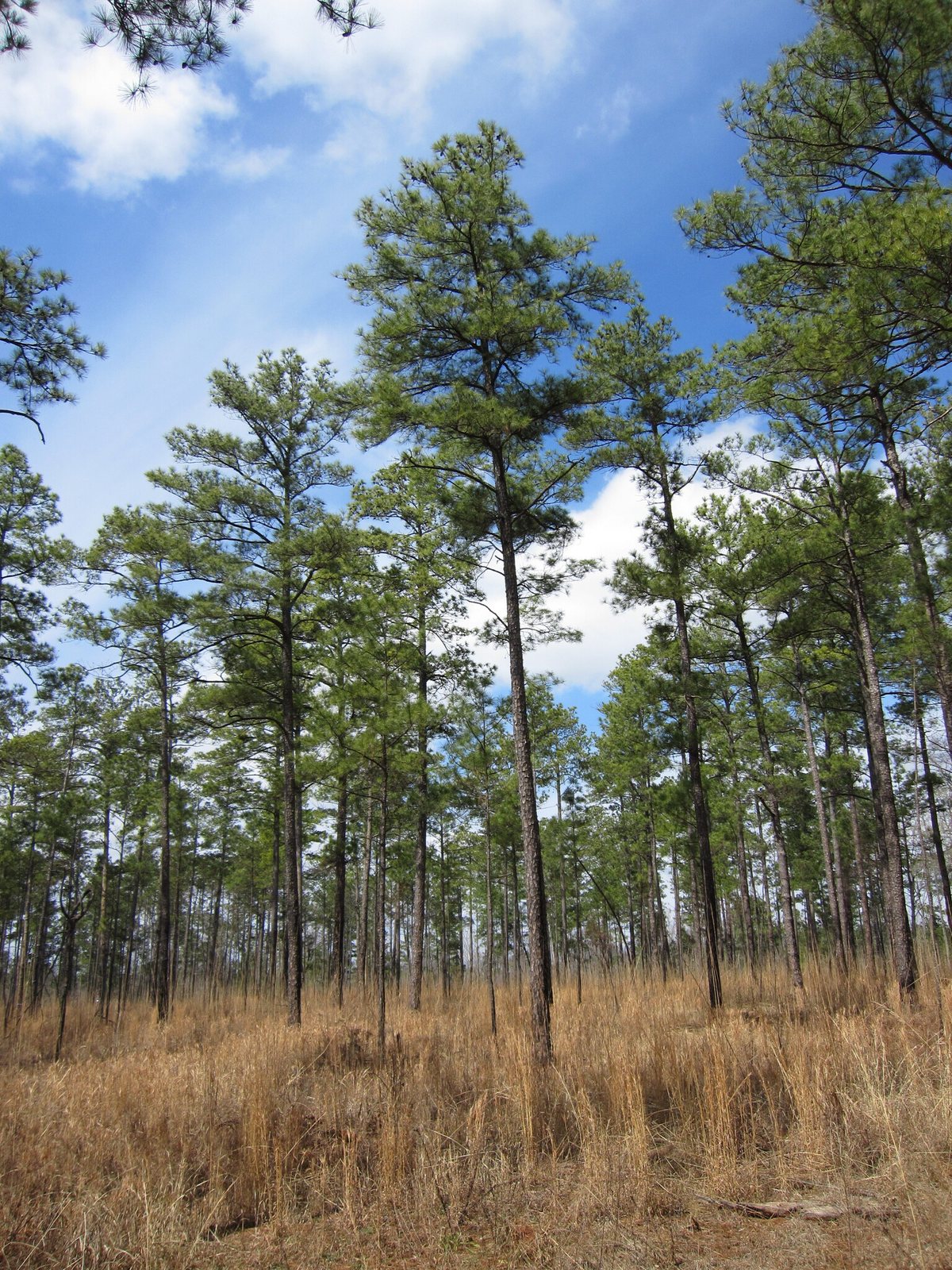
Loblolly pine is a fast-growing evergreen tree native to the southeastern United States, with long needles and a tall, increasingly open crown. It provides year-round screening, woodland structure and wildlife habitat on large properties, but its mature size makes it unsuitable for small gardens or planting close to buildings.
At a glance
- Sun
- Full sun; young trees tolerate light shade but develop poorly under a dense canopy.
- Water
- Moderate; prefers consistent moisture while establishing and tolerates some drought once well rooted.
- Soil
- Prefers acidic, moist, well-drained sandy loam or clay loam. Tolerates heavy soils and occasional flooding, but avoid permanently waterlogged or strongly alkaline ground.
- Height
- 60-90 ft (18-27 m), occasionally taller
- Spread
- 25-40 ft (7.6-12 m)
- Flowers
- Spring: yellowish pollen cones and small reddish to purplish seed cones; wind-pollinated and not showy.
- Foliage
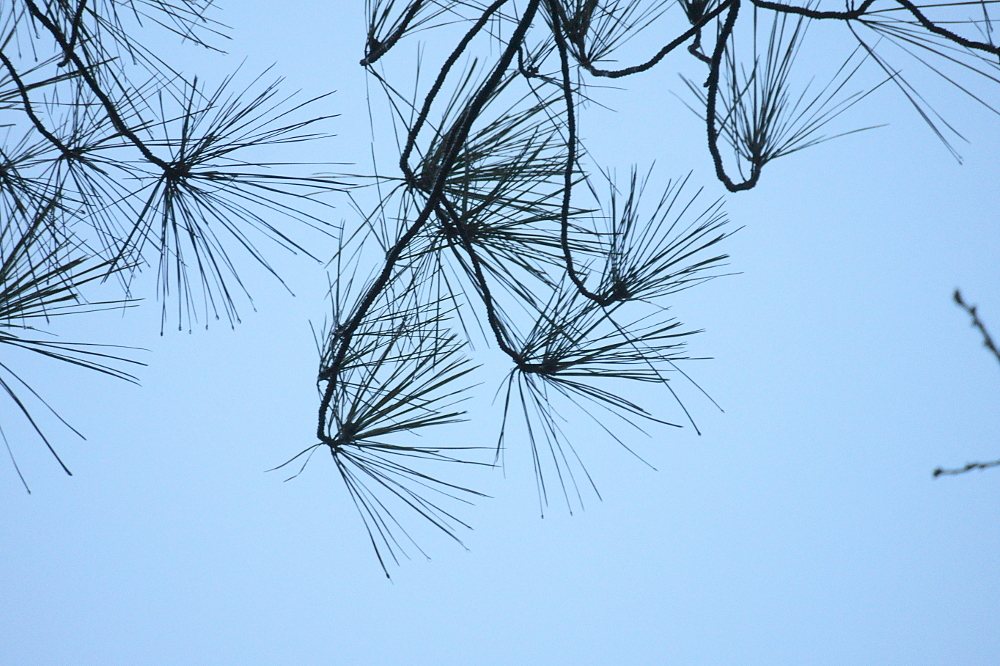
- Evergreen. Yellow-green to dark green needles, usually in bundles of three, 6-10 in (15-25 cm) long. Older inner needles yellow and fall naturally, especially in autumn.
- Growth
- Fast; often 2-3 ft (0.6-0.9 m) a year while young on suitable sites.
- Care needed
- Low
The year at a glance
- Deer resistant
- Drought tolerant
- Heat tolerant
- Wildlife
| J | F | M | A | M | J | J | A | S | O | N | D | |
|---|---|---|---|---|---|---|---|---|---|---|---|---|
| Flowers | ||||||||||||
| Fruit | ||||||||||||
| Plant |
Northern hemisphere months. In Australia, shift them by six.
- Difficulty
- Easy
- Toughness
- Very tough
Will it suit your garden?
Pick your zone, country, light and whether you have pets.
Full sun is 6 or more hours of direct sun a day, part shade 3 to 6 hours, shade under 3.
How it grows
Planting day
9 ft (2.7 m)
After 1 year
14 ft (4.2 m)
After 2 years
19 ft (5.7 m)
After 3 years
24 ft (7.3 m)
After 5 years
34 ft (10.3 m)
About 13 years to full size.
From a typical nursery size, at an average rate for this kind of plant. A rule of thumb, not a forecast.
Good to know
- Cats and dogs
- Safe
- Native to
- the US
- Growth rate
- Fast
Care
Jobs through the year
- WaterApr–May, Sep–Oct, every 21 days
- Water established trees only in dry spells; water more frequently during the first two growing seasons.
- WaterJun–Aug, every 14 days
- Soak the root zone during prolonged dry weather, allowing the surface to dry between waterings.
- MulchMay–Jun
- Maintain 5–8 cm of organic mulch and keep grass and mulch away from the trunk.
- PruneFeb–Mar
- Remove small dead, damaged or crossing branches at the branch collar; never top the tree.
- Plant while dormant, choosing a position with room for the mature crown and well away from overhead wires.
- Water deeply during dry spells for the first two growing seasons; let the soil begin to dry between waterings.
- Spread 2-3 in (5-8 cm) of organic mulch over the root area, keeping it clear of the trunk.
- Do not fertilize routinely; use a soil test to identify deficiencies before feeding.
- Protect the trunk and surface roots from mower damage, digging and soil compaction.
Pruning. Prune dead, damaged or crossing branches in late winter, cutting just outside the branch collar; hazardous branches need prompt attention. Do not top the tree or cut branches back into bare old wood, which rarely produces replacement growth.
Through the year
- Late winter
- Inspect the trunk and crown, and prune small damaged or crossing branches before new growth begins.
- Spring
- Check new shoots for browning or tip-moth damage; water newly planted trees if rainfall is insufficient.
- Early summer
- Renew mulch if needed and keep grass away from the trunk.
- Summer
- Water young trees deeply during prolonged dry weather and watch for resin masses, boring dust or rapid crown browning.
- Autumn
- Expect some older inner needles to yellow and fall; leave a thin needle layer as mulch where practical.
- Autumn to winter
- Plant container-grown trees during mild, dormant-season weather when the soil is workable and not saturated.
In the garden
- Plant in loose groups on large properties for evergreen screening, allowing for lower branches to thin as trees mature.
- Use as the tall canopy in a southeastern US native woodland with hollies and other acid-soil shrubs.
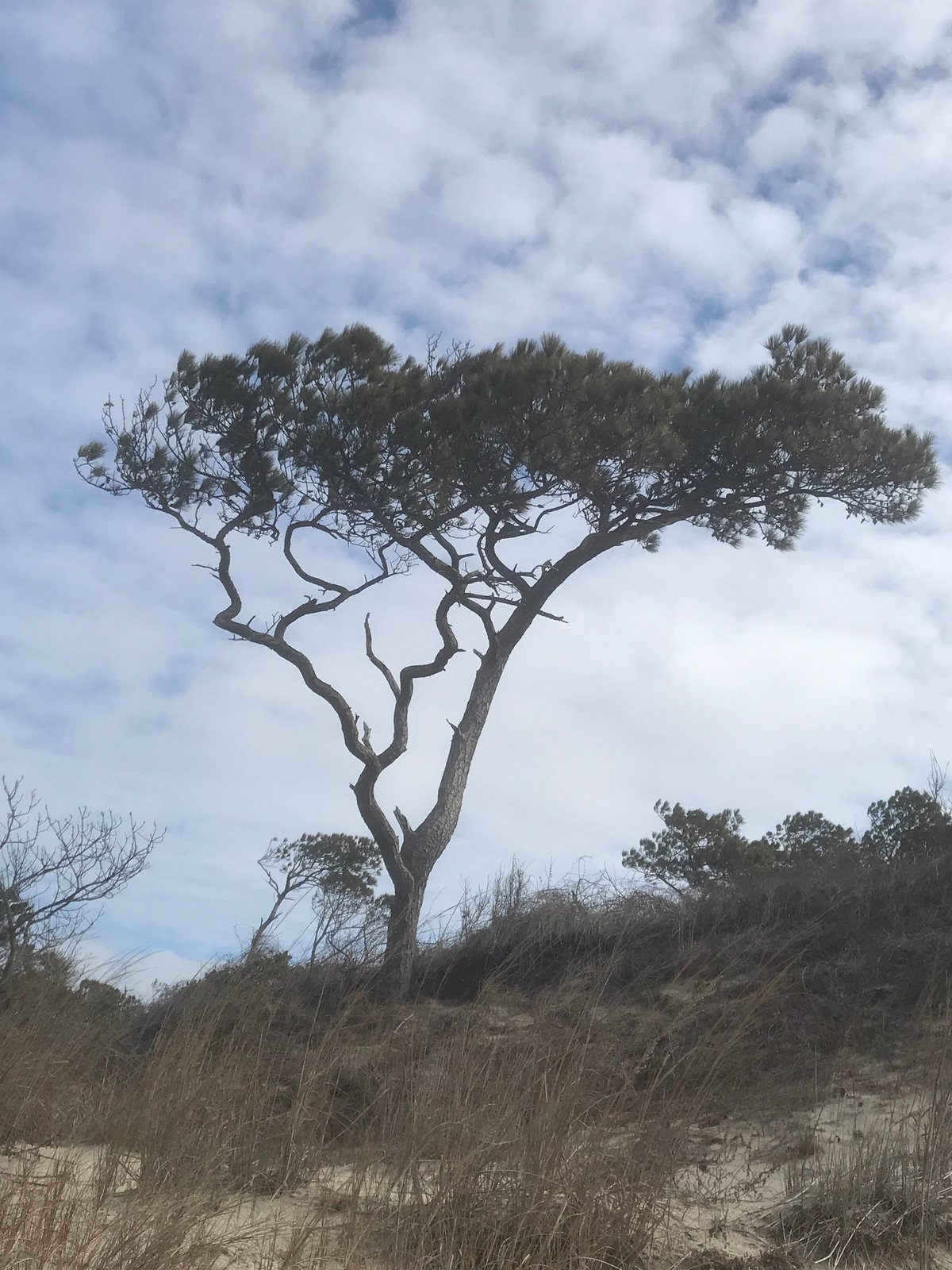
- Place as a specimen in an expansive lawn or meadow where its mature trunk and open crown can be seen.
- Establish a shelterbelt with mixed trees and shrubs rather than relying on a single row of pines.
Garden styles it suits: Southern, Woodland, Wildlife garden, Grand estate, Modern rustic and Winter interest.
Plant it with: Yaupon holly, Wax myrtle, Inkberry, Eastern redbud, Highbush blueberry and Switchgrass.
Wildlife: Seeds feed birds and small mammals; the crown provides shelter and nesting sites. Native insects use the foliage and wood, and older trees can provide valuable habitat for cavity-nesting birds.
Problems to watch for
- Southern pine beetle: resin masses, boring dust and rapidly browning crowns need urgent assessment by an arborist; infested trees may require removal to limit spread.
- Fusiform rust: spindle-shaped swellings develop on branches or trunks. Prune affected branches where feasible; have trunk infections assessed for structural weakness.
- Pine tip moths: damaged shoots turn brown and young trees may become bushy. Remove accessible affected tips; seek local advice if repeated attacks distort the main leader.
- Root rot and decline: persistent saturation or buried root collars can cause thinning and death. Keep the root flare exposed and choose a better-drained site rather than trying to correct chronic waterlogging with fertilizer.
Safety
Not known to be toxic to people, cats, dogs or horses. Needles and resin can irritate the mouth or stomach if chewed, and swallowed needles may cause physical injury; do not offer prunings as animal feed.
Where it spreads. Invasive outside its native range in parts of southern Brazil and South Africa, where self-sown trees can spread into grassland and other open habitats. Check local planting restrictions and remove unwanted seedlings.
Easily confused with
Slash pine (Pinus elliottii)
Needles occur in bundles of two and three and are often glossier. Its cones are generally shinier, with stouter prickles than loblolly pine's duller cones.
Longleaf pine (Pinus palustris)
Has much longer needles, usually 8-18 in (20-46 cm), clustered at branch tips, much larger cones and conspicuous silvery terminal buds.
Shortleaf pine (Pinus echinata)
Has shorter needles, usually 3-5 in (7.5-13 cm), in bundles of two or three, and smaller cones with less prominent prickles.
The name
“Loblolly” is an old word for a muddy hollow, referring to its common lowland habitat, while the Latin taeda means a resinous pine torch.
Propagation. Usually grown from seed collected from mature cones. A period of moist chilling improves germination; sow in spring and protect seedlings from rodents. Seed-grown trees vary in cold tolerance, so use stock of suitable regional provenance.
Checked against open data
- Accepted botanical name
- Pinus taeda
- In the US and Canada
- Native in the lower 48 states.
- Native range
- Alabama, Arkansas, Delaware, District of Columbia, Florida, Georgia, Kentucky, Louisiana, Maryland, Mississippi, North Carolina and Oklahoma.
- Measured
- Average height 1165 cm.
Sources: GBIF (CC BY 4.0), USDA PLANTS and Trefle (CC BY 4.0). The care and design notes are LandscapeGPT's own.
See it in your own yard.
Upload a photo of your yard and see it redesigned with plants that suit your climate, each checked against your zone.