Wax myrtle
Morella cerifera. Family Myricaceae. Shrub.
Also called Southern wax myrtle, Southern bayberry, Myrica cerifera.
Wax myrtle is a fast-growing evergreen shrub or small tree native to the southeastern United States and nearby warmer regions. Gardeners grow it for aromatic foliage, informal screening and waxy grey-blue fruits that feed birds. It tolerates coastal exposure and varied soils, but needs room for its spreading branches and root suckers.
At a glance
- Sun
- Full sun to partial shade; growth is denser in sun.
- Water
- Water regularly while establishing. Established plants tolerate moderate drought as well as periodically wet soil.
- Soil
- Adaptable to sandy, loamy or clay soil, preferably acidic to neutral. Tolerates poor soil and occasional flooding, but avoid permanently stagnant ground.
- Height
- 10-20 ft (3-6 m), occasionally taller
- Spread
- 8-15 ft (2.4-4.6 m), wider if suckers are allowed to develop
- Flowers
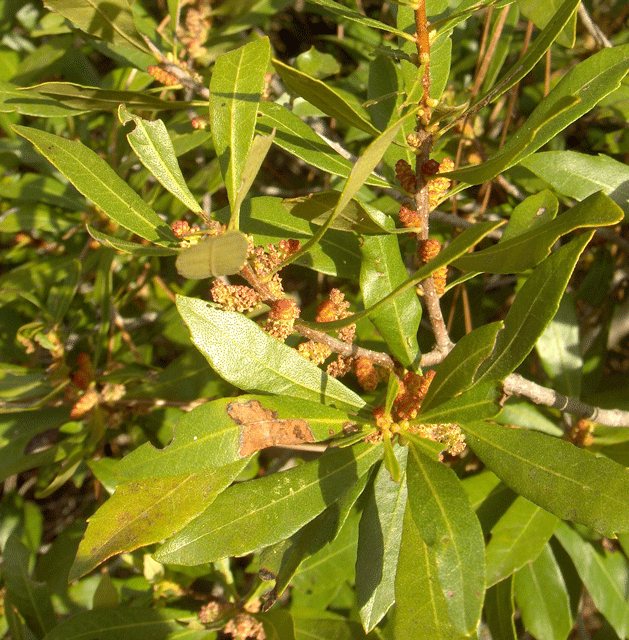
- Small, inconspicuous greenish catkins in late winter or spring; male and female flowers are usually on separate plants.
- Foliage
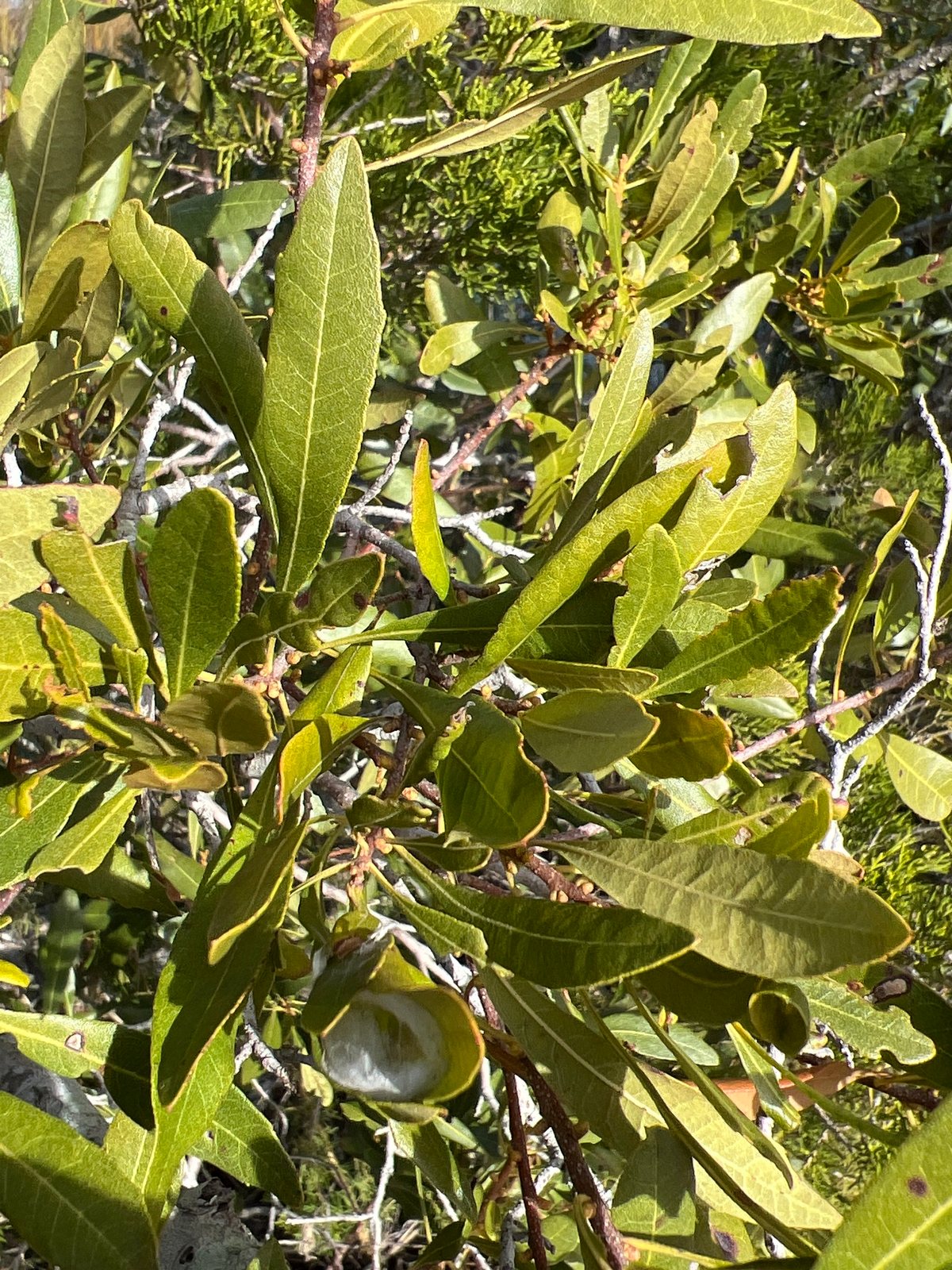
- Evergreen. Narrow, olive-green leaves with scattered teeth toward their tips; aromatic when crushed and dotted with resin glands.
- Growth
- Fast in warm conditions with adequate moisture.
- Care needed
- Low
The year at a glance
- Deer resistant
- Drought tolerant
- Heat tolerant
- Wildlife
- Fragrant
| J | F | M | A | M | J | J | A | S | O | N | D | |
|---|---|---|---|---|---|---|---|---|---|---|---|---|
| Flowers | ||||||||||||
| Fruit | ||||||||||||
| Plant |
Northern hemisphere months. In Australia, shift them by six.
- Difficulty
- Moderate
- Toughness
- Fairly tough
Will it suit your garden?
Pick your zone, country, light and whether you have pets.
Full sun is 6 or more hours of direct sun a day, part shade 3 to 6 hours, shade under 3.
How it grows
Planting day
1.8 ft (0.54 m)
After 1 year
6 ft (1.8 m)
After 2 years
10 ft (3 m)
After 3 years
14 ft (4.2 m)
After 5 years
15 ft (4.5 m)
full size
About 3 years to full size.
From a typical nursery size, at an average rate for this kind of plant. A rule of thumb, not a forecast.
Good to know
- Cats and dogs
- Safe
- Native to
- the US
- In the garden
- Spreads vigorously: plan to contain it.
- Growth rate
- Fast
Care
Jobs through the year
- WaterApr–May, Sep–Oct, every 14 days
- Water established shrubs only during extended dry spells; young plants need more regular watering.
- WaterJun–Aug, every 14 days
- Soak established roots during prolonged drought; water more frequently through the first growing season.
- MulchApr
- Apply 5–8 cm of organic mulch without covering the stem bases.
- PruneMar–Apr
- After severe frost, remove damaged branches and selectively thin crowded stems.
- PruneMay–Aug
- Remove unwanted suckers at their origin while small; avoid shearing fruiting branches.
- ProtectJan–Feb, Dec
- Use a sheltered site in zone 7 and fleece during severe freezes; zone 6 generally requires protected container culture.
- Water deeply during dry spells through the first growing season; continue during prolonged drought until well established.
- Apply 2-3 in (5-8 cm) of organic mulch, keeping it clear of the stems.
- Skip routine feeding unless growth or a soil test indicates a deficiency; this shrub fixes nitrogen through root associations.
- Remove unwanted root suckers promptly if you want a single shrub rather than a thicket.
- For fruit, grow a female plant with a male nearby; seed-grown plants may not reveal their sex until flowering.
- Keep this resinous shrub away from buildings in wildfire-prone gardens.
Pruning. Prune in late winter or early spring, removing damaged branches and selectively thinning crowded stems. To make a small tree, gradually remove lower branches and basal shoots; frequent shearing reduces its natural form and fruit display.
Through the year
- Late winter
- Thin crowded growth and remove broken or cold-damaged branches once severe frost has passed.
- Spring
- Plant in colder parts of its range, water thoroughly and mulch the root area.
- Late spring
- Check for unwanted suckers and remove them at their point of origin.
- Summer
- Water young plants during dry weather and inspect foliage for scale insects or yellowing.
- Autumn
- Plant in mild climates while soil remains warm; leave fruiting branches for birds.
- Winter
- Check exposed plants after storms and avoid unnecessary trimming while fruit remains.
In the garden
- Plant as an informal evergreen screen along a boundary where its full width can develop.
- Combine with yaupon holly and native grasses for a loose coastal planting that tolerates wind and salt spray.
- Use as the evergreen backbone of a wildlife border, with fruiting shrubs and open spaces for birds.
- Train a multi-stemmed specimen as a small tree to provide light shade beside a lawn or sitting area.
Garden styles it suits: Coastal, Southern, Wildlife garden, Native hedgerow, Low-maintenance and Woodland.
Plant it with: Yaupon holly, Inkberry, American beautyberry, Switchgrass, Little bluestem and Saw palmetto.
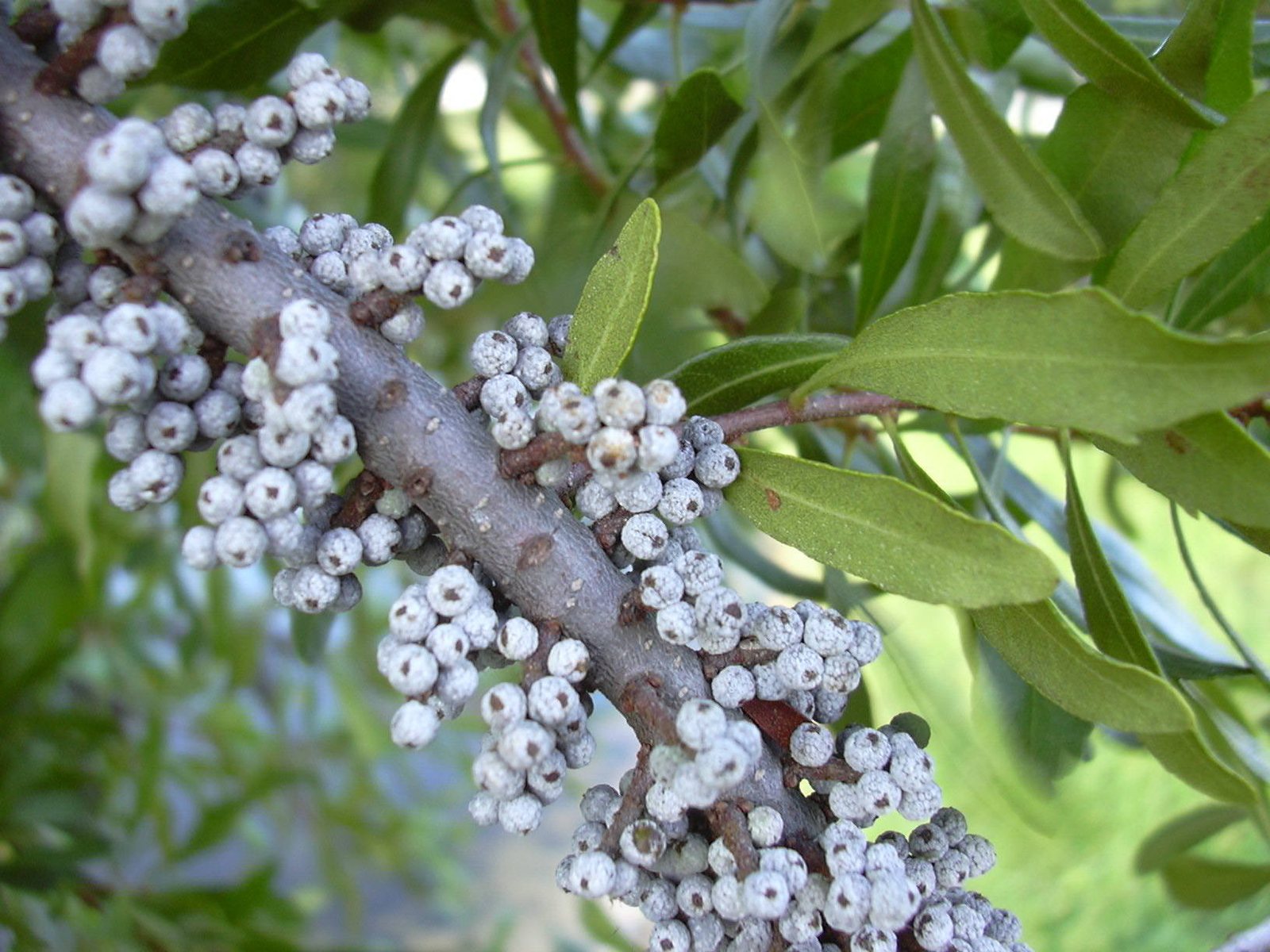
Wildlife: Waxy fruits are an important food for birds, including yellow-rumped warblers in its native range. Dense branches provide cover and nesting sites; female plants need pollen from a male to produce a good fruit crop.
Problems to watch for
- Cold injury: foliage may brown or drop near its northern limit. Choose a sheltered site and wait until spring growth begins before cutting back damaged wood.
- Scale insects: inspect stems and leaf undersides if growth weakens or sooty mould appears. Prune out heavily infested shoots and use a labelled horticultural oil when appropriate.
- Yellow leaves on alkaline soil: check soil pH before feeding. Move the plant to more suitable soil if alkalinity causes persistent iron deficiency.
- Excessive suckering: cut or dig out unwanted shoots while small, or give the plant space to form a natural thicket.
Safety
Not known to be toxic to cats, dogs or horses. It is not generally regarded as poisonous to people, but the leaves and wax-coated fruits are not ordinary edible garden produce; do not encourage children or pets to eat them.
Where it spreads. Can spread aggressively by root suckers and form thickets in sandy coastal sites in the southeastern United States, where it is native. This spreading habit is not the same as a non-native invasive listing.
Easily confused with
Northern bayberry (Morella pensylvanica)
Usually smaller and deciduous or semi-evergreen, with broader leaves. It is substantially more cold-hardy than wax myrtle.
Sweet gale (Myrica gale)
A smaller deciduous shrub of boggy ground, with broader, duller leaves and terminal cone-like fruit clusters rather than wax myrtle's small round fruits along the stems.
Firetree (Morella faya)
Has darker, glossier leaves with more regularly toothed margins and fruits that ripen dark purple-black rather than pale waxy grey-blue.
The name
The name wax myrtle refers to its aromatic, myrtle-like foliage and the wax coating on its fruits; cerifera means wax-bearing.
Propagation. Take semi-ripe cuttings in summer to preserve the sex and characteristics of a selected plant. Seed propagation is slower and less predictable; remove the waxy fruit coating and give cleaned seed a period of moist chilling before sowing.
Checked against open data
- Accepted botanical name
- Morella cerifera
- In the US and Canada
- Native in the lower 48 states and Puerto Rico. Introduced in Hawaii.
Sources: GBIF (CC BY 4.0) and USDA PLANTS. The care and design notes are LandscapeGPT's own.
See it in your own yard.
Upload a photo of your yard and see it redesigned with plants that suit your climate, each checked against your zone.