Makrut lime
Citrus hystrix. Family Rutaceae. Tree.
Also called Kaffir lime, Thai lime.
Makrut lime is a thorny, evergreen citrus grown chiefly for its intensely aromatic leaves and the rind of its knobbly fruit. It makes a useful small tree in frost-free gardens or a container plant that spends winter indoors in colder regions.
At a glance
- Sun
- Full sun; light afternoon shade can help in very hot inland gardens. Indoors, provide the brightest available window or a grow light.
- Water
- Water thoroughly when the upper 1-2 in (2.5-5 cm) of soil has dried. Keep roots evenly moist during active growth but never waterlogged; reduce watering in winter.
- Soil
- Fertile, well-drained, slightly acidic soil. In containers, use a free-draining citrus potting mix and a pot with drainage holes.
- Height
- 6-20 ft (1.8-6 m); usually smaller in containers
- Spread
- 6-12 ft (1.8-3.7 m)
- Flowers
- Small, fragrant white flowers, sometimes pink-tinged, mainly in spring with occasional later flushes.
- Foliage
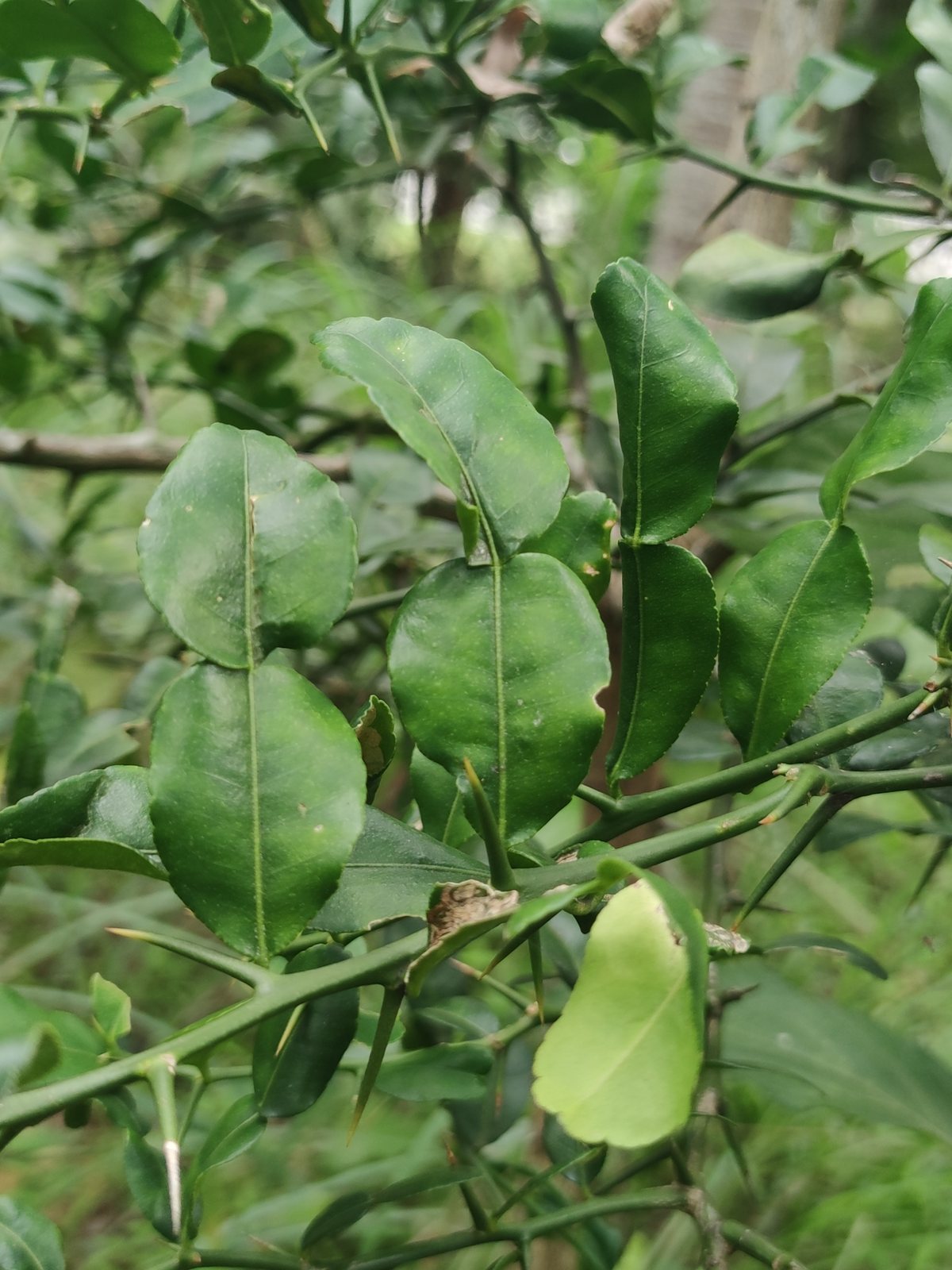
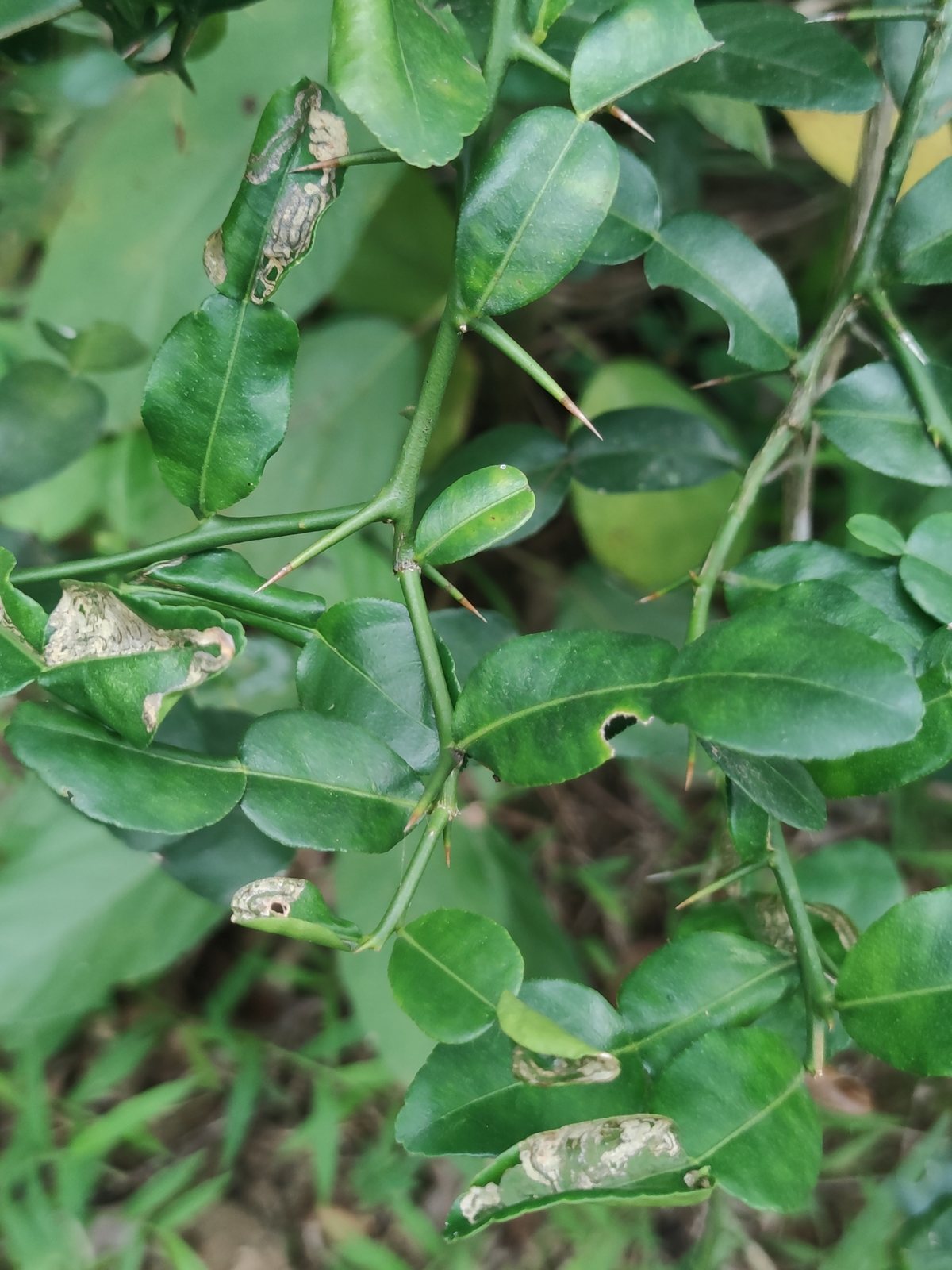
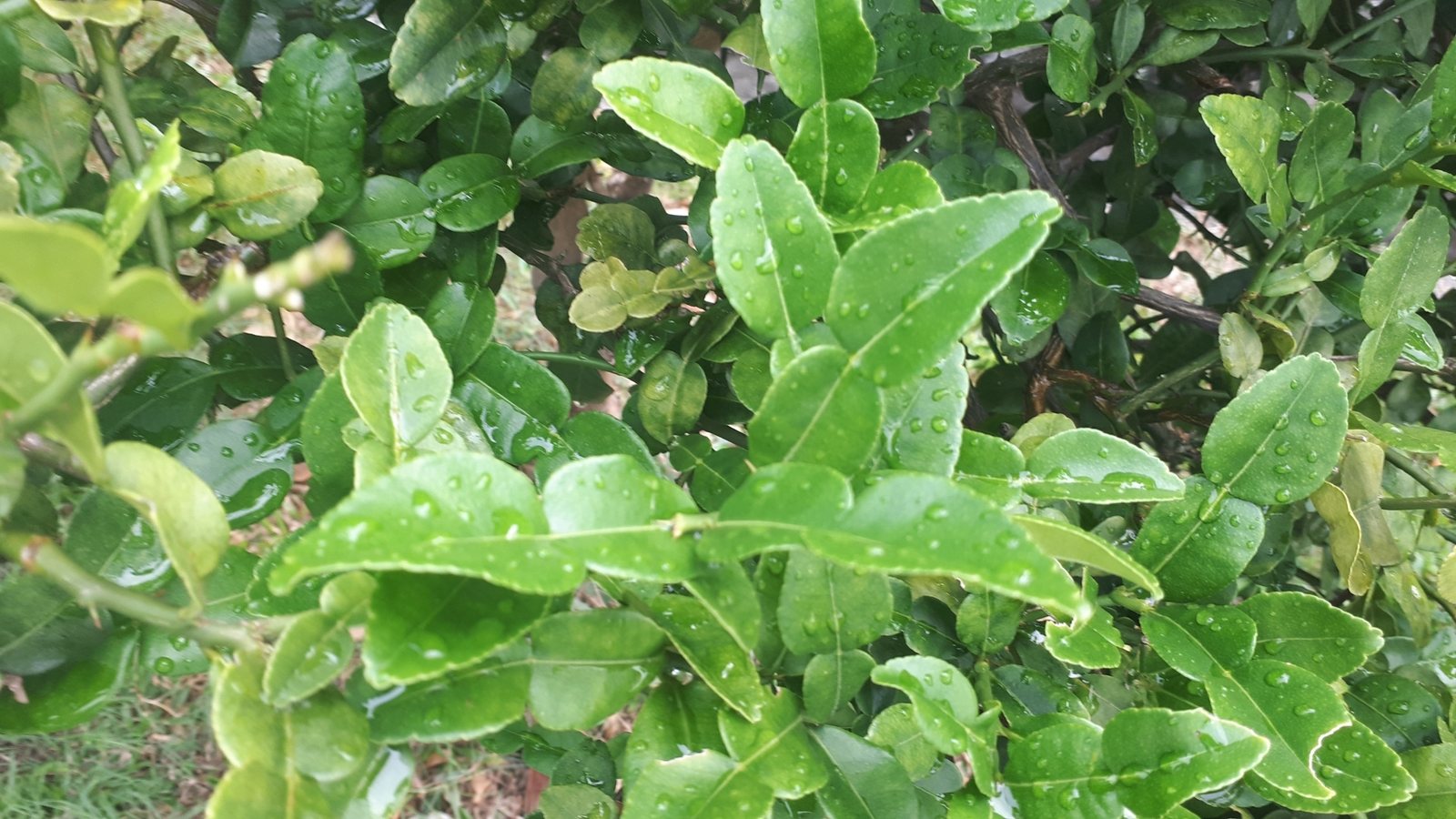
- Evergreen. Glossy, dark green, aromatic leaves with broad, winged leaf stalks that give each leaf a distinctive double-leaf outline.
- Growth
- Slow to moderate, depending on warmth and growing conditions
- Care needed
- Medium
The year at a glance
- Pollinators
- Heat tolerant
- Low allergen
- Fragrant
- Edible
| J | F | M | A | M | J | J | A | S | O | N | D | |
|---|---|---|---|---|---|---|---|---|---|---|---|---|
| Flowers | ||||||||||||
| Fruit | ||||||||||||
| Plant |
Northern hemisphere months. In Australia, shift them by six.
- Difficulty
- Moderate
- Toughness
- Needs looking after
Will it suit your garden?
Pick your zone, country, light and whether you have pets.
Full sun is 6 or more hours of direct sun a day, part shade 3 to 6 hours, shade under 3.
How it grows
Planting day
7 ft (2 m)
After 1 year
7 ft (2.1 m)
After 2 years
7 ft (2.1 m)
After 3 years
7 ft (2.2 m)
After 5 years
8 ft (2.4 m)
About 26 years to full size.
From a typical nursery size, at an average rate for this kind of plant. A rule of thumb, not a forecast.
Good to know
- Cats and dogs
- Toxic
- Growth rate
- Slow
Care
Jobs through the year
- WaterApr–May, Sep–Oct, every 7 days
- In zones 6–7, grow in a movable pot; water when the top 2–5 cm dries, then drain fully.
- WaterJun–Aug, every 3 days
- Check container moisture frequently; water only when the surface dries slightly.
- WaterJan–Mar, Nov–Dec, every 14 days
- Overwinter frost-free; water only as the surface dries, adjusting for indoor warmth.
- FeedMar–Sep, every 28 days
- Apply citrus fertilizer with trace elements at the label rate only during active growth.
- PruneMar–Apr
- Lightly shape before strong growth; remove dead, crossing and below-graft shoots.
- ProtectSep–Oct
- Bring indoors before cold nights; provide bright conditions preferably above 10°C.
- ProtectJan–Apr, Nov–Dec, every 14 days
- Inspect indoor foliage and stems for scale, mealybugs and mites.
- ProtectMay–Jun
- After frost risk passes, gradually acclimatize to outdoor sun and shelter from wind.
- HarvestJan–Dec
- Pick mature leaves sparingly year-round; cut full-sized green fruit for rind, usually in autumn.
- Move container plants under cover before frost; a bright, frost-free position above about 50°F (10°C) is preferable.
- Water deeply, then let the surface dry slightly; empty saucers rather than leaving pots standing in water.
- Apply citrus fertilizer with trace elements during active growth, following the label; avoid feeding a dormant or stressed plant.
- Mulch outdoor trees, keeping mulch several inches clear of the trunk.
- Acclimatize overwintered plants gradually to outdoor sun and shelter them from strong winds.
- Remove any shoots emerging below the graft union.
Pruning. Prune lightly in late winter or early spring, after frost risk has passed and before strong growth begins. Remove dead, crossing and crowded shoots, and shorten overly long branches; wear gloves against the thorns.
Harvest
Pick fully expanded, healthy leaves as needed once the plant is established, taking only a few from a small tree. Harvest full-sized, firm, knobbly fruit while green for aromatic rind; it yellows as it ripens and contains little juice. A grafted nursery tree may give its first useful fruit crop about 2-4 years after planting, while seedlings commonly take 5 years or longer, especially in containers.
Through the year
- Late winter
- Check overwintering plants for scale and mites; remove dead wood and lightly shape plants kept in warm conditions.
- Spring
- Resume citrus feeding as growth starts; repot only if roots have filled the container.
- Late spring
- After frost risk has passed, gradually move indoor plants into outdoor sun.
- Summer
- Check container moisture frequently and harvest mature leaves sparingly.
- Autumn
- Harvest full-sized fruit for rind and bring containers under cover before cold nights.
- Winter
- Keep plants in bright, frost-free conditions; water less and avoid feeding unless they are actively growing.
In the garden
- Grow in a large container beside a sunny kitchen terrace for convenient leaf harvesting.
- Use as a small evergreen specimen in a sheltered, frost-free courtyard.
- Combine with lemongrass and other warm-climate culinary plants in an edible garden.
- Place against a warm wall for shelter, keeping thorny branches clear of paths and seating.
Garden styles it suits: Edible landscape, Potager (kitchen garden), Modern courtyard, Tropical, Small-space and Sensory garden.
Plant it with: Lemongrass, Thai basil, Chilli peppers, Ginger and Turmeric.
Wildlife: Flowers attract bees and other pollinating insects. Leaves may feed citrus-feeding swallowtail caterpillars where those butterflies occur.
Problems to watch for
- Scale insects and mealybugs: inspect leaf undersides and stems; wipe off small colonies or use a horticultural oil labelled for edible citrus.
- Spider mites indoors: look for fine webbing and pale stippling; rinse foliage and treat persistent infestations with a suitable insecticidal soap.
- Citrus leafminer: winding trails distort young leaves; avoid excessive nitrogen and unnecessary pruning, and tolerate minor damage on established plants.
- Root rot and leaf drop: improve drainage, stop leaving pots in standing water, and protect plants from cold, wet conditions.
Safety
Leaves and rind are used as human food in normal culinary quantities, but concentrated essential oil can irritate skin and is unsafe to swallow. Citrus peel, foliage and oils contain compounds considered toxic to cats, dogs and horses; chewing may cause digestive upset or skin irritation, and concentrated oils can cause more serious poisoning. Keep essential oils away from pets and seek veterinary advice after significant exposure. Thorns can cause puncture injuries.
Easily confused with
Persian lime (Citrus × latifolia)
Has smoother fruit and leaves with much narrower winged stalks, rather than the conspicuous double-leaf outline of makrut lime.
Key lime (Citrus × aurantiifolia)
Has small, relatively smooth fruit and leaves with only narrowly winged stalks; makrut fruit is deeply knobbly.
Ichang papeda (Citrus ichangensis)
Also has broadly winged leaf stalks, but usually has a narrower, more pointed upper leaf blade and less deeply knobbly fruit; it is substantially more cold-hardy.
The name
The species name hystrix comes from the Greek word for porcupine, referring to its sharp thorns.
Propagation. Grafting or budding onto suitable citrus rootstock is the usual nursery method and gives earlier fruiting than seed. Semi-ripe cuttings can root with warmth and high humidity; seedlings are slower to bear. Use certified, disease-free material and follow local citrus movement restrictions.
Checked against open data
- Accepted botanical name
- Citrus hystrix
- Native range
- Assam, Bangladesh, Bismarck Archipelago, Borneo, Cambodia, China South-Central, China Southeast, East Himalaya, Lesser Sunda Is., Malaya, Maluku and Myanmar.
Sources: GBIF (CC BY 4.0) and Trefle (CC BY 4.0). The care and design notes are LandscapeGPT's own.
See it in your own yard.
Upload a photo of your yard and see it redesigned with plants that suit your climate, each checked against your zone.