Marsh fern
Thelypteris palustris. Family Thelypteridaceae. Fern.
Also called Eastern marsh fern.
Marsh fern is a deciduous fern with upright, finely divided green fronds and creeping underground stems. Grow it for soft foliage in bog gardens, damp woodland edges and pond margins, where it can form a spreading colony.
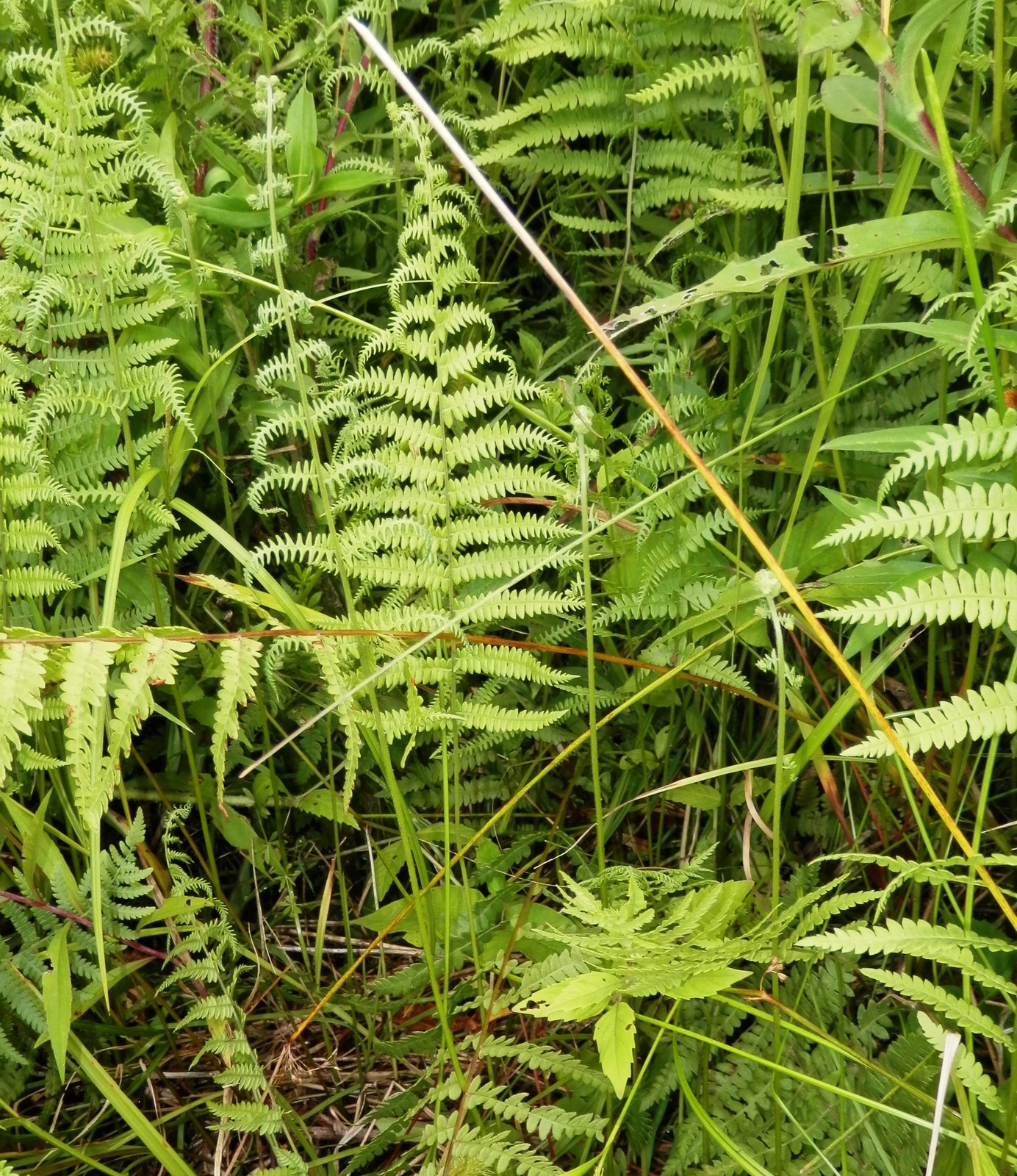
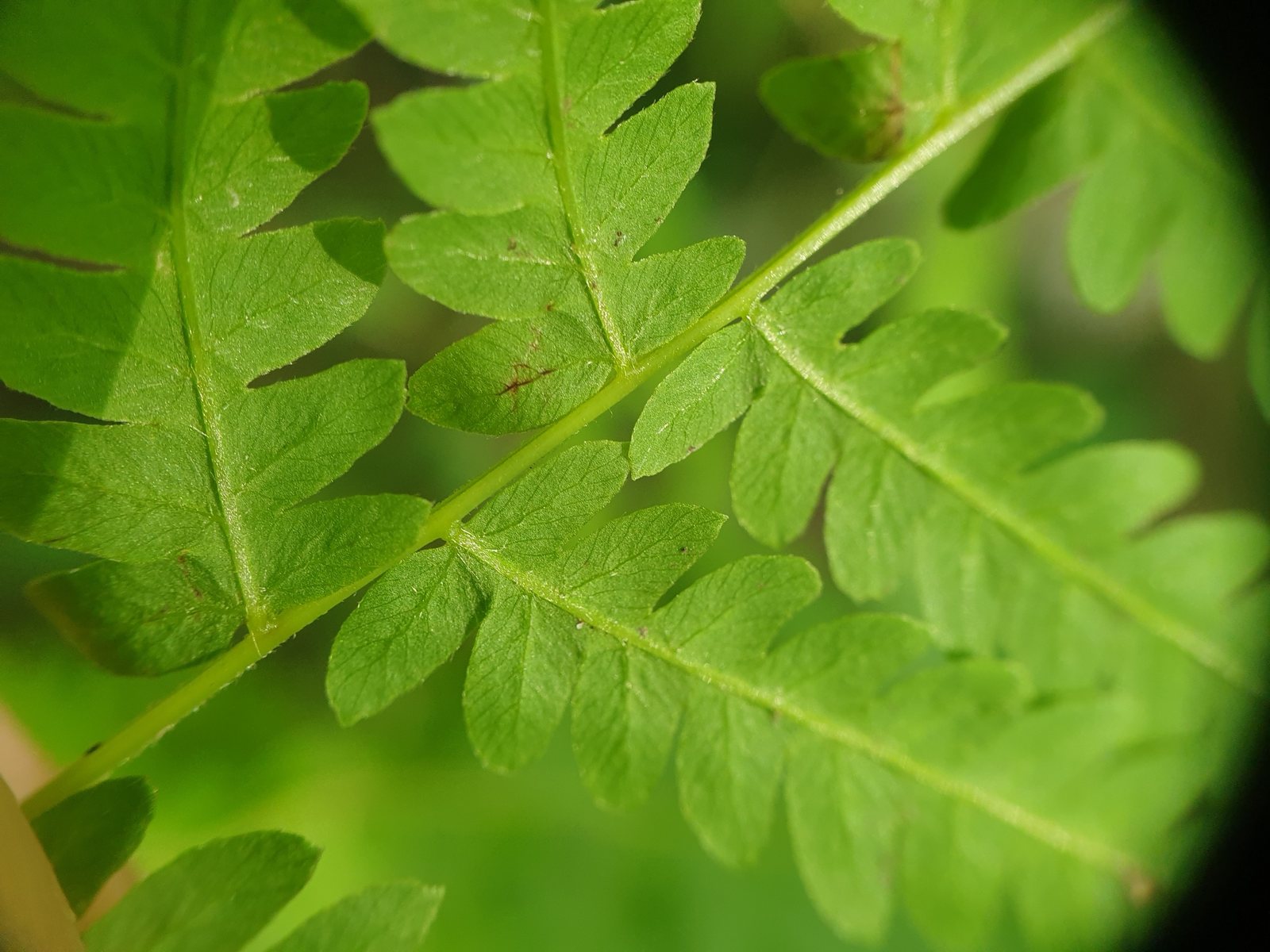
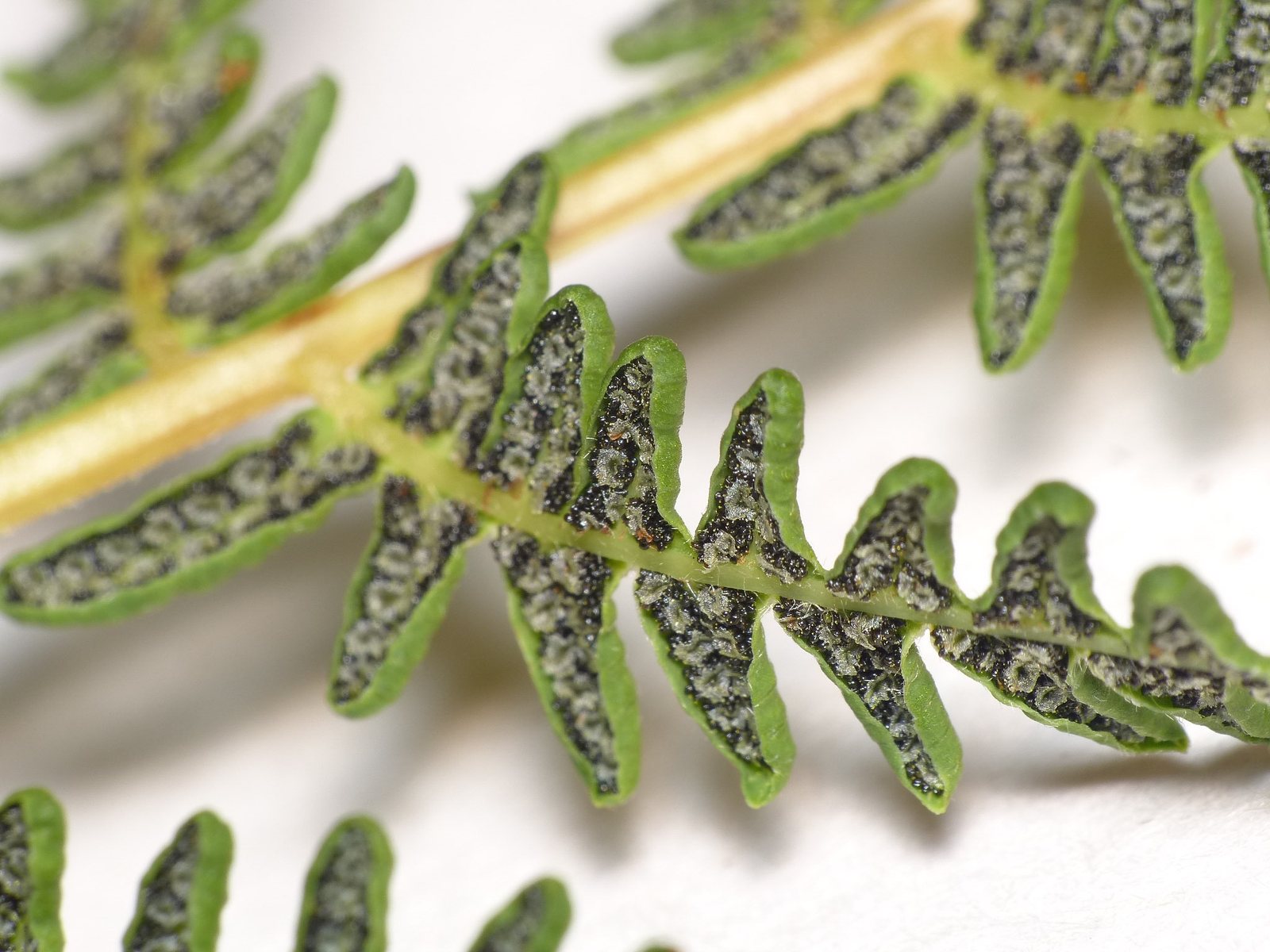
At a glance
- Sun
- Partial shade is ideal; tolerates full sun where the soil stays consistently wet.
- Water
- Keep the soil consistently moist to wet. Established plants tolerate waterlogged ground but not prolonged drying out.
- Soil
- Humus-rich soil that holds moisture; tolerates clay and acidic to alkaline conditions.
- Height
- 1-3 ft (0.3-0.9 m)
- Spread
- 2-3 ft (0.6-0.9 m) initially; colonies can spread much farther
- Foliage
- Light to medium green, upright or gently arching fronds with finely divided leaflets. Fertile fronds have narrower-looking leaflets with rolled-under edges and spore clusters beneath.
- Growth
- Moderate to fast in consistently wet soil
- Care needed
- Low
The year at a glance
- Deer resistant
- Cold hardy
- Heat tolerant
- Wildlife
- Low allergen
| J | F | M | A | M | J | J | A | S | O | N | D | |
|---|---|---|---|---|---|---|---|---|---|---|---|---|
| Plant |
Northern hemisphere months. In Australia, shift them by six.
- Difficulty
- Easy
- Toughness
- Fairly tough
Will it suit your garden?
Pick your zone, country, light and whether you have pets.
Full sun is 6 or more hours of direct sun a day, part shade 3 to 6 hours, shade under 3.
How it grows
Planting day
1 ft (0.3 m)
After 1 year
1.4 ft (0.42 m)
After 2 years
1.8 ft (0.55 m)
After 3 years
2 ft (0.6 m)
full size
About 2 years to full size.
From a typical nursery size, at an average rate for this kind of plant. A rule of thumb, not a forecast.
Good to know
- Cats and dogs
- Safe
- Native to
- the US, Canada and the UK
- In the garden
- Spreads vigorously: plan to contain it.
- Growth rate
- Fast
Care
Jobs through the year
- WaterApr–May, Sep–Oct, every 7 days
- Water established colonies if soil is losing moisture; skip in naturally wet ground.
- WaterJun–Aug, every 3 days
- Keep soil moist to wet during dry weather; new plants need closer moisture checks.
- MulchApr
- Spread a shallow layer of leaf mould or compost without burying crowns.
- PruneFeb–Mar
- Cut dead fronds close to the ground before new shoots emerge.
- DivideMar–Apr
- Divide crowded colonies or lift wandering rhizomes to limit spread.
- Plant in moist ground in partial shade, with the crown at its original soil level.
- Water during dry spells before the soil dries through.
- Apply leaf mould or garden compost around plants in spring without burying the crowns.
- Avoid routine feeding; a light compost dressing is usually enough.
- Divide or remove wandering rhizomes in spring if the colony exceeds its allotted space.
Pruning. Cut dead fronds close to the ground in late winter or early spring before new growth appears. Leave healthy green fronds intact.
Through the year
- Late winter
- Remove dead fronds before the new shoots begin to unfurl.
- Spring
- Plant or divide established colonies and water them in thoroughly.
- Mid-spring
- Spread a shallow layer of leaf mould or compost around the crowns.
- Summer
- Check soil moisture during dry weather and water deeply when needed.
- Early autumn
- Check the colony's boundaries and mark unwanted spread for removal in spring.
- Late autumn
- Allow fronds to die back naturally; leave them over winter unless they obstruct paths or nearby plants.
In the garden
- Plant in groups along damp pond margins, above permanent standing water.
- Use as spreading groundcover beneath widely spaced deciduous trees where the soil remains wet.
- Combine with sedges and moisture-loving irises for contrasting leaf shapes in a bog garden.
- Repeat through a shaded rain garden's persistently moist areas to link larger flowering plants.
Garden styles it suits: Bog garden, Woodland, Wildlife garden, Rewilded, Green on green and Cottage garden.
Plant it with: Marsh marigold, Royal fern, Blue flag iris, Tussock sedge, Cardinal flower and Meadowsweet.
Wildlife: Dense colonies provide sheltered, humid cover for small invertebrates and amphibians. As a fern, it produces neither flowers nor nectar.
Problems to watch for
- Browning or collapsed fronds in dry weather: restore steady soil moisture and mulch; move plants out of hot sun if the site dries repeatedly.
- Slugs and snails damaging emerging fronds: inspect new growth and hand-pick pests, especially on mild, damp evenings.
- Unwanted spread into neighbouring plants: lift encroaching rhizomes in spring or grow in a clearly bounded bed.
Safety
Not known to be toxic to people, cats, dogs or horses, but species-specific safety information is limited. Do not eat the fronds or rhizomes, and do not assume its young shoots are edible fiddleheads.
Where it spreads. Can spread aggressively by creeping rhizomes in wet garden beds in the United States, Canada and the United Kingdom. This garden behaviour is not the same as a regional invasive-species listing; keep it out of natural wetlands where it is not locally native.
Easily confused with
New York fern (Thelypteris noveboracensis)
Its frond narrows strongly toward both the tip and the base, with very small lowest pinnae. Marsh fern has relatively substantial lowest pinnae and a more abruptly defined leafy blade.
Lady fern (Athyrium filix-femina)
Lady fern forms distinct clumps and has more finely divided fronds with elongated or curved spore clusters underneath. Marsh fern spreads on creeping rhizomes and has round spore clusters.
The name
Thelypteris comes from Greek words meaning 'female fern', while palustris means 'of marshes', describing its wetland habitat.
Propagation. Divide creeping rhizomes in spring, keeping several buds and a good portion of roots on each piece. Replant immediately in moist soil; propagation from spores is possible but much slower.
Checked against open data
- Accepted botanical name
- Thelypteris palustris
- In the US and Canada
- Native in Canada, the lower 48 states and St. Pierre and Miquelon.
- Native range
- Alabama, Albania, Algeria, Altay, Arkansas, Austria, Baltic States, Belarus, Belgium, Bulgaria, Buryatiya and Central European Rus.
- Measured
- Soil pH 6.5 to 7. Average height 62 cm.
Sources: GBIF (CC BY 4.0), USDA PLANTS and Trefle (CC BY 4.0). The care and design notes are LandscapeGPT's own.
See it in your own yard.
Upload a photo of your yard and see it redesigned with plants that suit your climate, each checked against your zone.