Meadow buttercup
Ranunculus acris. Family Ranunculaceae. Perennial.
Also called Tall buttercup, Common buttercup.
Meadow buttercup is an upright, clump-forming perennial with glossy yellow flowers held above deeply divided leaves. Gardeners grow it for a loose, meadow-like effect among grasses, especially within its native range in Britain and Eurasia. It seeds freely and is an invasive pasture weed in some regions, so check local restrictions before planting.
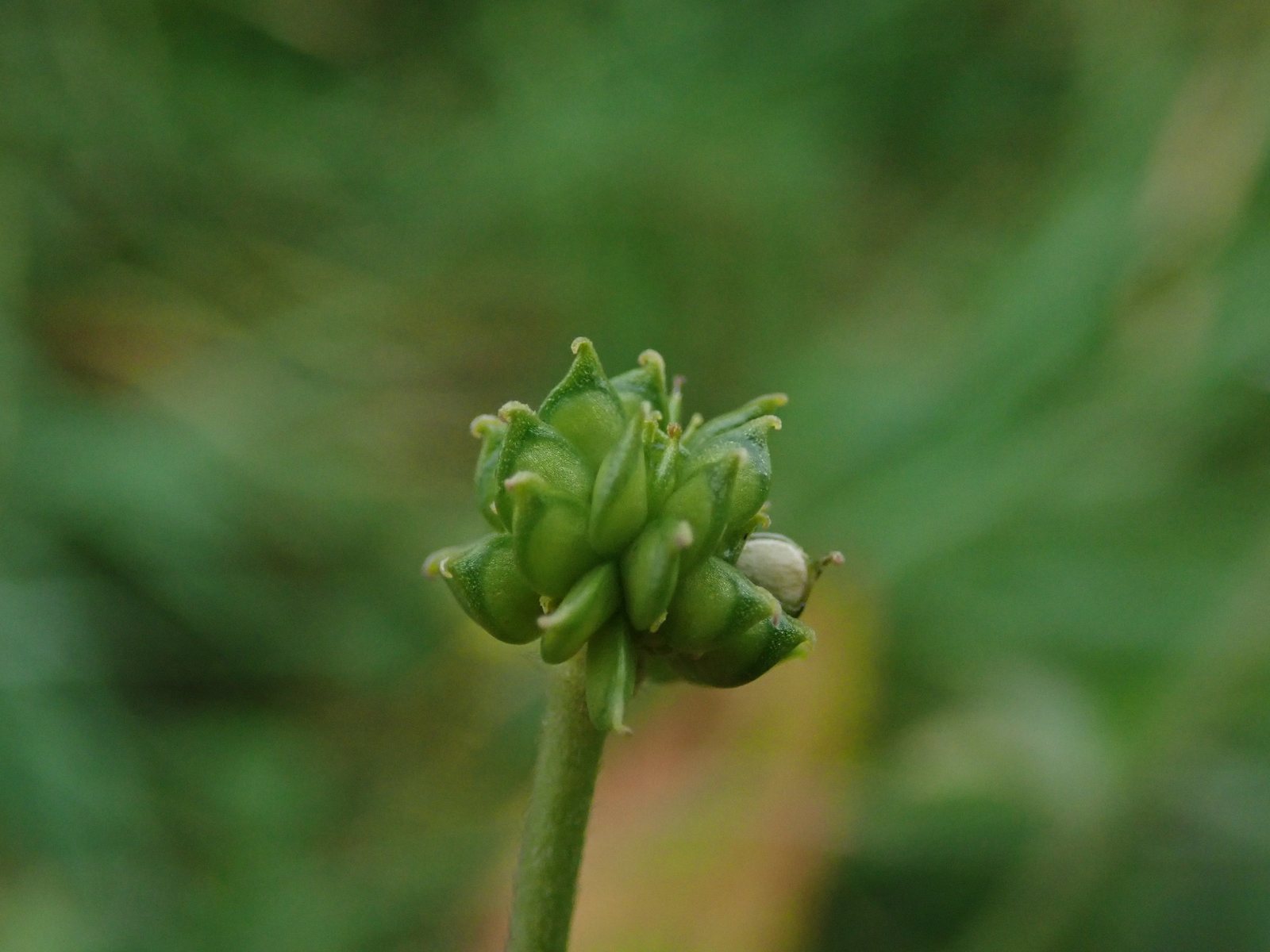
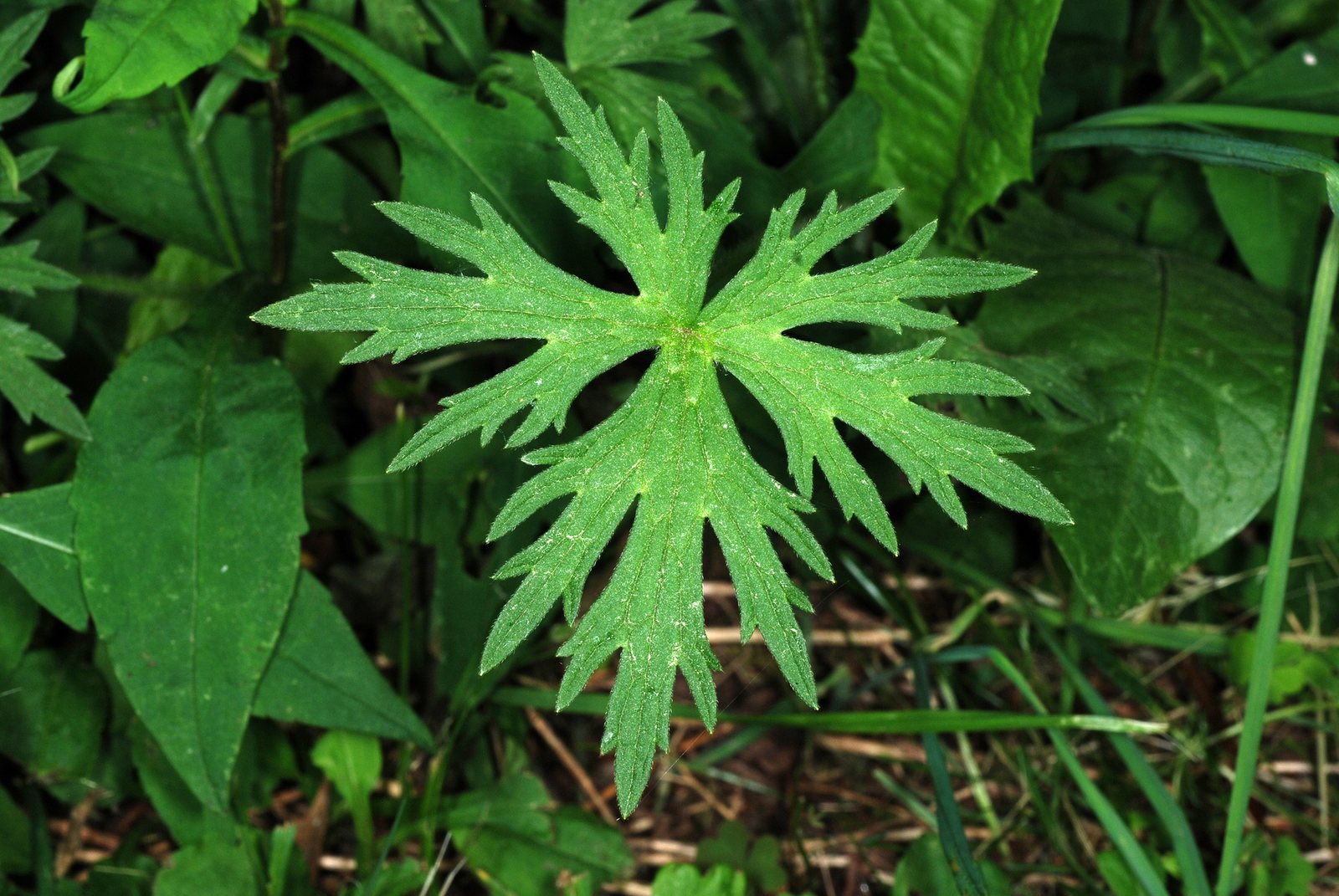
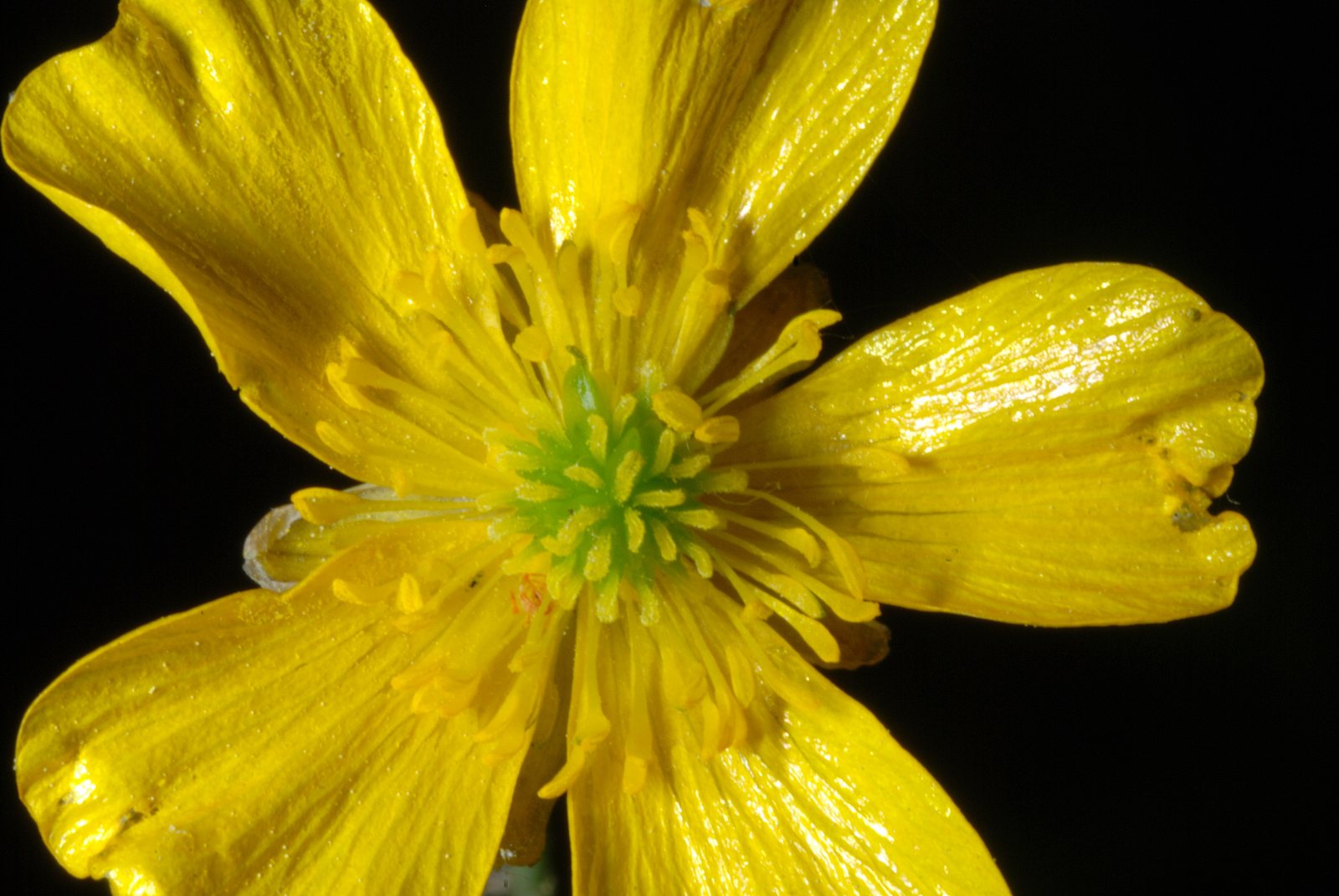
At a glance
- Sun
- Full sun or light partial shade; flowering is best in sun.
- Water
- Moderate; prefers consistently moist ground but tolerates brief dry spells once established.
- Soil
- Moisture-retentive loam or clay with reasonable drainage; tolerates a broad range of soil pH.
- Height
- 2-3 ft (0.6-0.9 m)
- Spread
- 1-2 ft (0.3-0.6 m)
- Flowers
- Late spring through summer; shiny, golden-yellow flowers, usually with five petals.
- Foliage
- Green, deeply divided basal leaves with toothed lobes; smaller, narrower leaves grow up the branching stems.
- Growth
- Moderate to fast
- Care needed
- Medium
The year at a glance
- Pollinators
- Deer resistant
- Cold hardy
- Low allergen
| J | F | M | A | M | J | J | A | S | O | N | D | |
|---|---|---|---|---|---|---|---|---|---|---|---|---|
| Flowers | ||||||||||||
| Plant |
Northern hemisphere months. In Australia, shift them by six.
- Difficulty
- Moderate
- Toughness
- Very tough
Will it suit your garden?
Pick your zone, country, light and whether you have pets.
Full sun is 6 or more hours of direct sun a day, part shade 3 to 6 hours, shade under 3.
How it grows
Planting day
1 ft (0.3 m)
After 1 year
1.6 ft (0.49 m)
After 2 years
2.2 ft (0.68 m)
After 3 years
2.5 ft (0.75 m)
full size
About 2 years to full size.
From a typical nursery size, at an average rate for this kind of plant. A rule of thumb, not a forecast.
Good to know
- Cats and dogs
- Toxic
- Native to
- the US and the UK
- Invasive in
- Canada
- In the garden
- Spreads vigorously: plan to contain it.
- Growth rate
- Fast
Care
Jobs through the year
- WaterApr–May, Sep–Oct, every 14 days
- Water established clumps only during prolonged dry weather; keep new plants more consistently moist.
- WaterJun–Aug, every 7 days
- During sustained drought, water deeply if the root zone has become dry.
- DeadheadMay–Aug, every 7 days
- Cut fading flower stems to basal leaves before seed ripens to limit spread.
- PruneNov
- Cut down dead stems and remove remaining seed heads; wear gloves against irritating sap.
- DivideMar–Apr, Sep
- Divide crowded clumps as needed and replant immediately into moist soil.
- ProtectMar–Jun, Sep
- Remove unwanted seedlings with their roots; keep plants away from livestock and follow local invasive-plant restrictions.
- Water during prolonged dry weather, especially in the first growing season.
- Avoid routine feeding; rich soil can encourage soft, floppy growth.
- Remove spent flower stems before seed ripens if you need to contain its spread.
- Divide crowded clumps in spring or early autumn.
- Keep it out of livestock paddocks and remove unwanted seedlings while small.
Pruning. Cut spent flower stems down to the basal leaves before seed develops. Remove dead foliage in late autumn or late winter, wearing gloves to avoid irritating sap.
Through the year
- Early spring
- Remove dead growth and lift unwanted seedlings before their roots become established.
- Spring
- Plant or divide clumps where cultivation is permitted; water thoroughly after planting.
- Late spring
- Check nearby grasses and perennials for seedlings spreading beyond the intended patch.
- Summer
- Remove fading flower stems before seed ripens; water if the soil becomes persistently dry.
- Early autumn
- Divide established clumps if needed and replant promptly into moist soil.
- Late autumn
- Cut down dead stems and remove any remaining seed heads where spread is a concern.
In the garden
- In British meadow planting, mingle with fine grasses and oxeye daisies for scattered yellow flowers above the sward.
- Use in informal cottage borders with cranesbills and meadow cranesbill for a loose, airy effect.
- Plant in a managed patch of moist, open grassland where taller growth is welcome and seedlings can be controlled.
- Use small groups beside an informal path, set back from edges where people or pets may brush against broken stems.
Garden styles it suits: Cottage garden, Wildflower, English country, Romantic rose garden, Wildlife garden and Rewilded.
Plant it with: Oxeye daisy, Meadow cranesbill, Common knapweed, Red clover, Sweet vernal grass and Great burnet.
Wildlife: Open flowers provide pollen and nectar for bees, hoverflies and other insects. Outside its native range, its ability to displace other vegetation can outweigh this benefit.
Problems to watch for
- Unwanted self-seeding: cut off flower stems before seed ripens and dig out seedlings, removing the crown and roots.
- Powdery mildew: improve air circulation, avoid overcrowding and remove badly affected foliage.
- Slugs and snails on young shoots: inspect during damp evenings and use barriers or locally approved controls if damage is significant.
- Floppy stems in shade or rich soil: move to a sunnier position, stop feeding and support loosely with nearby grasses or twiggy stakes.
Safety
Fresh leaves, stems, flowers and roots are toxic to people, cats, dogs and horses if eaten. Chewing or crushing releases an irritant that can cause mouth pain, drooling, vomiting or diarrhoea; substantial ingestion can cause serious poisoning, especially in grazing animals. Sap can irritate or blister skin. Drying greatly reduces toxicity, but do not treat the plant as edible.
Where it spreads. Introduced and invasive in parts of northern North America, particularly moist pastures and meadows. It is listed as a noxious weed in Washington, Montana and Colorado, and in British Columbia. It is also naturalised in southeastern Australia, including Tasmania and Victoria, where it can spread in damp pasture. It is native in the UK; check current local weed rules before planting elsewhere.
Easily confused with
Creeping buttercup (Ranunculus repens)
Produces creeping runners that root at the nodes. Its leaves usually have three distinct leaflets, with the central leaflet on a stalk; meadow buttercup is upright and lacks rooting runners.
Bulbous buttercup (Ranunculus bulbosus)
Has a swollen, bulb-like stem base and sepals that fold sharply backwards beneath the open flower. Meadow buttercup lacks this swollen base and has spreading rather than sharply reflexed sepals.
Lesser celandine (Ficaria verna)
A low, early-spring plant with glossy, heart-shaped leaves and usually eight or more narrow yellow petals, rather than deeply divided leaves and five broad petals.
The name
Ranunculus means 'little frog', referring to the damp habitats of many buttercups, while acris means 'acrid' or 'sharp', describing the plant's irritating sap.
Propagation. Divide clumps in spring or early autumn. The species also grows readily from seed, but avoid sowing it where it is invasive or restricted; double-flowered garden forms are generally propagated by division.
Checked against open data
- Accepted botanical name
- Ranunculus acris
- In the US and Canada
- Native in Greenland and the lower 48 states. Introduced in Alaska, Canada, the lower 48 states and St. Pierre and Miquelon.
- Native range
- Albania, Aleutian Is., Altay, Amur, Austria, Baltic States, Belarus, Belgium, Bulgaria, Central European Rus, Chita and Corse.
- Measured
- Soil pH 6.5 to 7. Average height 18 cm.
Sources: GBIF (CC BY 4.0), USDA PLANTS and Trefle (CC BY 4.0). The care and design notes are LandscapeGPT's own.
See it in your own yard.
Upload a photo of your yard and see it redesigned with plants that suit your climate, each checked against your zone.