Oceanspray
Holodiscus discolor. Family Rosaceae. Shrub.
Also called Ocean spray, Creambush, Ironwood.
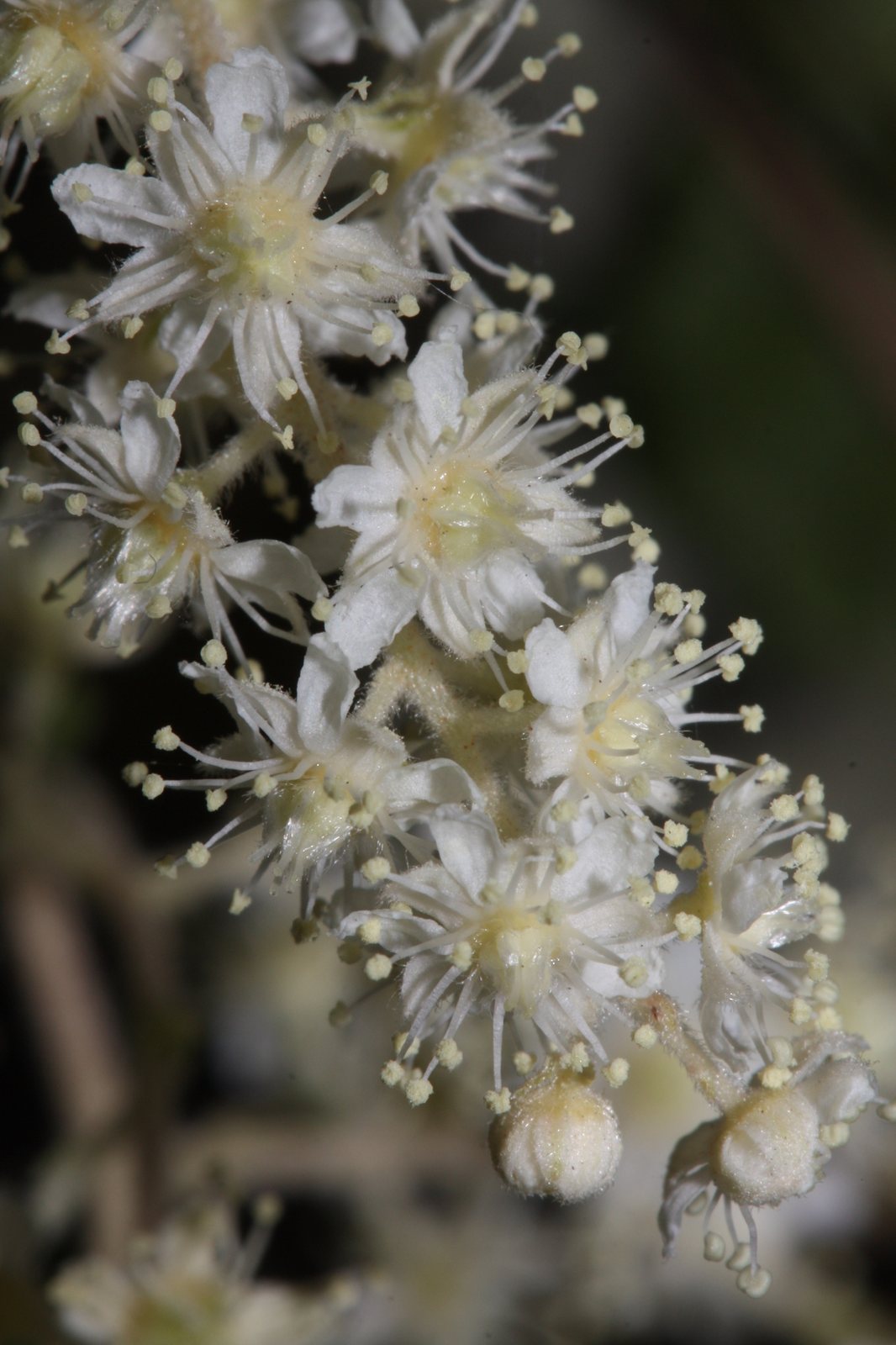
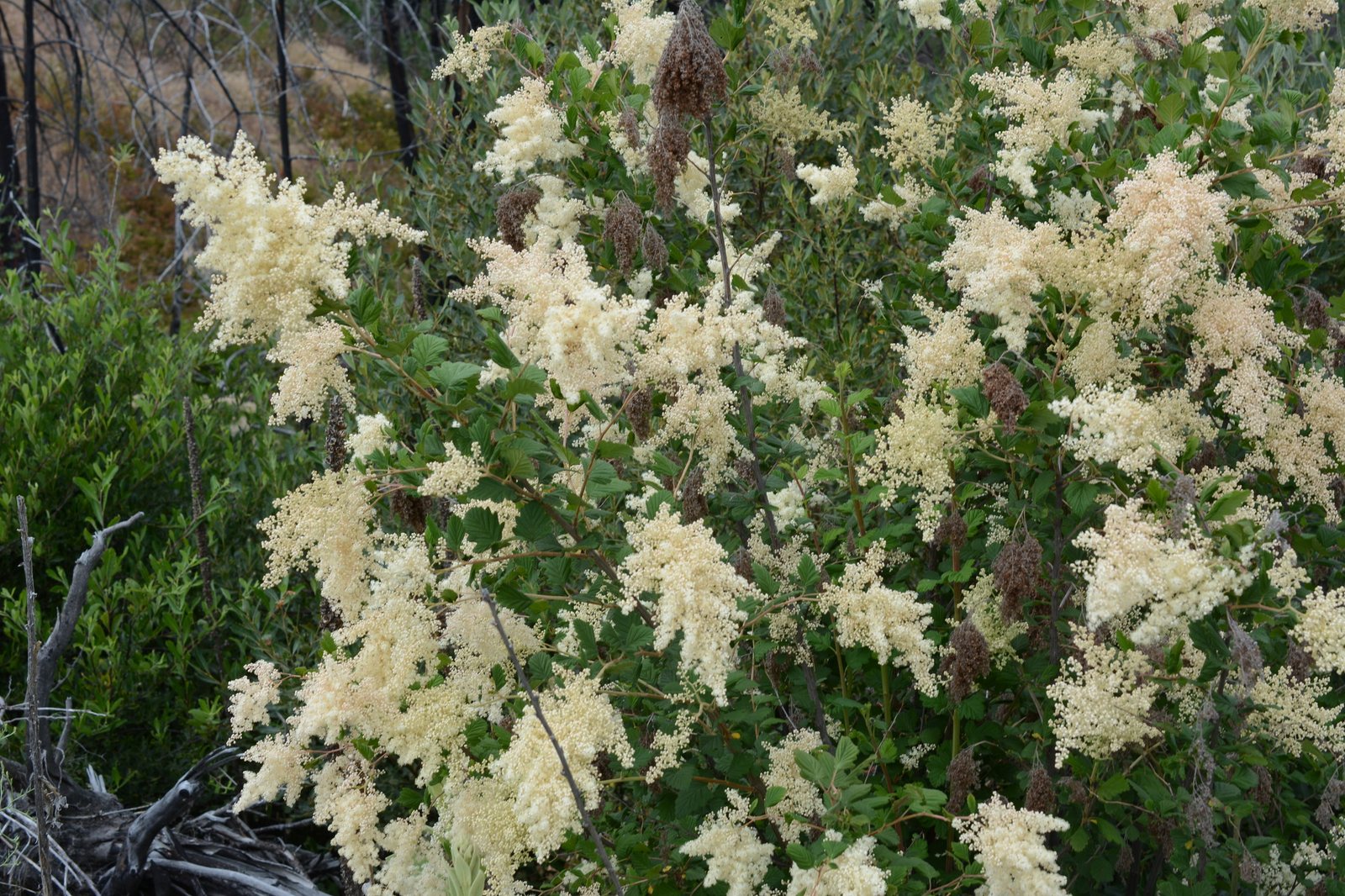
Oceanspray is a deciduous shrub native to western North America, grown for its arching branches and large, frothy clusters of creamy-white flowers. It suits informal borders, woodland edges and wildlife gardens, and tolerates summer drought once established.
At a glance
- Sun
- Full sun to partial shade; flowering is usually best with several hours of direct sun.
- Water
- Water regularly during establishment; established plants generally need little extra water except during prolonged drought.
- Soil
- Well-drained soil, including sandy, gravelly or loamy ground; tolerates relatively poor soil but dislikes persistent waterlogging.
- Height
- 8-15 ft (2.4-4.6 m)
- Spread
- 6-12 ft (1.8-3.7 m)
- Flowers
- Late spring to midsummer; small creamy-white flowers in large, branching, often drooping clusters that fade to tan.
- Foliage
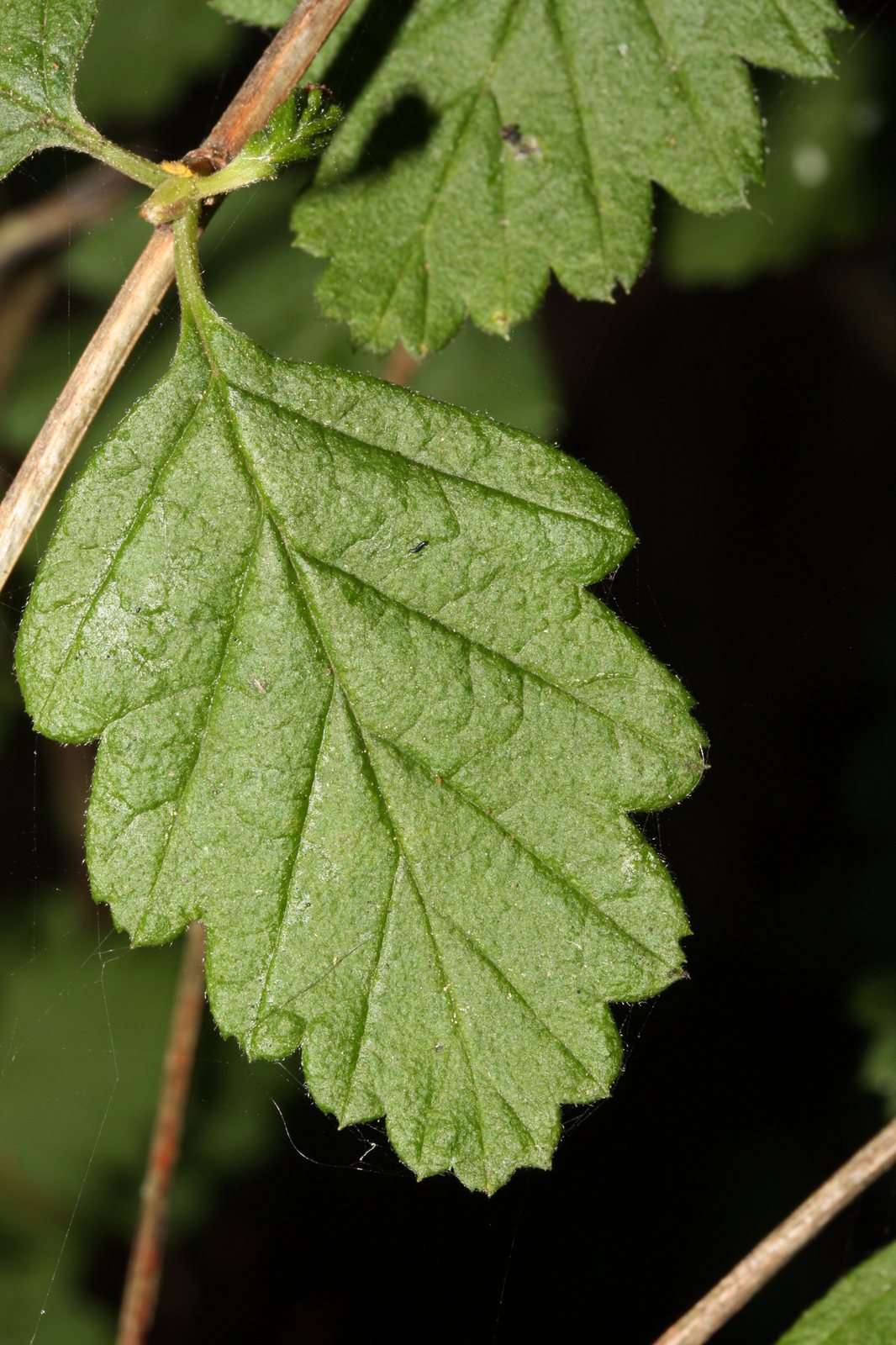
- Alternate, broadly oval leaves with toothed or shallowly lobed edges, green above and paler and softly hairy beneath; autumn colour is variable, sometimes yellow.
- Growth
- Moderate
- Care needed
- Low
The year at a glance
- Pollinators
- Deer resistant
- Drought tolerant
- Heat tolerant
- Wildlife
- Low allergen
| J | F | M | A | M | J | J | A | S | O | N | D | |
|---|---|---|---|---|---|---|---|---|---|---|---|---|
| Flowers | ||||||||||||
| Fruit | ||||||||||||
| Plant |
Northern hemisphere months. In Australia, shift them by six.
- Difficulty
- Easy
- Toughness
- Very tough
Will it suit your garden?
Pick your zone, country, light and whether you have pets.
Full sun is 6 or more hours of direct sun a day, part shade 3 to 6 hours, shade under 3.
How it grows
Planting day
1.6 ft (0.5 m)
After 1 year
4 ft (1.1 m)
After 2 years
6 ft (1.7 m)
After 3 years
8 ft (2.3 m)
After 5 years
11 ft (3.5 m)
full size
About 5 years to full size.
From a typical nursery size, at an average rate for this kind of plant. A rule of thumb, not a forecast.
Good to know
- Cats and dogs
- Safe
- Native to
- the US and Canada
- Growth rate
- Moderate
Care
Jobs through the year
- WaterApr–May, Sep–Oct, every 28 days
- Water established shrubs only during prolonged drought; water more regularly for the first two seasons.
- WaterJun–Aug, every 21 days
- Deep-water during prolonged drought, allowing the surface to dry between applications.
- MulchMar–Apr
- Refresh a 5–8 cm organic mulch layer, keeping it clear of the stems.
- PruneMar
- Remove winter-damaged wood without shortening healthy flowering stems.
- PruneJul–Aug
- Immediately after flowering, remove selected old stems at ground level only if renewal is needed.
- Water deeply during dry spells for the first two growing seasons, allowing the soil surface to dry between waterings.
- Plant in freely draining ground; avoid low spots that stay wet in winter.
- Apply a 2-3 in (5-8 cm) layer of organic mulch, keeping it clear of the stems.
- Do not routinely fertilize; overly rich feeding can encourage soft growth rather than flowers.
- Allow room for the arching branches instead of repeatedly clipping them to fit a narrow space.
Pruning. Prune just after flowering, since flowers form on older wood. Remove dead or damaged stems and, when needed, cut a few of the oldest stems to ground level to renew the shrub without shearing its outline.
Through the year
- Autumn
- Plant while the soil is workable in mild climates; water thoroughly and mulch.
- Early spring
- Plant in colder regions once the ground has thawed, and remove any winter-damaged wood.
- Spring
- Refresh mulch and check that nearby plants are not crowding the developing branches.
- Early summer
- Check young plants during dry weather and water deeply when the root zone becomes dry.
- Summer
- After flowering, thin selected old stems if the shrub needs renewal.
- Winter
- Leave dry flower clusters for texture and shelter unless they interfere with paths.
In the garden
- Use at a woodland edge with sword ferns and Oregon grape for layered planting.
- Include in an informal mixed hedge where its arching stems can develop naturally.
- Place behind lower perennials so its pale summer flowers provide a loose, airy backdrop.
- Plant on a well-drained slope in a western North American native garden.
- Use in a wildlife border with other shrubs that flower at different times.
Garden styles it suits: Pacific Northwest woodland, Woodland, Wildlife garden, Pollinator garden, Native hedgerow and Low-maintenance.
Plant it with: Oregon grape, Western sword fern, Pacific ninebark, Red-flowering currant, Serviceberry and Snowberry.
Wildlife: Flowers attract bees, butterflies and other insects. The foliage supports native moth and butterfly larvae within its natural range, while the branching growth provides cover for birds.
Problems to watch for
- Poor flowering in deep shade: move a young plant to a brighter position or selectively reduce overhead shade.
- Root decline in waterlogged soil: improve drainage or relocate to higher ground; extra feeding will not solve the problem.
- Wilting or leaf scorch during establishment: water the root zone deeply during dry spells and maintain mulch without burying the stems.
Safety
Not known to be toxic to people, cats, dogs or horses. Species-specific safety information is limited, so do not treat the leaves, flowers, seeds or wood as edible.
Easily confused with
False spirea (Sorbaria sorbifolia)
False spirea has pinnate leaves made up of many narrow leaflets and often forms spreading colonies; oceanspray has simple, broad leaves.
Lewis's mock orange (Philadelphus lewisii)
Mock orange has opposite leaves and much larger, usually fragrant, four-petalled flowers; oceanspray has alternate leaves and masses of tiny flowers.
Douglas spirea (Spiraea douglasii)
Douglas spirea has dense, upright pink flower clusters and narrower leaves; oceanspray has loose, creamy-white, often drooping flower clusters.
The name
Oceanspray refers to the foamy appearance of the flower clusters, while discolor means two-coloured and refers to the contrasting upper and lower leaf surfaces.
Propagation. Take softwood cuttings in early summer and root them in a free-draining medium under humid conditions. Seed can also be used, but germination is variable and a period of cold, moist stratification is generally needed.
Checked against open data
- Accepted botanical name
- Holodiscus discolor
- In the US and Canada
- Native in Canada and the lower 48 states.
- Native range
- Arizona, British Columbia, California, Colorado, Idaho, Mexico Central, Mexico Northeast, Mexico Northwest, Mexico Southwest, Montana, Nevada and New Mexico.
- Measured
- Soil pH 6.5 to 7.5. Average height 250 cm.
Sources: GBIF (CC BY 4.0), USDA PLANTS and Trefle (CC BY 4.0). The care and design notes are LandscapeGPT's own.
See it in your own yard.
Upload a photo of your yard and see it redesigned with plants that suit your climate, each checked against your zone.