Ocotillo
Fouquieria splendens. Family Fouquieriaceae. Shrub.
Also called Coachwhip, Desert coral, Candlewood.
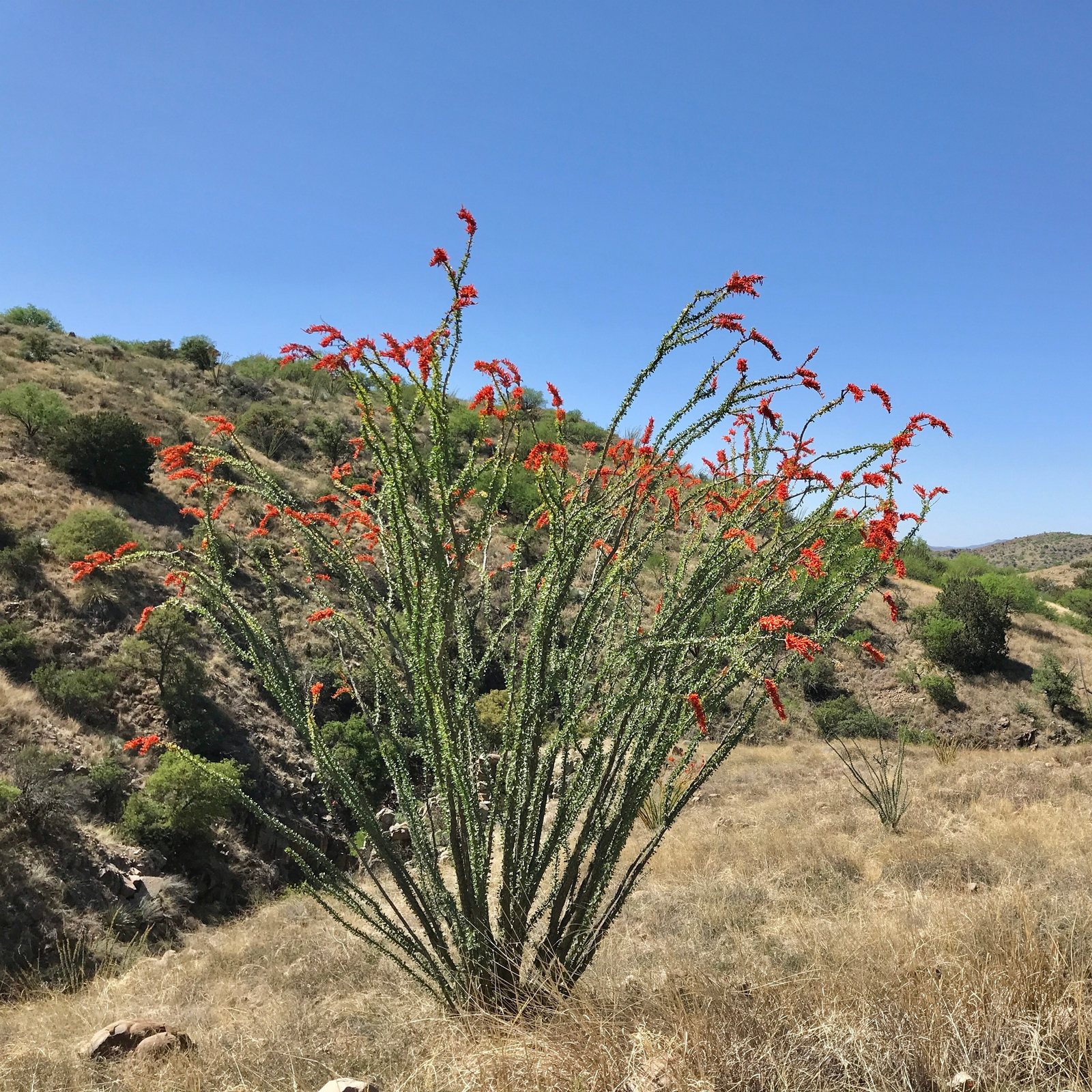
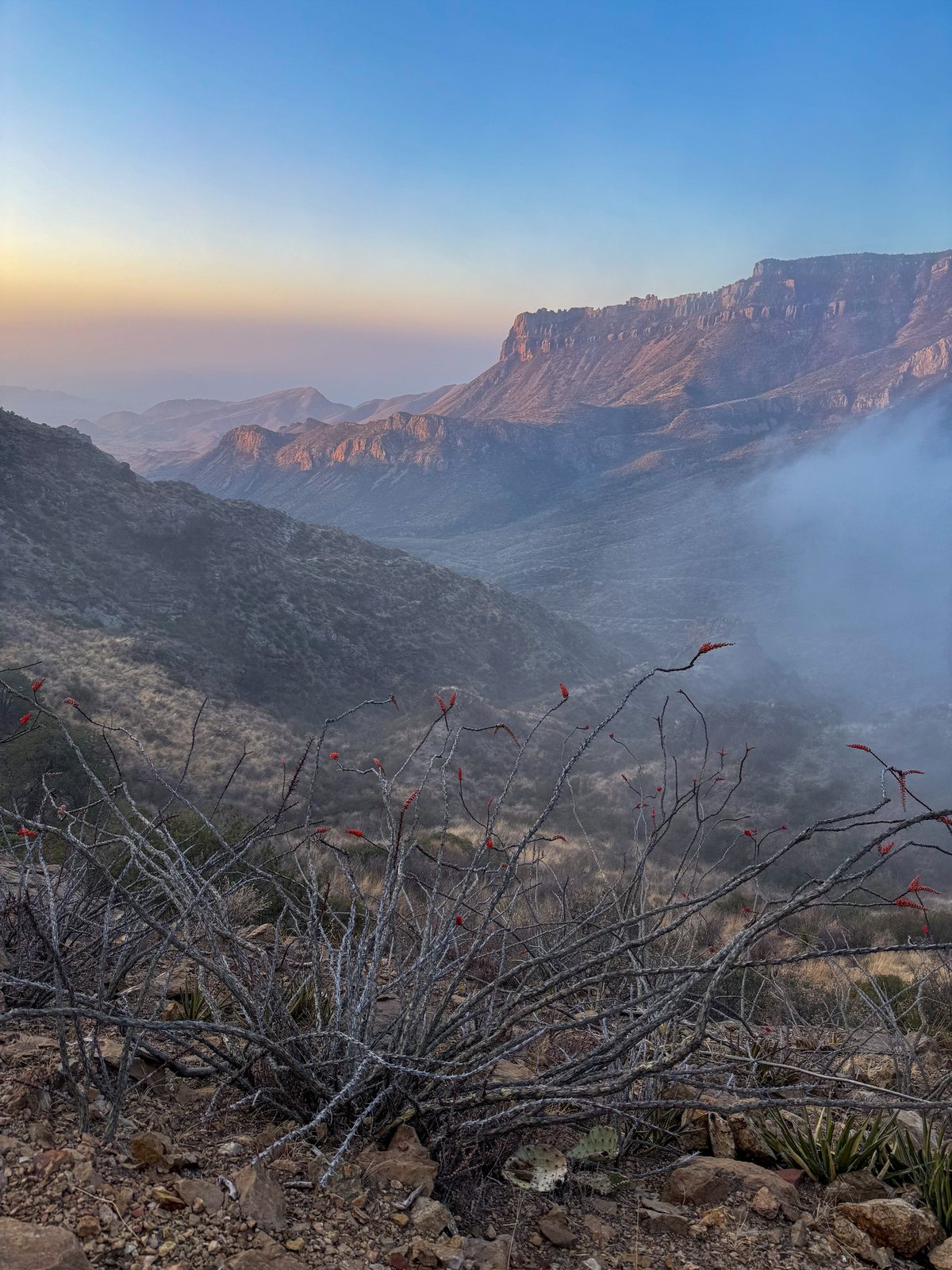
Ocotillo is a desert shrub from the southwestern United States and Mexico, with tall, thorny canes and clusters of red flowers that attract hummingbirds. Gardeners grow it for its striking outline and drought tolerance; despite its appearance, it is not a cactus. It needs strong sun, excellent drainage and a dry climate, making outdoor cultivation difficult in most of the United Kingdom and Canada.
At a glance
- Sun
- Full sun, preferably with all-day exposure.
- Water
- Very low once established. Water newly planted specimens deeply but infrequently, allowing the root zone to dry between waterings; avoid routine irrigation during cool weather.
- Soil
- Fast-draining sandy, gravelly or rocky soil. Tolerates alkaline soils; avoid heavy clay and sites that stay wet in winter.
- Height
- 10-20 ft (3-6 m)
- Spread
- 8-15 ft (2.4-4.6 m)
- Flowers
- Bright red to orange-red tubular flowers in terminal clusters, mainly in spring to early summer; occasional flowering follows rain.
- Foliage
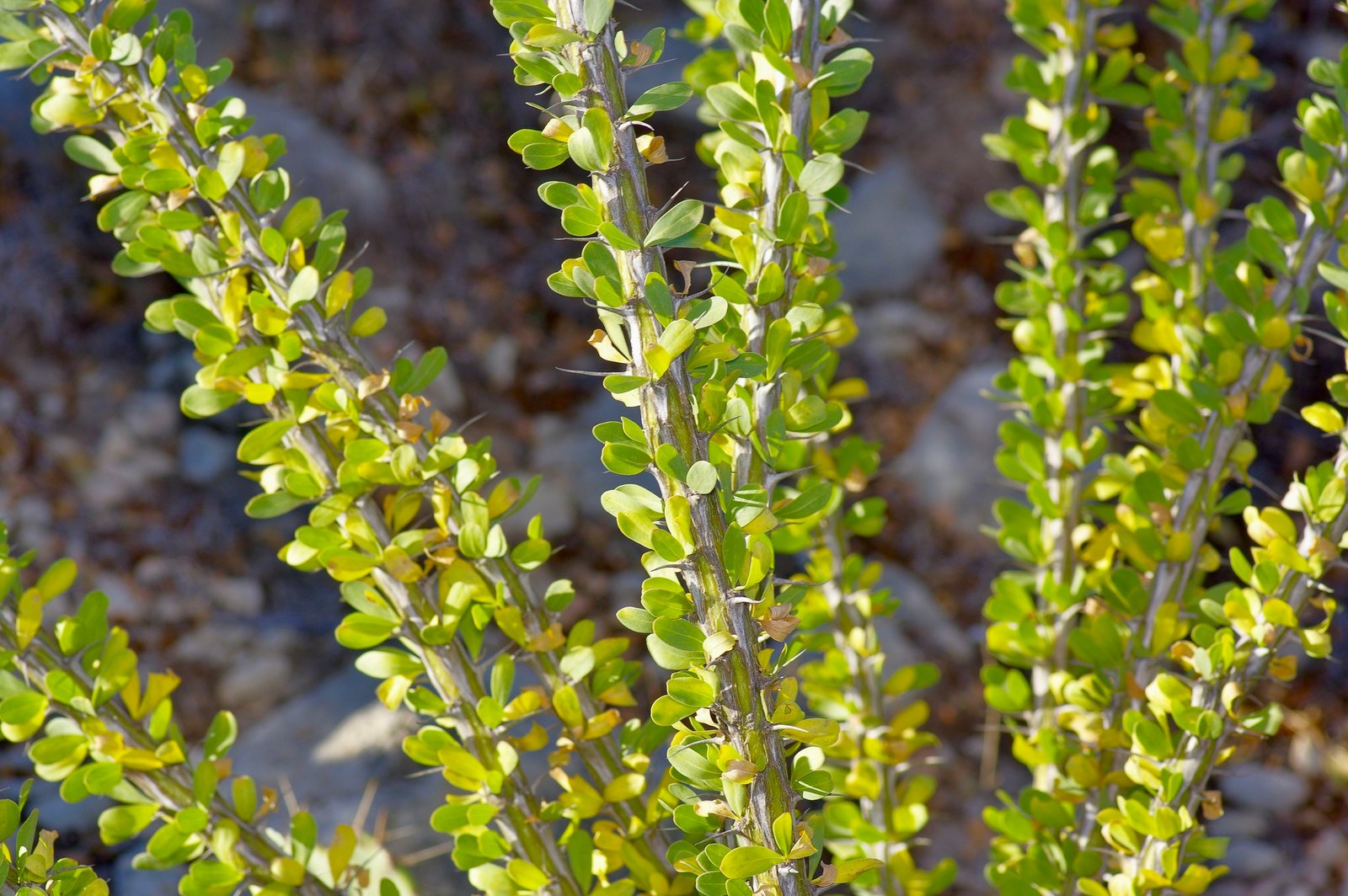
- Small, oval green leaves appear after rain and drop during drought, sometimes through several cycles in a year. Long, ridged, thorny canes remain conspicuous when leafless.
- Growth
- Slow to moderate; establishment can be slow, especially with large bare-root plants.
- Care needed
- Low
The year at a glance
- Pollinators
- Deer resistant
- Drought tolerant
- Heat tolerant
- Wildlife
- Low allergen
| J | F | M | A | M | J | J | A | S | O | N | D | |
|---|---|---|---|---|---|---|---|---|---|---|---|---|
| Flowers | ||||||||||||
| Plant |
Northern hemisphere months. In Australia, shift them by six.
- Difficulty
- Hard
- Toughness
- Needs looking after
Will it suit your garden?
Pick your zone, country, light and whether you have pets.
Full sun is 6 or more hours of direct sun a day, part shade 3 to 6 hours, shade under 3.
How it grows
Planting day
1.8 ft (0.54 m)
After 1 year
4 ft (1.1 m)
After 2 years
6 ft (1.8 m)
After 3 years
8 ft (2.4 m)
After 5 years
12 ft (3.6 m)
About 7 years to full size.
From a typical nursery size, at an average rate for this kind of plant. A rule of thumb, not a forecast.
Good to know
- Cats and dogs
- Safe
- Native to
- the US
- Growth rate
- Slow
Care
Jobs through the year
- WaterMay, Sep, every 28 days
- For established plants, water only if thoroughly dry; water rooting specimens somewhat more often.
- WaterJun–Aug, every 21 days
- Water established plants deeply only during prolonged drought, never while the root zone is moist.
- MulchMay
- Use shallow gravel mulch and keep it away from the stem bases.
- PruneMay–Jun
- Remove only confirmed dead or damaged canes at their bases; never shorten healthy canes.
- ProtectJan–Apr, Oct–Dec
- Not reliably hardy in zone 6–7 or the UK; grow in a movable container and overwinter frost-free and nearly dry.
- Plant in full sun on a raised, freely draining site, keeping the original soil line at ground level.
- Water establishing plants deeply, then let the soil dry; once rooted, supplement rainfall only during prolonged drought.
- Use a shallow gravel mulch and keep it away from the crown; avoid moisture-retaining mulch against the stems.
- Do not fertilize routinely; rich soil and heavy feeding are unnecessary.
- Keep thorny canes well away from paths, play areas and doors.
- Buy nursery-propagated or legally salvaged plants rather than wild-dug specimens of uncertain origin.
Pruning. Usually leave the natural cane structure intact. Remove only clearly dead or damaged canes at their base in late winter or after flowering; do not shear or shorten healthy canes to control size.
Through the year
- Late winter
- Check for frost damage, but wait until living growth is distinguishable before removing questionable canes.
- Spring
- Plant when the soil is warming and frost risk has passed; choose a site with room for the mature spread.
- Spring
- Watch for flower clusters and keep insecticides away from visiting pollinators.
- Summer
- Check establishing plants and water only when the root zone has dried.
- Autumn
- Reduce supplemental watering as temperatures fall and clear debris from around the crown.
- Winter
- Keep the root zone dry and protect young plants from unusual freezes with breathable frost cloth.
In the garden
- Use as a tall, open focal point in a gravel garden, with low-growing plants leaving the cane structure visible.
- Combine with agaves, yuccas and barrel cacti for contrasting upright, rosette and rounded forms.
- Place against a plain wall or open sky to emphasize the branching silhouette.
- Use in a spacious desert wildlife garden where flowering canes provide hummingbird feeding stations.
Garden styles it suits: Desert modern, Southwestern, Desert / xeriscape, Architectural minimal, Dry gravel garden and Wildlife garden.
Plant it with: Desert spoon, Red yucca, Parry's agave, Brittlebush, Blackfoot daisy and Desert marigold.
Wildlife: Nectar-rich flowers feed hummingbirds in its native range and attract bees and other insects. The thorny framework also provides perches for birds.
Problems to watch for
- Root or crown rot in wet soil: improve drainage, keep the crown exposed and stop frequent irrigation; badly rotted plants rarely recover.
- Frost-damaged cane tips: use a warm, sheltered site and protect young plants during exceptional cold; prune confirmed dead tissue after growth resumes.
- Poor establishment after transplanting: use healthy nursery stock, avoid deep planting and allow ample time for rooting rather than repeatedly increasing water.
- Leaf drop mistaken for plant death: drought-induced leaf loss is normal; do not compensate with constant watering or remove canes solely because they are bare.
Safety
Not known to be toxic to people, cats, dogs or horses, although species-specific toxicity information is limited. The sharp thorns are the main hazard and can cause puncture wounds or eye injuries.
Easily confused with
Madagascar ocotillo (Alluaudia procera)
Has thick, succulent upright stems with neatly arranged pairs of small leaves and spines, rather than ocotillo's slender canes and conspicuous red terminal flower clusters.
Mexican tree ocotillo (Fouquieria macdougalii)
Develops a distinct trunk with reddish bark and a branching, tree-like crown rather than a fountain of long canes rising from the base.
The name
Fouquieria honours French physician Pierre Fouquier, splendens means shining or splendid, and ocotillo comes from Spanish for little ocote, referring to a torch or resinous pine.
Propagation. Grow from fresh seed in a warm, freely draining medium. Cane cuttings sometimes root but are unreliable; nursery-grown plants are generally a better choice for homeowners.
Checked against open data
- Accepted botanical name
- Fouquieria splendens
- In the US and Canada
- Native in the lower 48 states.
- Native range
- Arizona, California, Mexico Northeast, Mexico Northwest, Mexico Southwest, Nevada, New Mexico and Texas.
- Measured
- Soil pH 7 to 8.5. Average height 240 cm.
Sources: GBIF (CC BY 4.0), USDA PLANTS and Trefle (CC BY 4.0). The care and design notes are LandscapeGPT's own.
See it in your own yard.
Upload a photo of your yard and see it redesigned with plants that suit your climate, each checked against your zone.